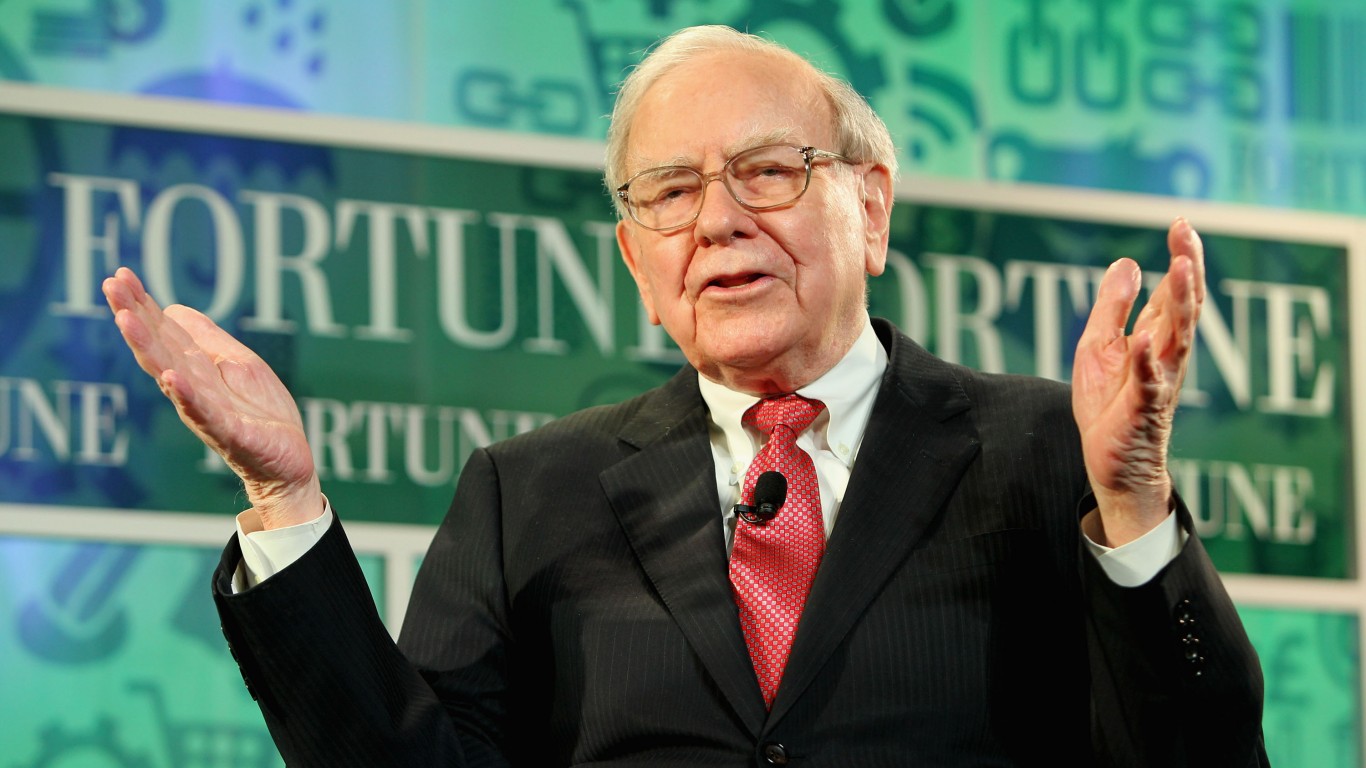
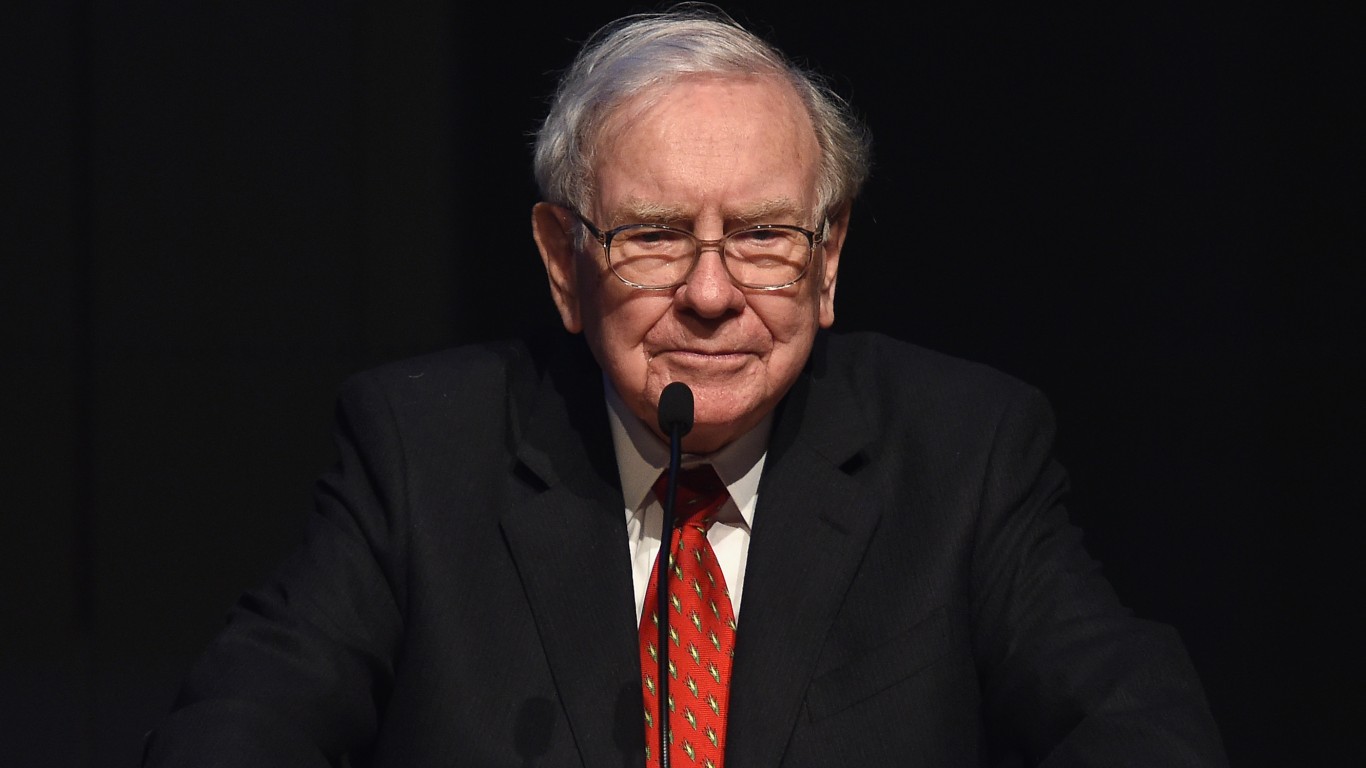
This 15% Yield ETF Copies Warren Buffett’s Stock Picks and Is Beating Berkshire Hathaway
A new ETF targets Buffett's stock picks and promises a 15% annual payout, but the real question is whether it can deliver income without quietly eroding the investment underneath it.

This post may contain links from our sponsors and affiliates, and Flywheel Publishing may receive compensation for actions taken through them.

Berkshire Hathaway famously doesn’t pay a dividend, and I don’t consider that a drawback. One of the things I like most about Berkshire is its fortress balance sheet and the flexibility that comes with retaining so much capital. Instead of committing to a recurring dividend, management can repurchase Berkshire shares when valuations are attractive, deploy capital into public equities, or acquire entire businesses. With substantial liquidity available, Berkshire can sometimes finance deals without relying heavily on outside debt.
If I needed income from Berkshire, I’d rather manufacture it myself by periodically selling shares. But there’s an ETF for virtually everything these days, including investors who like Warren Buffett’s stock-picking philosophy but would prefer a large recurring distribution. The VistaShares Target 15 Berkshire Select Income ETF (OMAH) combines a portfolio inspired by Berkshire’s largest publicly traded stock holdings with an options strategy targeting a 15% annual distribution rate.
How OMAH Turns Buffett’s Stocks Into Income
OMAH’s starting point is Berkshire Hathaway’s publicly disclosed equity portfolio. The ETF seeks exposure to a selection of Berkshire’s largest public stock positions, effectively isolating one particular component of the Buffett investment strategy: stock selection. That’s also why OMAH is very different from simply buying Berkshire Hathaway Class B shares.
When you own Berkshire, you’re buying considerably more than its 13F stock portfolio. You’re getting its insurance operations and the associated insurance float, along with wholly owned businesses spanning railroads, energy, manufacturing, services and retail. You’re also getting Berkshire’s enormous cash and Treasury holdings and management’s ability to allocate that capital across acquisitions, buybacks, securities and operating subsidiaries.
OMAH strips most of that away. What you’re primarily getting is an ETF built around Berkshire’s prominent public-equity selections, followed by an options overlay designed to turn those holdings into substantially more current income. The fund sells options with the objective of supporting a 15% annual distribution target.
That target isn’t guaranteed. The amount of premium available depends partly on implied volatility and market conditions, while the fund’s distributions can change. There’s also an inherent trade-off. Selling options can exchange some future appreciation for current premium, meaning OMAH may not participate fully when its underlying stocks rally strongly.
The Tax Efficiency Is More Mixed
OMAH’s distributions have included return of capital (ROC), which can potentially make some of the fund’s large payout more tax efficient. According to its most recent distribution estimate, 37.50% was classified as ROC. ROC generally isn’t immediately taxed as income. Instead, it reduces the shareholder’s adjusted cost basis. That can defer the resulting tax liability until shares are sold or basis reaches zero, after which additional ROC is generally treated as capital gain.
That’s useful, but 37.50% is considerably lower than the ROC percentages I’ve seen recently from some competing options-income ETFs. The remaining distribution can therefore create more current taxable income depending on its final characterization. The estimate is also preliminary. Section 19(a)-1 notices aren’t final tax documents, and shareholders should use Form 1099-DIV to determine the actual tax treatment.
Cost is another drawback. OMAH charges a 0.95% expense ratio. That’s a significant annual hurdle compared with simply owning Berkshire Hathaway shares, which don’t carry an ETF expense ratio, or building a portfolio of the underlying stocks yourself. For an income investor, you’re effectively paying that fee for portfolio construction, rebalancing and the options strategy used to manufacture the targeted distribution.
OMAH Has Beaten Berkshire So Far
Despite those drawbacks, the early total-return numbers have been interesting. According to Testfolio, over the 1.55 years from March 5, 2025 through Sept. 22, 2026, OMAH generated a 13.74% cumulative total return with distributions reinvested. Berkshire Hathaway Class B shares returned approximately 1% over the same period.
That’s a notable result given that OMAH simultaneously targeted a much larger cash distribution. It also suggests that, so far, investors haven’t simply been receiving a 15% distribution while watching the underlying investment steadily deteriorate. But 1.55 years isn’t enough history for me to conclude that OMAH’s structure will reliably outperform Berkshire.
The comparison is also imperfect because these are fundamentally different portfolios. OMAH isolates selected public-equity holdings and adds derivatives. Berkshire owns those stocks alongside operating businesses, insurance operations, cash, Treasuries and other assets. The 0.95% expense ratio also becomes more important the longer you hold OMAH. Berkshire doesn’t need to overcome an annual ETF management fee, while OMAH starts every year with nearly a percentage point of additional drag.
Personally, I’d also prefer to see the distribution target reduced from 15% to something closer to 12%. That would still provide substantial monthly income while potentially requiring less aggressive monetization of the portfolio’s upside. A lower payout could give more of the underlying holdings’ returns room to compound rather than continually converting them into distributions.
For investors who don’t need income, I’d still find Berkshire itself easier to justify. But for someone who specifically wants Buffett-inspired stock exposure combined with a large recurring payout, OMAH offers a genuinely different proposition, and its early total-return record has so far held up surprisingly well.
Contact [email protected] for any questions or corrections.
Tony Dong is the founder of ETF Portfolio Blueprint. He also serves as Lead ETF Analyst for ETF Central, a partnership between Trackinsight and the NYSE.
Tony’s work focuses on ETF strategy, portfolio construction, and risk management, with an emphasis on making complex investment concepts accessible to everyday investors. His insights and analysis have also appeared in U.S. News & World Report, Kiplinger, MoneySense, and The Motley Fool.
Tony holds a Master of Science degree in enterprise risk management from Columbia University and the Certified ETF Advisor (CETF) designation from The ETF Institute.