The S&P 500 ETF You Know Charges 0.0945%. These 2 Charge 0.03%
Most investors default to the most famous S&P 500 ETF without realizing its fee structure puts them at a silent disadvantage compared to two funds holding the exact same 500 companies.

This post may contain links from our sponsors and affiliates, and Flywheel Publishing may receive compensation for actions taken through them.
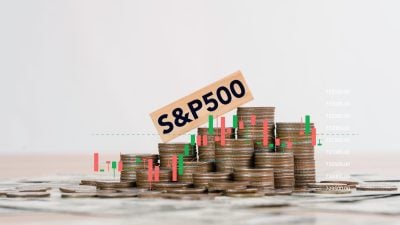
Investors who buy the best-known S&P 500 fund pay the highest fee in the group. The State Street SPDR S&P 500 ETF Trust (NYSEARCA:SPY) has an expense ratio of 0.0945%, according to State Street’s fact sheet dated March 17, 2026.
The Vanguard S&P 500 ETF (NYSEARCA:VOO) charges 0.03%, per Vanguard’s fact sheet dated March 25, 2026. The iShares Core S&P 500 ETF (NYSEARCA:IVV) also charges 0.03%, per its SEC prospectus dated July 31, 2026.
Same 500 Companies, Three Different Tickers
SPY tracks the S&P 500. IVV’s prospectus says the fund seeks to track “an index composed of large-capitalization U.S. equities”, and that index is the S&P 500. VOO is the ETF share class of Vanguard 500 Index Fund. All three are passive funds, so the index’s rules decide what each one has.
State Street’s March fact sheet shows how top-heavy that index is. NVIDIA (NASDAQ:NVDA | NVDA Price Prediction) was the largest position at roughly 8% of SPY’s assets, with Apple (NASDAQ:AAPL) next at about 7%. The rest of the top ten were also mega-cap stocks, so whichever of the three funds you own, you get that same concentration.
Vanguard’s semi-annual report for the six months ended June 30 lists 519 holdings.
Information technology made up 38% of net assets, and turnover was just 1%. The count runs above 500 because a few companies appear through two share classes (i.e., Google).
All three funds follow the same component list at the same market-cap weights. With the portfolio effectively identical, cost and structure are the real points of comparison.
What Each Fund Charges, Document by Document
SPY’s 0.0945% comes from State Street’s March 17, 2026 fact sheet. State Street’s fund page lists the same 0.0945% gross expense ratio this month.
Vanguard’s March 25, 2026 fact sheet lists VOO’s fee at 0.03%. The fund’s semi-annual report sets the six-month cost of a hypothetical $10,000 investment at approximately $2, or 0.03% annualized.
IVV’s 0.03% comes from the prospectus filed with the SEC and dated July 31, 2026. The fee table shows a 0.03% management fee and 0.00% in other expenses. That’s because BlackRock Fund Advisors pays nearly all of the fund’s operating costs under its advisory agreement. The headline fee is close to the full annual cost.
Whatever the gap is, it applies to every dollar invested, every year, and it compounds for anyone who holds for the long term.
Why the Priciest Fund Still Dominates Trading
SPY began trading on January 22, 1993, and State Street reports about $819 billion in assets under management as of October 6. After three decades as the default S&P 500 trading vehicle, it offers the tightest bid-ask spreads and the deepest options market of any S&P 500 ETF.
The options chain shows that market’s size. On October 6, same-day contracts traded about 5.1 million calls and 4.2 million sets.
Listed expirations run through January 2029, and the October 16 expiration had put open interest of about 2.2 million contracts.
That depth matters to a pension fund hedging a stock portfolio or a desk moving large blocks during the day. For those users, that trade-off can pay off. A tighter spread on every share, plus the ability to hedge with options on the exact fund they hold, can be worth more than the annual fee. The expense ratio accrues daily, so someone who holds for only a few days pays almost none of it. For that job, SPY’s liquidity is the main draw.
How SPY’s Trust Structure Handles Dividends
SPY is organized as a unit investment trust, an older structure than the open-end funds behind VOO and IVV. According to its prospectus, the trust holds dividends from its holdings in a non-interest-bearing account until the quarterly payout. The SEC-filed prospectus also says no dividend reinvestment services are provided by the Trust.
The latest distribution shows how long that cash can wait. SPY’s quarterly payment of about $1.89 per share went ex-dividend on September 18 and pays on October 30. Until it’s paid out, that money sits outside the market.
As open-end funds, VOO and IVV can reinvest dividends internally before they’re distributed. IVV’s statement of additional information also describes a securities lending program in which BlackRock limits the collateral investment fees the fund pays, and the lending income helps offset costs.
Who Should Care About 0.0945% Versus 0.03%
A buy-and-hold investor pays the expense ratio every year the position stays open, and it’s one of the few investment costs you know in advance. Over several decades, the fee gap compounds against a growing balance, and a long-term holder who never trades options or moves large size gets nothing in return for SPY’s higher fee.
A trader holding for days is in the reverse position. The annual fee shows up, while spreads and options access affect every trade.
VOO and IVV charge the same fee, so the choice between them comes down to where you invest. VOO fits Vanguard brokerage customers, and its parent 500 Index Fund held more than $1.6 trillion across all share classes at midyear. IVV is the overlooked choice. Retail investors know it less well than the other two, yet its N-PORT filing showed about $888 billion in net assets at the end of June. It also slots easily into iShares Core portfolios and BlackRock model allocations.
Matching the Fund to the Job
Long-term investors get the same S&P 500 exposure from VOO or IVV at the lower fee, and the choice between those two depends on which brokerage holds the account. SPY’s higher fee makes sense for traders, hedgers, and institutions that rely on its liquidity and options market. Before buying any of the three, check the issuer’s most recent fee disclosure.
Contact [email protected] for any questions or corrections.
Ryne Mauck is an investment writer covering exchange-traded funds, retirement planning, and portfolio strategy. Through his work at 24/7 Wall St. and other investment platforms, including Seeking Alpha, he aims to provide clear, research-driven insights that help investors make more informed decisions while maintaining a long-term approach to investing.
Ryne holds a B.Sc. in Finance and an M.A. in Political Science. He is a formerly registered Municipal Advisor Representative and has passed the Series 50, Series 63, and Series 65 exams. His articles are not intended to be, nor should they be interpreted as, financial advice.