Nvidia Is the Biggest Bet in Your Index Fund. Here’s What Its Drop Just Cost You
One chip stock sank on a morning with no company news, and your 401(k) felt it in three different funds at once. Check how much of your "diversified" portfolio quietly rides on a single ticker.

This post may contain links from our sponsors and affiliates, and Flywheel Publishing may receive compensation for actions taken through them.
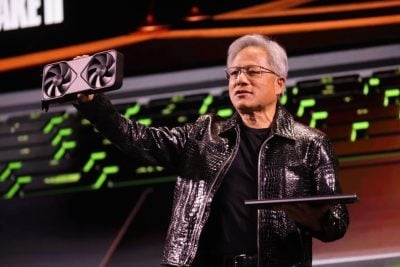
Nvidia (NASDAQ:NVDA | NVDA Price Prediction) shares fell 5.23% to $189.67 in early trading Thursday, down from $200.13 at the start of the session. The decline came during a second straight day of AI and chip selling after the Democratic sweep in the midterm elections, as investors considered the chance of more regulation of the AI and data center buildout. Same-day coverage tied the move to that sector-wide pressure, and no company-specific announcement was attached to it.

If you hold an S&P 500 or Nasdaq-100 index fund in a 401(k), Nvidia is the single largest stock in it. That makes a mid-single-digit drop in one company a significant hit to a fund many savers treat as diversified. Riding an AI-led market this concentrated is fine as long as you plan the exit, which is the whole point of our free bubble survivor’s handbook.
How Big Nvidia Is Inside Your Index Fund
The latest reported holdings put Nvidia at the top of three widely held funds. The last column estimates the share of each fund’s move that came from Nvidia alone, using today’s 5.23% decline.
| Fund | NVDA Weight (As Of) | Today’s Fund Moves | Drag From NVDA |
|---|---|---|---|
| SPDR S&P 500 ETF Trust (NYSEARCA:SPY) | 7.58% (Mar. 17, 2026) | -1.81% | about 0.40 points |
| Invesco QQQ Trust (NASDAQ:QQQ) | about 7.6% (June 30, 2026) | -3.89% | about 0.40 points |
| VanEck Semiconductor ETF (NASDAQ:SMH) | about 17.5% (June 30, 2026) | -7.04% | about 0.92 points |
Why a Moderate Drop in a Giant Hits Harder
Nvidia’s slide is smaller than the semiconductor fund’s 7.04% drop, meaning several other chip names fell more. Weight is what matters to your balance. A stock with a 0.5% weight falling 15% takes off just 0.075 points from a fund. Nvidia’s smaller percentage move takes off about 0.40 points from SPY.
In dollar terms, a saver with $250,000 in an S&P 500 fund lost roughly $991 on paper from Nvidia alone this morning, before considering any other holdings.
Overlap Can Triple Your Exposure
Overlap happens when several funds in your account own the same stocks. A common 401(k) mix of an S&P 500 fund, a growth or Nasdaq-100 fund, and a tech or semiconductor fund holds Nvidia in all three. The AI exposure runs deeper than Nvidia, too. QQQ’s reported top holdings also include other chipmakers weighted at about 5.6%, about 4.1%, and about 2.8%. When AI stocks sell off together, those positions fall together.
Over the recent stretch, QQQ is down 8.35% over the past week, and SMH is down 17.42%, while SPY is down 2.51%. For context, SPY remains up 10.41% year to date, and SMH is up 30.16%, while Nvidia itself is up only 1.94%.

Fundamentals Behind the Selling
Nvidia’s most recent quarter delivered revenue of $96.22 billion, up 105.8% year over year, and the company guided third-quarter revenue to $108.0 billion, plus or minus 2%. Management also highlighted pressure points: CFO Colette Kress said memory price increases have “exceeded our prior expectations and [are] headed even higher into next year,” and CEO Jensen Huang addressed Nvidia’s financing support for AI labs directly: “We recognize the scale of this support, and we know some will call this circular financing.” A shift in Washington’s approach to the data center expansion would add another variable to that spending cycle.

What Retirement Savers Should Check Now
- Look through to the 10 biggest holdings of every fund in your plan. Fund fact sheets list them.
- Add up your single-stock exposure across funds. Two funds at about 7.6% each, plus a semiconductor fund near 17.5%, can add up to a larger single-stock stake than you intended.
- Check target-date funds too. Their U.S. stock portions usually track broad indexes that carry the same top holdings.
- Review your rebalancing schedule. Savers close to retirement have less time to recover from a sector-wide drawdown.
- Keep an eye on the stock into Nvidia’s next earnings report, which will show whether it delivered on its $108.0 billion guidance.

Contact [email protected] for any questions or corrections.
Ryne Mauck is an investment writer covering exchange-traded funds, retirement planning, and portfolio strategy. Through his work at 24/7 Wall St. and other investment platforms, including Seeking Alpha, he aims to provide clear, research-driven insights that help investors make more informed decisions while maintaining a long-term approach to investing.
Ryne holds a B.Sc. in Finance and an M.A. in Political Science. He is a formerly registered Municipal Advisor Representative and has passed the Series 50, Series 63, and Series 65 exams. His articles are not intended to be, nor should they be interpreted as, financial advice.