Nvidia Just Jumped More Than 30%. A 66-Year-Old Who Moved $500,000 Out of VOO on Friday Missed a Five-Figure Day

This post may contain links from our sponsors and affiliates, and Flywheel Publishing may receive compensation for actions taken through them.
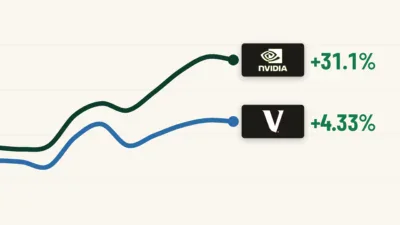
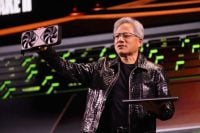
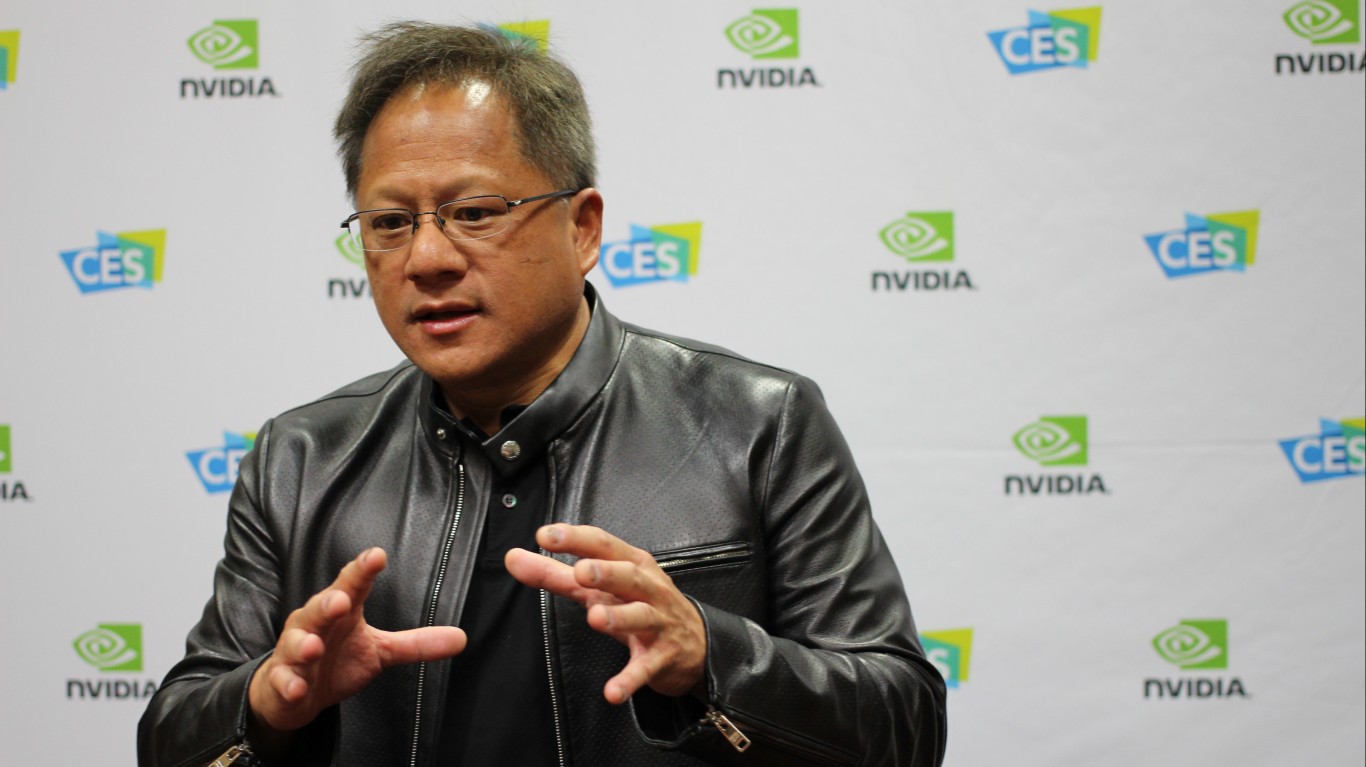
Shares of NVIDIA (NASDAQ:NVDA | NVDA Price Prediction) are up 31.1% at $164.57 as of 12:43 PM ET on Monday, Nov. 23. The catalyst is a leadership reversal. In a company announcement, NVIDIA said its board had reinstated Jensen Huang as president, CEO, and board director. According to Barron’s, the reinstatement followed direct intervention that President Donald Trump said was his own, and CNBC reported that Trump told the network, “I made the deal.” Today’s jump recovers only part of a steep slide. NVIDIA is still down 25.86% over the past month.

Take a hypothetical investor: a 66-year-old who moved $500,000 out of the Vanguard S&P 500 ETF (NYSEARCA:VOO) at Friday’s close. The Vanguard S&P 500 ETF is up 4.33% from Friday’s close as of 12:44 PM ET. On a $500,000 position, that works out to about $21,650 in a single session. Before today, the fund had fallen 4.37% over the past week, and a slide like that is exactly what tempts investors to step aside.
NVIDIA’s Weight Drove More Than Half of VOO’s Day
NVIDIA made up 7.58% of the Vanguard S&P 500 ETF as of Oct. 31, 2026. Because the fund weights companies by market value, a $3.97 trillion company moves the whole portfolio.
Here are rough estimates based on that Oct. 31 weight and the intraday moves at the times above:
- NVIDIA added about 2.36 percentage points to the fund’s move.
- That is roughly 54% of the fund’s total gain today.
- About $11,787 of the hypothetical retiree’s missed gain came from NVIDIA alone.
NVIDIA’s weight has likely changed since Oct. 31 as its share price fell and then rebounded, so treat these figures as estimates. The wider rally supplied the rest of the gain. One stock at that weight can drive a large part of an S&P 500 fund’s day. Today that concentration works in index investors’ favor. During NVIDIA’s monthlong decline, it worked against them.
Overlapping Funds Stack Up NVIDIA Exposure
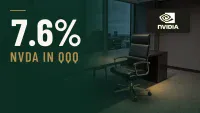
Many retirement portfolios hold more than one index fund, and the overlap adds up. In the Invesco QQQ Trust (NASDAQ:QQQ), NVIDIA was the largest holding at about 7.6%[1] of net assets as of June 30, 2026. The Nasdaq 100 was up 6.99% around 1 PM ET, and the technology sector led the market with a gain of 8.88%. Total-market funds, technology sector funds, and semiconductor funds also hold NVIDIA. An investor who owns several of these alongside the Vanguard S&P 500 ETF has more exposure to one company than any single fund’s label suggests. For readers looking to spread AI exposure beyond the chipmaker that already dominates every index fund, we profiled seven suppliers behind the data-center expansion, from power to cooling, in a free report here. The Vanguard S&P 500 ETF charges an expense ratio of 0.03%, which keeps it a low-cost core holding, though concentration risk remains regardless of fees.
Strong Earnings Didn’t Stop the Slide
The selloff came even as the business kept growing. For the third quarter of fiscal 2027, NVIDIA reported revenue of $115.84 billion[2], up 103.2% year over year. Non-GAAP EPS was $2.68[2], beating the $2.47 consensus estimate. The company guided fourth-quarter revenue to $130.0 billion, plus or minus 3%[2]. Colette Kress, then interim CEO, told analysts on the earnings call, “Our momentum is real.”[3] This pattern suggests the decline was driven more by leadership uncertainty than demand, and today’s move reverses part of that discount.

What One Missed Day Means for a Retirement Plan
Some of the market’s biggest single-day gains tend to arrive soon after sharp declines. That means stepping out after a drop risks missing the rebound. This is a general pattern, and it doesn’t guarantee how any particular week will play out.
There is another side. A 66-year-old may have sound reasons to cut stock exposure, such as upcoming income needs, a lower tolerance for losses, or a plan to rebalance as retirement approaches. A large loss early in retirement can do permanent damage to a portfolio that is also funding withdrawals. Rather than fixating on any single session’s result, ask whether the change fits a written plan or was a reaction to a rough week.
What to Keep an Eye On
Even with Huang back, the problems remain, Barron’s noted. Investors will want to see how the board addresses the independent committee investigation the company disclosed with its third-quarter results. Vanguard’s next holdings update will show how far NVIDIA’s weight in the fund has changed since Oct. 31. NVIDIA’s next quarterly dividend of $0.25[2] is payable on Dec. 23. For index investors, the main takeaway is that a single company now does a lot to set the daily direction of a wider S&P 500 fund.

Contact [email protected] for any questions or corrections.
Ryne Mauck is an investment writer covering exchange-traded funds, retirement planning, and portfolio strategy. Through his work at 24/7 Wall St. and other investment platforms, including Seeking Alpha, he aims to provide clear, research-driven insights that help investors make more informed decisions while maintaining a long-term approach to investing.
Ryne holds a B.Sc. in Finance and an M.A. in Political Science. He is a formerly registered Municipal Advisor Representative and has passed the Series 50, Series 63, and Series 65 exams. His articles are not intended to be, nor should they be interpreted as, financial advice.