The Chip Selloff Just Hit SOXL Holders Hard. Here’s What It Cost a $10,000 Position
One bad morning in semiconductors turned a tidy SOXL position into a painful lesson about daily resets and borrowed exposure. Election jitters and a weak forecast set it off, and the damage ran deeper than a single session.

This post may contain links from our sponsors and affiliates, and Flywheel Publishing may receive compensation for actions taken through them.

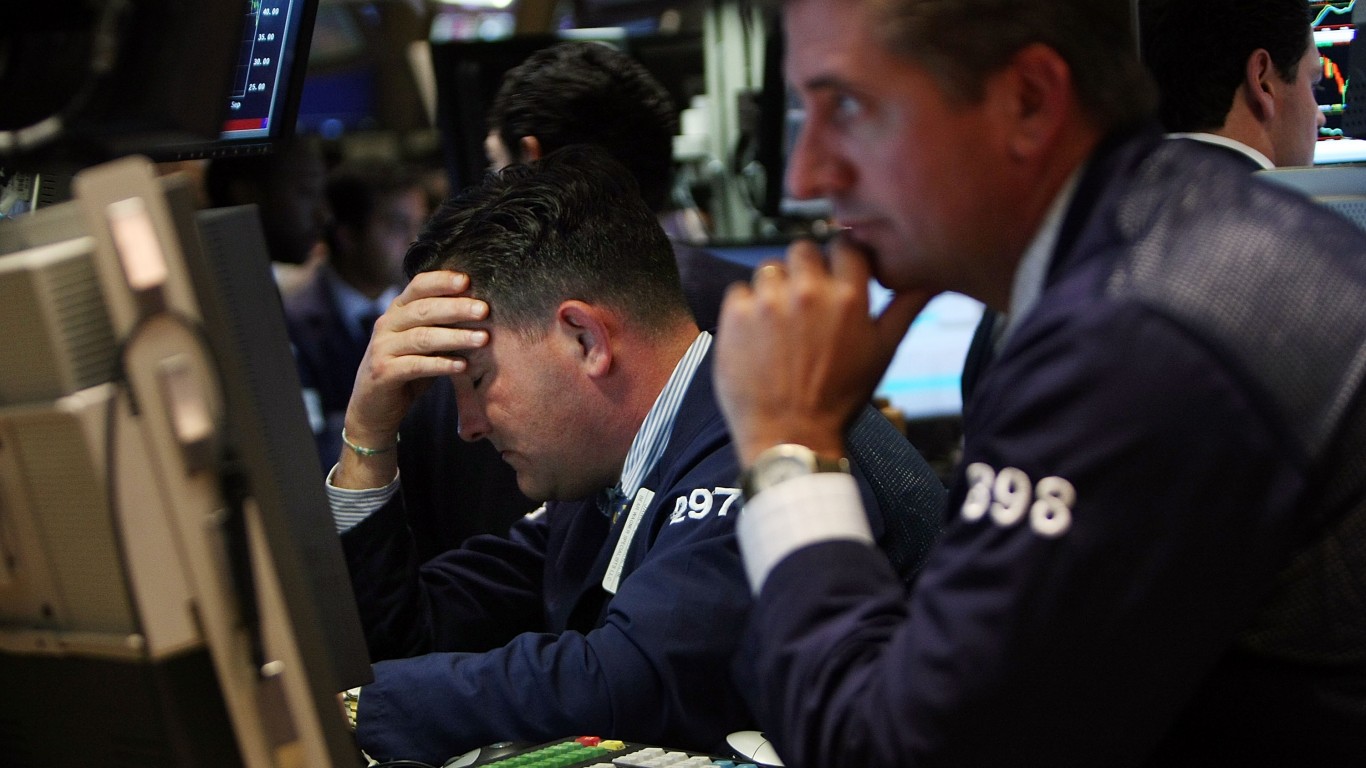
Thursday’s chip-stock selloff knocked the Direxion Daily Semiconductor Bull 3X ETF (NYSEARCA:SOXL) down 25.93% as of 11:29 AM ET. If you held $10,000 of the fund at Wednesday’s close, it was worth $7,407 by late morning. That’s a loss of $2,593 before lunch.
That example assumes the position was worth exactly $10,000 at Wednesday’s close. The prior close, meaning the last price when trading ended Wednesday, was $66.68. As of 11:29 AM ET on November 5, 2026, a delayed quote showed SOXL at $49.39. These are intraday figures, so the move could look different by the close.
Election Fears and a Weak Forecast Hit Chip Stocks at Once
24/7 Wall St. reported this morning that chipmakers were continuing a selloff. The worry is Democratic control of both chambers. After the November 3 midterms, the fear is that Democratic state officials could tighten AI rules and slow data center construction.
In morning trading, 24/7 Wall St. reported chip stocks fell. Advanced Micro Devices (NASDAQ:AMD | AMD Price Prediction) was down 13%, NVIDIA (NASDAQ:NVDA) was down 7%, Intel was down 8%, and Broadcom (NASDAQ:AVGO) was down 6%.
Earnings news made it worse. CNBC reported that Qualcomm (NASDAQ:QCOM) slipped 9% after issuing a light forecast, which pulled chip stocks lower. According to CNBC, peers fell on post-election concerns of a data center slowdown as Democrats indicated plans for AI regulation.
Why a Triple-Leveraged Fund Falls So Much Faster
The fund’s name spells out what it does. SOXL is a Direxion daily 3X bull fund on semiconductors. A leveraged ETF uses borrowed exposure, mostly through derivative contracts, to amplify returns. This one aims to deliver three times one day’s move in its benchmark.
The fund resets every day, rebuilding its triple exposure from whatever value it starts that day with. Over a single session, the result should land near three times the benchmark’s daily move, though it won’t always match exactly. Over weeks or months, those daily resets compound, so results can end up far from three times what the benchmark did over longer periods. Choppy markets make that gap bigger.
The leverage comes from more than just stock holdings. As of July 31, 2026, the fund’s latest portfolio filing showed NVIDIA, AMD, and Broadcom among its largest named stock positions. The same filing showed large short-term investments and derivative positions alongside those shares, and that mix of stocks and contracts is how the fund gets its leverage.
Gains Built This Year Are Disappearing Fast
Thursday’s drop, which CNBC tied to post-election concerns, caps a rough period: from October 28, 2026 through the 11:29 AM ET price, SOXL fell 53.99%. Since October 5, 2026, it’s down 69.93%.
What a $10,000 Position Reveals About Daily Leverage
SOXL is built for short-term trading. Traders use it to amplify a view on chip stocks over a day or a few days, and as Thursday shows, one bad day in the sector can sharply reduce the value of a position. That matters a lot if you’re near retirement and can’t easily wait for a recovery.
The $10,000 example is the clearest way to see what daily triple leverage means on a bad day. Moves of 6% to 13% in some of the biggest chip names helped turn $10,000 into $7,407 within one morning. For long-term holders of SOXL, the daily reset can shape results over months or years.
The first thing to watch is where SOXL closes Thursday compared with the $49.39 intraday price. After that, chip investors will be watching for concrete AI policy proposals from the new Congress or state officials, and for whether Qualcomm’s light forecast shows up in other chipmakers’ upcoming earnings reports.
Contact [email protected] for any questions or corrections.
Ryne Mauck is an investment writer covering exchange-traded funds, retirement planning, and portfolio strategy. Through his work at 24/7 Wall St. and other investment platforms, including Seeking Alpha, he aims to provide clear, research-driven insights that help investors make more informed decisions while maintaining a long-term approach to investing.
Ryne holds a B.Sc. in Finance and an M.A. in Political Science. He is a formerly registered Municipal Advisor Representative and has passed the Series 50, Series 63, and Series 65 exams. His articles are not intended to be, nor should they be interpreted as, financial advice.