Same Nvidia Selloff, Opposite Bets. Here’s How Two 2× ETFs Fared

This post may contain links from our sponsors and affiliates, and Flywheel Publishing may receive compensation for actions taken through them.
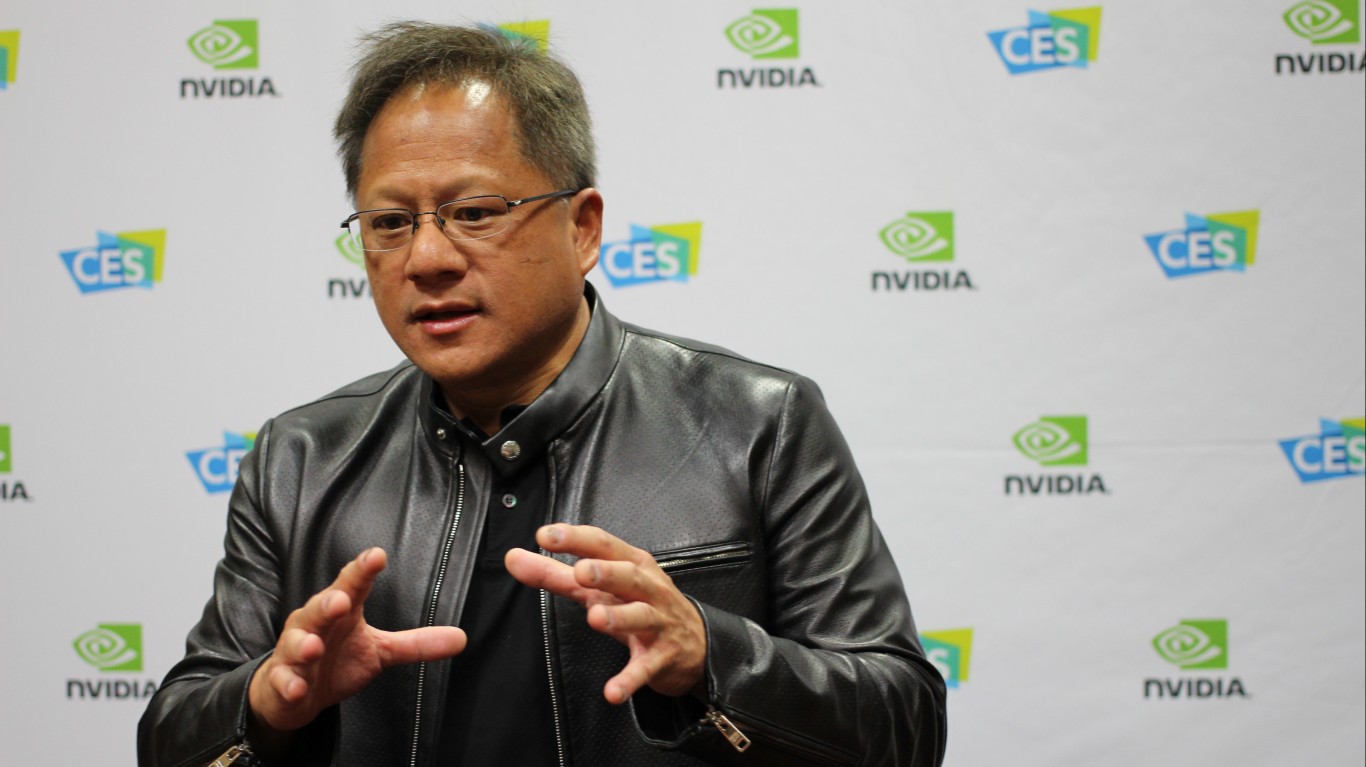
Shares of NVIDIA (NASDAQ:NVDA | NVDA Price Prediction) fell 4.34% on Thursday, sliding from $173.73 to $166.19 as of 4:06 p.m. ET, after the board announced that Jensen Huang had resigned as President, Chief Executive Officer, and a member of the Board, effective immediately. CFO Colette Kress agreed to serve as Interim Chief Executive Officer. The announcement came after reports that Huang had a relationship with a businesswoman whom U.S. intelligence officials suspected of spying for China, according to Reuters. Beijing denied the allegation. The New York Times separately reported that Huang had a relationship with an NVIDIA executive who reported directly to him.
For investors in two leveraged single-stock funds, the same headline produced opposite results. The T-Rex 2X Long NVIDIA Daily Target ETF (CBOE:NVDX), which aims for twice Nvidia’s daily return, fell 8.99% to $10.43. The GraniteShares 2x Short NVDA Daily ETF (NASDAQ:NVD), which aims for twice the inverse of Nvidia’s daily return, rose 9.03% to $6.40. Both fund prices are as of 4:05 p.m. ET.

| Security | Daily Objective | Thursday Move | One-Month Return |
|---|---|---|---|
| NVDA | Underlying stock | -4.34% | -27.28% |
| NVDX | 2x daily return | -8.99% | -49.25% |
| NVD | -2x daily return | +9.03% | +77.29% |
A Month-Long Slide Shows Why 2x Rarely Means 2x
Thursday ended a rough stretch. Nvidia has dropped about 27.28% since its October 13 close of $228.52, trading near its 52-week low of $163.90. Simply doubling that decline points to roughly 54.55%. NVDX lost less than that, and NVD gained far more.

The reason is the daily reset. Each fund rebalances every session to target 2x (or -2x) of that day’s move, so returns compound day by day. In a steady downtrend, NVDX’s losses come off a shrinking base while NVD’s gains build on a growing one. This month’s persistent slide worked in favor of both funds relative to simple math.
Choppy markets flip that effect. If a stock rises 10% and then falls 10%, it ends down about 1%. A 2x fund tracking those same two days rises 20% and falls 20%, ending down about 4%. That gap is volatility drag, and it hits both long and short funds.
The year-to-date figures show it clearly. Nvidia is down about 10.68% since December 31, 2025, yet NVDX is down 39.08% and NVD is down 10.49%. Investors on both sides lost money in a year when the stock moved modestly. Over a longer window, NVD’s adjusted price has fallen 98.61% since August 22, 2023.
Short-Term Trading Tools Carrying Steep Costs
These funds are built for single-day moves. They are short-term trading instruments, and holding them for weeks can produce results far from what an investor expects. Costs run high for that reason. NVDX lists a 1.05% gross and net expense ratio in its prospectus dated November 6, 2026. NVD shows a 1.42% gross and 1.30% net expense ratio in its prospectus dated October 28, 2026.
The bigger danger is a single severe session. Nvidia carries a beta of 2.247, meaning it has historically swung more than the broad market. Because each fund doubles the daily move, one large bad day in Nvidia can erase most of a leveraged fund’s value, leaving little capital to recover.
What Retirement Savers Actually Felt Thursday
Most index fund holders felt this selloff through ordinary vehicles: S&P 500 funds, Nasdaq-100 trackers and technology or semiconductor ETFs. In those funds, Nvidia is a large weight, often limited by index weighting rules, and it sits alongside dozens or hundreds of other holdings. In our view, that structure reduced Thursday’s drop for the typical 401(k) or IRA investor, even though Nvidia’s size means the hit was still noticeable in tech-heavy portfolios.
Leveraged single-stock funds remove that cushion and amplify moves in both directions. Thursday’s mirror-image results look tidy on one day, but the month and year-to-date numbers suggest that time and volatility can turn both sides into losers.
Next on the calendar: Nvidia is scheduled to report third-quarter fiscal 2027 results on Tuesday, November 17, with its first earnings call under interim leadership. CNBC also reported that Huang agreed to testify before Congress before Thanksgiving. Either event could produce the kind of outsized single-day move that leveraged fund holders feel twice over.
Contact [email protected] for any questions or corrections.
Ryne Mauck is an investment writer covering exchange-traded funds, retirement planning, and portfolio strategy. Through his work at 24/7 Wall St. and other investment platforms, including Seeking Alpha, he aims to provide clear, research-driven insights that help investors make more informed decisions while maintaining a long-term approach to investing.
Ryne holds a B.Sc. in Finance and an M.A. in Political Science. He is a formerly registered Municipal Advisor Representative and has passed the Series 50, Series 63, and Series 65 exams. His articles are not intended to be, nor should they be interpreted as, financial advice.