NVDL 2X NVIDIA ETF Sinks 9% as NVIDIA Falls 4% on Jensen Huang Fallout Ahead of Earnings; AMD Drops 5%

This post may contain links from our sponsors and affiliates, and Flywheel Publishing may receive compensation for actions taken through them.
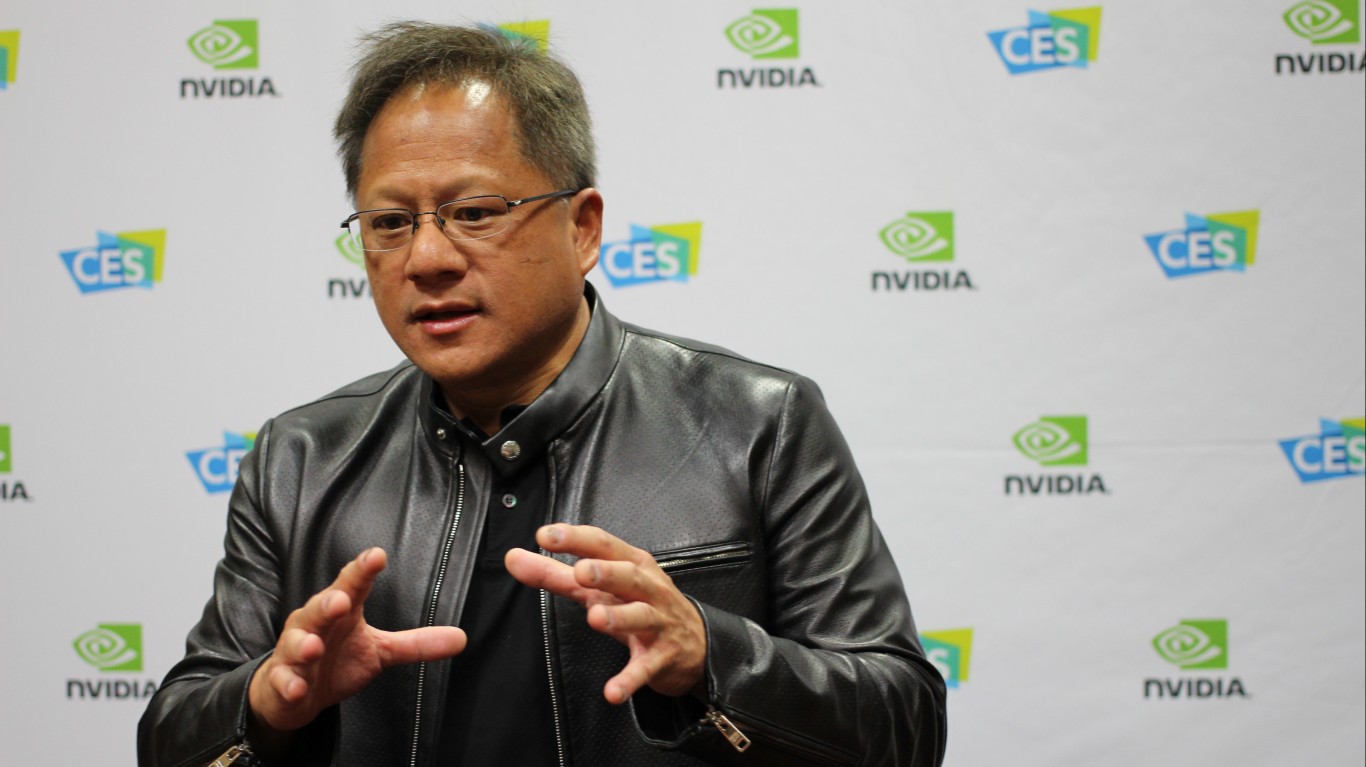
Leveraged exposure to NVIDIA (NASDAQ:NVDA | NVDA Price Prediction) is taking an oversized hit as the chipmaker extends its slide on the fallout from Jensen Huang’s resignation as CEO. The GraniteShares 2x Long NVDA Daily ETF (NASDAQ:NVDL) is at $16.21, down 9% in afternoon trading. The fund targets 2x NVIDIA’s daily return, so it amplifies every move in the stock.
NVIDIA stock is at $155.60, down 4%. The ETF’s drop is what a daily 2x fund is designed to deliver when its underlying stock falls. Earnings calendar data lists NVIDIA’s Q3 FY2027 report for November 17 after the close, and it’ll be the company’s first report since Huang’s exit.
AI and chip stocks are sliding to start the week, with technology the weakest sector as the S&P 500 falls 1.7%. NVIDIA led AI stocks lower ahead of its earnings, a reminder that the AI trade reaches well beyond the chipmakers (we rounded up seven power, cooling, and networking names behind the data-center expansion in a free report here).
Huang’s Exit and Comeback Reports Shake NVIDIA Before Earnings
NVIDIA announced on November 12 that Huang was stepping down as CEO of the chipmaker he co-founded, and finance chief Colette Kress was named interim CEO. Huang’s departure followed reports about his personal conduct, including China-related allegations that remain unverified. Huang denied that he had compromised national security or company secrets.
Separately, the Financial Times reported on November 15 that Huang has spoken with allies about returning as NVIDIA’s CEO, citing anonymous sources. That report isn’t confirmed, and it leaves the company’s leadership picture muddier heading into its quarterly results.
NVIDIA’s last quarter set a high bar. The company disclosed on August 26[1] that its Q2 FY2027 revenue rose 105.8% year over year (YoY) to $96.22 billion, and it guided its Q3 revenue to $108 billion, plus or minus 2%.

NVDL Losses Compound Faster Than NVIDIA’s Slide
Across five trading days, the GraniteShares ETF is down 32%, while NVIDIA stock is down 17%. On a one-month basis, the fund has fallen 53% against a 30% decline for the chipmaker. Year to date (YTD), the ETF is off 45%, compared with a 16% drop in NVIDIA stock.
Those gaps come from the daily reset. Each session, the fund rebalances to deliver twice that day’s NVIDIA move, so the next session’s return works off whatever capital is left, and when NVIDIA falls and then bounces, the fund’s doubled loss leaves a smaller base, and its doubled rebound recovers less ground. Over months of swings, that drag can push a daily 2x fund’s decline past twice the stock’s, as the YTD figures show.
Trading activity shows how heavily the fund is in use. The ETF’s volume reached 29,407,620 shares in partial-day trading, following 133,080,184 shares on November 12, the day Huang’s resignation was announced. GraniteShares lists a net expense ratio of 1.64%[2] in the fund’s prospectus. The product is built for short-term trading given how its daily reset distorts longer-term results.
AMD Falls Harder Than NVIDIA as Chip Selloff Spreads
Advanced Micro Devices (NASDAQ:AMD) stock is at $505.32, down 5%, a larger decline than NVIDIA’s. That figure suggests the selloff extends beyond NVIDIA’s leadership, as AMD slides alongside the broader chip group.
AMD’s business has momentum of its own. The company disclosed on November 3[3] that its Q3 2026 revenue rose 44.7% YoY to $13.38 billion. CEO Lisa Su stated, “We delivered a record quarter with revenue exceeding the high end of our guidance as Data Center segment sales nearly doubled year-over-year.”[3]
How NVIDIA, AMD and the GraniteShares ETF Differ
NVIDIA sells a full AI factory platform. It covers graphics processing units (GPUs), central processing units (CPUs), networking, systems and software, and its data center business drives the bulk of its results. A broader mix defines AMD, which pairs Instinct accelerators and EPYC server processors with Ryzen PC chips, Radeon gaming graphics and embedded products, plus its open ROCm software stack.
The GraniteShares ETF is a trading vehicle that resets daily to deliver twice NVIDIA’s return, linking its results to a single stock and the path that stock takes. That structure leaves the fund more exposed to NVIDIA leadership headlines than AMD, whose diversified product lines spread its risk.
NVIDIA Earnings Put NVDL’s Leverage to the Test
NVIDIA’s next test is whether its November 17 report and interim leadership can steady confidence after Huang’s exit. A strong quarter backed by firm guidance could spark a rebound that the GraniteShares fund would amplify, while further leadership turmoil or a softer outlook could extend the losing streak, with the ETF doubling each daily drop.

Huang’s reported comeback talk adds a second variable for NVIDIA, since a return could reassure some shareholders and worry others. Volatility in NVDA stock and the leveraged fund could stay elevated until NVIDIA’s leadership question resolves.
Contact [email protected] for any questions or corrections.
David Moadel is financial writer specializing in stocks, ETFs, options, precious metals, and Bitcoin. David has written well over 1,000 articles for leading online publications, helping investors understand markets, income strategies, and risk. His work has appeared in 24/7 Wall St., The Motley Fool, InvestorPlace, U.S. News & World Report, TipRanks, ValueWalk, Benzinga, Market Realist, MarketScreener, TalkMarkets, Finmasters, and others. With a master’s degree in education, David has taught at the elementary, high school, and college levels. That teaching background shapes his writing style: clear, educational, and practical. David has also built a loyal social-media audience by providing trustworthy financial content on YouTube, X/Twitter, and StockTwits.