The Most Boring Monthly Checks on Wall Street: AGG, BND and TLT

This post may contain links from our sponsors and affiliates, and Flywheel Publishing may receive compensation for actions taken through them.
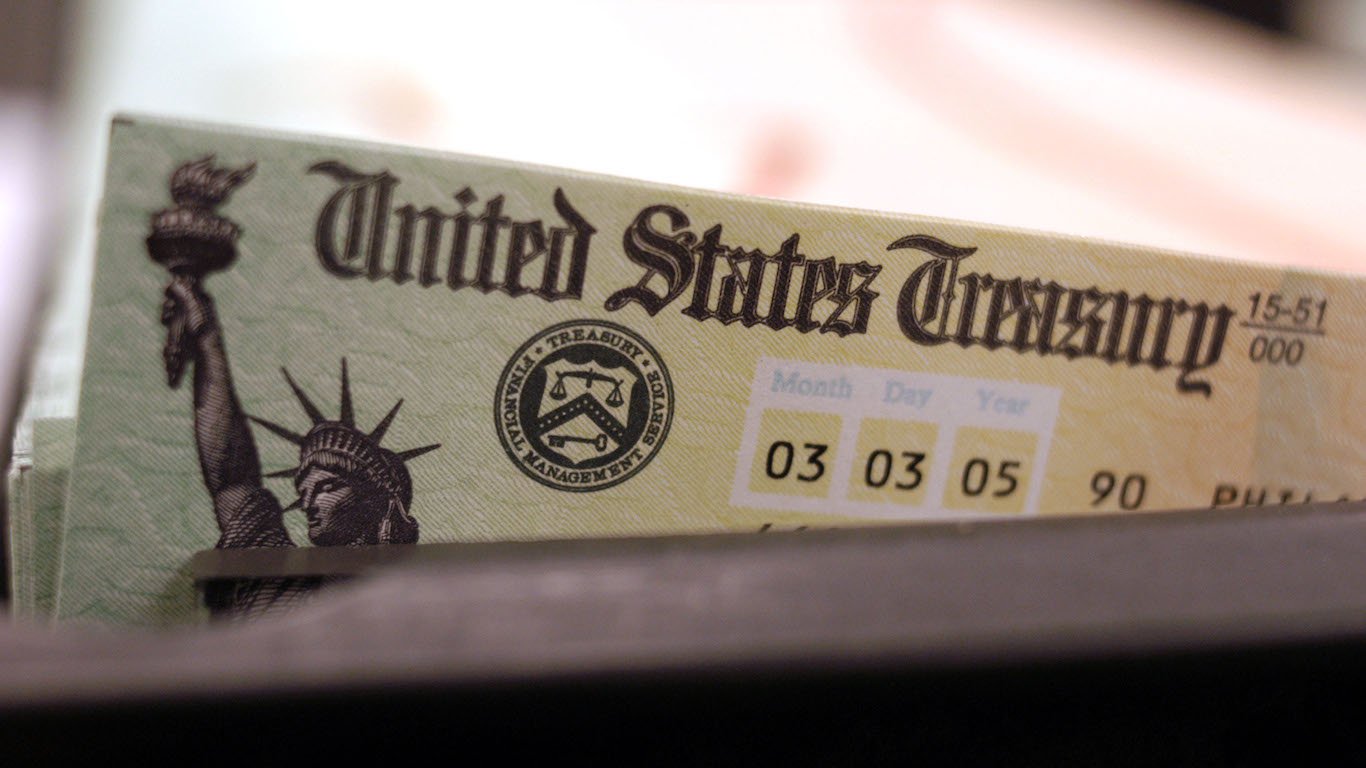
Retirement trades a salary for whatever lands in the brokerage account each month. For that job, a dull check is a compliment. It shows up on schedule and looks almost identical to the last one. Three core bond funds pay this way every month: iShares Core U.S. Aggregate Bond ETF (NYSEARCA:AGG), Vanguard Total Bond Market ETF (NASDAQ:BND) and iShares 20+ Year Treasury Bond ETF (NASDAQ:TLT). We checked how boring their payments really are, using payments with ex-dividend dates from November 19, 2024 through November 18, 2026.
The measure is typical variation, meaning how far a payment typically varies from the fund’s own average. The smaller the figure, the more predictable the payment. Rates make the question timely. The 10-year Treasury yield stood at 5.04% on November 19, 2026, with the 20-year at 5.43% and the 30-year at 5.4%.
Twelve Checks a Year, With a January Gap
Each fund made 24 payments in the window, yet those payments fell in only 22 calendar months. All three pay twice in December and skip January. None had an ex-dividend date in January 2025 or January 2026. AGG paid its extra December 2025 check on December 24, and the next one arrived February 5, 2026. Plan for a double check in December and do not count on one in January.
AGG Earns the Most Boring Title Here
AGG had a typical variation of 2.7%, the lowest of the three. Its smallest check was $0.304188 (ex-dividend March 3, 2025) and its largest was $0.342379 (November 2, 2026). Its trailing 12-month total reached $3.980911 per share, and it has a history of 277 payments.
| Ex-Dividend Date | Payment Date | Amount |
|---|---|---|
| Nov 2, 2026 | Nov 5, 2026 | $0.342379 |
| Oct 1, 2026 | Oct 6, 2026 | $0.334142 |
| Sep 1, 2026 | Sep 4, 2026 | $0.337062 |
| Aug 3, 2026 | Aug 6, 2026 | $0.337568 |
| Jul 1, 2026 | Jul 7, 2026 | $0.330688 |
| Jun 1, 2026 | Jun 4, 2026 | $0.331 |
AGG tracks the Bloomberg U.S. Aggregate, a cross-section of the broad U.S. investment-grade bond market. Its checks have drifted higher as maturing bonds get reinvested at higher current yields.
The hitch: a regular check does nothing to protect the share price. From the October 29, 2021 month-end close, AGG’s price fell 16.7% through November 19, 2026, with a worst drop from a high of -19.6%. Its typical annual price swing, meaning how much the price usually moves over a year based on monthly changes, was 6.5%. These price figures exclude the payments.
BND Covers the Same Market With a Smaller Check
BND had a typical variation of 3.7%. Its checks ranged from $0.21946 (March 3, 2025) to $0.256802 (November 2, 2026), and it has a history of 235 payments on record.
| Ex-Dividend Date | Payment Date | Amount |
|---|---|---|
| Nov 2, 2026 | Nov 4, 2026 | $0.256802 |
| Oct 1, 2026 | Oct 5, 2026 | $0.248502 |
| Sep 1, 2026 | Sep 3, 2026 | $0.2529 |
| Aug 3, 2026 | Aug 5, 2026 | $0.2516 |
| Jul 1, 2026 | Jul 6, 2026 | $0.2445 |
| Jun 1, 2026 | Jun 3, 2026 | $0.247259 |
AGG and BND both hold the broad U.S. investment-grade bond market, so why do the checks differ? BND’s per-share amount is smaller because its shares trade lower: $70.91 versus AGG’s $95.55 on November 19, 2026. Differences in index construction, costs, and how each manager passes interest through each month push the amounts along slightly different paths. BND’s checks also tend to land a day or two sooner.
The catch: BND’s share price fell 17% from the October 29, 2021 close through November 19, 2026, with a worst drop of -19.8% and a typical annual price swing of 6.5%.
TLT Pairs a Steady Check With a Volatile Share Price
TLT had a typical variation of 4.3%, and its record of monthly payments runs back to September 3, 2002. Its latest check was $0.343177, up from $0.311581 the month before. Its August 31, 2026[1] holdings filing had a portfolio of long-term U.S. Treasury bonds plus a small cash fund position.
| Ex-Dividend Date | Payment Date | Amount |
|---|---|---|
| Nov 2, 2026 | Nov 5, 2026 | $0.343177 |
| Oct 1, 2026 | Oct 6, 2026 | $0.311581 |
| Sep 1, 2026 | Sep 4, 2026 | $0.314686 |
| Aug 3, 2026 | Aug 6, 2026 | $0.330454 |
| Jul 1, 2026 | Jul 7, 2026 | $0.31803 |
| Jun 1, 2026 | Jun 4, 2026 | $0.335777 |
The catch: long-term bonds lose the most value as rates rise (and rates have risen). The 10-year yield reached 5.07%[2] on November 18, up 0.95 points from a year earlier. TLT’s share price fell 45.7% from the October 29, 2021 close through November 18, 2026. Its worst drop was -48.7%, measured from the November 30, 2021 close to the September 30, 2026 close, so that low point is recent. Its typical annual price swing was 14.6%, compared with 6.5% for AGG and BND.
Who These Monthly Checks Suit
All three delivered checks that barely change from month to month, with AGG the steadiest of the group. That predictability covers the income alone. It leaves principal exposed to rate moves, and it includes a January gap every year. These funds fit a retiree who values a predictable payment and can accept share price swings, which run widest in TLT.
Building a full monthly income stream out of a lump sum takes more than one line item, though, which is why we laid out the mix, the payment calendar, and the withdrawal order in a free guide here. Long-term Treasury yields deserve close attention. They set the direction for both the size of future checks and the value of the shares that pay them.
Contact [email protected] for any questions or corrections.
Ryne Mauck is an investment writer covering exchange-traded funds, retirement planning, and portfolio strategy. Through his work at 24/7 Wall St. and other investment platforms, including Seeking Alpha, he aims to provide clear, research-driven insights that help investors make more informed decisions while maintaining a long-term approach to investing.
Ryne holds a B.Sc. in Finance and an M.A. in Political Science. He is a formerly registered Municipal Advisor Representative and has passed the Series 50, Series 63, and Series 65 exams. His articles are not intended to be, nor should they be interpreted as, financial advice.