Ukraine Revealed the Future of Warfare—And No One Saw It Coming
Russia’s 2022 invasion of Ukraine was supposed to be a short campaign, but the larger country’s swift victory anticipated by many analysts failed to materialize. Part of the reason for Ukraine’s effective defense was Kyiv’s early warning of the build-up…


Russia’s 2022 invasion of Ukraine was supposed to be a short campaign, but the larger country’s swift victory anticipated by many analysts failed to materialize. Part of the reason for Ukraine’s effective defense was Kyiv’s early warning of the build-up of Russian forces on its border. U.S./allied intelligence warned Kyiv, but another non-government source tipped them off to the impending invasion: commercial imagery, especially Maxar’s optical photos, publicly documented the build-up and the initial invasion, revealing the long convoy heading toward Kyiv on Feb. 27, 2022.
Though optical imagery (e.g., Maxar) was instrumental in warning of the initial attack, all-weather synthetic aperture radar (SAR) became crucial as the war progressed. Because February is often cloudy in Ukraine, SAR became especially valuable for persistent coverage, as it can “spot” threats even in obscured conditions. This article will examine how startups profoundly impacted the early stages of the conflict.
This post was updated on October 14, 2025 to clarify the global space economy value, initial optical imagery warning, SAR use in detecting ice thickness, invaluable use of SAR as the war progressed.
Why This Matters

Innovation has always been a key part of warfare, but it is usually some time before a new idea becomes viable in a military sense. In recent years, startups have emerged to challenge more established names in the defense sector. Washington substantially increased funding for the Defense Innovation Unit (DIU) to harness new ideas more effectively. Lessons drawn from Ukraine and other active conflicts will strongly influence future spending priorities.
The Space Economy

It has become much cheaper to launch a satellite, leading to a huge increase in orbital traffic and the growth of the “space economy.” The latest Space Foundation figures from 2023 put the global space economy at about $630B. The space economy’s rapid growth is primarily driven by private commercial interests. From 2022-23, the number of satellites in space grew by 35%. These orbital assets also have military applications.
Synthetic Aperture Radar
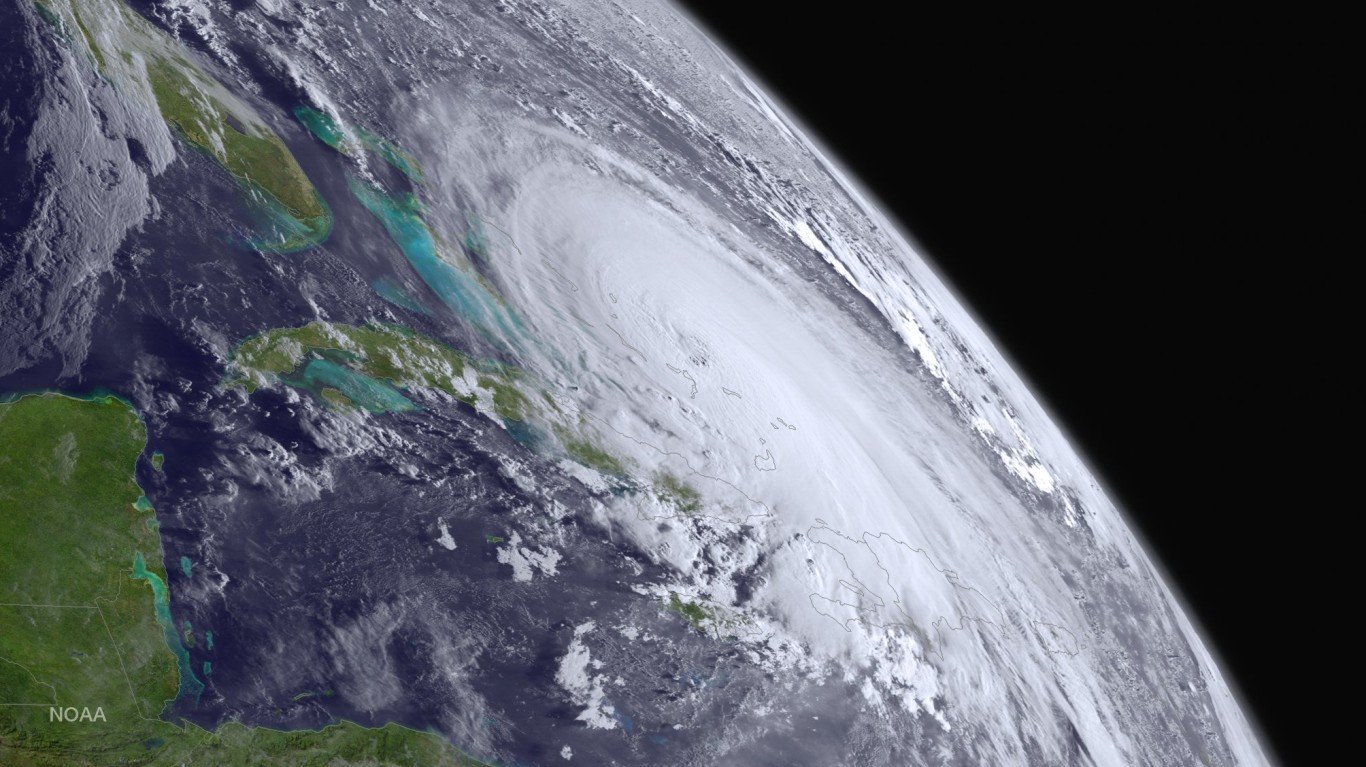
Synthetic aperture radar (SAR) technology has been used in the Russian- Ukrainian conflict. In simple terms, SAR doesn’t “see” objects from space but instead constructs images on the ground from a microwave radar signal. As well as satellites, SAR can be fitted to aircraft.
The idea behind SAR is hardly new. It was first explored in the 1950s and developed for military use in the 1960s. Attempts were made during the Vietnam War but the results were unsatisfactory as it couldn’t distinguish between trees and enemy structures. A major shortcoming in a war fought in the jungle. However, the concept has steadily improved over the years. With reduced costs, private entities have begun to enter the fray.
SAR Startups in Ukraine
Capella Space is one of three startups making their mark on the war between Russia and Ukraine. The others are Umbra Space, and ICEYE, a Finnish company. Umbra hasn’t spoken publicly of its involvement in the Ukraine War, but ICEYE confirmed a deal with the Ukrainian government in August 2022. Ukraine used unspent funds intended for Turkish drones in exchange for data from ICEYE to monitor Russian troops, vehicles, and other military targets. The “People’s Satellite” provided thousands of images, which were used to prepare and execute strikes on Russian targets, causing billions of dollars of damage for a modest price. As an August 2024 report from Ukraine’s Defense Intelligence Directorate noted:
During the period of use of the “people’s satellite” and access to the ICEYE satellite constellation, our specialists took a total of 4173 pictures of enemy objects.
The use of data from commercial satellites in a conflict does raise some important questions for the future. Deliberately attacking civilian objects is a war crime according to the terms of the Geneva Convention. However, the line between a civilian and a military object isn’t clear here. If a commercial entity is being used for military purposes, it might become a legitimate target.
Applications of SAR
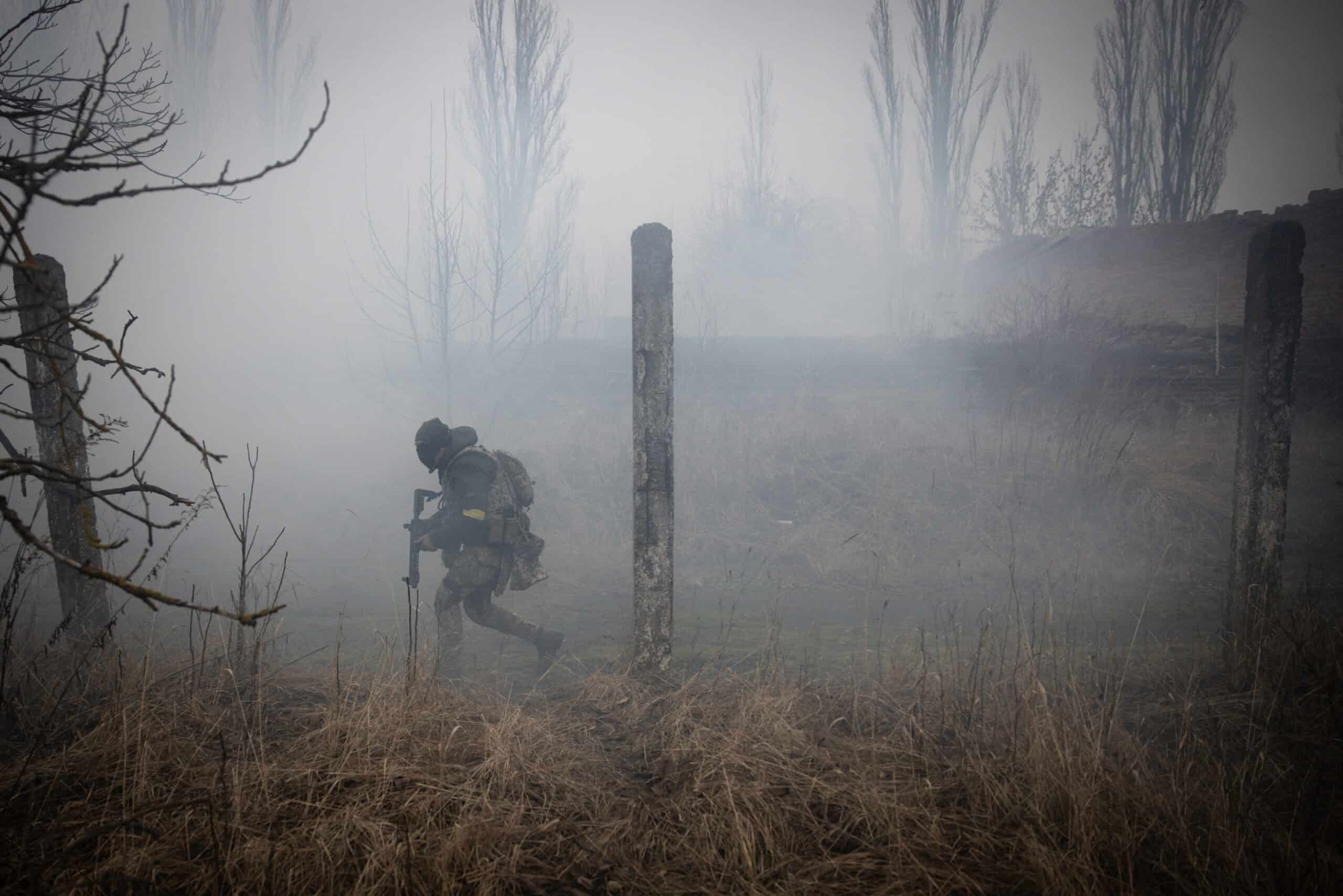
SAR has several civilian applications such as environmental monitoring. It is, for example, excellent for all-weather imaging of sea-ice extent/drift and can support thickness estimates indirectly in combination with other sensors/models, like radar altimetry (e.g., CryoSat-2). This data helps monitor the effects of climate change. Because SAR can see through adverse weather conditions, it can be very valuable for disaster management. There’s also maritime surveillance to protect fish stocks and prevent illegal dumping.
For the military, SAR can provide reconnaissance, target acquisition, and round-the-clock surveillance. Unlike optical satellites, SAR can operate day or night and in any weather conditions. It can also track moving objects on the ground or at sea.
Conclusion
Few experts predicted Ukraine’s military would last more than a few days against a Russian invasion. Fewer still would have guessed a part of Ukraine’s effective resistance came from a crowd-funded satellite purchased from a Finnish startup. The so-called “People’s Satellite” has paid for itself several times over. Synthetic aperture radar can help cut through the fog of war in the most literal sense by providing round-the-clock surveillance of assets that optical satellites are blind to. The versatility and relatively low cost of SAR indicate yet more integration between commercial and military interests in the future.
Contact [email protected] for any questions or corrections.
Michael is a seasoned editor, educator, and writer who has recently begun contributing articles to Flywheel Publishing. He covers many topics, specializing in defense, history, and politics.
A dual UK-US citizen, Michael earned a master’s degree in military history at the University of Wolverhampton. He was awarded the Postgraduate Prize for outstanding academic performance in 2019. He has lived and worked in multiple countries including the United Kingdom, South Korea, and Japan.
He has enjoyed a varied career in academia, editing, writing, and online publishing. He’s written hundreds of articles covering entertainment, history, politics, and sports. As well as 24/7 Wall Street, his work can be found at National Geographic, Ranker, and many others.
When he’s not making complex historical and geopolitical concepts accessible to a wide audience, he unwinds by working out, playing soccer, and conquering the world in grand strategy games.