14 of the Most Expensive Navy Aircraft Ever Produced
Established in 1775, less than one year before the Declaration of Independence was signed, the U.S. Navy is one of the oldest military branches in the United States. It is also one of the largest. As of June 2025, there…

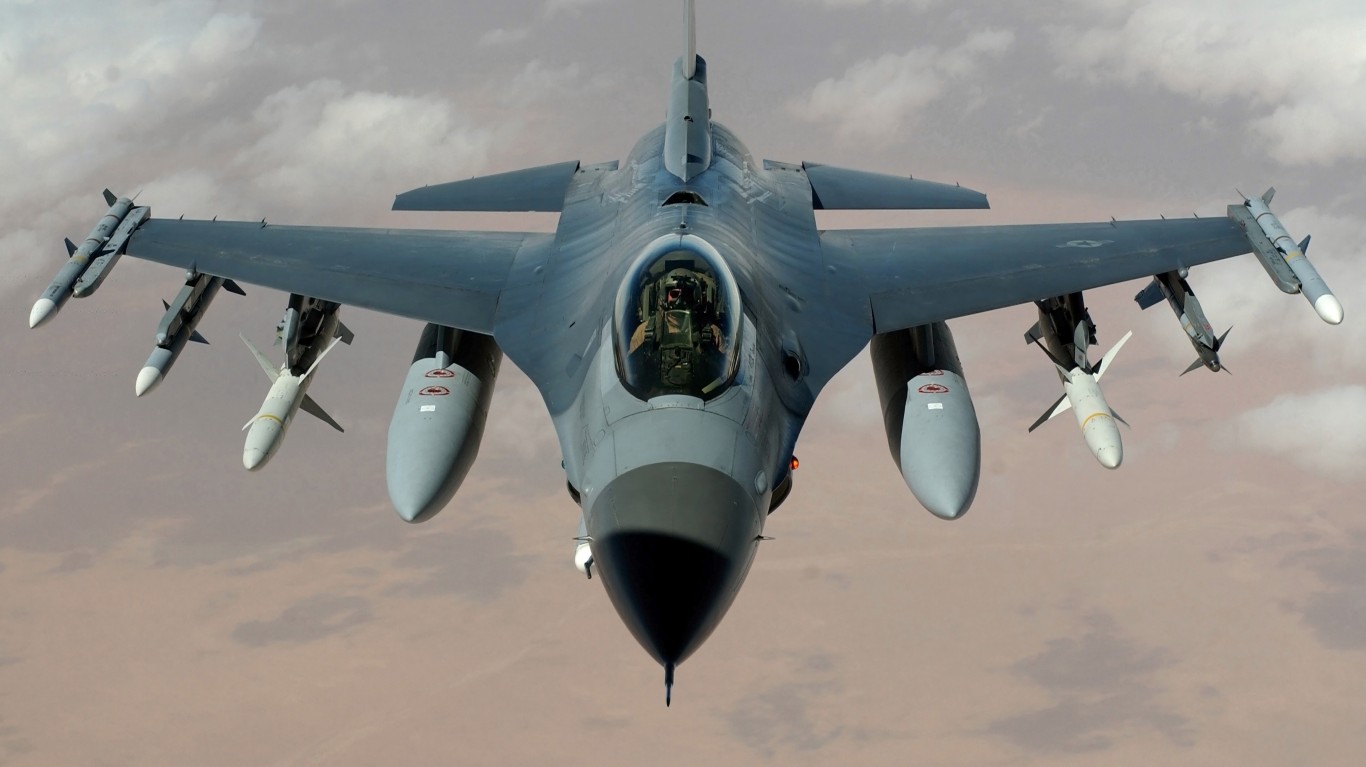
Established in 1775, less than one year before the Declaration of Independence was signed, the U.S. Navy is one of the oldest military branches in the United States. It is also one of the largest. As of June 2025, there were approximately 332,700 active duty troops serving in the Navy, more than any other branch, with the sole exception of the Army. Including the Marine Corps, which has been overseen by the Department of the Navy for nearly 200 years, the Navy is the only branch with more than half a million active duty troops.
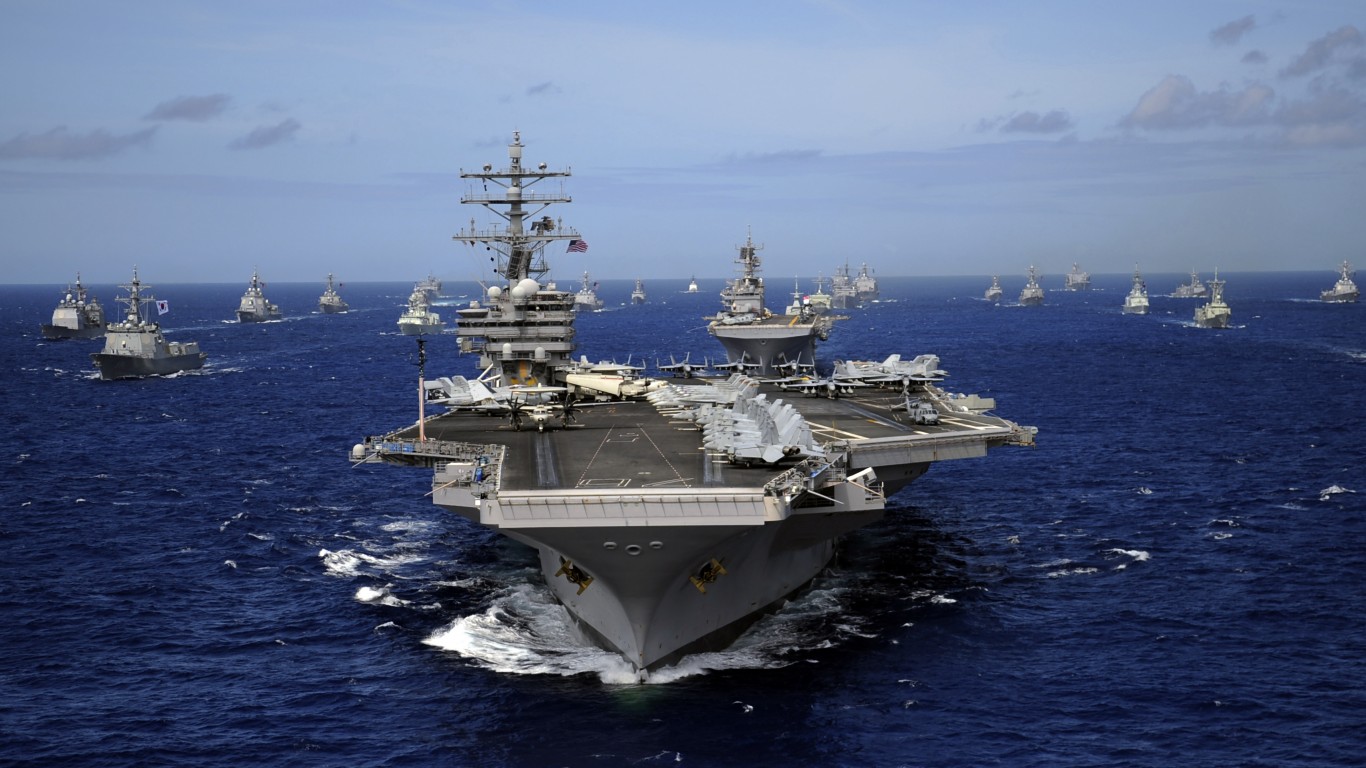
With bases spanning four continents and ships deployed around the world, the U.S. Navy has a sweeping global footprint that is necessitated by its responsibilities. These include sustaining land-based combat operations by delivering food, equipment, fuel, and firepower, as well as rapidly responding to international crises. Even in peacetime, the U.S. Navy serves as a guarantor of global trade and commerce — 90% of which is transported by ship. The Navy also helps maintain peace by deterring foreign aggressors, both through its forward presence and its fleet of submarines armed with nuclear ballistic missiles.
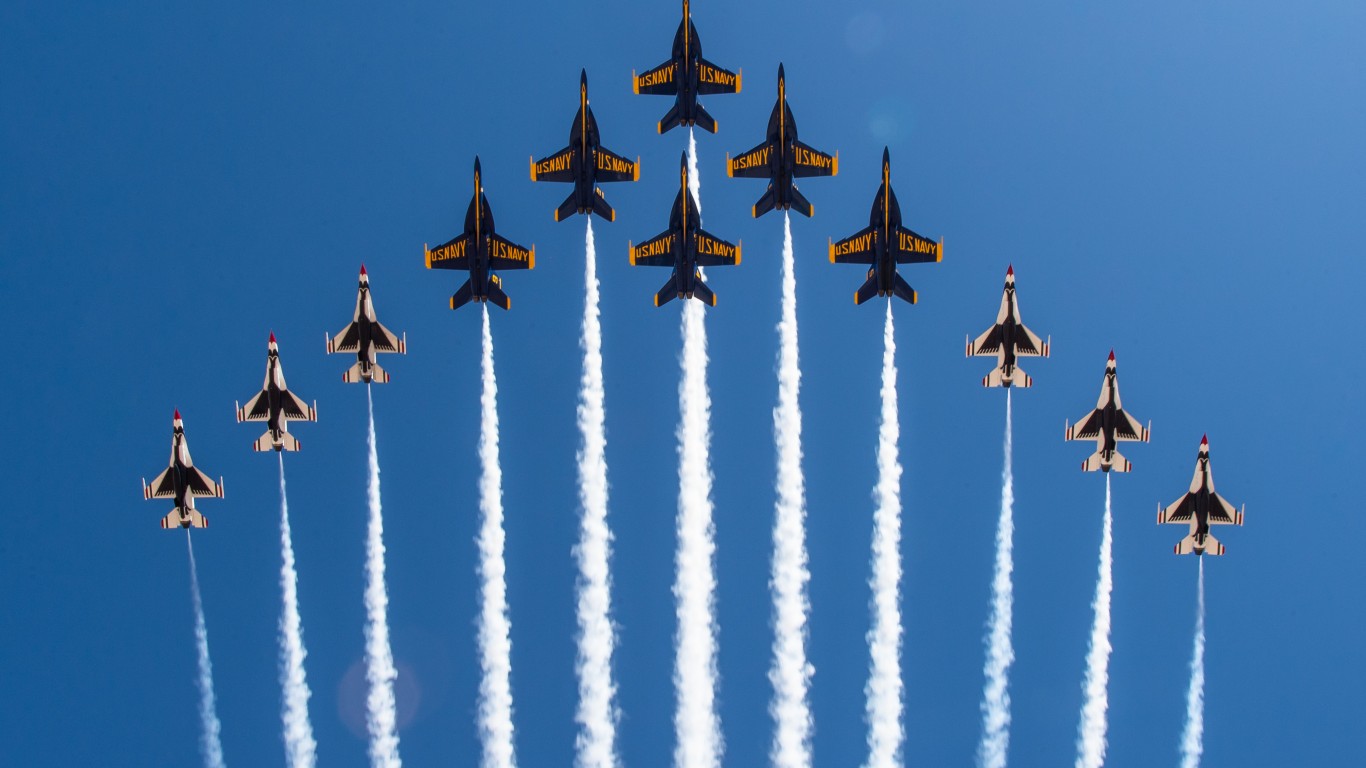
The Navy is primarily a maritime force, with hundreds of surface vessels and submarines at its disposal. And even though the Air Force is the U.S. military branch that specializes in air power and aerial combat, the Navy also has a substantial fleet of aircraft under its command. From communications and transport aircraft to logistical support planes and multi-role fighter jets, the Navy’s success is often contingent on its pilots and aerial fleet.
As of 2024, the U.S. Navy and Marine Corps had approximately 3,800 aircraft under their combined command. With many of these aircraft estimated to cost tens of millions of dollars apiece, it is perhaps no surprise that, at over $363 billion in fiscal 2025, the Navy’s annual budget is the largest of any U.S. service branch, and more than China’s total military expenditure in 2024.
Using data from the U.S. Navy, 24/7 Wall St. identified the most expensive aircraft in the Navy. We ranked over a dozen fixed wing aircraft in the Navy fleet on their reported unit cost, adjusted for inflation to current U.S. dollars using the Bureau of Labor Statistics’ inflation calculator. Only aircraft with reported unit costs were included in this analysis. All supplemental data is also from the Navy and the 2025 World Air Forces report from FlightGlobal, an aerospace industry publication. Aircraft are ranked from the least expensive to the most expensive.
The aircraft on this list serve a range of functions, including communications, transport, multi-role fighters, and trainers. More than half of the aircraft on this list have an estimated unit cost of over $50 million in today’s dollars. Notably, unit costs are only one element of the expenses associated with the aircraft on this list. The cost to operate some of these aircraft can reach tens of thousands of dollars per hour. Additionally, the missiles loaded onto Navy combat aircraft can each cost hundreds of thousands of dollars.
These are the most expensive aircraft in the U.S. Navy.
Why It Matters
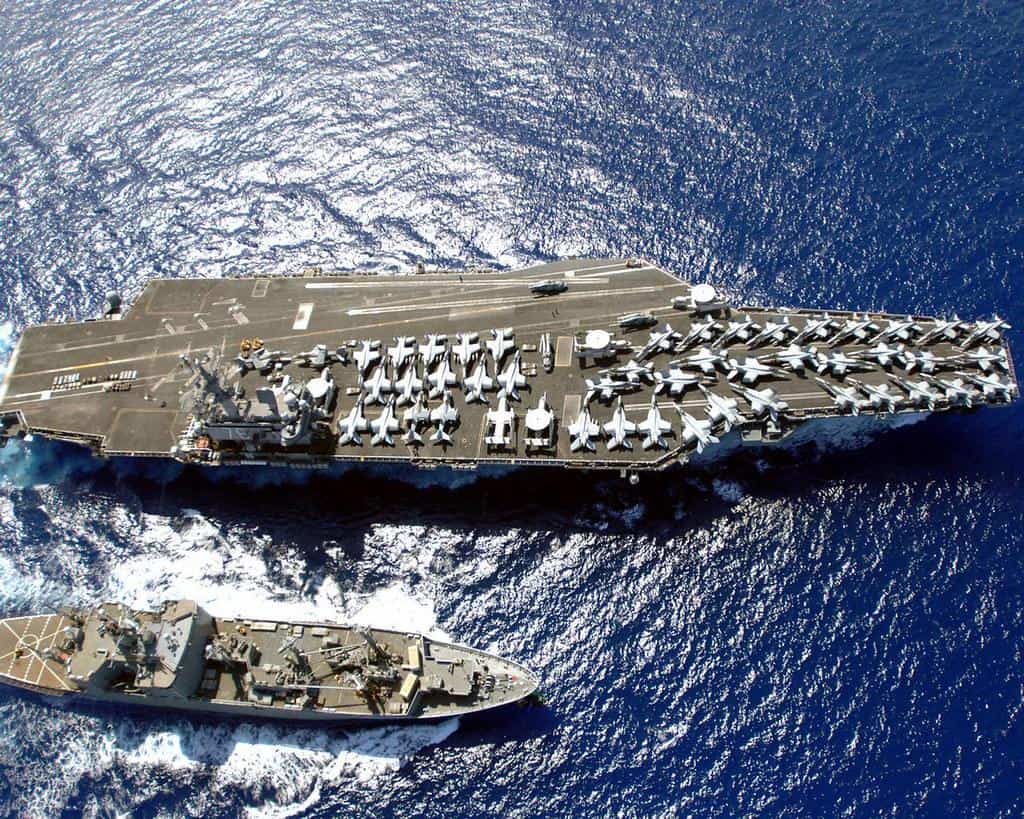
The Navy is the best-funded branch of the United States military, accounting for nearly 40% of the Pentagon’s fiscal 2025 budget.. Not only does the Navy have about 300 maritime vessels in its fleet — approximately one-third of which are deployed around the world at any given time — it also has hundreds of fixed-wing jets and planes assigned to bases and aircraft carriers across the globe. Many of these aircraft have eight-figure price tags.
14. T-38 Talon Supersonic Training Aircraft

- Est. unit cost: $890,000 (inflation adj. to August 2025 dollars)
- Aircraft’s primary function: U.S. Naval Test Pilot School training jet
- Approx. maximum altitude: 55,000 feet
- Reported speed capability: 812 mph
- Approximate, reported flight range: 1,000 miles
- Estimated U.S. Navy and Marine Corps inventory: 10
- Primary contractor(s): Northrop Grumman
13. T-34C Turbomentor Training Aircraft
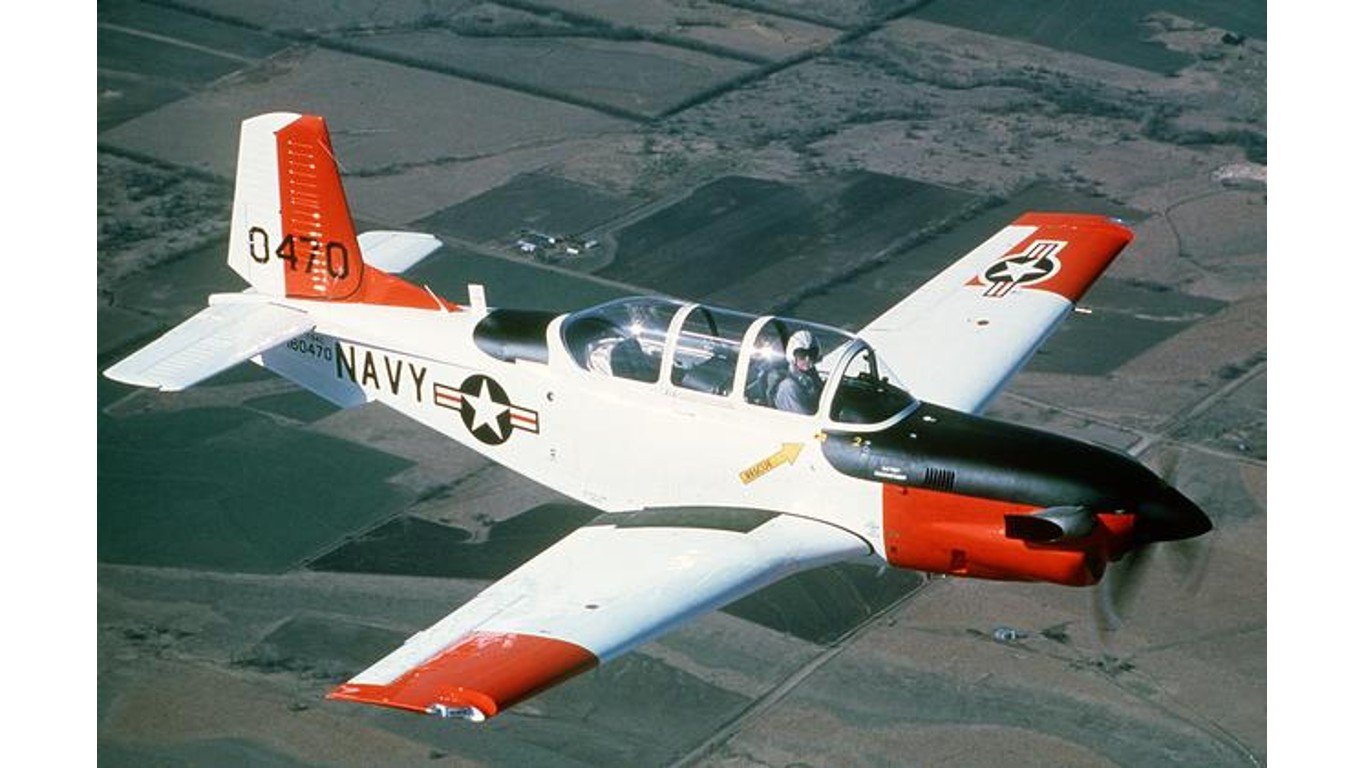
- Est. unit cost: $1.2 million (inflation adj. to August 2025 dollars)
- Aircraft’s primary function: Training and aircraft support services
- Approx. maximum altitude: 25,000 feet
- Reported speed capability: 322 mph
- Approximate, reported flight range: 690 miles
- Estimated U.S. Navy and Marine Corps inventory: 17
- Primary contractor(s): Raytheon
12. T-45A Goshawk Training Aircraft
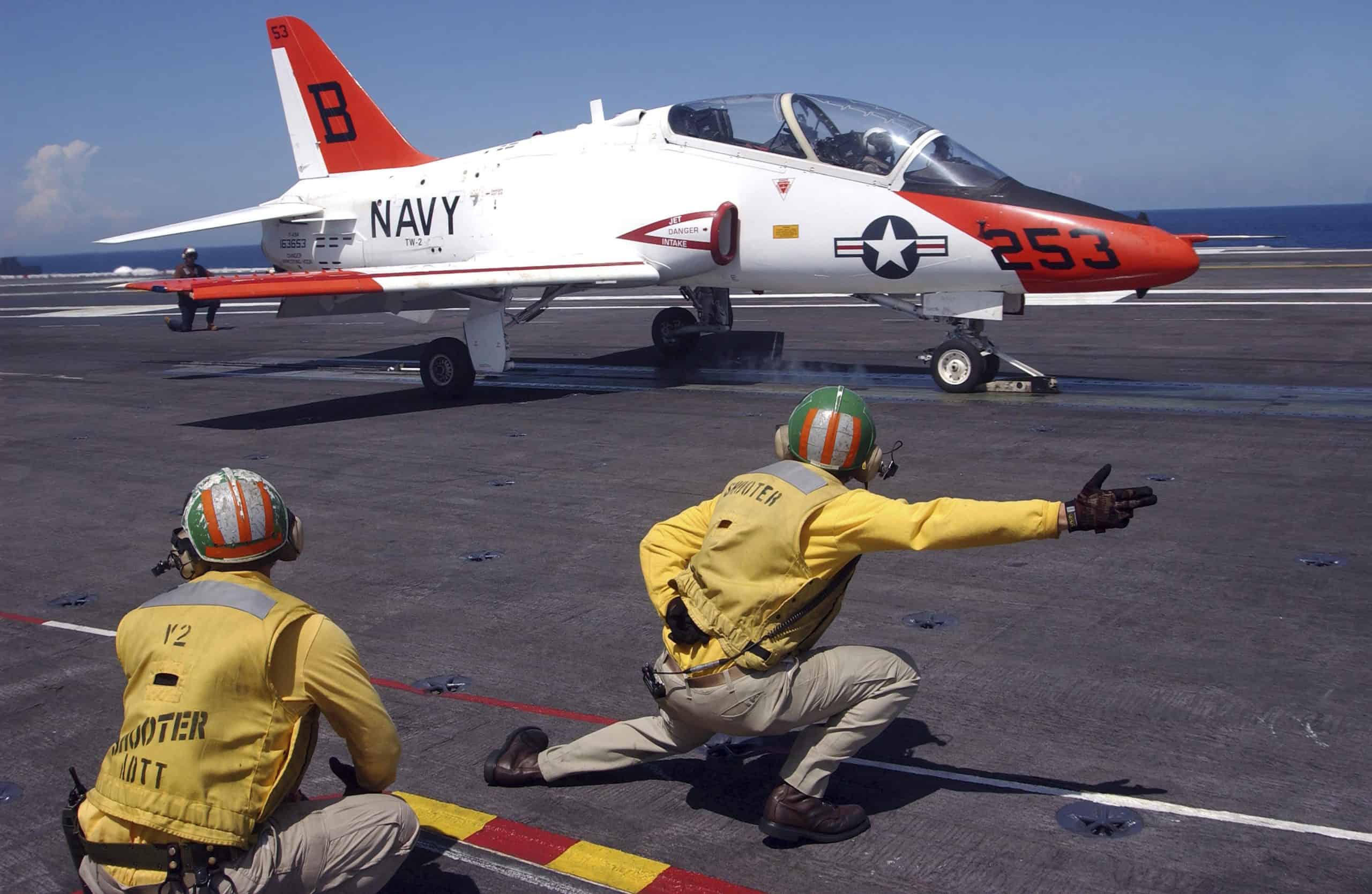
- Est. unit cost: $20.2 million (inflation adj. to August 2025 dollars)
- Aircraft’s primary function: Training platform for Navy/Marine Corps pilots
- Approx. maximum altitude: 42,500 feet
- Reported speed capability: 645 mph
- Approximate, reported flight range: 805 miles
- Estimated U.S. Navy and Marine Corps inventory: 189
- Primary contractor(s): Boeing
11. F/A-18A-D Hornet Strike fighter aircraft
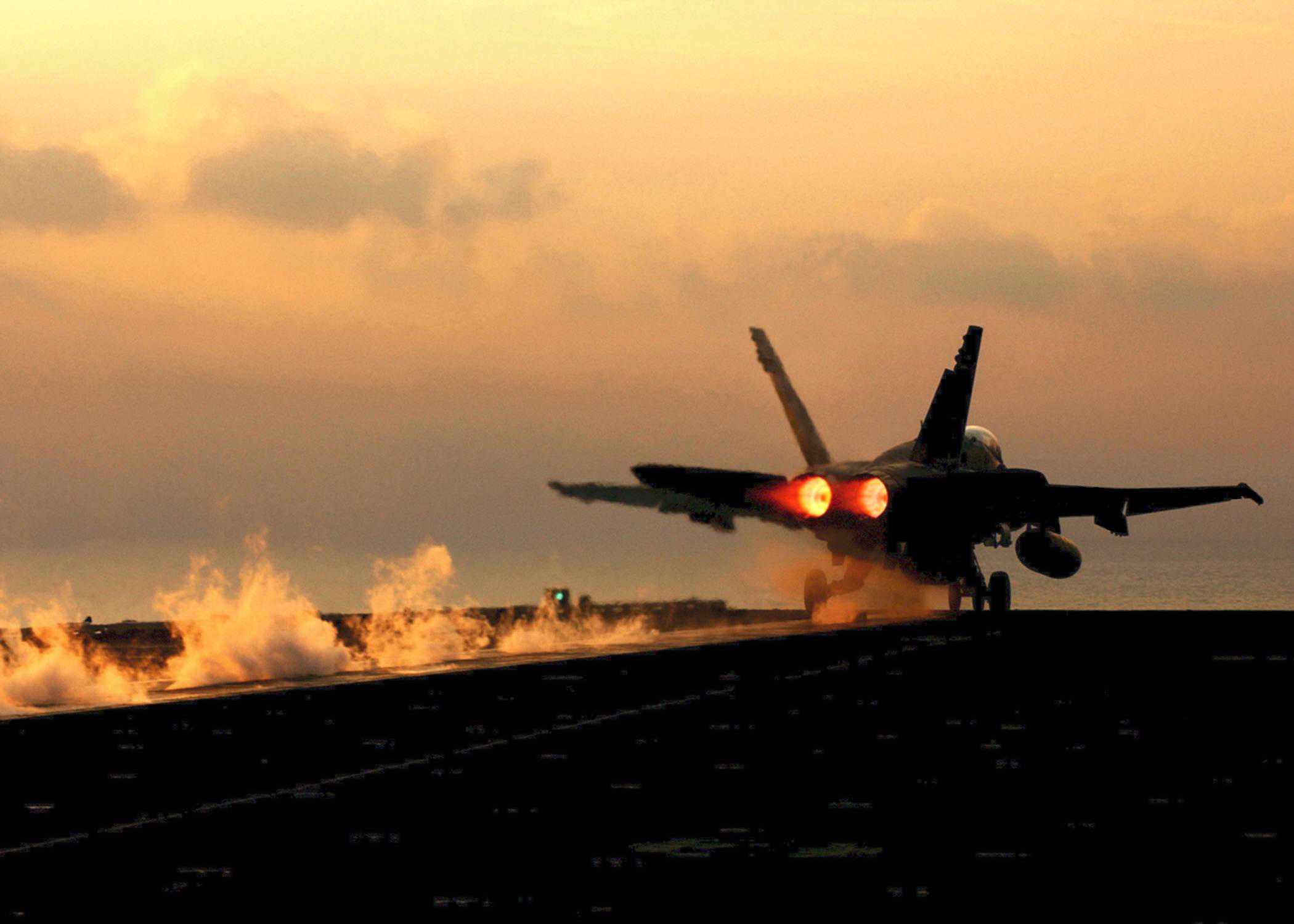
- Est. unit cost: $35.7 million (inflation adj. to August 2025 dollars)
- Aircraft’s primary function: Multi-role attack and fighter jet
- Approx. maximum altitude: 50,000 feet
- Reported speed capability: 1,304 mph
- Approximate, reported flight range: 1778 miles
- Estimated U.S. Navy and Marine Corps inventory: 225
- Primary contractor(s): Boeing, Northrop Grumman
10. C-2A Greyhound Logistics Aircraft
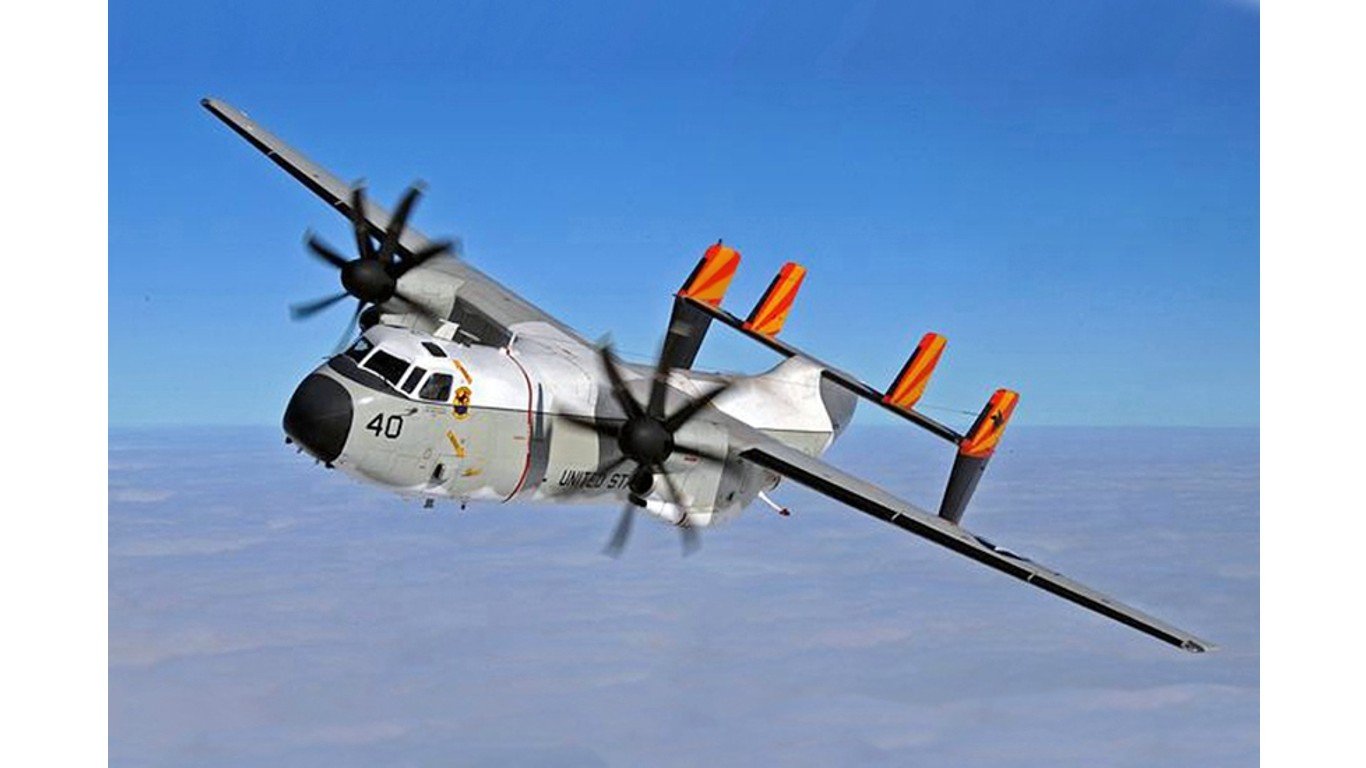
- Est. unit cost: $46.0 million (inflation adj. to August 2025 dollars)
- Aircraft’s primary function: Aircraft carrier delivery of personnel, mail, and high-priority cargo
- Approx. maximum altitude: 30,000 feet
- Reported speed capability: 213 mph
- Approximate, reported flight range: 1,151 miles
- Estimated U.S. Navy and Marine Corps inventory: 15
- Primary contractor(s): Northrop Grumman
9. C-20 Gulfstream Logistics Aircraft
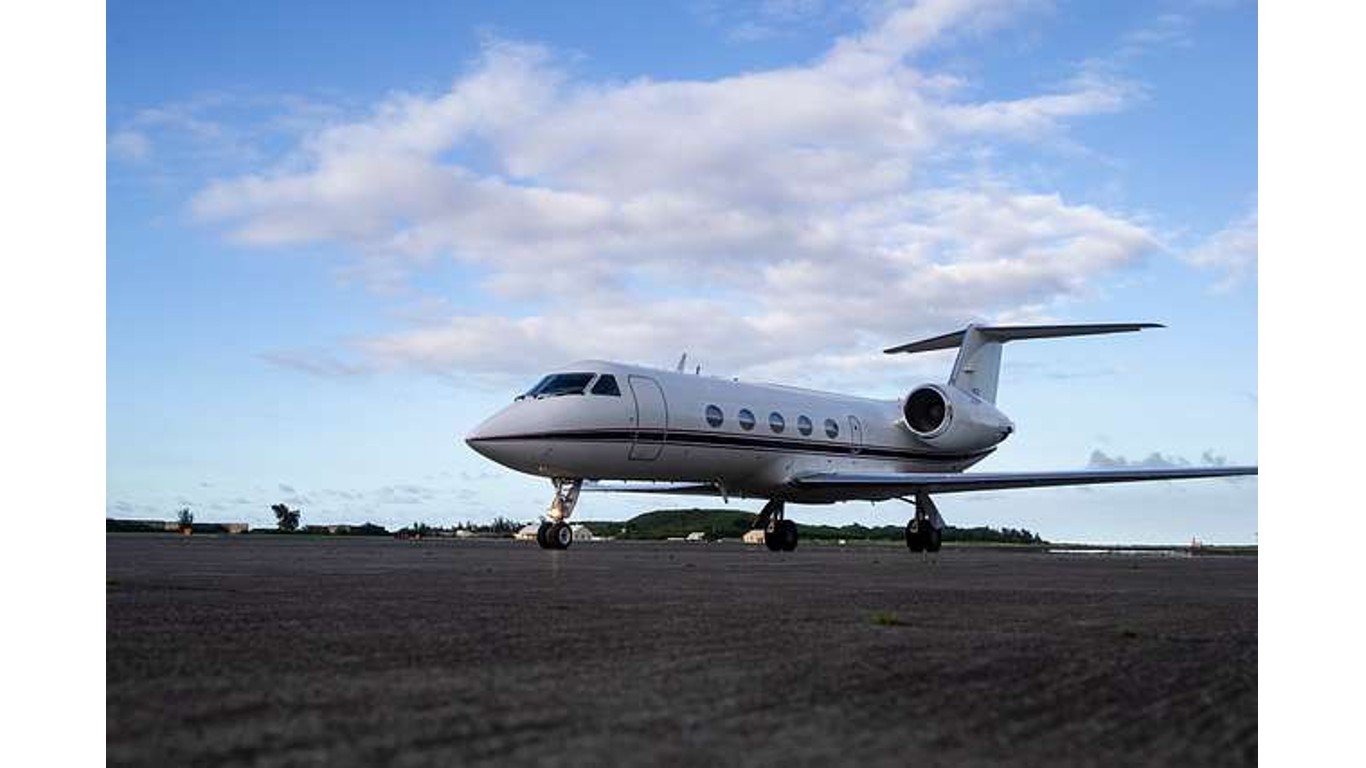
- Est. unit cost: $46.3 million (inflation adj. to August 2025 dollars)
- Aircraft’s primary function: Special airlift missions for high ranking military and government officials
- Approx. maximum altitude: N/A
- Reported speed capability: 652 mph
- Approximate, reported flight range: 5,903 miles
- Estimated U.S. Navy and Marine Corps inventory: 2
- Primary contractor(s): Gulfstream Aerospace
8. C/KC-130T Hercules Transport Aircraft
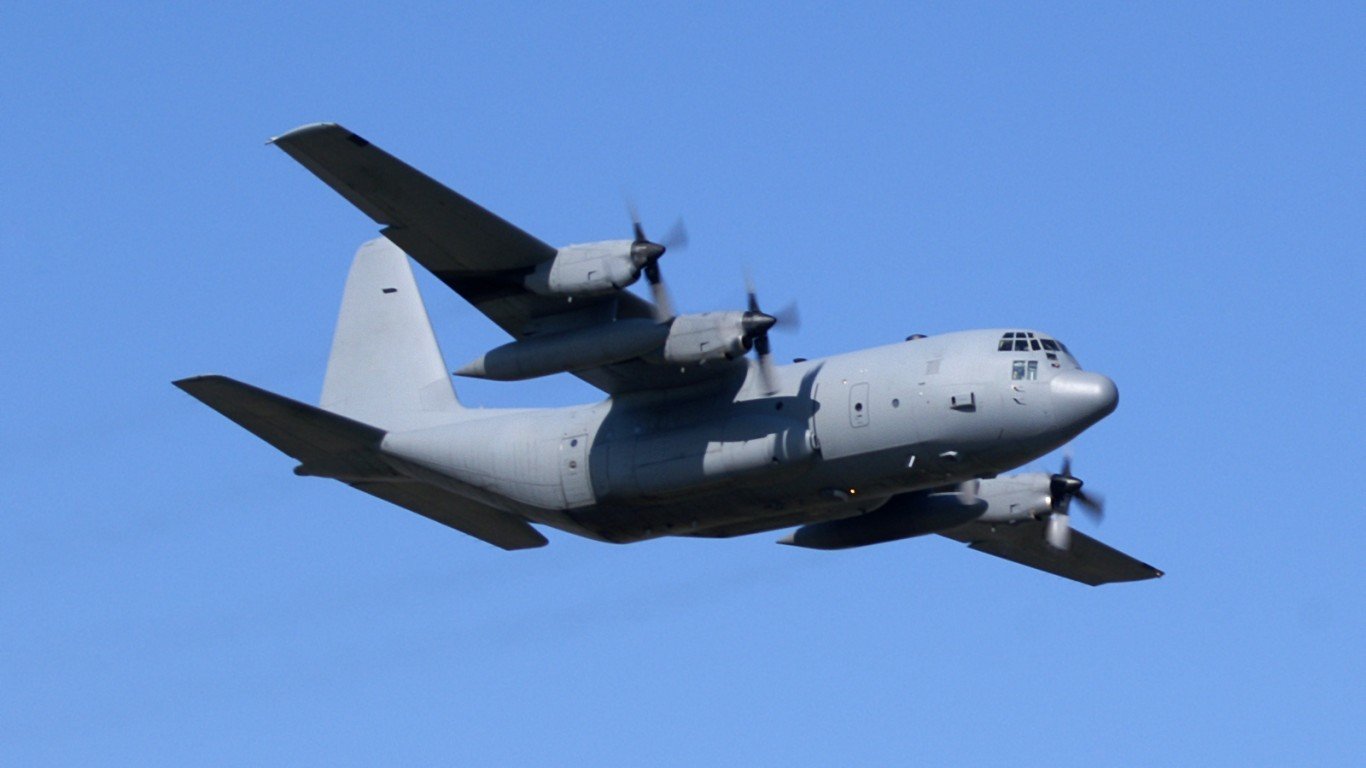
- Est. unit cost: $51.7 million (inflation adj. to August 2025 dollars)
- Aircraft’s primary function: Aerial refueling, tactical passenger and cargo airlift
- Approx. maximum altitude: 33,000 feet
- Reported speed capability: 374 mph
- Approximate, reported flight range: 2,350 – 5,200 miles
- Estimated U.S. Navy and Marine Corps inventory: 28
- Primary contractor(s): Lockheed Martin
7. EA-18G Growler Airborne Electronic Attack Aircraft
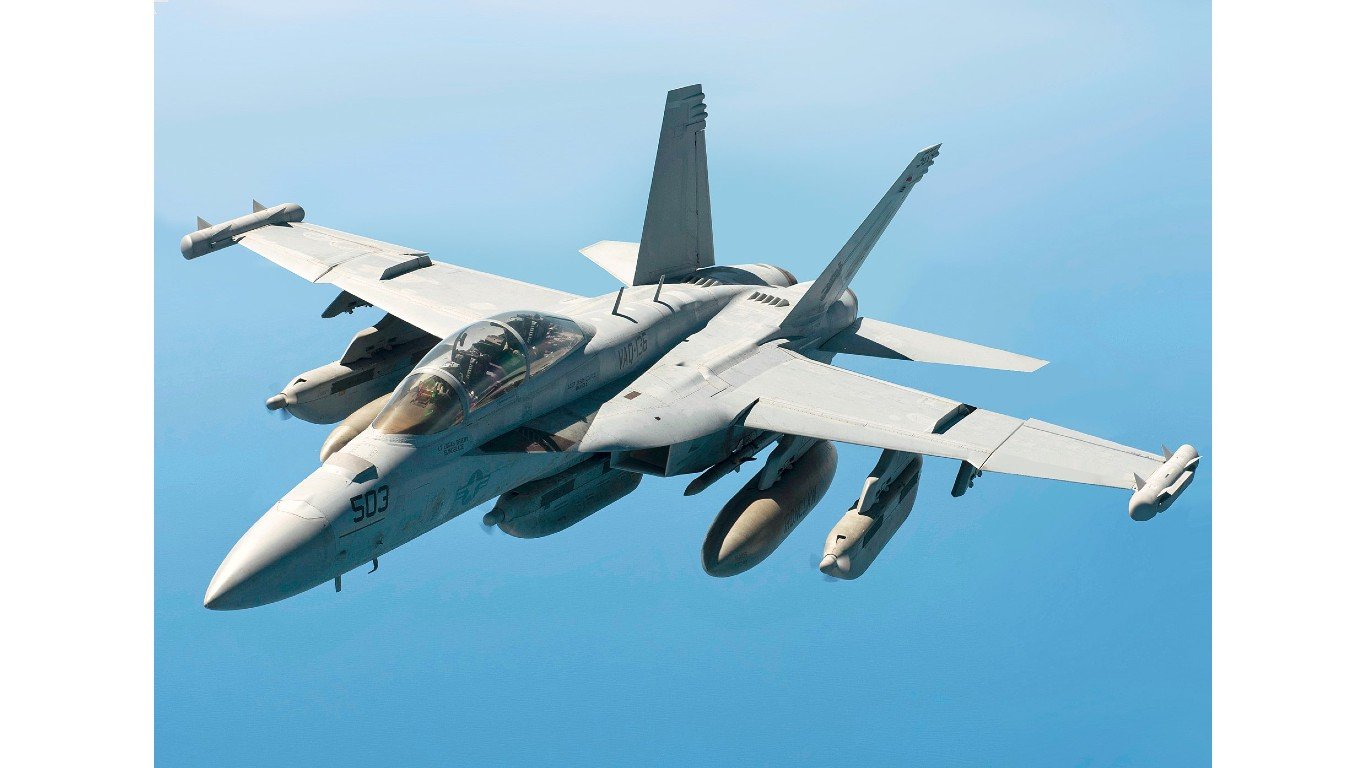
- Est. unit cost: $79.1 million (inflation adj. to August 2025 dollars)
- Aircraft’s primary function: Electronic warfare
- Approx. maximum altitude: 50,000 feet
- Reported speed capability: N/A
- Approximate, reported flight range: 978 miles
- Estimated U.S. Navy and Marine Corps inventory: 153
- Primary contractor(s): Boeing
6. UC-35 Citation Transport Aircraft
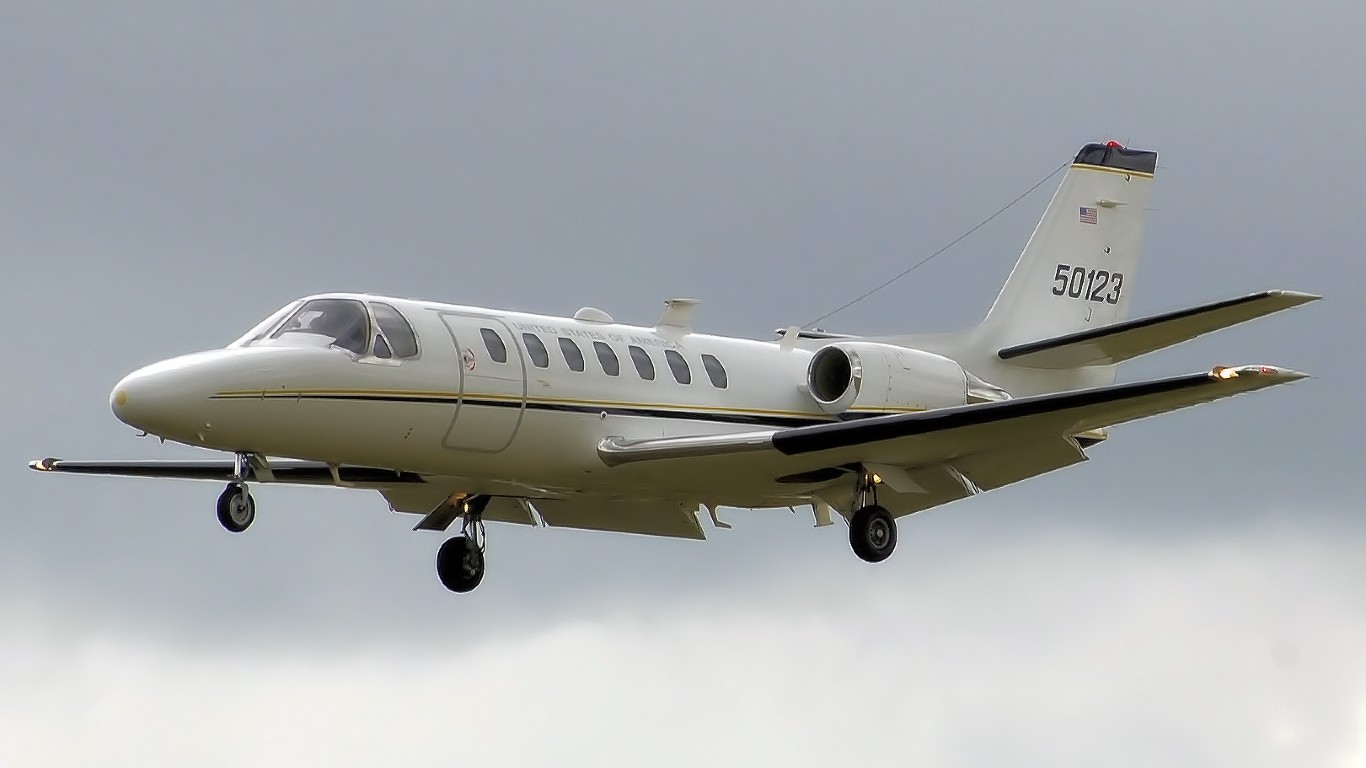
- Est. unit cost: $79.8 million (inflation adj. to August 2025 dollars)
- Aircraft’s primary function: High-priority passengers and cargo transport
- Approx. maximum altitude: N/A
- Reported speed capability: 575 mph
- Approximate, reported flight range: 1,800 miles
- Estimated U.S. Navy and Marine Corps inventory: N/A
- Primary contractor(s): DynCorps, Pratt & Whitney
5. C-37A and C/NC-37B Gulfstream 550 Logistics Aircraft
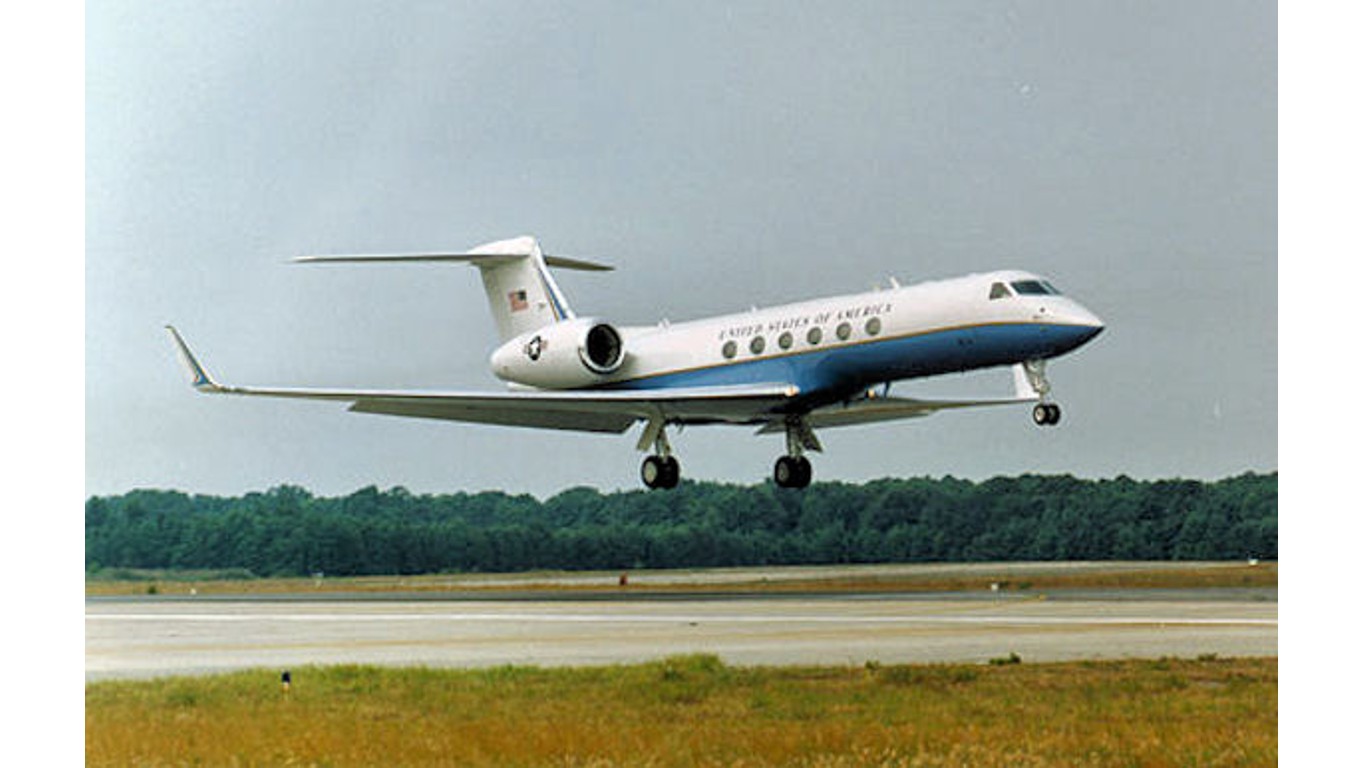
- Est. unit cost: $80.0 million (inflation adj. to August 2025 dollars)
- Aircraft’s primary function: Special airlift missions for high ranking military and government officials
- Approx. maximum altitude: N/A
- Reported speed capability: 679 mph
- Approximate, reported flight range: 6,675 – 7,768 miles
- Estimated U.S. Navy and Marine Corps inventory: N/A
- Primary contractor(s): CLS – Gulfstream
4. F/A-18E/F Super Hornet Strike fighter aircraft
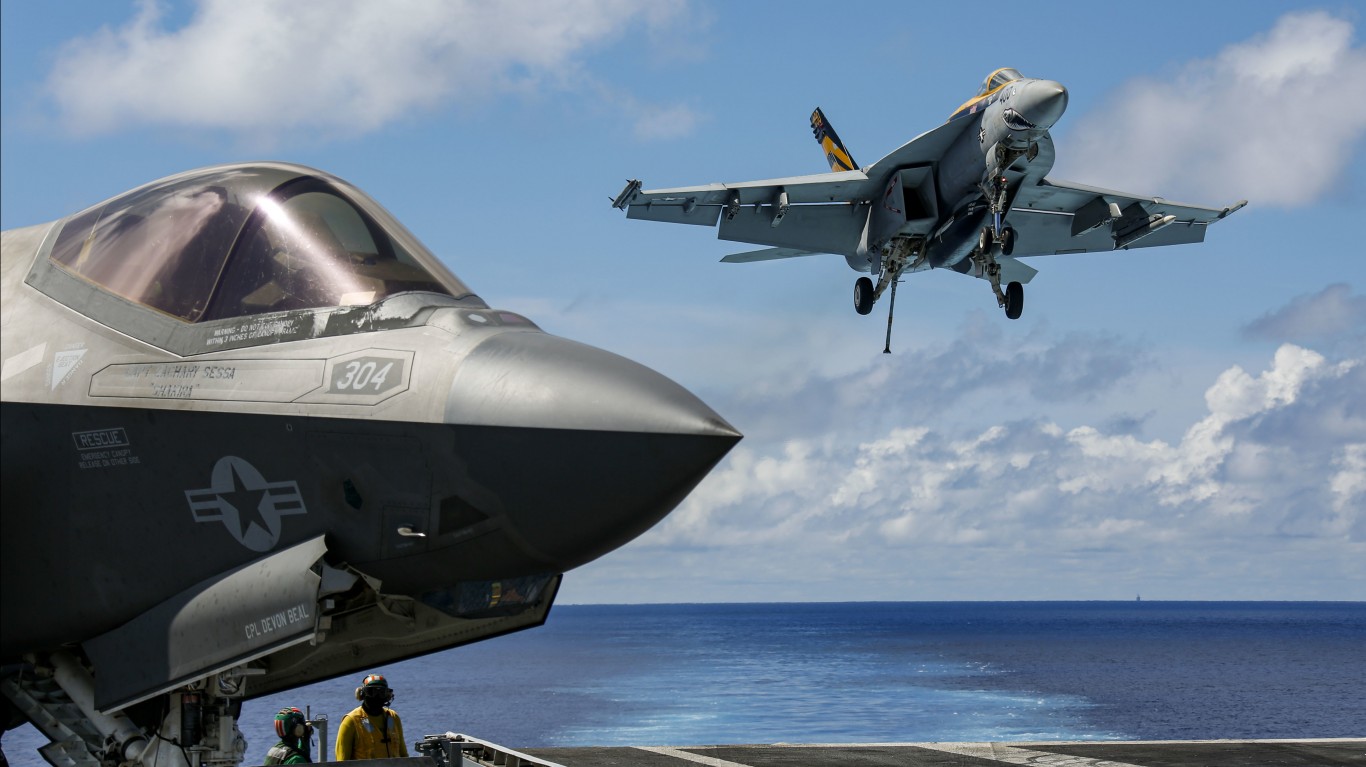
- Est. unit cost: $83.0 million (inflation adj. to August 2025 dollars)
- Aircraft’s primary function: Multi-role attack and fighter jet
- Approx. maximum altitude: 50,000 feet
- Reported speed capability: 1,381 mph
- Approximate, reported flight range: 1,467 miles
- Estimated U.S. Navy and Marine Corps inventory: 416
- Primary contractor(s): Boeing
3. KC-130J Hercules Transport Aircraft
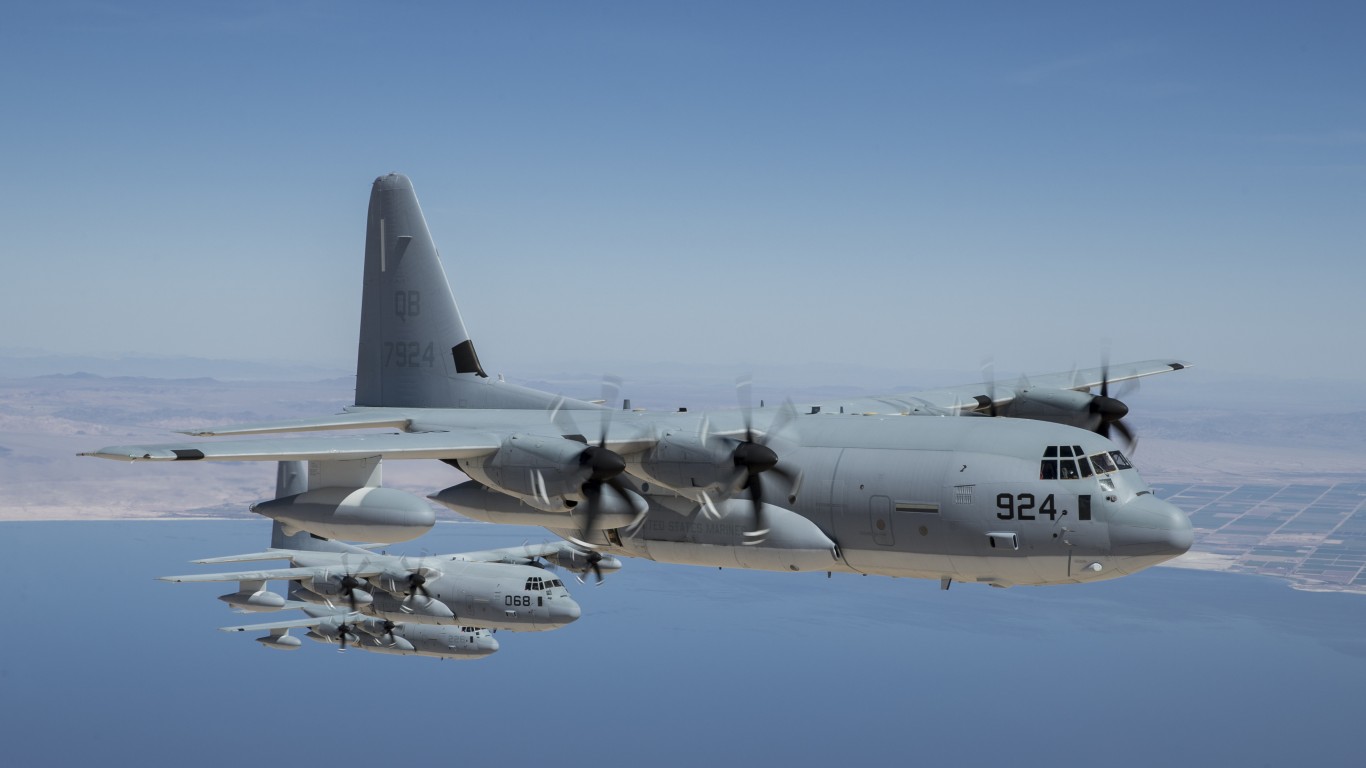
- Est. unit cost: $91.7 million (inflation adj. to August 2025 dollars)
- Aircraft’s primary function: Aerial refueling, tactical passenger and cargo airlift
- Approx. maximum altitude: 33,000 feet
- Reported speed capability: 374 mph
- Approximate, reported flight range: 2,350 – 5,200 miles
- Estimated U.S. Navy and Marine Corps inventory: 75
- Primary contractor(s): Lockheed Martin
2. E-2 Hawkeye Airborne Command and Control Aircraft
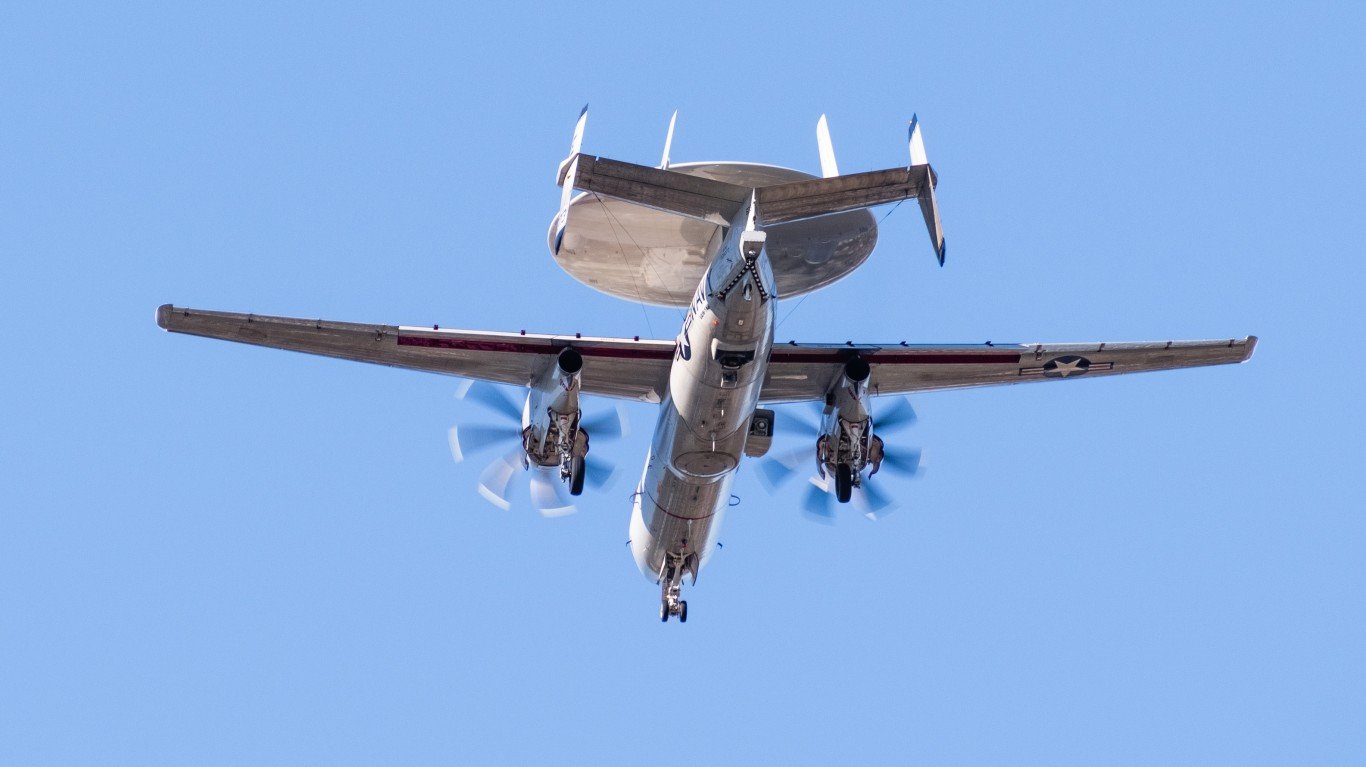
- Est. unit cost: $94.5 million (inflation adj. to August 2025 dollars)
- Aircraft’s primary function: Battle space management
- Approx. maximum altitude: 30,000 feet
- Reported speed capability: 345 mph
- Approximate, reported flight range: N/A
- Estimated U.S. Navy and Marine Corps inventory: 86
- Primary contractor(s): Northrop Grumman
1. E-6B Mercury Airborne Command Post

- Est. unit cost: $167.4 million (inflation adj. to August 2025 dollars)
- Aircraft’s primary function: Communications for fleet ballistic missile submarines and airborne command post for U.S. strategic forces
- Approx. maximum altitude: N/A
- Reported speed capability: N/A
- Approximate, reported flight range: N/A
- Estimated U.S. Navy and Marine Corps inventory: N/A
- Primary contractor(s): Boeing
Contact [email protected] for any questions or corrections.
Sam Stebbins is a writer at 247WallSt.com where his primary focus is on government policy, politics, companies, and broad social and economic trends. Sam has been writing in the money and news verticals for over 8 years and holds a bachelor's degree from Hobart College, which he earned in 2010. Sam resides in upstate New York and enjoys hiking, biking, canoeing, and skiing in the Adirondack Mountains and across the Northeast.