The Rise of Combat Drones Are Rewriting the Rules of Modern Warfare
Combat drones are rapidly becoming one of the most important tools in modern military arsenals. These unmanned aircraft can remain in the air for long periods, track enemy forces, and strike targets with guided weapons—all without putting a pilot at…


Combat drones are rapidly becoming one of the most important tools in modern military arsenals. These unmanned aircraft can remain in the air for long periods, track enemy forces, and strike targets with guided weapons—all without putting a pilot at risk. As countries continue investing heavily in drone technology, a new generation of unmanned systems is emerging that can influence battles in ways that were almost unimaginable just a few decades ago. Here, 24/7 Wall St. is taking a closer look at these drones.
To identify the drones that are shaping the modern battlefield, 24/7 Wall St. reviewed various historical and military sources. We included supplemental information for each drone regarding the country or operator, when it was introduced, manufacturer, maximum range, maximum endurance, as well as the payload and armament.
Here is a look at the combat drones that are changing the modern battlefield:
Why Are We Covering This?
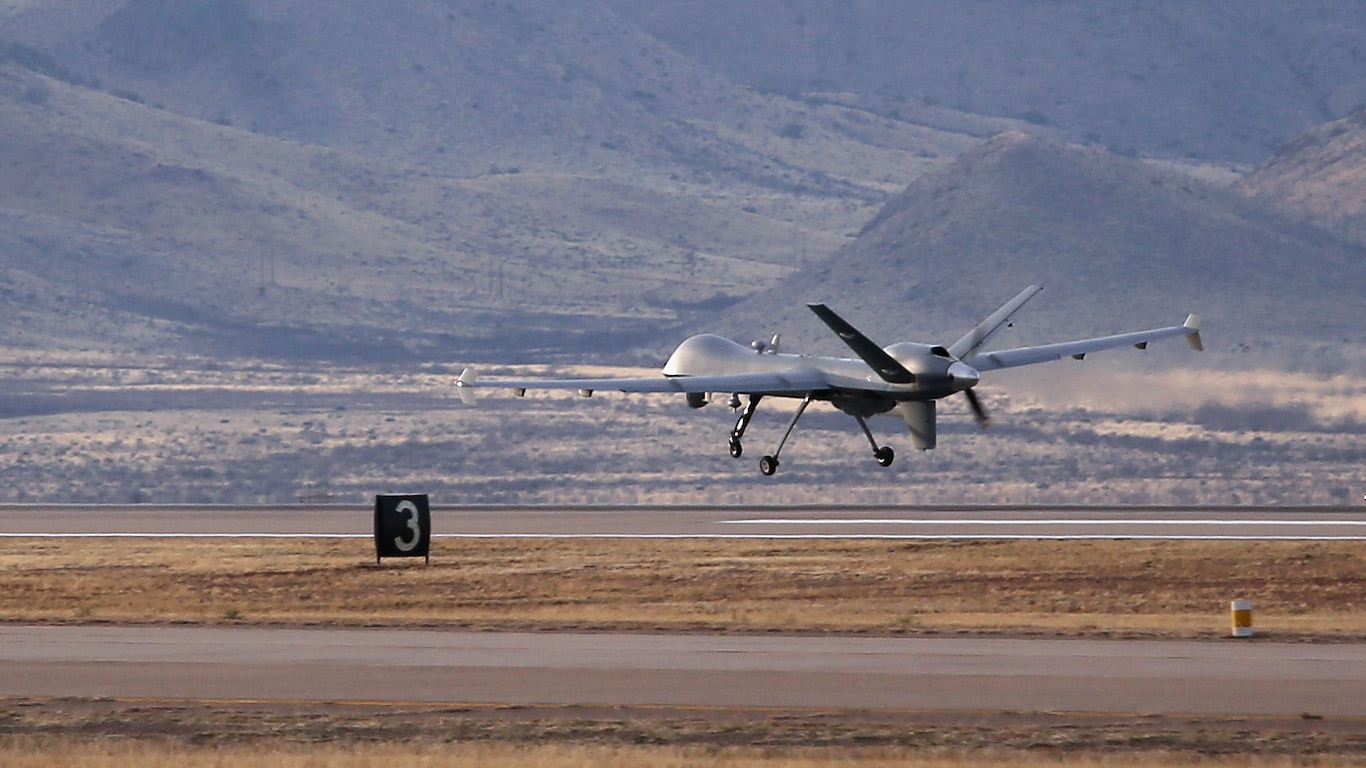
Understanding how combat drones are changing warfare helps explain one of the most important technological shifts in modern military strategy. Unmanned aerial systems are no longer limited to surveillance roles; they now conduct precision strikes, hunt armored vehicles, and guide artillery fire across the battlefield. From large armed UAVs to smaller loitering munitions carried by infantry units, drones are expanding access to airpower and altering how conflicts are fought. Examining the systems that combine endurance, precision, and battlefield impact offers a clearer picture of how unmanned technology is reshaping modern warfare.
Drones Are Reshaping Modern Warfare
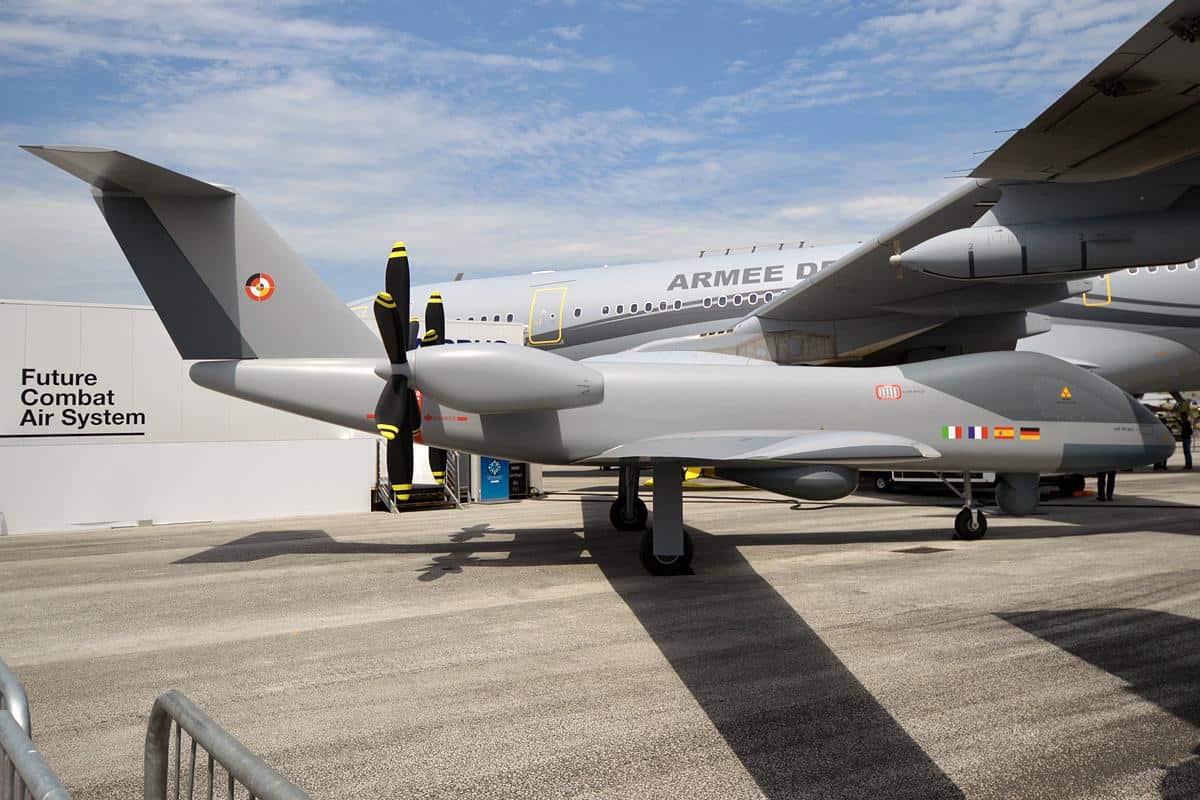
Unmanned aerial systems have rapidly transformed how modern militaries fight. Once used primarily for surveillance, drones now carry out precision strikes, track enemy movements, and support ground operations in real time. Their ability to operate without risking pilots has made them an essential part of modern military strategy. As technology advances, drones are increasingly becoming one of the defining weapons of the modern battlefield.
Persistent Eyes in the Sky
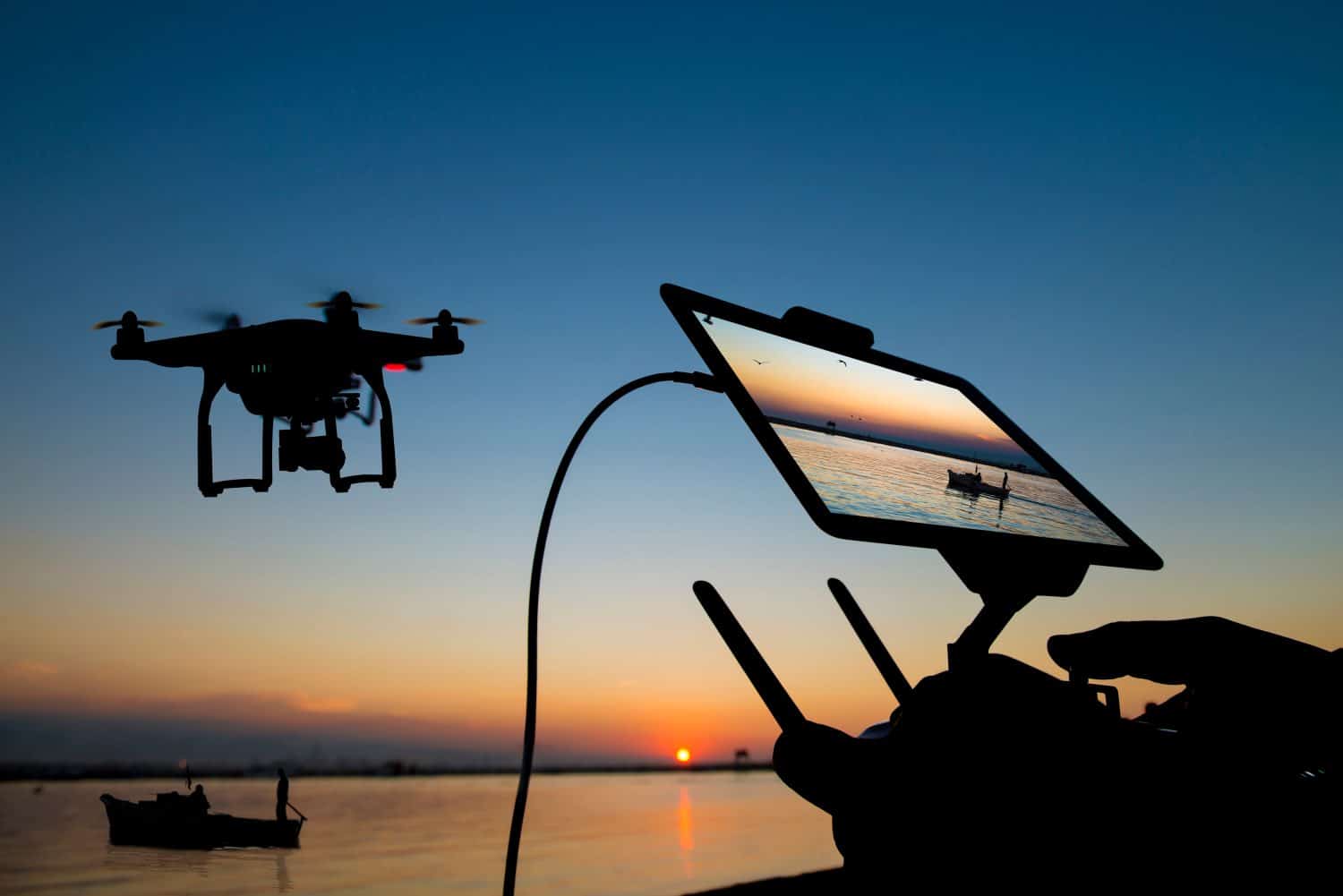
One of the greatest advantages drones provide is persistence. Many modern unmanned aircraft can remain in the air for more than a full day, constantly monitoring large areas of terrain. This endurance allows commanders to track enemy activity, identify targets, and respond quickly to changing battlefield conditions. In many cases, drones now provide the continuous intelligence that modern military operations depend on.
Precision Strikes Without Pilots
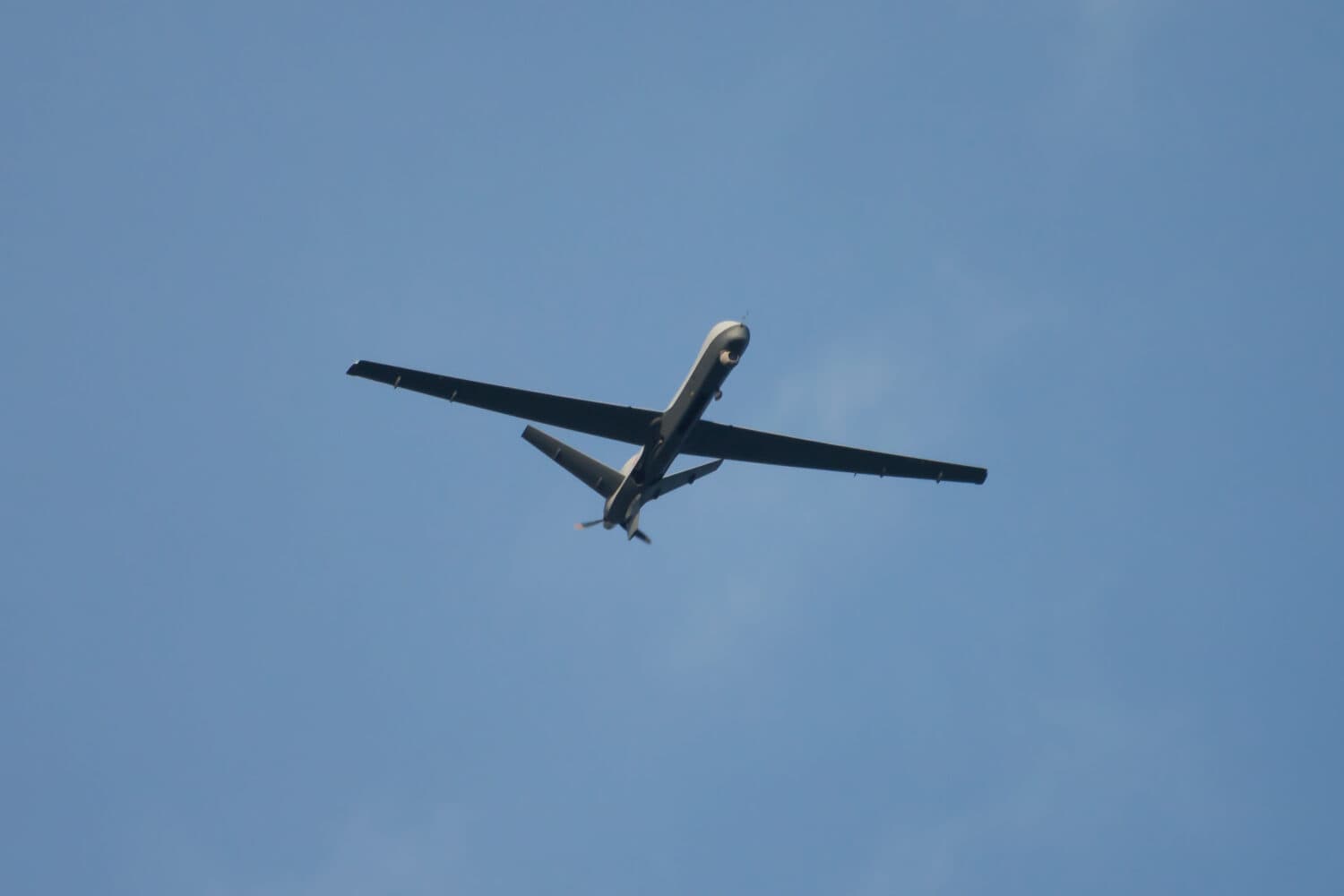
Combat drones also give militaries the ability to conduct precision strikes without placing pilots in harm’s way. Armed with guided missiles and smart bombs, these aircraft can destroy vehicles, defensive positions, and infrastructure targets with remarkable accuracy. Their ability to quickly transition from surveillance to strike missions has made them one of the most flexible weapons available to modern armed forces.
Loitering Munitions Change the Fight
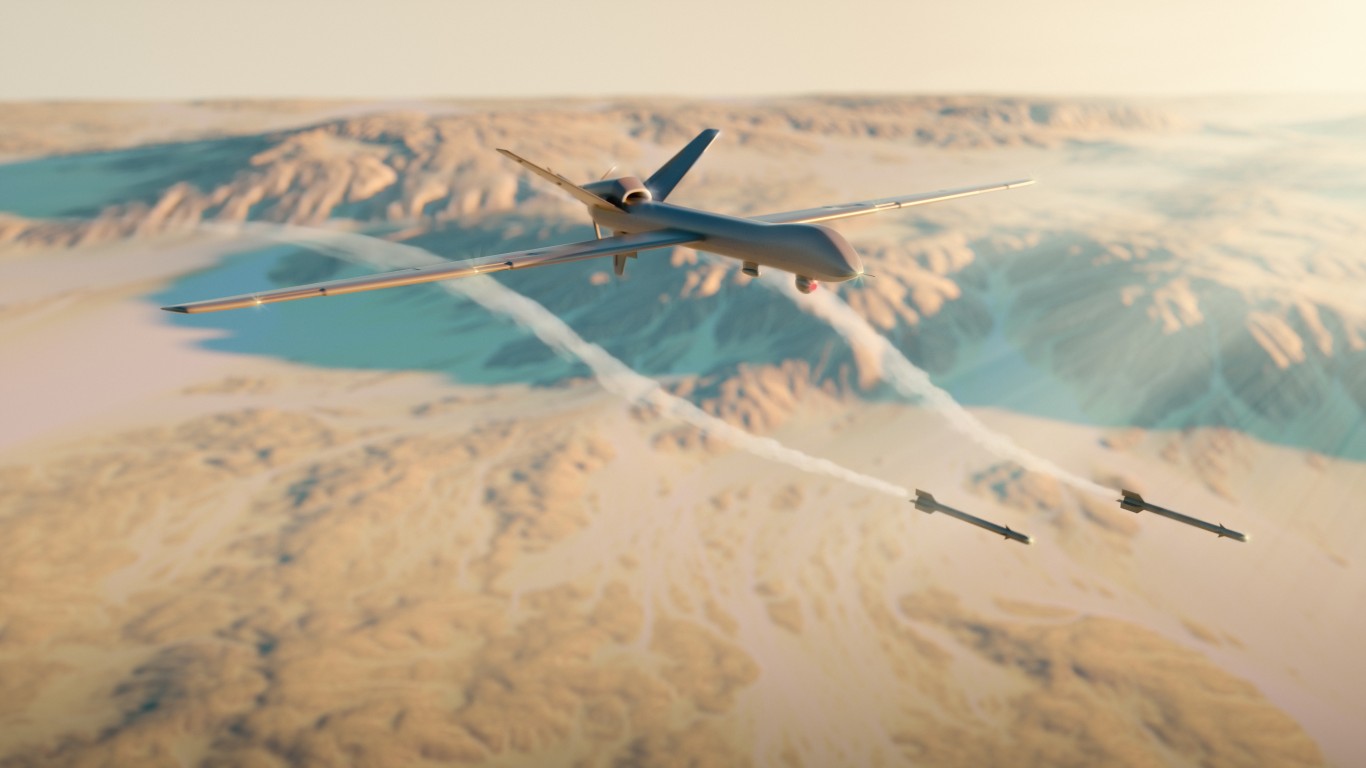
A newer category of unmanned weapons—loitering munitions—has expanded the role drones play in combat. These systems act as both reconnaissance tools and weapons, searching for targets before diving onto them with explosive payloads. Often inexpensive and highly portable, loitering drones allow even small units to conduct precision attacks that once required larger military platforms.
The Drones Defining Modern Airpower

The rapid development of unmanned combat systems is reshaping military doctrine around the world. Nations large and small are investing heavily in drones capable of surveillance, electronic warfare, and precision strikes. The systems on this list highlight the drones that are having the greatest impact on modern warfare and changing how battles are fought today.
MQ-9 Reaper
- Country or operator: United States
- Manufacturer: General Atomics
- Drone type: Armed UAV
- Year introduced to service: 2007
- Maximum endurance: 27 hours
- Maximum range: 1,850 km
- Payload / armament: AGM-114 Hellfire, GBU-12/38
- Key battlefield role: Long-endurance precision strike
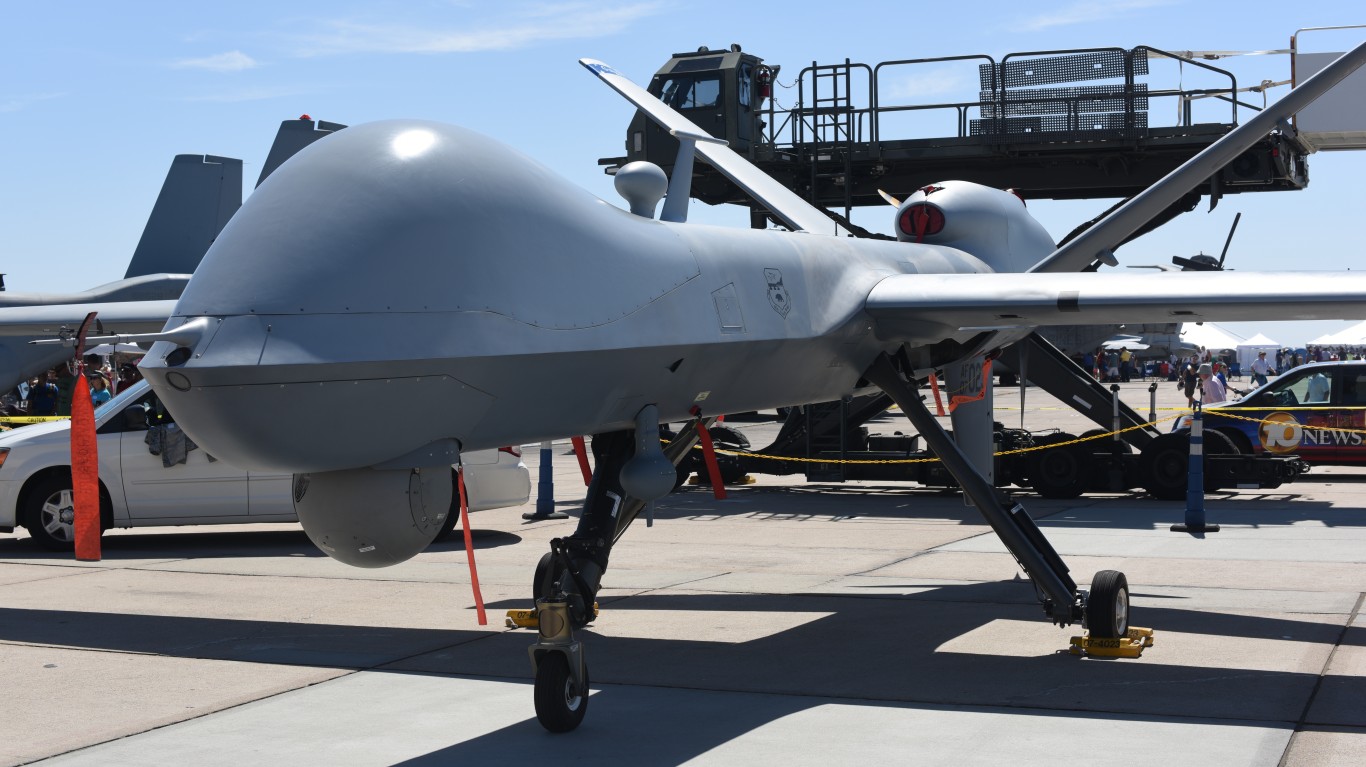
The MQ-9 Reaper has become one of the most recognizable armed drones in modern warfare. Built for long-endurance missions, it can patrol vast areas for hours before striking with precision-guided missiles and bombs. Its ability to combine surveillance and attack roles allows commanders to identify targets and engage them quickly, making the Reaper a central tool for modern drone-based combat operations.
MQ-1C Gray Eagle
- Country or operator: United States
- Manufacturer: General Atomics
- Drone type: Armed UAV
- Year introduced to service: 2009
- Maximum endurance: 25 hours
- Maximum range: Satellite controlled
- Payload / armament: AGM-114 Hellfire
- Key battlefield role: Persistent battlefield surveillance and strike
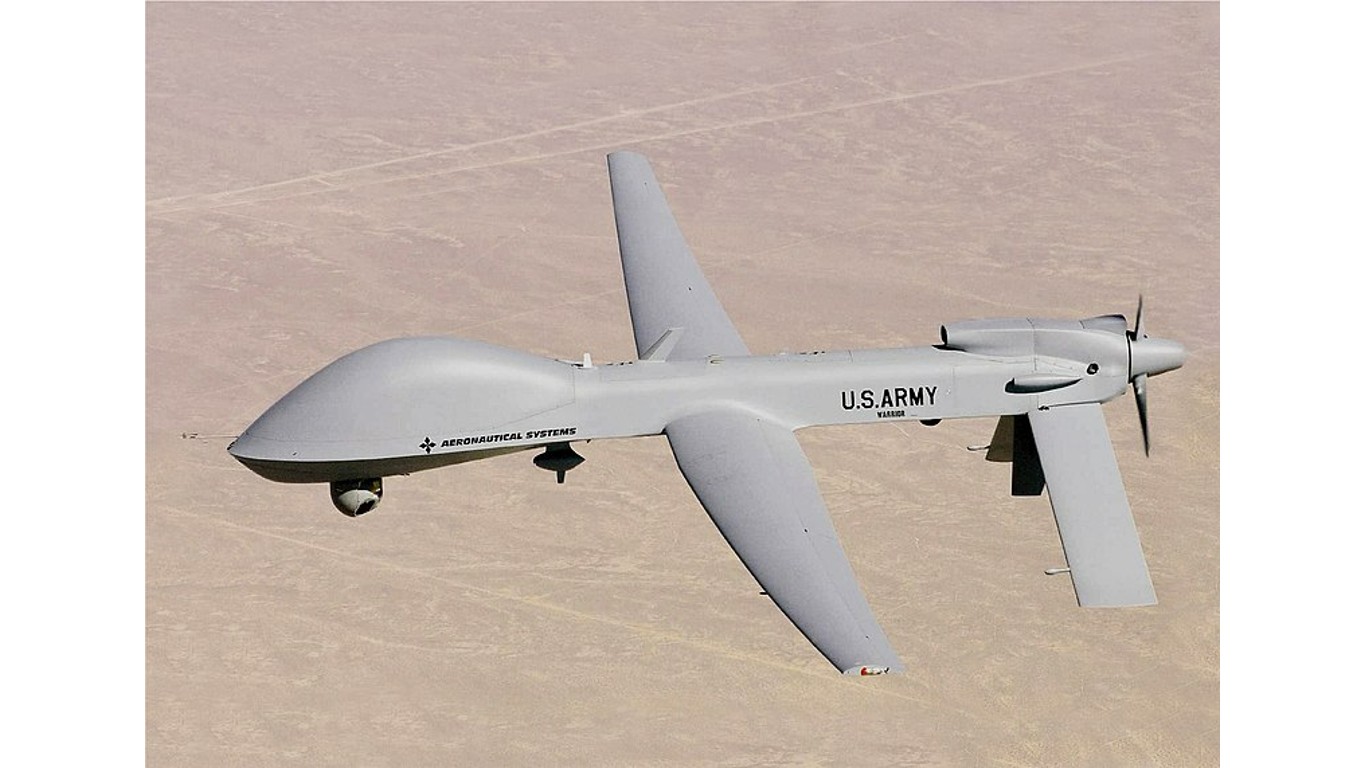
The MQ-1C Gray Eagle is designed to support ground forces with persistent surveillance and precision strike capability. Operating for long periods above the battlefield, it can track enemy movements, relay intelligence, and launch guided missiles against targets of opportunity. This ability to provide constant aerial coverage makes the Gray Eagle an important asset for modern armies.
RQ-170 Sentinel
- Country or operator: United States
- Manufacturer: Lockheed Martin
- Drone type: Stealth Recon/Strike UAV
- Year introduced to service: 2007
- Maximum endurance: Unknown (classified)
- Maximum range: Satellite controlled
- Payload / armament: Classified payload
- Key battlefield role: Stealth intelligence gathering
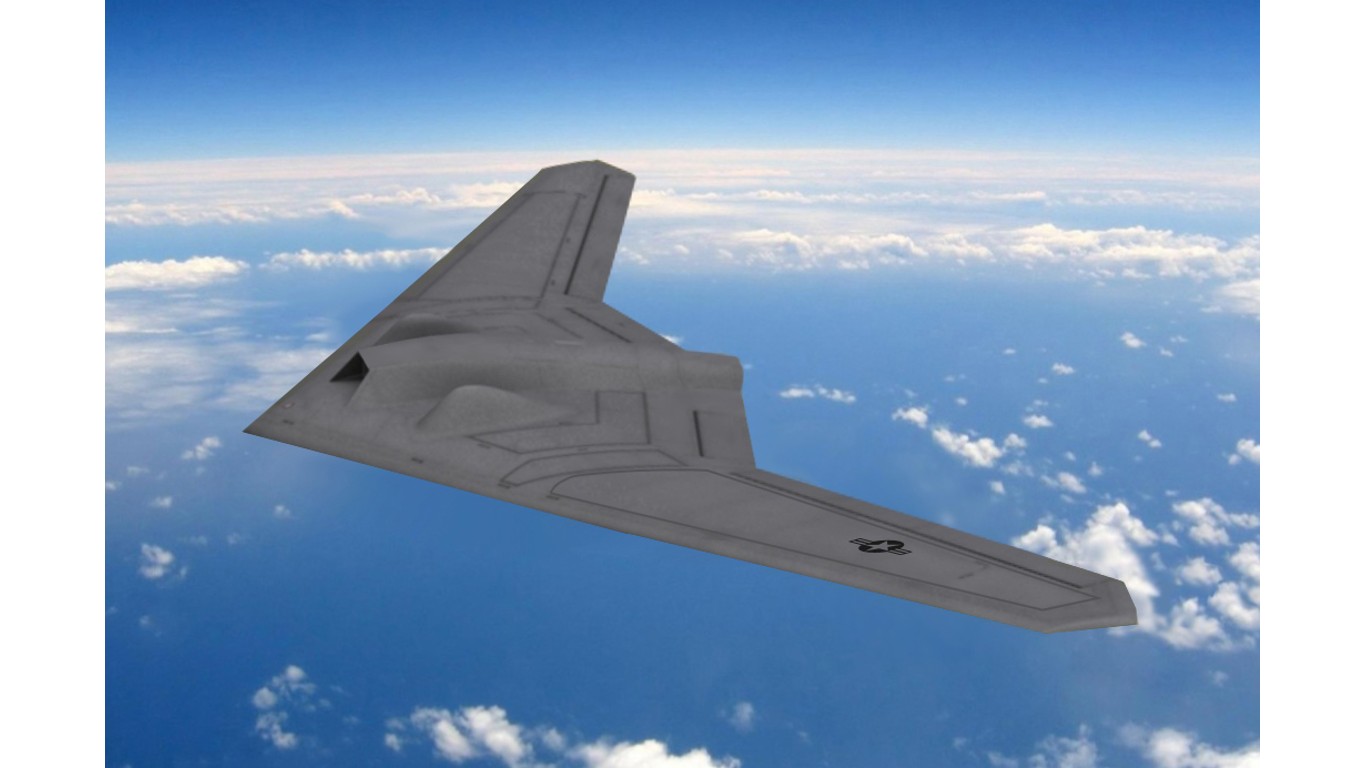
The RQ-170 Sentinel is a stealthy unmanned aircraft designed for intelligence and reconnaissance missions in contested airspace. Its low-observable design allows it to operate in areas protected by advanced air defenses. By gathering valuable intelligence without risking pilots, the Sentinel highlights how stealth drones are expanding the reach of modern military surveillance operations.
Switchblade 300
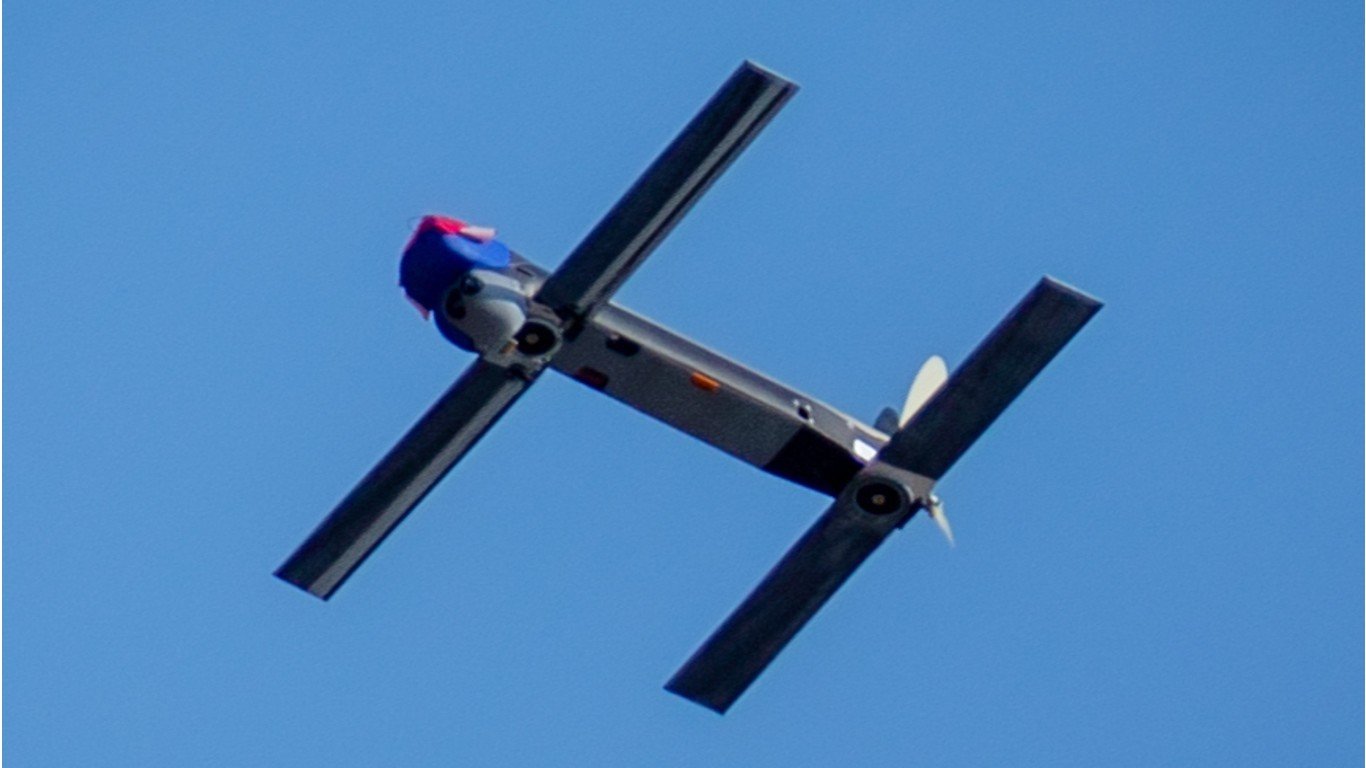
- Country or operator: United States
- Manufacturer: AeroVironment
- Drone type: Loitering Munition
- Year introduced to service: 2012
- Maximum endurance: 15 minutes
- Maximum range: 10 km
- Payload / armament: Explosive warhead
- Key battlefield role: Infantry-portable strike drone
The Switchblade 300 is a small loitering munition designed for infantry units operating on the front lines. Soldiers can launch the drone quickly and guide it toward enemy targets before detonating its onboard warhead. Its portability and ease of use allow small units to deliver precision strikes that were once only possible with larger weapons systems.
Switchblade 600
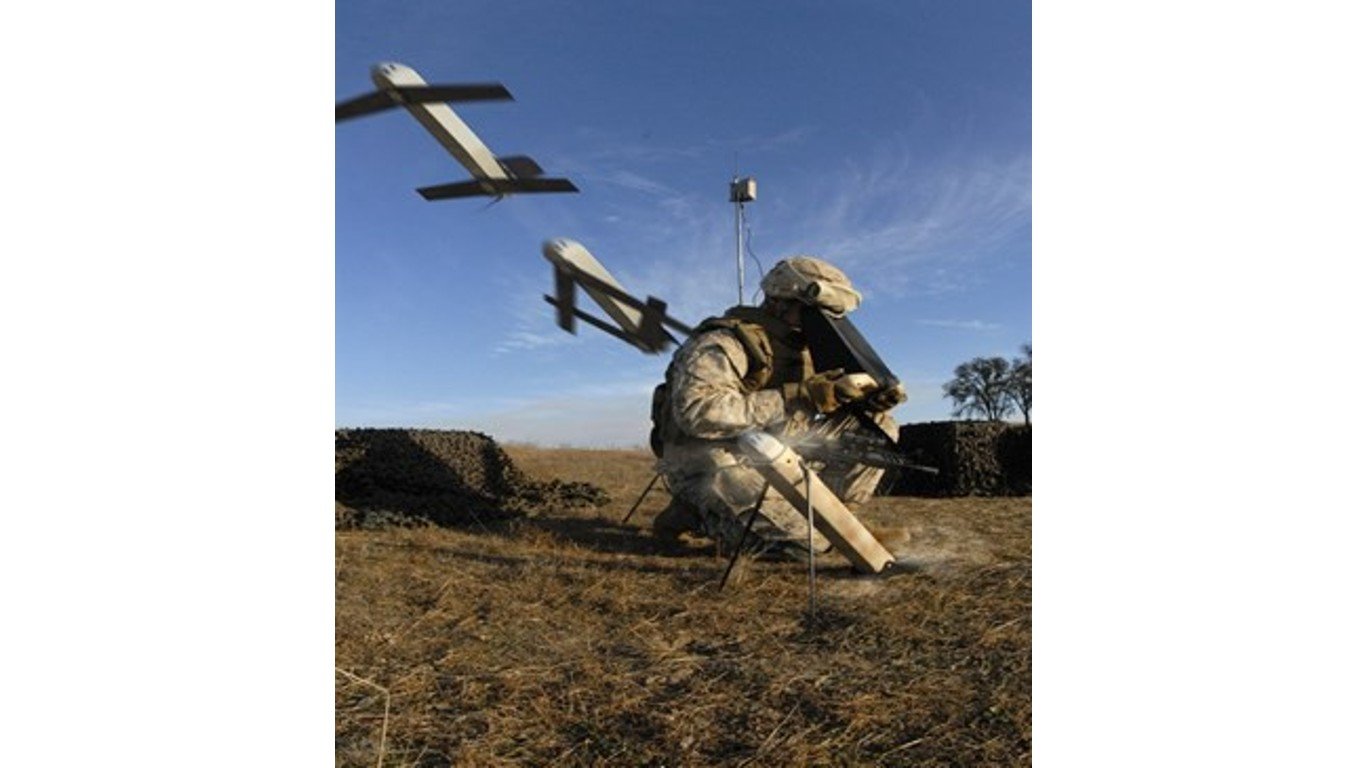
- Country or operator: United States
- Manufacturer: AeroVironment
- Drone type: Loitering Munition
- Year introduced to service: 2020
- Maximum endurance: 40 minutes
- Maximum range: 40 km
- Payload / armament: Anti-armor warhead
- Key battlefield role: Tank-hunting loitering drone
The Switchblade 600 expands the loitering munition concept with greater range and a powerful anti-armor warhead. Designed to defeat tanks and armored vehicles, the drone can loiter over a battlefield while operators search for targets. Once a suitable target is identified, it dives onto the vehicle, delivering a precise strike without exposing soldiers to direct fire.
Bayraktar TB2
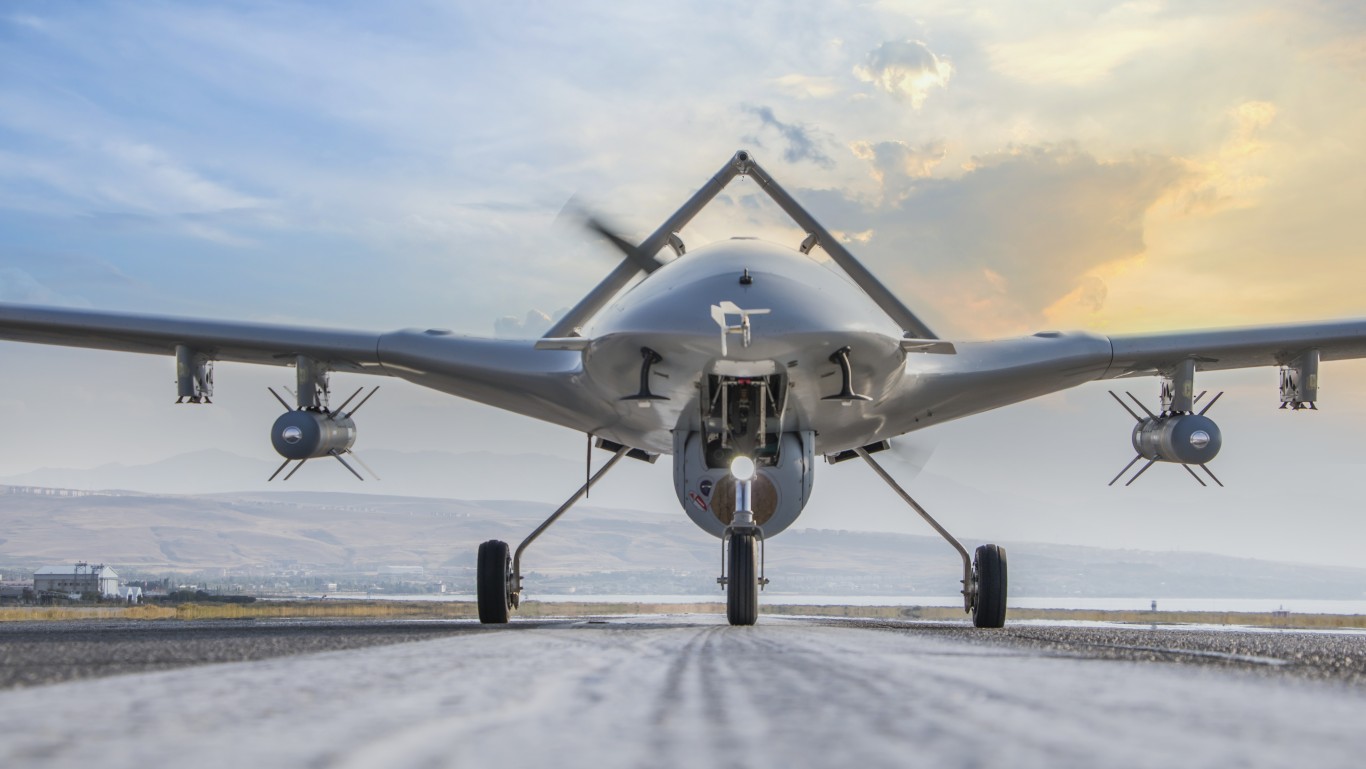
- Country or operator: Turkey
- Manufacturer: Baykar
- Drone type: Armed UAV
- Year introduced to service: 2014
- Maximum endurance: 27 hours
- Maximum range: 150 km
- Payload / armament: MAM-L / MAM-C precision bombs
- Key battlefield role: Affordable strike drone
The Bayraktar TB2 gained international attention for its role in several modern conflicts. Affordable and relatively easy to operate, it provides long-endurance surveillance and precision strike capability. Armed with guided munitions, the TB2 allows smaller militaries to field effective aerial strike platforms without investing in expensive fighter aircraft.
Bayraktar Akinci
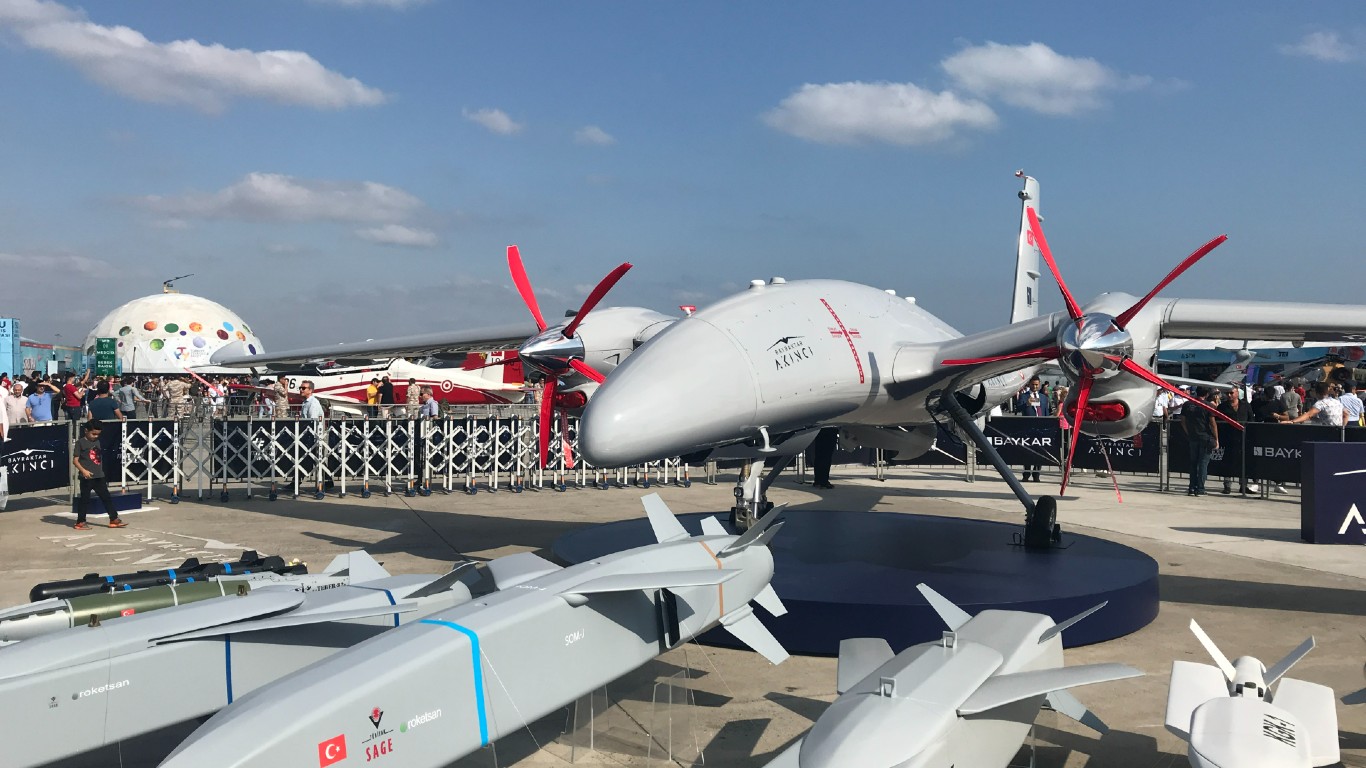
- Country or operator: Turkey
- Manufacturer: Baykar
- Drone type: Heavy UCAV
- Year introduced to service: 2021
- Maximum endurance: 24+ hours
- Maximum range: Satellite controlled
- Payload / armament: Smart bombs, cruise missiles
- Key battlefield role: High-end strike drone
The Bayraktar Akinci represents a new generation of heavier combat drones with greater payload and endurance. Designed to carry a wide range of guided weapons, the drone can perform missions similar to manned strike aircraft. Its advanced sensors and long-range capabilities highlight the growing sophistication of modern unmanned combat systems.
Anka-S
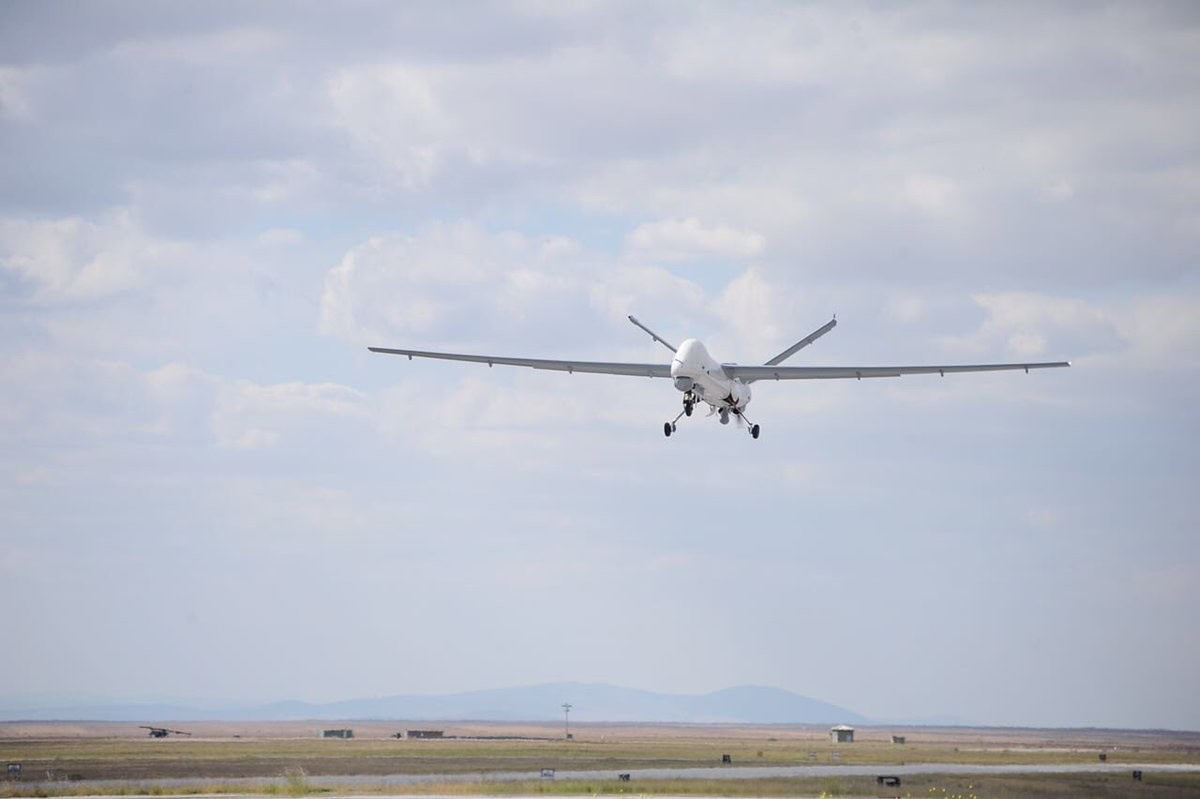
- Country or operator: Turkey
- Manufacturer: Turkish Aerospace Industries
- Drone type: Armed UAV
- Year introduced to service: 2016
- Maximum endurance: 24 hours
- Maximum range: Satellite controlled
- Payload / armament: MAM-L / smart munitions
- Key battlefield role: Long-endurance ISR and strike
The Anka-S is Turkey’s long-endurance armed UAV designed to conduct intelligence, surveillance, and strike missions. Equipped with satellite communications, it can operate at extended ranges while delivering precision-guided munitions. Its combination of endurance and connectivity allows it to support military operations across large regions.
IAI Harop
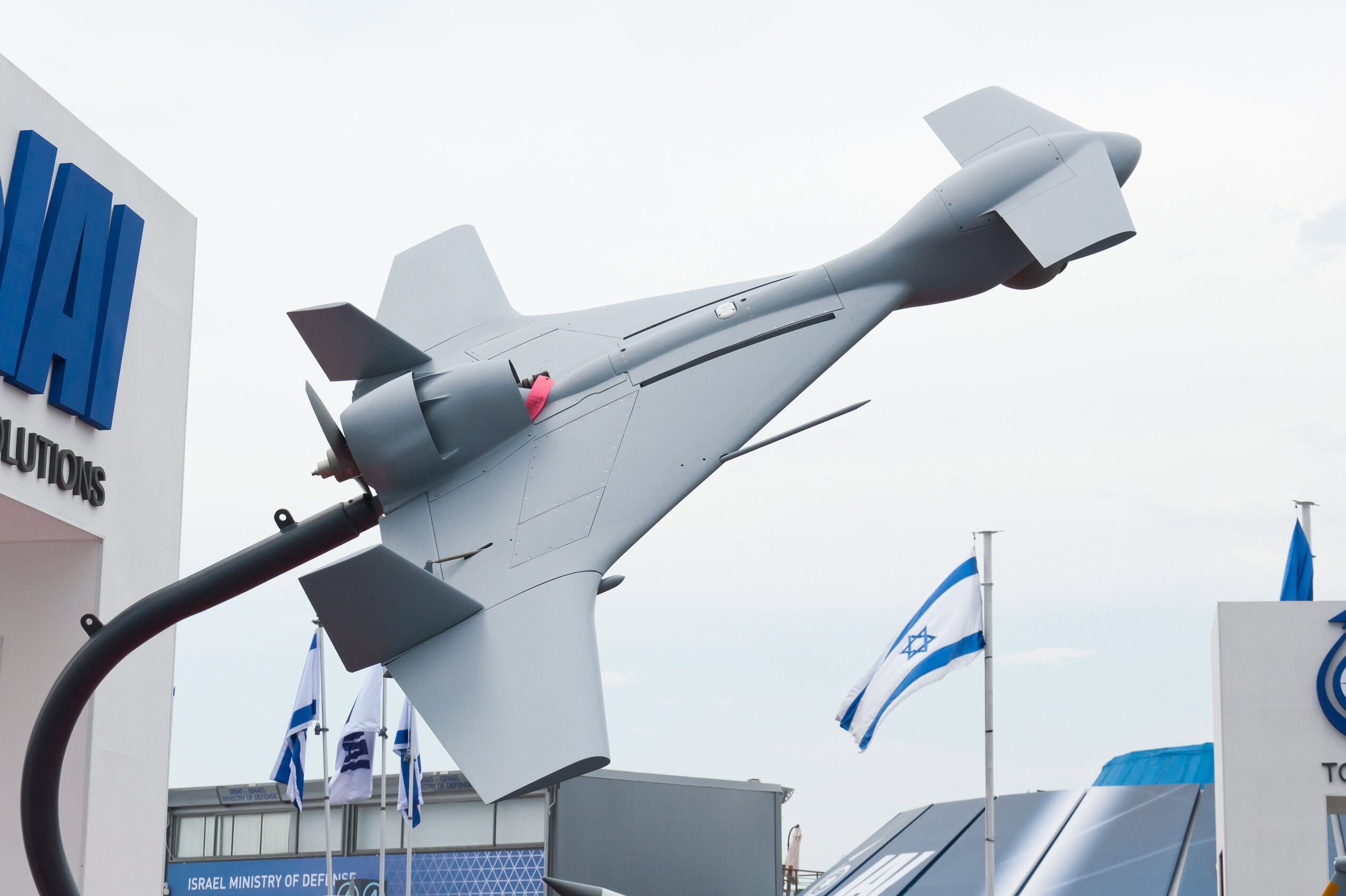
- Country or operator: Israel
- Manufacturer: Israel Aerospace Industries
- Drone type: Loitering Munition
- Year introduced to service: 2009
- Maximum endurance: 6 hours
- Maximum range: 1,000 km
- Payload / armament: Explosive payload
- Key battlefield role: Anti-radar loitering drone
The IAI Harop is a loitering munition designed to search for radar emissions and destroy enemy air defense systems. Once launched, it can patrol an area until it detects a target before diving into it with an explosive payload. This capability makes the Harop particularly effective in suppressing enemy air defenses.
IAI Harpy
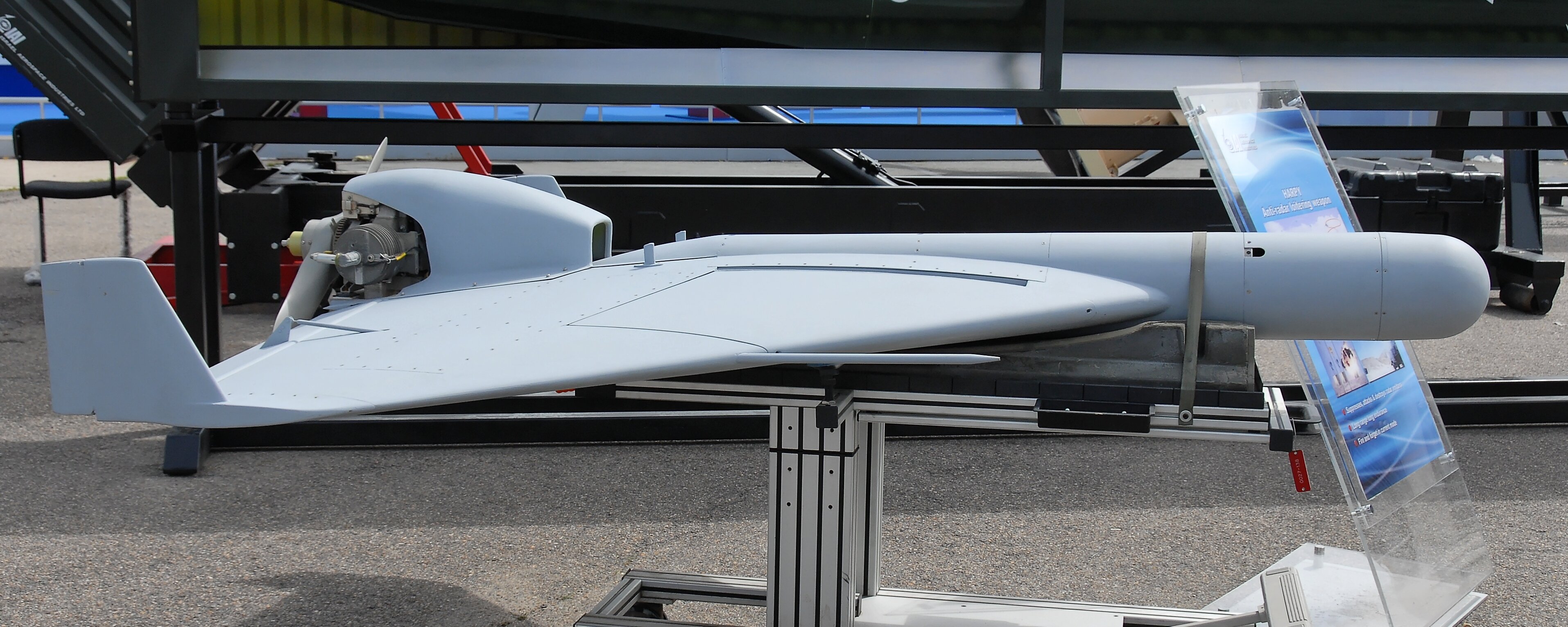
- Country or operator: Israel
- Manufacturer: Israel Aerospace Industries
- Drone type: Loitering Munition
- Year introduced to service: 1994
- Maximum endurance: 2 hours
- Maximum range: 500 km
- Payload / armament: Explosive payload
- Key battlefield role: Suppression of enemy air defenses
The IAI Harpy is one of the earliest operational loitering munitions designed specifically to destroy radar systems. The drone automatically seeks out radar emissions and attacks the source, allowing militaries to neutralize air defense networks. This capability has made the Harpy a key tool for opening airspace during modern military operations.
Hero-120
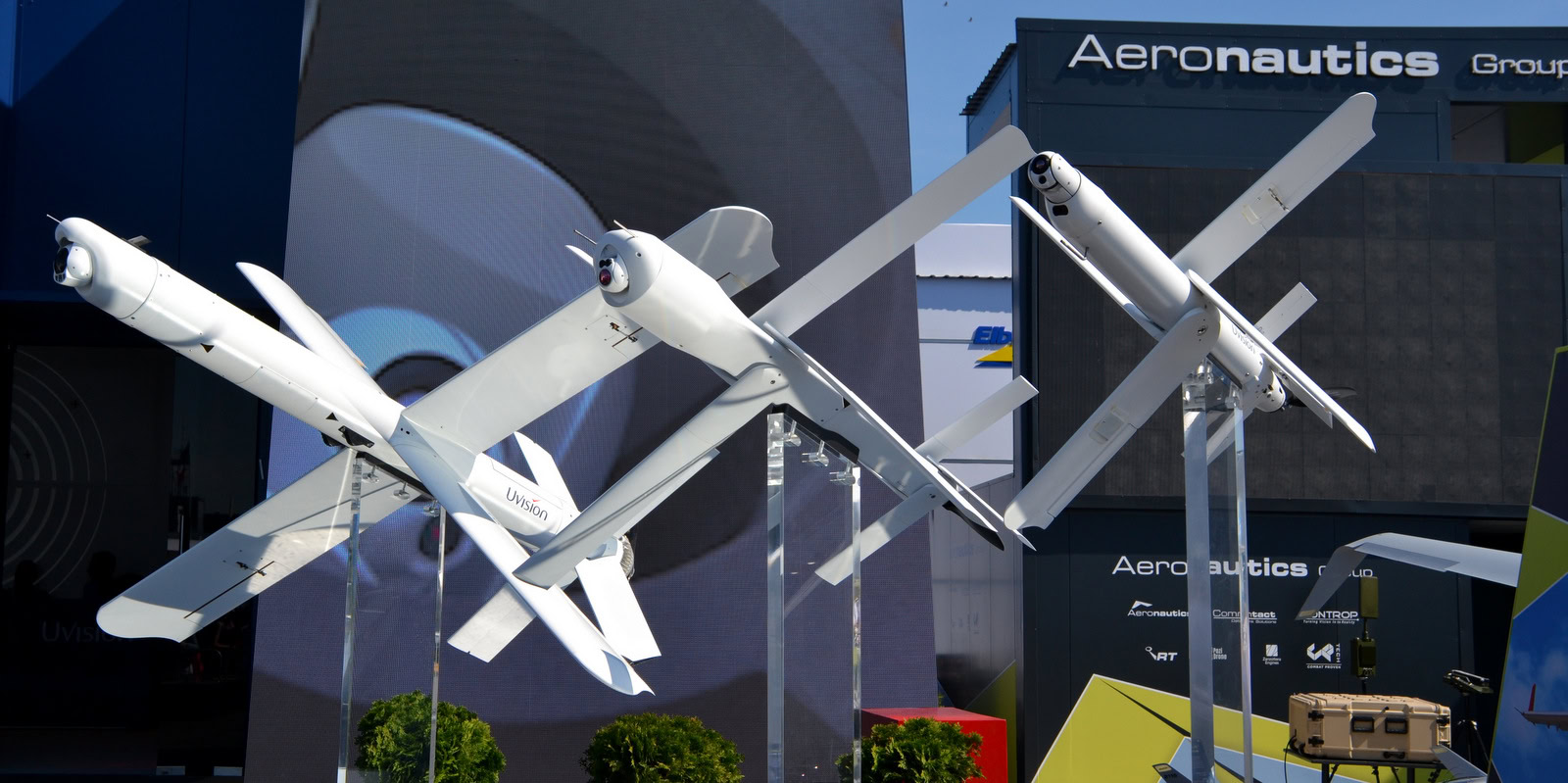
- Country or operator: Israel
- Manufacturer: UVision
- Drone type: Loitering Munition
- Year introduced to service: 2015
- Maximum endurance: 60 minutes
- Maximum range: 40 km
- Payload / armament: Anti-armor warhead
- Key battlefield role: Precision anti-vehicle strikes
The Hero-120 is a loitering munition designed to strike armored vehicles and fortified targets. Operators can guide the drone toward targets in real time, allowing for highly precise attacks. Its compact design and powerful warhead make it a versatile weapon for modern battlefield environments.
Wing Loong II
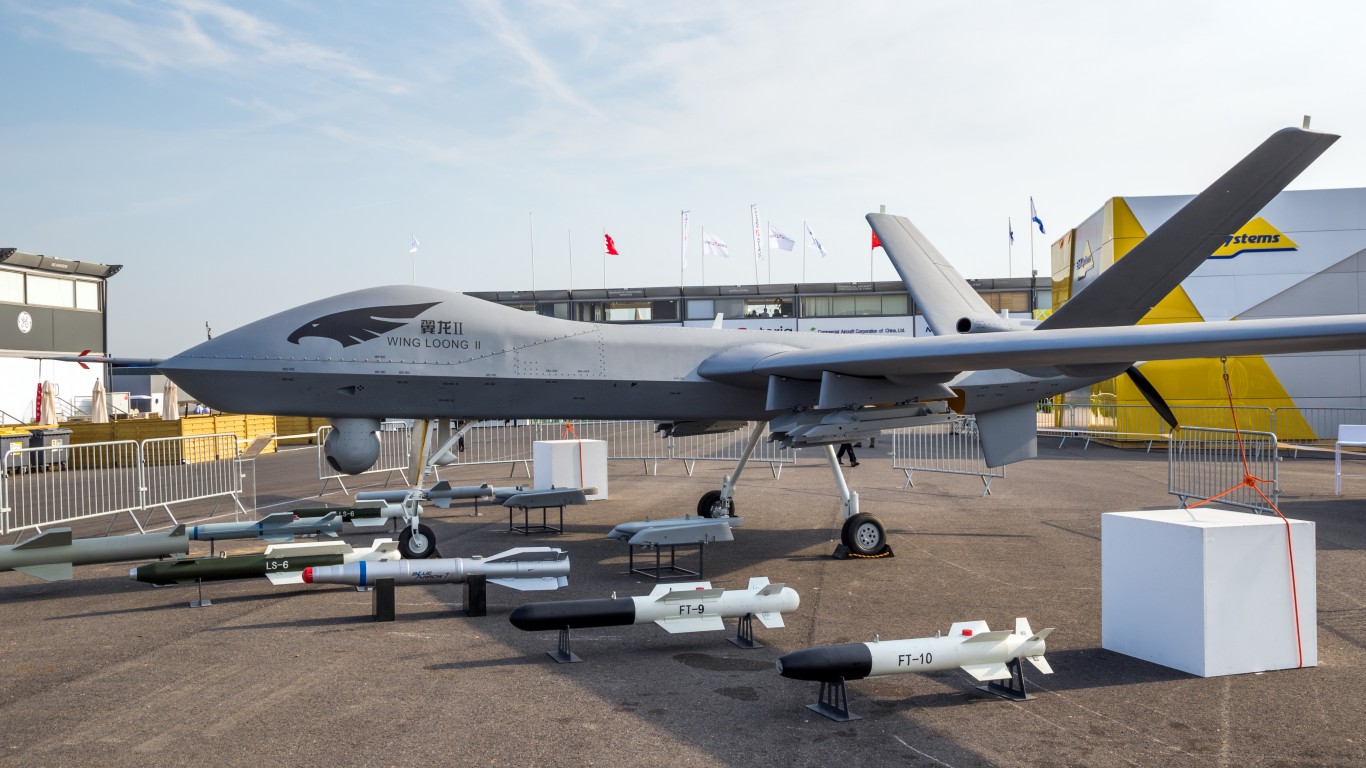
- Country or operator: China
- Manufacturer: Chengdu Aircraft Industry Group
- Drone type: Armed UAV
- Year introduced to service: 2017
- Maximum endurance: 32 hours
- Maximum range: 4,000 km
- Payload / armament: Air-to-surface missiles
- Key battlefield role: Long-endurance strike UAV
China’s Wing Loong II is a long-endurance armed drone capable of conducting surveillance and strike missions. With a large payload capacity and multiple weapon options, it provides many countries with an affordable alternative to Western UAV systems. Its export success demonstrates the growing global demand for combat drones.
CH-4 Rainbow
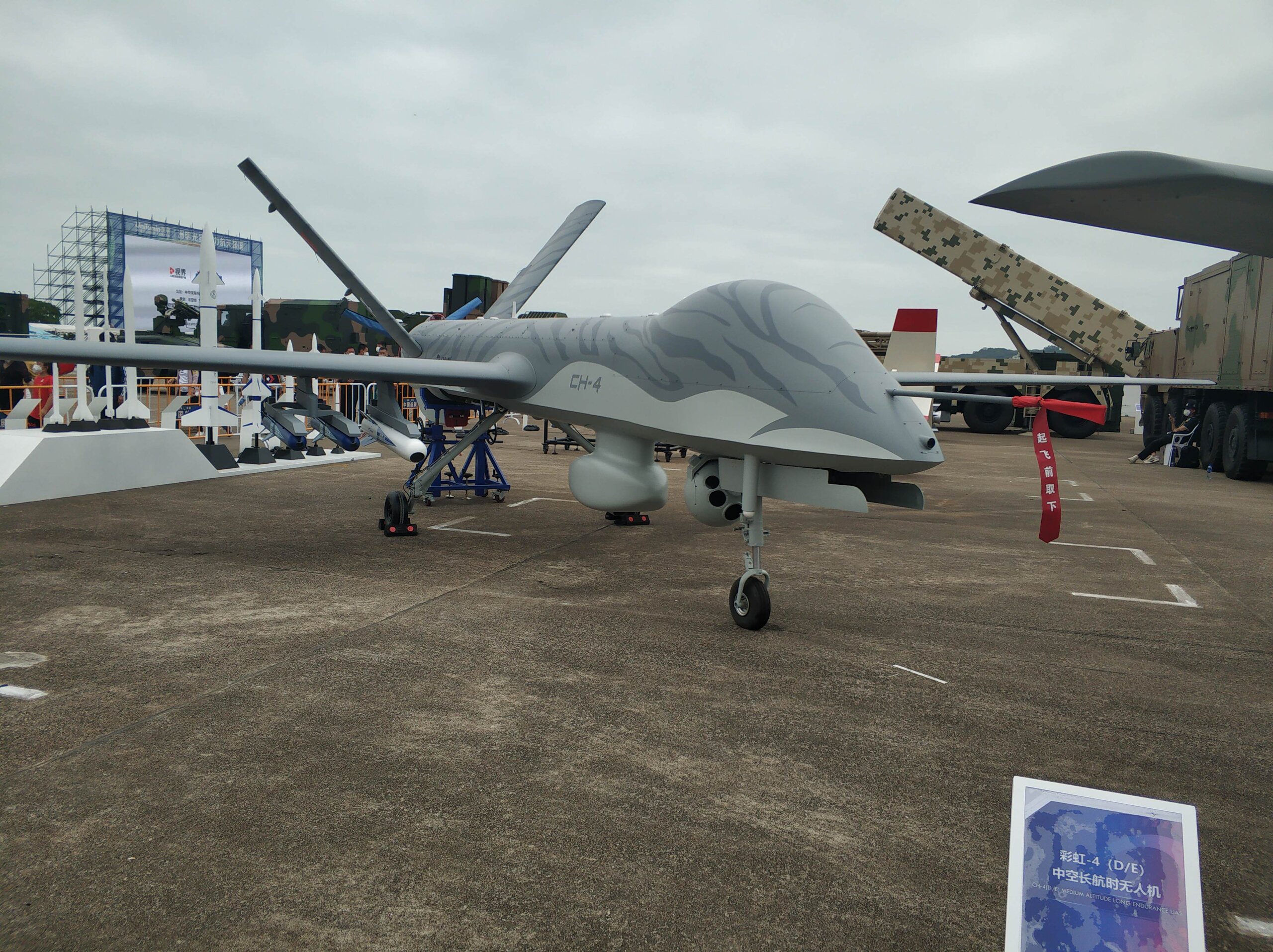
- Country or operator: China
- Manufacturer: CASC
- Drone type: Armed UAV
- Year introduced to service: 2014
- Maximum endurance: 30 hours
- Maximum range: 3,500 km
- Payload / armament: Precision-guided bombs
- Key battlefield role: Export strike drone
The CH-4 Rainbow is a Chinese combat drone widely exported to international customers. Designed for intelligence gathering and strike missions, it can carry precision-guided bombs and missiles. Its relatively low cost has helped expand the use of armed drones among countries seeking modern airpower capabilities.
CH-5 Rainbow
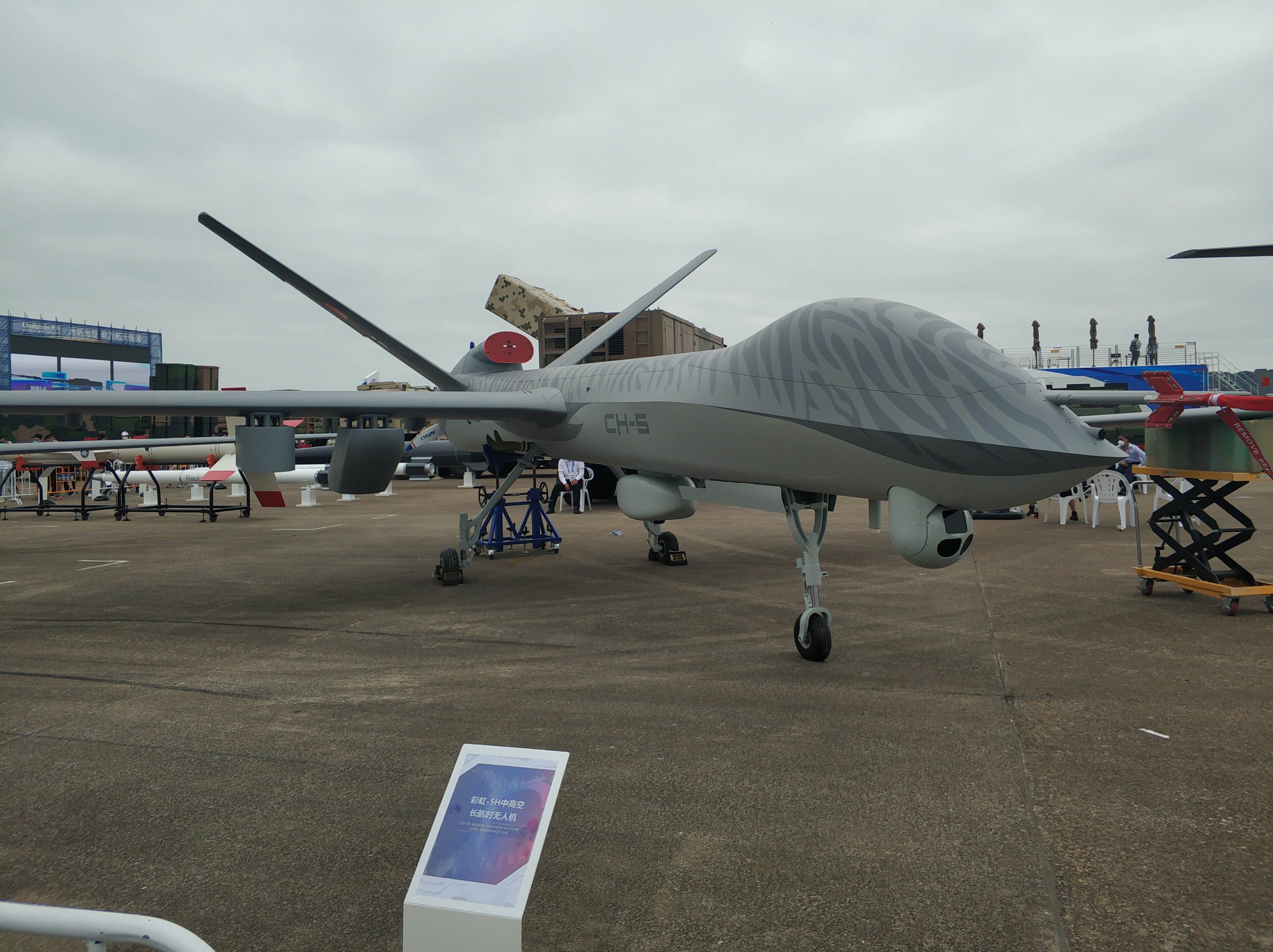
- Country or operator: China
- Manufacturer: CASC
- Drone type: Heavy UCAV
- Year introduced to service: 2017
- Maximum endurance: 60 hours
- Maximum range: 10,000 km
- Payload / armament: Guided missiles and bombs
- Key battlefield role: Ultra long-endurance UAV
The CH-5 Rainbow is a large unmanned combat aircraft designed for extended missions. With extremely long endurance and a substantial payload capacity, it can remain over the battlefield for long periods while conducting surveillance or strike operations. This capability makes it suitable for long-range monitoring and precision attack missions.
Lancet
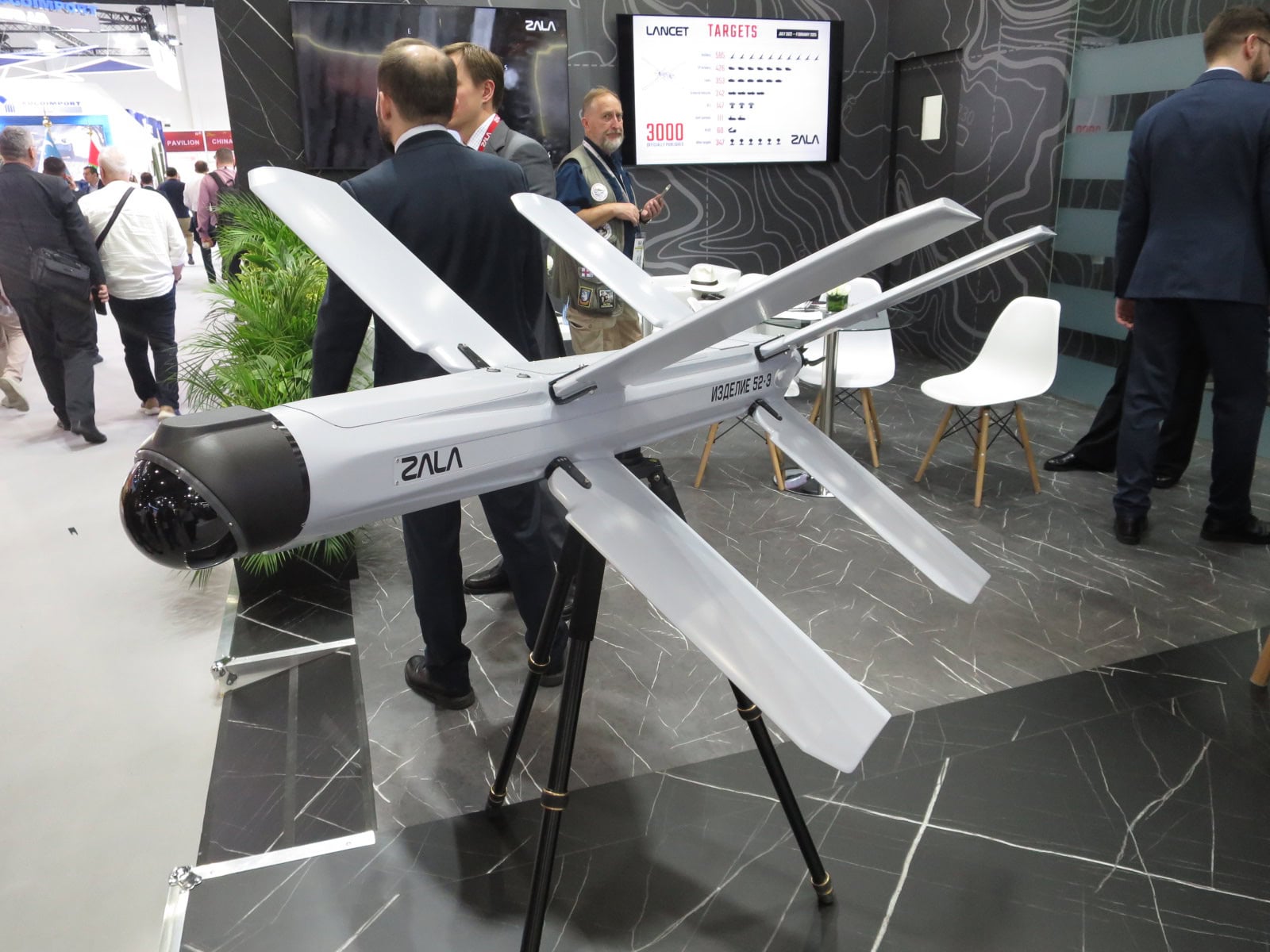
- Country or operator: Russia
- Manufacturer: ZALA Aero
- Drone type: Loitering Munition
- Year introduced to service: 2019
- Maximum endurance: 40 minutes
- Maximum range: 40 km
- Payload / armament: Explosive warhead
- Key battlefield role: Precision loitering attack drone
The Lancet is a Russian loitering munition designed for precision strikes against high-value battlefield targets. Once launched, it can search for vehicles, artillery systems, or defensive positions before diving into the target with an explosive payload. Its ability to strike quickly makes it a dangerous tool for disrupting enemy operations.
Orion (Inokhodets)
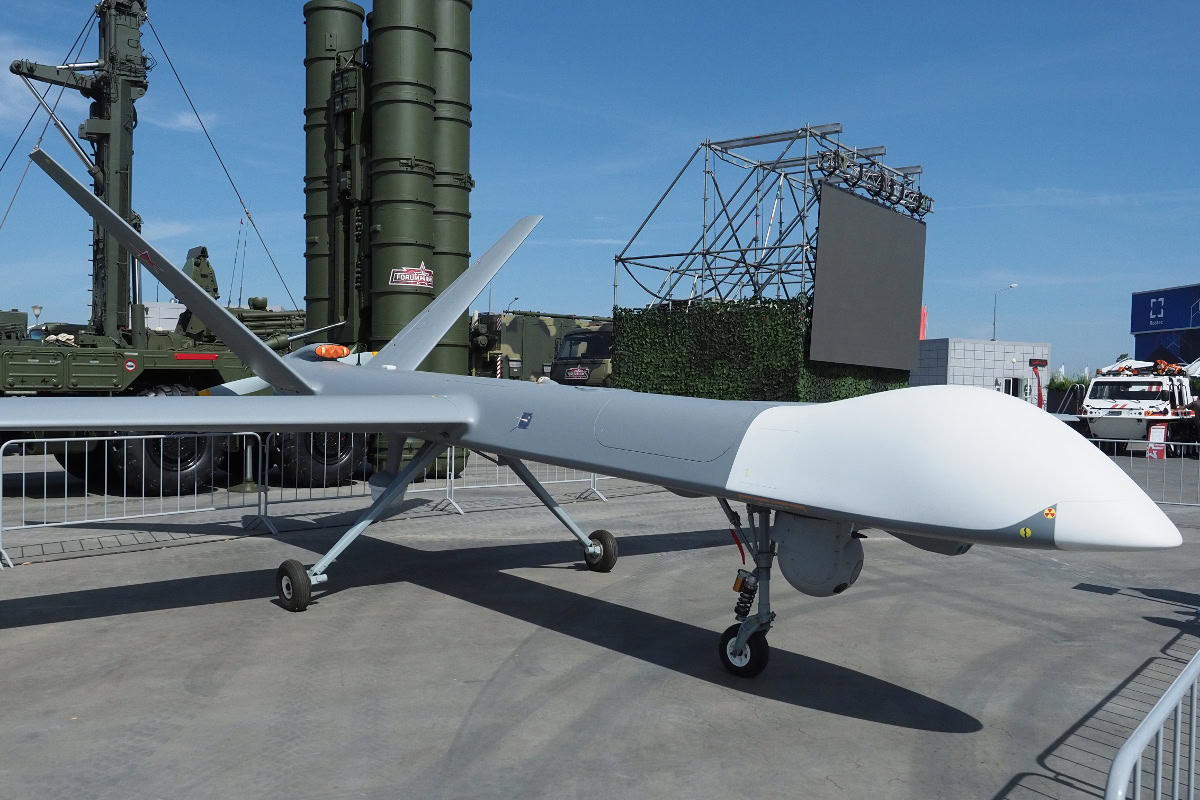
- Country or operator: Russia
- Manufacturer: Kronshtadt
- Drone type: Armed UAV
- Year introduced to service: 2020
- Maximum endurance: 24 hours
- Maximum range: 250 km
- Payload / armament: Guided missiles
- Key battlefield role: Russian medium-altitude strike drone
The Orion drone represents Russia’s effort to field a modern armed UAV capable of performing long-endurance reconnaissance and strike missions. Equipped with guided weapons and advanced sensors, it allows Russian forces to conduct surveillance and targeted attacks without risking pilots.
Shahed-136
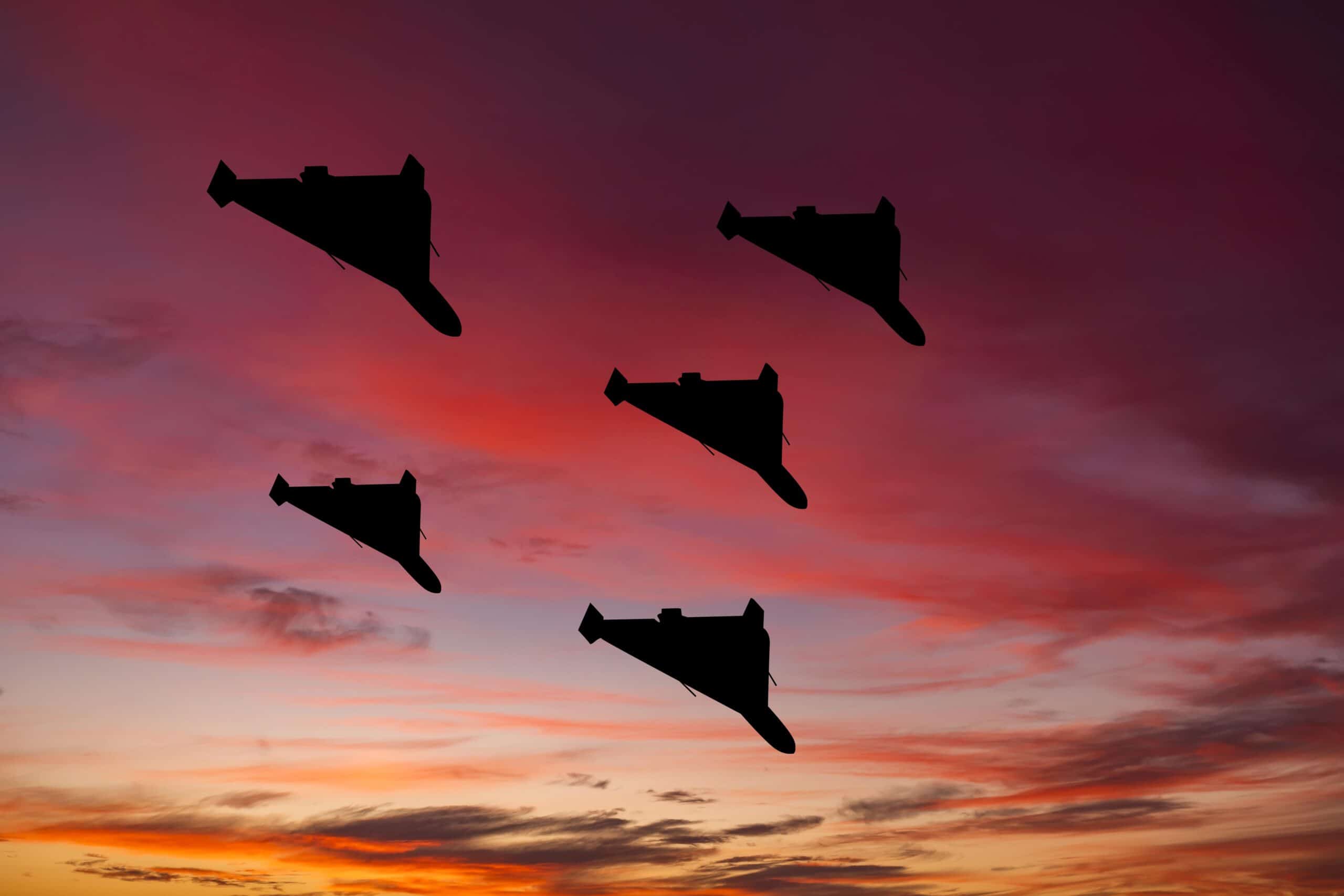
- Country or operator: Iran
- Manufacturer: Shahed Aviation
- Drone type: Loitering Munition
- Year introduced to service: 2021
- Maximum endurance: Several hours
- Maximum range: 2,000+ km
- Payload / armament: Explosive warhead
- Key battlefield role: Long-range kamikaze drone
The Shahed-136 is a long-range loitering munition designed to strike targets far behind enemy lines. Often launched in large numbers, it can overwhelm defenses and strike infrastructure or military positions. Its relatively low cost has made it a widely discussed example of how drones are reshaping modern warfare.
Shahed-129
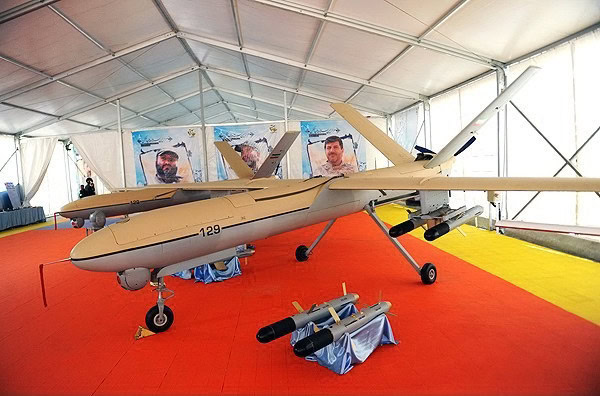
- Country or operator: Iran
- Manufacturer: Shahed Aviation
- Drone type: Armed UAV
- Year introduced to service: 2013
- Maximum endurance: 24 hours
- Maximum range: 1,700 km
- Payload / armament: Guided bombs and missiles
- Key battlefield role: Persistent strike UAV
The Shahed-129 is an Iranian armed drone designed for surveillance and strike missions. With long endurance and the ability to carry guided munitions, it provides Iran with a persistent aerial strike capability. Its development reflects the growing emphasis on indigenous drone technology.
Eurodrone (MALE RPAS)
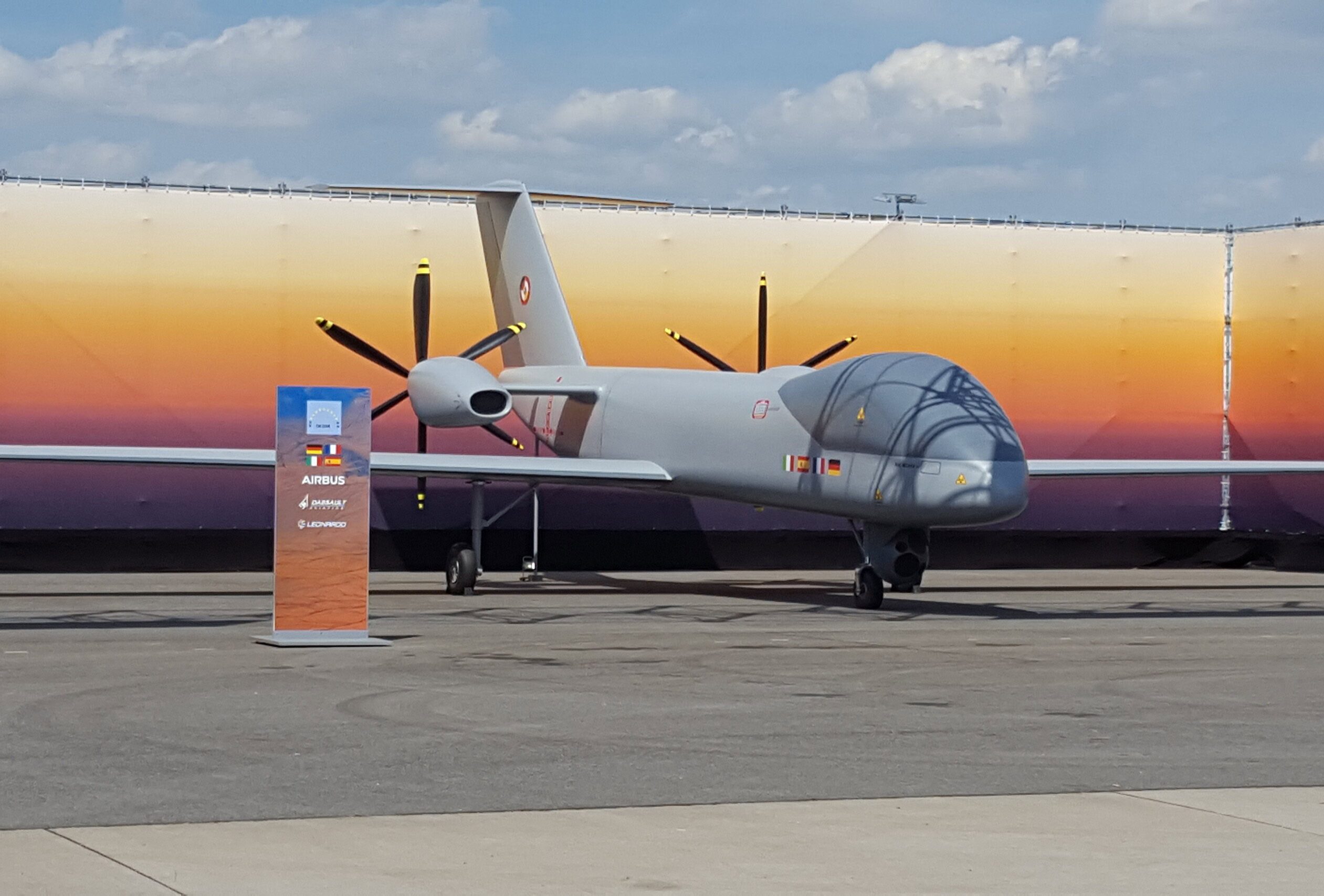
- Country or operator: Europe
- Manufacturer: Airbus / Dassault / Leonardo
- Drone type: Armed UAV
- Year introduced to service: Expected mid-2020s
- Maximum endurance: 40 hours
- Maximum range: Satellite controlled
- Payload / armament: Precision-guided weapons
- Key battlefield role: Next-gen European UAV
The Eurodrone program represents a collaborative European effort to develop a modern medium-altitude long-endurance combat drone. Designed to provide surveillance and strike capabilities for European militaries, it aims to reduce reliance on foreign UAV systems while strengthening regional defense technology.
MQ-20 Avenger
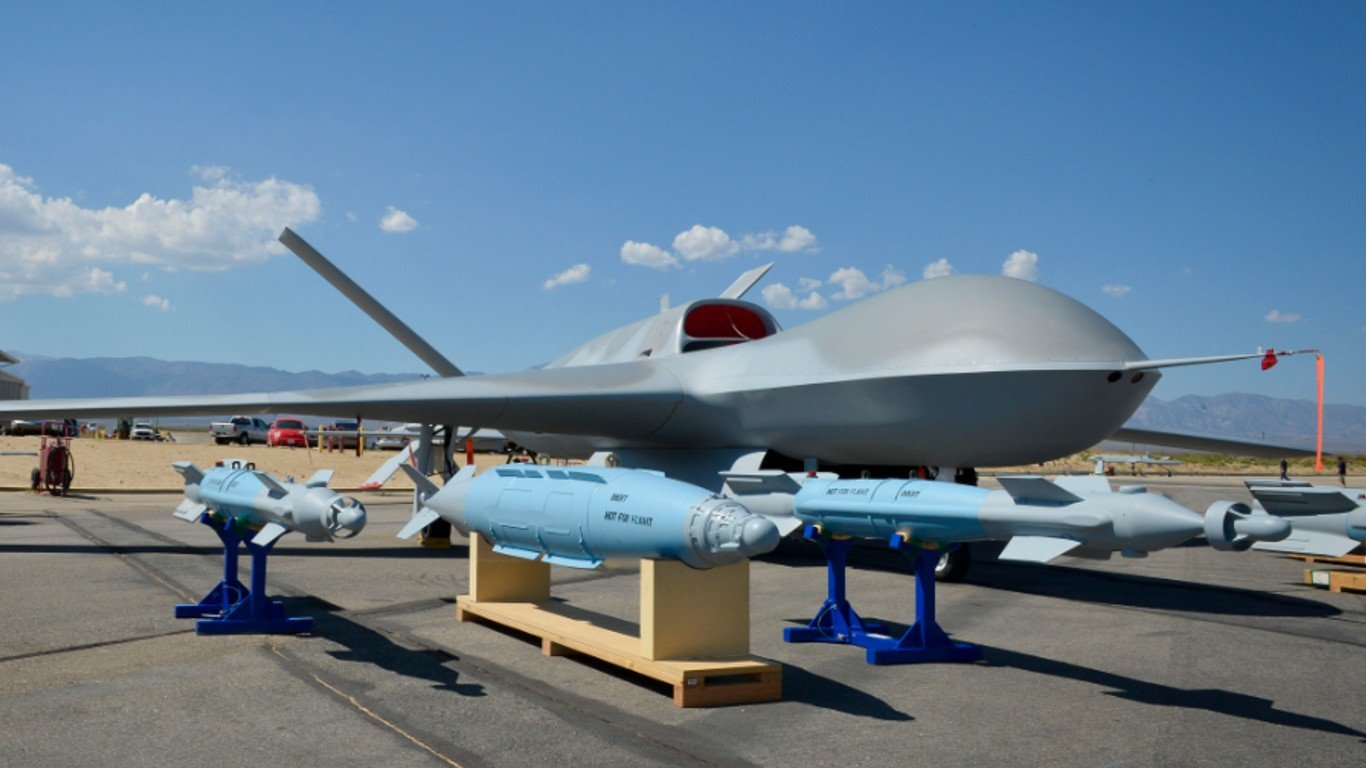
- Country or operator: United States
- Manufacturer: General Atomics
- Drone type: Stealth UCAV
- Year introduced to service: 2016
- Maximum endurance: 20 hours
- Maximum range: Satellite controlled
- Payload / armament: Precision-guided weapons
- Key battlefield role: High-speed stealth drone
The MQ-20 Avenger is a high-performance combat drone designed to combine stealth features with jet-powered speed. Unlike many propeller-driven UAVs, the Avenger can travel faster and carry heavier payloads. This design points toward a future where unmanned aircraft increasingly resemble traditional combat jets.
Contact [email protected] for any questions or corrections.
Chris Lange is a financial and geopolitical writer with more than a decade of experience covering a myriad of topics. He has published thousands of articles for 24/7 Wall St., with past coverage focused heavily on stocks, IPOs, healthcare, defense, global affairs, and technology.
His work has been quoted, or referenced by a number of outlets including Business Insider, USA Today, Yahoo Finance, MSN, The Motley Fool, and many other publications. A graduate of Southwestern University, he studied business with a focus on investments and has previous experience in banking and startups.
When not reading or writing the news, he is following his passion for Lacrosse, playing chess, or building solar projects with his dad.