Dave Ramsey shares some blunt advice for if you’ve made it financially and your friends call you greedy
Recently, a single mother sent in a question to the Dave Ramsey show to get some advice. She said she had followed Ramsey's tips and was doing well financially, becoming debt-free with an emergency fund and a house that will…

This post may contain links from our sponsors and affiliates, and Flywheel Publishing may receive compensation for actions taken through them.

A single mother recently sent a question to the Dave Ramsey show asking for guidance on an uncomfortable situation. She had followed Ramsey’s framework and was doing well: debt-free, a solid emergency fund, and a house almost entirely paid off. The people around her, though, were not celebrating.
At church gatherings and family events, she faced complaints about rising prices, snide comments about haves versus have-nots, and the blunt assertion that anyone who owns a home and holds investments is rich, greedy, and profiting at everyone else’s expense. She wanted to know what Ramsey thought she should do about it.
Ramsey had some very blunt advice for this caller, and it is advice worth hearing.
The case for “stealth wealth”
One practical way to sidestep this kind of resentment is by practicing what personal finance experts call “stealth wealth.” Reaching major financial milestones is worth celebrating, but keeping those details private is often the simplest way to protect your peace. Nobody is owed your financial blueprint, least of all extended family members or a church group. Keeping your net worth and investment strategies to yourself means you stop feeding the financial insecurities of others while you quietly keep building.
This approach has grown more relevant as wealth-related resentment becomes a recognizable feature of everyday social life. A 2024 Empower survey of 2,203 Americans found that the average respondent believes an annual income of $270,000 qualifies as financial success, more than triple the median U.S. household income. That same survey put the net worth threshold for success at $5.3 million. The generational spread is striking: Gen Z respondents set the income bar at nearly $600,000 per year, while boomers placed it closer to $100,000. That wide perception gap fuels precisely the “haves versus have-nots” tension the caller described. As the broader “quiet money” cultural shift gains traction in 2025 and 2026, with paid-off homes increasingly viewed as a bigger marker of success than flashy cars or designer labels, discretion about your finances is a genuinely useful strategy regardless of your net worth.
Here’s what to do if your friends criticize your efforts at success
Ramsey did not mince words when he replied to the caller. “You need some new friends,” he said. “Shake the dust off your sandals and keep moving.” Co-host Dr. John Delony was part of the conversation. Delony holds two PhDs from Texas Tech University, one in Counselor Education and Supervision and the other in Higher Education Administration (both completed in 2018). He joined Ramsey Solutions in 2020 after more than two decades in crisis response and higher education leadership, and is now a three-time national bestselling author. His clinical background gave real weight to the conversation.
Ramsey described the negative commentators as “energy vampires, sucking the blood out of your soul,” and warned that this brand of negativity is contagious. His reasoning is simple: people tend to mirror the attitudes and habits of those they spend the most time with. “You become who you hang around with,” Ramsey said. “You talk like them, you think like them.”
He also made a long-range financial case for curating your social circle. “Fifteen years from today, your income will be within 10% to 15% of the average of your 10 closest friends’ income,” Ramsey explained. That point connects directly to research by Harvard economist Raj Chetty, whose team analyzed data from 21 billion friendships among 72.2 million U.S.-based Facebook users aged 25 to 44. Published in two papers in the journal Nature in August 2022, the research found that cross-income friendships are a strong predictor of upward mobility. Low-income children who grew up in counties where they could form friendships with higher-income peers saw their adult incomes rise by roughly 20% on average, the researchers found. Ramsey suggested limiting time with negative people to whatever energy she has left over after trying to help them, and drew a parallel between her situation and a recovering addict who had to leave substance-using friends behind in order to build a healthier life.
Should you ditch your friends if they aren’t on the same financial page?

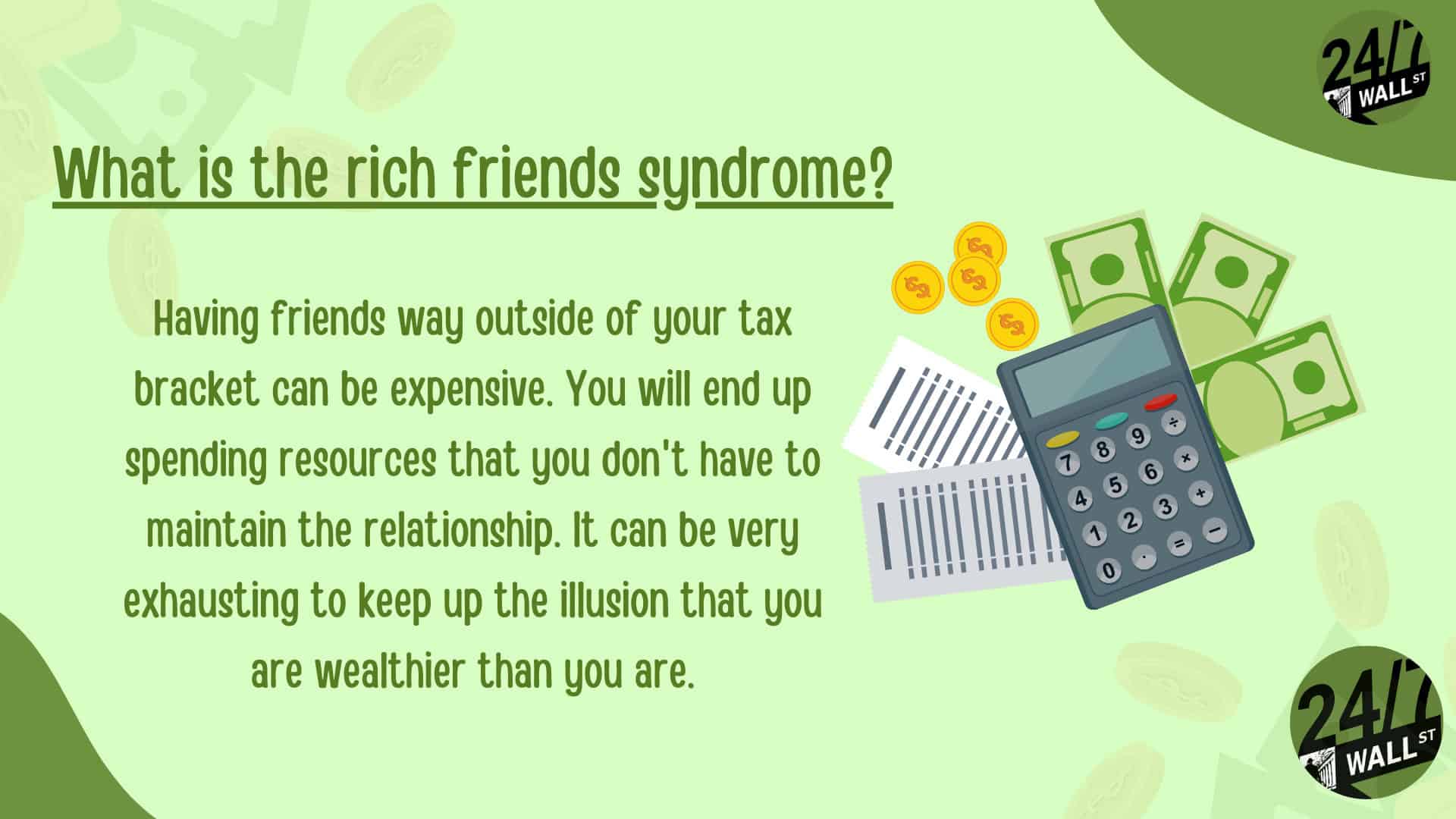
Ramsey made clear that the woman did not have to be cruel about pulling back, only that she should limit access. That is a reasonable position when those people are actively penalizing her for her own hard-won success. Real friends celebrate when someone they care about gets ahead financially. They do not tear that person down for making the sacrifices required to get there.
Delony reinforced the point with a practical observation: time spent with people jealous of your financial progress is time taken away from your partner, your kids, or others who genuinely support you. The National Institutes of Health has published research that puts the stakes clearly. High-quality friendships provide understanding, support, and validation of your self-worth, while low-quality friendships fraught with conflict, criticism, and aggression are linked to poor outcomes including anxiety and depression.
Both Ramsey and Delony acknowledged that making new friends as an adult is genuinely difficult. Continuing to spend significant time with people who hold a victim mindset carries its own costs, though. If her friends consistently tear down her achievements, staying motivated to pay off the house and keep building wealth becomes harder over time. That negativity quietly normalizes excuse-making rather than accountability.
How to set firm financial boundaries
Ramsey’s advice to “shake the dust off your sandals” is sound, but practically speaking, you cannot always cut family members or community ties instantly. Having a script ready for shutting down these conversations gracefully is just as important. When a family member or acquaintance starts in on snide comments about your choices, respond politely but firmly: “I’ve worked really hard to get to a secure place, and I prefer not to talk about finances when we’re together. Let’s change the subject.” Using that line consistently leaves no room for debate and gives “energy vampires” no reaction to feed on.
Finding new, supportive friends who share a similar financial mindset raises the odds of long-term success. Encouragement keeps people on track, shared goals create accountability, and a group of financially motivated peers can trade ideas that move everyone forward. As Ramsey framed it, the issue is not about having friends with less money. It is about being surrounded by people who tear you down for something you should be proud of.
Whether the criticism is about money, fitness, or any other self-improvement goal, the same principle applies. The people in your corner should celebrate your wins, not resent you for having them.
Editor’s note: This pass added the generational breakdown from the 2024 Empower survey, noting that Gen Z respondents set the income threshold for financial success at nearly $600,000 per year while boomers placed it around $100,000, and incorporated the Chetty research finding that low-income children with cross-income friendships saw their adult incomes rise by roughly 20% on average.
Contact [email protected] for any questions or corrections.
Christy Bieber has been a personal finance and legal writer since 2008. She has a JD from UCLA School of Law and a BA in English, Media and Communications with a certification in business from the University of Rochester.
Christy has been published by a wide variety of sites, including WSJ Buy Side, Forbes, Kiplinger, Fox Business, Credit Karma, Insurify, and Annuity.org. In addition to writing for the web, she has also ghostwritten textbooks on business and law and served as a subject matter expert for course design.