Dave Ramsey: “You Could Live Another 30 Years” to 70-Year-Old With $500k Nest Egg
Market timing anxiety intensifies as investors approach retirement, especially when headlines warn of economic turbulence. On a January 2026 episode of The Ramsey Show, a caller named Robert from Nashville shared his dilemma. At 70 years old and planning to…

This post may contain links from our sponsors and affiliates, and Flywheel Publishing may receive compensation for actions taken through them.
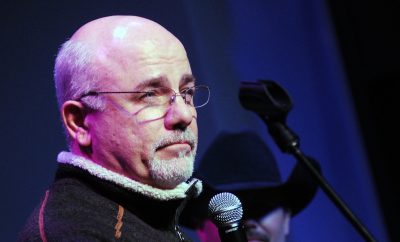
Market timing anxiety intensifies as investors approach retirement, especially when headlines warn of economic turbulence. The impulse to abandon a winning strategy at the finish line can be overwhelming, but it may also be one of the costliest mistakes a late-career investor can make.
On a January 2026 episode of The Ramsey Show, a caller named Robert from Nashville laid out his dilemma. At 70 years old and planning to retire by year’s end, Robert and his wife had built a $400,000 nest egg across their 401(k) and Roth accounts, plus $100,000 in a high-yield savings account. His portfolio had compounded at 10.89% annually over 23 years, with 93% allocated to stocks. With gold prices elevated and economic uncertainty rising, Robert wondered whether he should shift part of his retirement into a money market fund.
“Way to go. That’s exactly what we tell people you should be,” Ramsey responded about Robert’s returns. The message was direct: don’t abandon equities because of fear. “You could live another 30 years,” Ramsey reminded Robert, pointing out that his wife planned to live to 100. “You are missing out on a whole lot of returns” by moving to bonds out of panic.
Where the Advice Holds Up
Ramsey’s core insight is mathematically grounded. A 70-year-old with a spouse targeting a lifespan of 100 faces a potential 30-year investment horizon, which means the portfolio still has decades of compounding ahead. The historical record backs maintaining equity exposure over such a stretch. The S&P 500 averaged 14.4% annually over the five years from January 2021 through December 2025, well above the long-run historical norm. Over the 10 years from January 2016 through December 2025, the average annualized return came in at 14.8%. Those figures dwarf what bonds have produced in the same periods, illustrating why abandoning equities could cost Robert substantial growth over three decades.
The purchasing power argument also runs strongly in Ramsey’s favor. Shifting the nest egg into bonds would generate modest annual income, but inflation reduces purchasing power steadily, and over time equities have tended to outpace inflation while cash has often lost ground to it. The seemingly cautious move can actually guarantee a declining standard of living if the cost of goods and services rises faster than fixed-income yields allow.
What the Advice Leaves Out
Ramsey’s guidance assumes Robert can absorb a 30% to 40% portfolio decline without flinching. Maintaining 93% equity exposure means accepting meaningful short-term volatility, and a retiree drawing income during a market downturn faces what researchers call sequence-of-returns risk. The issue refers to how the timing of withdrawals paired with stock market losses can affect how long retirement savings last. Your first five years of retirement are considered the “danger zone” for tapping accounts during a downturn, according to Amy Arnott, a portfolio strategist at Morningstar Research Services. Selling stocks when they’re down locks in losses permanently, because those shares can no longer participate in any subsequent recovery.
The stakes are concrete. If a portfolio dropped by at least 15% in the first year of retirement and a retiree also withdrew 3.3% of the balance, that combination would increase the odds of depleting the portfolio within 30 years by six times compared with someone who experienced a positive first-year return, according to a Morningstar analysis. For Robert, drawing from a 93% equity portfolio with no bond buffer, a rough sequence at the start of retirement could do lasting damage that decades of subsequent growth might not fully repair.
Ramsey’s broader retirement framework adds another dimension worth noting. His framework calls for retirees to invest 100% of their portfolio in equities and withdraw 8% of the starting balance each year, adjusting upward for inflation. He has dismissed the widely accepted 4% rule as “absolutely wrong” and “ridiculous,” arguing that long-term stock market returns of 10% to 12% make a higher withdrawal rate perfectly sustainable. That position sits in sharp contrast with current research. For 2026, Morningstar’s base-case safe starting withdrawal rate is 3.9%, with higher bond yields cited as the main driver of a modest uptick from prior years. That figure assumes a portfolio holding 30% to 50% in equities; Morningstar found that more equity-heavy portfolios generally do not support the highest safe withdrawal rates, because the greater volatility creates more sequence-of-returns risk.
Financial planners widely recommend that retirees hold three to five years of living expenses in cash or short-term bonds while keeping the remainder invested. That buffer lets retirees cover spending needs without being forced to sell stocks at depressed prices during a downturn.
How Retirees Should Think About This
Robert’s situation also deserves a quick reality check on the longevity math Ramsey invoked. In 2024, life expectancy at age 65 for the total U.S. population was 19.7 additional years, according to the CDC, which would put the average 65-year-old’s lifespan at roughly 85. For women at 65, that figure was 20.8 additional years, compared with 18.4 years for men. A plan running to age 100 is a reasonable upper-bound target for a couple wanting to avoid outliving their savings, but it represents a lifespan well beyond the statistical average, which matters when deciding how aggressively to invest.
The 30-year horizon is real, and for a couple determined to preserve spending power across that span, equities remain a necessary part of the portfolio. The open question is how much cushion Robert holds to weather the early years without forced selling. Those who can avoid withdrawals during downturns may benefit from high equity exposure. Those who cannot should keep a meaningful cash reserve rather than relying on the market to cooperate with their withdrawal schedule.
Editor’s note: This article was updated to include current S&P 500 return figures from Fidelity (14.4% five-year and 14.8% ten-year average annual returns through December 2025), CDC life expectancy data showing the average American at age 65 can expect roughly 19.7 additional years of life, Morningstar’s 2026 safe withdrawal rate of 3.9%, and Morningstar’s research identifying the first five years of retirement as the “danger zone” for sequence-of-returns risk.
Contact [email protected] for any questions or corrections.
Austin Smith is a financial publisher with over two decades of experience as an investor, analyst, and advisor. He covers stocks, ETFs, Artificial intelligence and personal finance for 24/7 Wall St. Previously, he spent over a decade at The Motley Fool as a senior editor for Fool.com, portfolio advisor for Millionacres, and launched The Ascent to help reader take control of their personal finances.
His work has been featured on Fool.com, NPR, CNBC, USA Today, Yahoo Finance, MSN, AOL, Marketwatch, and many other publications. He is as an advisor to private companies, and co-hosts The AI Investor Podcast with Eric Bleeker.
When not looking for investment opportunities, he can be found skiing, running, or playing soccer with his children. Learn more about Austin's investment approach here.