I Want to Start a Vending Machine Business: Should I Really Save $3,330 in Cash First?
George Kamel watched a TikToker break down the startup costs for a vending machine side hustle and landed on a number: $3,330.22. His advice was direct: save it in cash, not borrowed or on a credit card. If you cannot…

This post may contain links from our sponsors and affiliates, and Flywheel Publishing may receive compensation for actions taken through them.
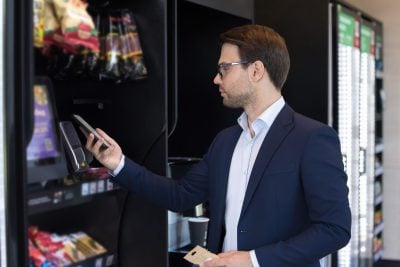
George Kamel watched a TikToker break down the startup costs for a vending machine side hustle and landed on a number: $3,330.22. His advice was direct: save it in cash, not borrowed or on a credit card. If you cannot save the full amount, you cannot afford the business yet.
I’ve been studying side-hustle economics and small-business funding traps for years, and my verdict matches Kamel’s. A $3,330 startup funded with debt can quietly turn into a money-losing operation before you sell your first Monster energy drink.
Why borrowing breaks the business
Put $3,330 on a credit card at a typical purchase APR and you owe interest from day one. The vending business has thin per-unit margins. A soda you buy in a Costco (NASDAQ:COST | COST Price Prediction) case for under a dollar might sell for $2. That spread has to cover the machine cost, the LLC fee, restocking gas, your time, and now a finance charge stacked on top.
If the machine sits in a low-traffic spot for the first three months while you learn the location, you are paying credit card interest on the full balance while generating almost no revenue. The break-even point on the machine itself stretches from months into a year or more. I’d rather see you save in cash and flip the equation: the worst case is that the machine underperforms and you sell it used, losing time and some depreciation but not your credit score.
The actual $3,330 breakdown
Here is what the TikToker laid out, exactly as Kamel cited it:
- The machine: A cashless, refrigerated Haha vending machine for $3,000. The refrigerated, cashless design means “so many less moving parts, which means less repairs.”
- Costco inventory: Monster energy drinks at $41.99 a case, Gatorade at $15.99, chocolate variety packs at $28.99, crackers at $17.89, chips at $19.89, and soda cases at $18.79 each.
- Business formation: $150 to form an LLC, with the EIN free through the IRS website.
- All-in total: $3,330.22 before you place the machine anywhere.
How fast can you actually save it?
The factor I think determines whether Kamel’s advice helps or hurts you is how fast you can save $3,330. National data shows the math is tight right now. The personal savings rate sat at 4% in the first quarter of 2026, down from 5.8% in the second quarter of 2024. Consumer sentiment registered 53.3 in March 2026, which sits in pessimistic territory.
Run two scenarios. If you can save $500 a month, you have the cash in roughly seven months and launch debt free. If you can only save $100 a month, you are nearly three years out, and my view is the smarter move is to either raise the savings rate or pick a side hustle with a lower entry cost. Either way, the answer is not a credit card.
Demand is there if you fund it properly
The end market supports the concept. Consumer spending on nondurable goods reached $4,423.5 billion in March 2026, up from $4,195.2 billion a year earlier. Retail sales hit $752.1 billion in March 2026, the high of the trailing 12 months. Snacks and drinks, the core of any vending route, are categories people keep buying.
What to do this week
- Open a separate high-yield savings account labeled “vending machine” and set an automatic transfer. Do not commingle it with your emergency fund.
- Calculate your true monthly savings capacity by subtracting fixed bills and a realistic discretionary number from take-home pay. Divide $3,330 by that figure to get your honest timeline.
- While you save, scout three to five locations and ask the property owner what they would require for a commission. Locations are the actual moat.
- File your LLC and grab your free EIN from the IRS only once you have the full $3,330 ready. State filing fees vary, but budget around $150.
- Buy the machine and a starter inventory of variety packs from Costco or Sam’s Club so you can test what sells before committing to full cases.
Kamel’s answer is the right one, and I’d give the same advice to a friend: save the $3,330 in cash first. The vending business can work, but only if it starts on the right side of the balance sheet. A side hustle funded with debt is just a second job that pays your lender before it pays you.
Contact [email protected] for any questions or corrections.
I've been writing about stocks and personal finance for 20+ years. I believe all great companies are tech companies in the long run, and I invest accordingly.