Trump Says ‘I Don’t Think About Americans Financial Situation’ Amidst 28% Surge in Gas Prices
Speaking to reporters before departing for Beijing, President Trump was asked whether American financial pressure from rising gas prices might shape his approach to ending the Iran conflict. His answer, captured on Bloomberg’s “Balance of Power: Late Edition” on May…

This post may contain links from our sponsors and affiliates, and Flywheel Publishing may receive compensation for actions taken through them.

Speaking to reporters before departing for Beijing, President Trump was asked whether American financial pressure from rising gas prices might shape his approach to ending the Iran conflict. His answer, captured on Bloomberg’s “Balance of Power: Late Edition” on May 12, 2026, was unusually blunt: “The only thing that matters when I’m talking about Iran, they can’t have a nuclear weapon. I don’t think about Americans’ financial situation, I don’t think about anybody.”
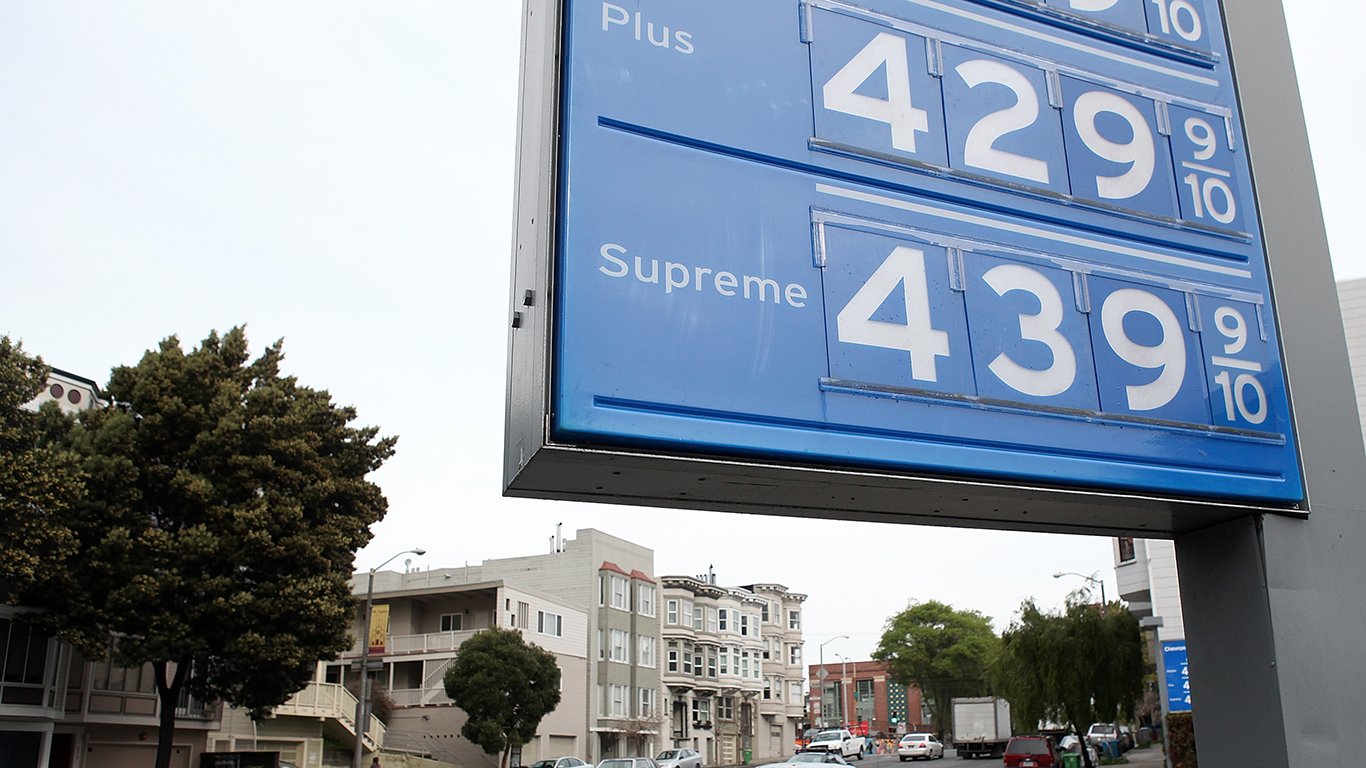
The remark landed on the same day inflation data showed energy prices accelerating sharply. National gasoline prices are now at $4.50 per gallon, a 28% jump in the past two months. Democratic strategists called the comment tone-deaf and suggested it would resurface in campaign advertisements. Congressman Darrell Issa defended the president, arguing that ending the 47-year conflict with Iran would produce a larger peace dividend than temporary inflation relief.
Set the politics aside. The household question is simpler and more immediate: what does a 28% gas spike do to a family budget when paychecks are not keeping up?
The verdict: this is a real squeeze on household budgets
Gasoline is one of the least flexible line items in a household budget. You can defer a vacation. You usually cannot defer your commute. When a non-discretionary cost rises this fast, it either displaces other spending or it pulls from savings.
The math is straightforward. A household that previously spent $200 a month on gas is now spending roughly 28% more. A two-driver household budgeting $400 is absorbing the same proportional hit. None of that money was sitting unused; it was already allocated to groceries, debt payments, or savings.
The wider inflation picture confirms the squeeze. The energy component of PCE inflation rose 12% month-over-month in March 2026 and is up 14% year-over-year, the steepest reading in the dataset. WTI crude is trading near $110 per barrel, near the top of its 12-month range. Gas pump prices do not retreat quickly when crude sits this high.
The variable that decides whether this hurts
The factor that determines whether a household feels this as an inconvenience or a crisis is the gap between wage growth and energy inflation. Right now, that gap is widening the wrong way.
Average hourly earnings reached $37.41 in April 2026, up from $37.35 in March. That is a slower monthly gain than earlier in the year. Hourly wage growth fell in the last month, even as energy costs surged. The result is real wages losing ground.
Households are already drawing down their cushions to keep up. The personal savings rate has fallen to 4% in Q1 2026, down from 5% a year earlier. Personal saving in dollar terms dropped from $1,163.3 billion to $942.3 billion over the same period. Consumer sentiment sits at 53.3, in recessionary territory. People feel the squeeze because the squeeze is real.
Here is the split. A household with elastic income (overtime, commission, a recent raise) can absorb a 28% gas spike without restructuring the budget. A household on a fixed paycheck or Social Security has to find the difference somewhere. There is no middle option.
Practical moves households are making
While you have little impact over the near-term fluctuation of oil prices, you can make budgeting changes today. Here are five concrete moves worth running through this week:
- Recalculate the actual gas line. Pull the last two months of card statements and add up real fuel spending. The 28% headline number only matters once you know your own baseline.
- Consolidate trips and audit the commute. Two trips a week instead of four, or one remote workday, can offset a meaningful share of the increase without touching another budget category.
- Cut one discretionary category for 60 days. Subscriptions, dining out, or delivery fees are the usual candidates. The goal is to free up the exact dollar amount the gas increase is costing you, not a vague “cut back.”
- Build an energy buffer inside the emergency fund. Even one extra tank of gas in cash terms, set aside, prevents a credit card balance from forming when prices spike again.
- Evaluate fuel efficiency before replacing a vehicle. If a car change was already on the horizon, miles-per-gallon math matters more at $4.50 than it did at $3.00. Run the numbers; do not assume.
Contact [email protected] for any questions or corrections.
Eric Bleeker, CFA has been investing for more than 20 years. He began his career working at Microsoft before joining Motley Fool, one of the largest publishers of financial research. In his 15 years at Motley Fool Eric served as the General Manager for Fool.com and led coverage in the Technology & Telecom sector. In addition, he was a featured columnist and has hosted dozens of investing seminars attended by more than a million total investors. Eric has more than 1,000 financial bylines to his name and has been featured in The Wall Street Journal, CNBC, Fox Business, and many other leading publications. He is currently focused on artificial intelligence investing and is a CFA Charterholoder.