




A 68-year-old couple with $2.5 million in savings and a monthly spending goal of $14,500 faces a straightforward income challenge. To support that lifestyle entirely from their portfolio, they would need approximately $174,000 per year in investment income. On a $2.5 million portfolio, that translates to a required blended yield of roughly 7%, significantly higher than the current yield on the 10-year Treasury, which is around 4.5%, and well above the federal funds rate target range of 3.5% to 3.75%.
Generating a 7% portfolio yield is possible, but it is difficult to achieve through a single investment vehicle without taking on substantial risk. As a result, many income-focused investors combine multiple asset classes and income sources to balance yield, diversification, and portfolio durability.
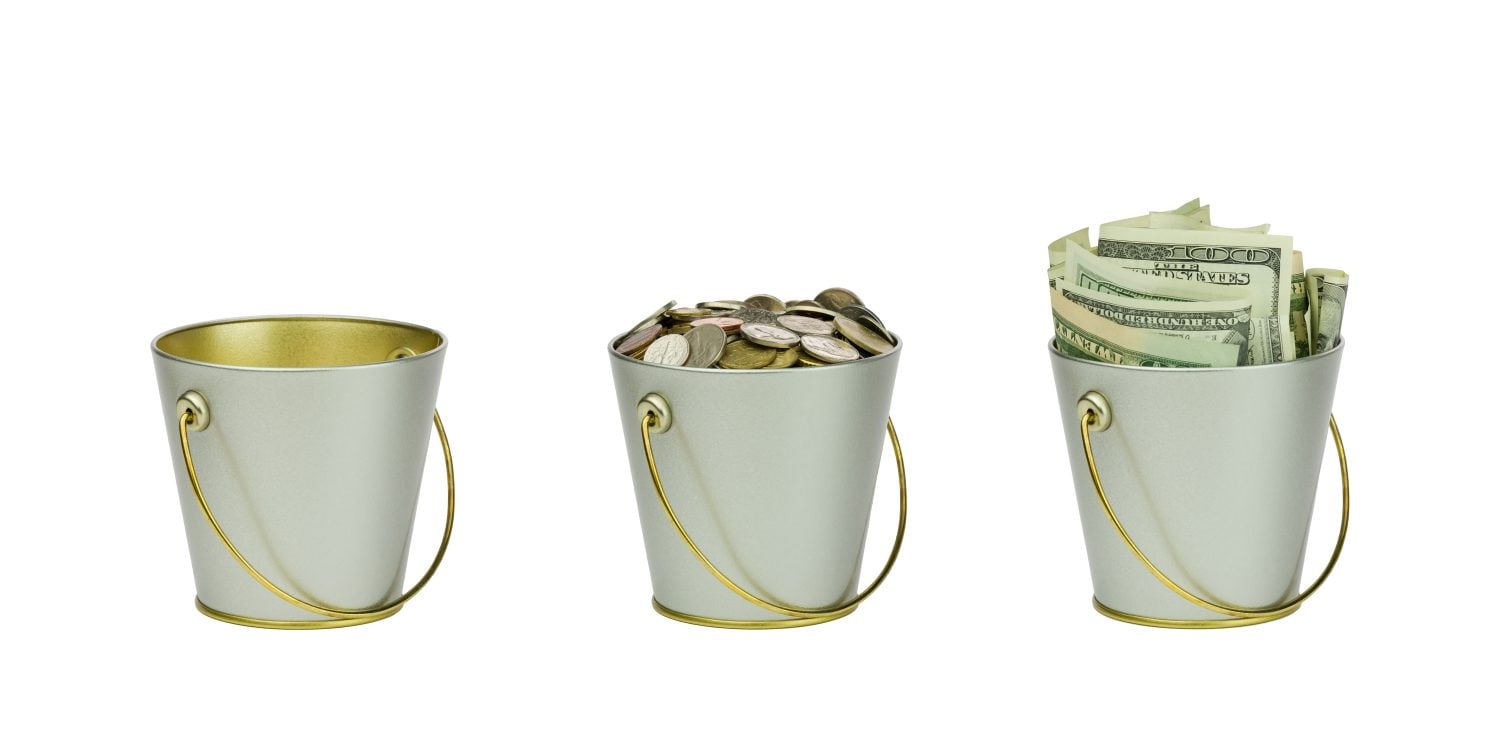
The comparison below shows how the required income can be generated across conservative, moderate, and aggressive yield tiers using the same $2.5 million portfolio base within a three-bucket structure.
Bucket 1: Growth and Income at 3% Yield
Allocation: 20% of the portfolio, or $500,000. The vehicles here are broad dividend growth funds. Schwab U.S. Dividend Equity ETF (NYSEARCA:SCHD) is the anchor, paired with a high-dividend equity sleeve.
At a 3% blended yield, $500,000 produces $15,000 a year. That is the smallest income slice, and it is supposed to be. SCHD’s most recent quarterly distribution was $0.2569 per share, and the fund has returned about 29% over the past year and about 236% over the past decade. This bucket is the inflation hedge. Distributions grow over time and the principal compounds, which matters when a 68-year-old couple may be drawing income for 25 more years.
Bucket 2: High Current Income at 9% Yield
Allocation: 55% of the portfolio, or $1,375,000. This is the income engine. Covered-call equity income funds like JPMorgan Equity Premium Income ETF (NYSEARCA:JEPI) and its Nasdaq cousin JPMorgan Nasdaq Equity Premium Income ETF (NASDAQ:JEPQ) sit alongside a business development company fund.
JEPI’s last five monthly distributions ran from $0.34443 in February to $0.44761 in May 2026. At a 9% blended yield, $1,375,000 produces roughly $123,750 a year. The tradeoff is real. Covered-call ETFs cap equity upside, and BDC distributions can be cut when credit losses rise. The income is high, but the principal does not appreciate the way SCHD has.
Bucket 3: Stability and Credit at 5.5% Yield
Allocation: 25% of the portfolio, or $625,000. Preferred shares, municipal bond funds, and a Treasury ladder. The 30-year Treasury currently yields nearly 5% and the 7-year sits at around 4.3%, so a blend with preferreds (which historically yield in the 6% range) lands near 5.5%.
At 5.5%, $625,000 produces roughly $34,375 a year. The preferred sleeve leans on financials, with Bank of America, JPMorgan Chase, and Morgan Stanley preferred series each running near 3.6% of net assets. This bucket is where the couple parks their 12-month spending reserve.
The Combined Result
Add the three buckets together and the portfolio generates roughly $173,125 a year, or about $14,427 a month, on a roughly 6.9% blended yield. That comes within about $875 a year of the $174,000 target, close enough that a small allocation adjustment or modest cash reserve could bridge the gap.
Why the Smallest Bucket May Matter Most
A 3% yield growing 8% a year eventually outpaces a 9% yield with flat or declining distributions. SCHD’s quarterly payout has increased meaningfully since early 2020 after adjusting for the fund’s 3-for-1 split in October 2024, with the March 2026 distribution at $0.2569 per share. JEPI’s distributions, by contrast, fluctuate with options premiums and have not followed the same dividend-growth pattern. Over a 20-year retirement, the conservative bucket quietly pulls more weight than its 20% allocation suggests.
How to Pressure-Test the Income Plan
- Test the spending number. $174,000 is the target, but actual annual outflows after Social Security and Medicare may be lower. Cutting the requirement to $150,000 lets the high-current-income bucket shrink, which lowers credit risk.
- Hold 12 months of spending in the stability bucket as cash or short Treasuries. The 1-year Treasury yields about 3.8%. That reserve absorbs distribution cuts from the 55% high-yield sleeve without forcing sales in a drawdown.
- Rebalance once a year, in January. If the high-current-income bucket drifts above 55% on price moves, trim it back. If SCHD compounds past 20%, harvest the gain into the stability bucket. Drift is what breaks three-bucket plans.















 Top Gaining Stocks
 Top Losing Stocks