Americans Taxpayers Could Face a New $3 Billion Cost Thanks to Kevin Warsh and the Fed
Many consumers are struggling to keep up with the ever-rising cost of living. And elevated interest rates aren’t helping matters. That’s why many people may be hoping that the Federal Reserve will cut interest rates at some point this year.…

This post may contain links from our sponsors and affiliates, and Flywheel Publishing may receive compensation for actions taken through them.
Many consumers are struggling to keep up with the ever-rising cost of living. And elevated interest rates aren’t helping matters. That’s why many people may be hoping that the Federal Reserve will cut interest rates at some point this year. That’s becoming more and more unlikely, though, as inflation remains well above the central bank’s 2% target.
In May, the Consumer Price Index rose 4.2% on an annual basis, while core CPI rose 2.9%. On top of that, the labor market added 172,000 jobs in May, surpassing economists’ expectations.
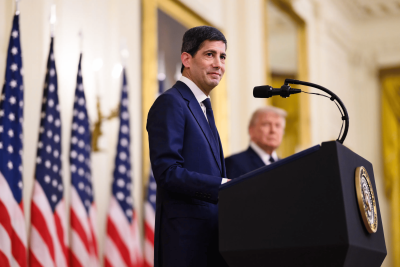
Even though there’s been pressure on new Fed chair Kevin Warsh to consider interest rate cuts, the more likely scenario by the end of the year is a modest interest rate hike. But that could have huge consequences for U.S. consumers.
Even a small rate hike could deal borrowers a massive blow
U.S. consumers carry approximately $1.35 trillion in credit card debt, according to the latest data from the Federal Reserve Bank of New York. And because most credit cards have variable interest rates that move broadly with benchmark rates, even a small increase by the Fed could translate into billions of dollars in additional interest costs for consumers.
When the Fed raises interest rates, it typically does so in increments of 25 basis points, or 0.25 percentage points. If the Fed implements a 0.25% rate hike in 2026, when we do the math on outstanding credit card balances, it looks like this: $1.35 trillion × 0.0025 = $3.375 billion.
In other words, a 25-basis-point increase by the Fed could cost credit card borrowers more than $3 billion in additional annual interest charges.
To be clear, the Fed does not set credit card interest rates directly. It sets the federal funds rate, which determines what banks pay for overnight loans.
But when the Fed raises its federal funds rate and it costs more for financial institutions to borrow, they tend to pass the cost along to consumers. And because credit card rates are typically variable, the cost of borrowing can change as a result of a Fed interest rate decision.
Credit card borrowers need to prepare
If you’re carrying a substantial credit card balance, it’s important to prepare for the fact that it could cost you more money if the Fed raises rates. The best thing to do? Try whittling that balance down as much as possible. The lower your balance is, the less likely a rate hike is to impact you.
Another thing you may want to do is roll your credit card balance into a personal or home equity loan, where you’ll get the benefit of a fixed interest rate. That way, if the Fed raises rates later in the year and borrowing costs rise, you’ll already be locked in.
Finally, try to build an emergency fund. It’s easier said than done in today’s elevated price environment. But having cash reserves could prevent you from having to take on more debt at a time when Fed rate hikes may be on the horizon.
While a quarter-point rate increase may sound small, the math shows that broadly, it could cost consumers billions. If you’re already carrying substantial debt, preparing now could help soften the impact if the Fed decides that higher rates are necessary to get inflation under control.
Contact [email protected] for any questions or corrections.
Maurie Backman has more than a decade of experience writing about financial topics, including retirement, investing, Social Security, and real estate. Her work has appeared on sites that include The Motley Fool, USA Today, U.S. News & World Report, The Washington Post, and Kiplinger.
Prior to becoming a full-time financial writer, Maurie worked in the financial industry trading distressed debt. She then changed course and spent a few years designing electronic toys. After a stint in content marketing and UX, she shifted back into writing and has since covered everything from the housing market to estate planning to Medicare.
When she's not busy writing, Maurie can be found hiking, walking her dogs, driving her kids to their various sports practices and games, and curling up with a good book. She cooks on occasion and bakes way too often.