Here’s How You Can Retire In the Town Dubbed “The Peaceful Side of the Smokies”
Townsend, Tennessee, calls itself the “Peaceful Side of the Smokies,” and the description fits. While Gatlinburg and Pigeon Forge absorb millions of visitors a year, Townsend remains quieter, slower, and more residential. The question is whether that mountain-town lifestyle is…

This post may contain links from our sponsors and affiliates, and Flywheel Publishing may receive compensation for actions taken through them.
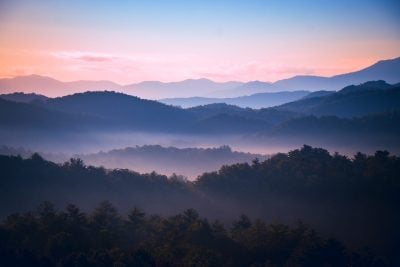
Townsend, Tennessee, calls itself the “Peaceful Side of the Smokies,” and the description fits. While Gatlinburg and Pigeon Forge absorb millions of visitors a year, Townsend remains quieter, slower, and more residential. The question is whether that mountain-town lifestyle is still affordable for retirees. Here is what the math looks like for a couple with a $1 million portfolio and $4,000 a month in combined Social Security.
Why Townsend, Not Gatlinburg or Pigeon Forge
Gatlinburg and Pigeon Forge offer many of the things retirees enjoy: restaurants, shopping, theaters, festivals, Dollywood, and a constant stream of delightfully quirky attractions. For people who like activity and entertainment, they have obvious appeal. The downside is traffic, crowds, and housing costs influenced by one of the country’s busiest tourist destinations.
Townsend sits about 20 miles west of the Parkway crowds and feels much quieter. With roughly 450 year-round households, a single stoplight, and easy access to Cades Cove and the national park, it attracts retirees who prefer mountain scenery to tourist activity. If they want a day of shopping or attractions, Gatlinburg and Pigeon Forge are usually 30 to 45 minutes away by car.
The trade-off is convenience. Townsend has a small grocery and a handful of restaurants, while major shopping, hospitals, and the airport are in Maryville and Knoxville, roughly 25 to 45 minutes away. Winters are generally mild by northern standards, but occasional snow and ice can make driving difficult, particularly on steeper mountain roads.
The Cost Picture in Current Dollars
Tennessee’s overall cost of living index sits at 91.87, below the national average of 100, and it ranks first in the country for individual income tax (there isn’t one) and carries one of the lowest adjusted state and local tax burdens in the nation at $5,333 per capita. Every dollar pulled from the portfolio escapes state tax entirely. Townsend itself runs above the state average for housing, however. Zillow puts the typical home value around $404,000, while active listings in Townsend skew closer to $550,000 because so much of the inventory is cabin-style and view-lot.
Assume the couple buys a modest single-level home outright for roughly $420,000. A working annual budget looks like this:
- Property tax and homeowners insurance on a Blount County home: roughly $4,800 combined.
- Utilities, internet, propane or heat pump electric, water: about $3,600.
- Groceries on the USDA moderate-cost plan for a couple aged 65-plus: about $11,400.
- Transportation, two older vehicles, fuel and maintenance: about $6,500.
- Medicare and supplemental coverage for two: the 2026 Part B premium is $202.90 each, plus Medigap and Part D, roughly $13,200 a year.
- Recreation, dining, gifts, travel: about $9,000.
- Home maintenance reserves, vehicle replacement sinking fund, emergencies: about $7,500.
That is roughly $56,000 a year for a comfortable Townsend life. Add a more active travel and grandkid budget and the working number lands closer to $72,000.
The Math, in Plain Dollars
Social Security covers $48,000 of that budget. At the comfortable $56,000 number, the portfolio has to produce $8,000 a year, a 0.8% draw on $1 million. At the more active $72,000 lifestyle the portfolio needs to provide $24,000, a 2.4% draw. Even an aggressive $84,000 lifestyle asks 3.6% of the portfolio, well inside what most planners consider sustainable over a 30-year horizon.
The income side is genuinely easy in this scenario because the portfolio is carrying such a small share of the spending burden. Even the more active $72,000 lifestyle requires only a 2.4% withdrawal rate. That gives retirees considerable flexibility in how they structure the portfolio, whether they prefer a mix of stocks and bonds, a total-return approach, or an income-oriented allocation. The more important challenge is maintaining purchasing power over time as healthcare, insurance, and other retirement costs continue to rise.
The Carrying Cost Most Buyers Underprice
A Smokies mountain home carries serious wildfire exposure. Townsend was under active evacuation orders during the November 2023 Rich Mountain Road fire, and carriers have been re-rating wildland-urban-interface properties hard. Plan for homeowners premiums that rise faster than headline inflation, defensible-space landscaping that runs four figures every couple of years, and the real possibility of a non-renewal that forces you into a surplus-lines policy at double the cost. A metal roof and a generator add another $25,000 in the first five years.
The second compounding cost is geography. Specialist care is in Knoxville, 35 miles away. That drive is easy at 65 and harder at 80. Some retirees eventually choose to relocate closer to Maryville or Knoxville as healthcare needs increase, creating a potential future housing expense that should be included in the retirement plan.
What the Number Actually Is
The $1 million portfolio and $48,000 in Social Security support a comfortable Townsend retirement at a 2% to 3% withdrawal rate, with room for insurance creep and the eventual Knoxville-proximity decision. The key is recognizing the costs that many buyers miss: wildfire-related insurance pressure, home-hardening expenses, and the possibility that healthcare needs eventually pull you closer to Knoxville.
Even after accounting for those risks, Townsend remains an unusually affordable way to live near one of America’s most visited national parks. For retirees seeking mountain scenery, low traffic, and a quieter alternative to Gatlinburg or Pigeon Forge, the math works surprisingly well.
Contact [email protected] for any questions or corrections.
Drew Wood has edited or ghostwritten nine books and published more than 1,500 articles on investing, business, politics, travel, world cultures, wildlife, and earth science. He holds a doctorate and four master's degrees and has nearly 30 years of college teaching experience. His travels have taken him to 25 countries, including three years living in Ukraine.