Mountain Mornings and No Rush: Retire to the Colorado Rockies at 65 on $1.2 Million
The Colorado Rockies remain one of America’s dream retirement destinations. Snow-capped peaks, mountain towns, hiking trails, and four distinct seasons attract retirees who want an active outdoor lifestyle without the crowds of major cities. The question is whether a couple…

This post may contain links from our sponsors and affiliates, and Flywheel Publishing may receive compensation for actions taken through them.
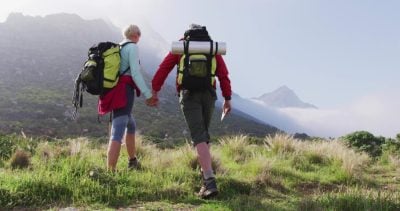
The Colorado Rockies remain one of America’s dream retirement destinations. Snow-capped peaks, mountain towns, hiking trails, and four distinct seasons attract retirees who want an active outdoor lifestyle without the crowds of major cities. The question is whether a couple with $1.2 million can comfortably afford that dream. They can, but only if they choose the right town and build the budget around the realities of mountain living.
Which Rockies, Exactly
The first filter is geographic, and it is brutal. Aspen, Telluride, Vail, Steamboat Springs, Crested Butte, and Breckenridge have become some of the most expensive mountain communities in America. A $1.2 million retirement nest egg generally does not stretch comfortably there. More realistic options include places like Salida, Buena Vista, Pagosa Springs, Gunnison, Montrose, Cañon City, the foothills around Grand Junction, or parts of Durango where housing remains far more attainable. These are the towns where many retirees can still own a modest home, enjoy mountain scenery, and maintain a sustainable retirement budget.
Colorado overall runs about 3% above the national cost of living, but the mountain corridor runs hotter than the state average, and resort-adjacent towns hotter still. Assume you are paying a premium for elevation and scenery no matter where you land.
The Working Budget
Plan on roughly $300,000 to $400,000 for a livable home in a second-tier mountain town, paid in cash from the portfolio. That leaves $800,000 to $900,000 invested. Annual line items for a couple:
- Property taxes, HOA, and utilities: about $6,500. Colorado’s residential property tax rate is low, but mountain utility bills and propane in shoulder seasons are not.
- Homeowners and auto insurance: $4,500 to $7,000.
- Healthcare at 65-plus on Medicare: roughly $9,000 to $11,000 for the couple, covering Part B, a Medigap or Advantage plan, Part D, and dental.
- Food at home and modest dining out, scaled to the USDA moderate plan: about $11,000.
- Transportation, including gas at $3.91 a gallon nationally and longer drives to specialists or a real grocery store: $6,500.
- Travel, hobbies, gifts: $8,000.
- Miscellaneous and reserves, including home maintenance, vehicle replacement, and federal income tax on withdrawals: $12,000.
That lands around $60,000 to $65,000 a year. Call it $63,000.
Making the Math Work
Two retired workers claiming at full retirement age will typically draw somewhere around $48,000 to $52,000 combined in Social Security, with the 2.8% COLA for 2026 already baked in. That leaves a gap of $11,000 to $15,000 a year against the budget.
On roughly $850,000 invested after purchasing the home, a 4% withdrawal provides about $34,000 per year. Combined with Social Security, that comfortably exceeds the estimated spending needs and leaves room for unexpected expenses. Colorado also allows many retirees to exclude a significant amount of retirement income from state taxation, further improving the overall retirement picture.
The headline number works because Social Security is doing most of the heavy lifting, and the house is paid for.
The Line Item Most People Miss
Wildfire insurance is one of the biggest financial risks in this scenario. Carriers have non-renewed thousands of policies across Colorado’s wildland-urban interface in recent years, and premiums have climbed sharply for many homeowners. Before buying a specific property, call an independent insurance agent and obtain a quote for that exact address. A home one ridge over with defensible space and a metal roof may be far easier and less expensive to insure than the dream cabin tucked into dense timber.
The second-order issue is healthcare access. Medicare works anywhere, but specialists do not live in Salida or Pagosa. A cardiology consult or orthopedic surgery means a day trip to Grand Junction, Denver, or Durango, and in winter that drive is sometimes closed. Budget the gas, budget the overnight, and be realistic about whether you want to be making that drive at 78.
What It Actually Takes
A $1.2 million portfolio can support a comfortable retirement in Colorado’s mountain communities if housing costs remain reasonable, withdrawals stay disciplined, and wildfire insurance is treated as a major long-term expense rather than an afterthought. Choosing the right town often matters more than choosing the perfect mountain view. Build those realities into the budget from the beginning, and a Colorado Rockies retirement can be financially sustainable for decades.
Contact [email protected] for any questions or corrections.
Drew Wood has edited or ghostwritten nine books and published more than 1,500 articles on investing, business, politics, travel, world cultures, wildlife, and earth science. He holds a doctorate and four master's degrees and has nearly 30 years of college teaching experience. His travels have taken him to 25 countries, including three years living in Ukraine.