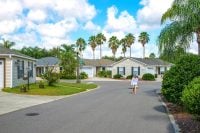
$2,500 a Month in Hot Springs Village: Here’s How to Retire in America’s Largest Gated Community
Hot Springs Village keeps appearing in retirement forums as a place where $2,500 a month actually stretches, but the math only holds under a specific set of conditions most people overlook before signing the deed.

This post may contain links from our sponsors and affiliates, and Flywheel Publishing may receive compensation for actions taken through them.

Every few weeks, someone in a retirement forum asks whether two people can live on $2,500 a month somewhere pleasant. Hot Springs Village keeps showing up in the answers. It sits in the Ouachita foothills of central Arkansas, sprawls across roughly 26,000 acres, and bills itself as the largest gated community in the country. Nine golf courses, eleven lakes, one gate, and a demographic that skews decisively toward retirees. The math is more interesting than the pitch, and it only works under specific conditions.
What $2,500 Actually Buys Inside the Gate
Arkansas is the second most affordable state by cost of living, with an index of 86.937 against a national average of 100, trailing only Mississippi at 86.953. Real income in Arkansas comes out to $68,063 once adjusted for purchasing power. Hot Springs Village sits below that state average on most line items except one that catches newcomers off guard.
Assume you arrive with the house paid off. A modest three-bedroom inside the Village runs in the low $200,000s for something move-in ready. Property taxes in Garland and Saline counties are among the lowest in the country, typically running $1,200 to $1,600 a year on a home in that price range after the state homestead credit. Homeowner insurance sits around $1,800 to $2,200 annually, with tornado exposure priced in but no coastal wind or wildfire premium. Utilities for a couple in a 1,800 square foot home land around $280 a month year-round.
Healthcare is the swing factor. For a couple both on Medicare, budget roughly $750 to $850 a month combined for Part B premiums, a Medigap plan, Part D, and dental. Groceries for two on the USDA moderate plan run about $900 a month. Gas, one older paid-off car, and a replacement reserve add another $350. Miscellaneous, gifts, restaurants, and a small travel line get you $300 more.
Add it up and you are at roughly $2,450 to $2,550 a month. It works. It just does not leave slack, and it assumes the house is paid for.
The Math That Turns the Budget Into a Portfolio
The annual burn at $2,500 a month is $30,000. The average retired worker’s Social Security benefit is running around $2,000 a month, so a couple with two average earning records collects roughly $48,000 a year before any Medicare premium deduction. Social Security alone covers the budget with cushion.
For a single retiree with one benefit, the picture tightens. One average check covers about $24,000 of the $30,000, leaving a $6,000 annual gap. At a 4% withdrawal rate, that gap requires a $150,000 portfolio. At a more conservative 3.5%, closer to $172,000. Neither number is intimidating, but both assume the house is unencumbered and the car is not on a loan. Carry a $150,000 mortgage at today’s rates and the portfolio requirement roughly triples.
The 2026 Social Security COLA of 2.8% matters here because it is doing the work of keeping this budget viable against a CPI that has been running at the 80th percentile of its 12-month range. If COLAs undershoot Arkansas grocery and healthcare inflation for a few years in a row, the $2,500 budget quietly becomes a $2,750 budget.
The POA Assessment and the Age-65 Freeze Most Buyers Miss
Every property inside Hot Springs Village carries a mandatory monthly Property Owners’ Association assessment, currently around $100 to $115 per lot per month, which funds the roads, gates, lakes, and recreation facilities. It is attached to the deed regardless of whether you use the amenities. If the previous owner bundled an adjacent unimproved lot with the sale, which happens routinely, you inherit that lot’s assessment too. Over a 25 year retirement, an extra assessment quietly consumes $30,000 to $40,000 of portfolio.
The offset is Arkansas Amendment 79, which freezes the assessed value of your homestead for property tax purposes once you turn 65 or become disabled. Combined with the standard homestead credit, a couple who buys before 65 and holds the home into their 80s can watch neighbors’ tax bills drift upward while theirs stays essentially flat. Over a long retirement, that freeze is worth real money. It is the structural reason Hot Springs Village works better as a place you move to at 62 than a place you buy into at 75.
What It Actually Takes
A couple with two average Social Security records, a paid-off house bought before age 65, and one POA assessment can run this scenario on roughly a $75,000 to $150,000 portfolio held mostly in a conservative mix of short treasury ladders and broad index funds, drawing at 3.5% to cover healthcare inflation and the occasional roof. A single retiree needs closer to $200,000 and tighter discipline on the miscellaneous line. Anyone still carrying a mortgage into the Village needs to either retire it before moving or accept that the real budget is closer to $3,200. The number on the sign is real. It just requires that you show up with the house, one assessment, and the patience to let the age-65 freeze do its quiet compounding work.
Contact [email protected] for any questions or corrections.
I am a long time investor and student of business, and believe finding good companies that can become great investments is the best game on earth. After 20 years of writing and researching the public markets it is clear that individuals have never had more tools and information to take control of their financial lives. From ETFs and $0 commissions to cryptos and prediction markets there has never been a greater democratization of access to investing.
I write to help people understand the investments available to them so they can make the best choice for their portfolio, whether they're starting out or looking for income in retirement.