$2,500 a Month in The Villages: Here’s How to Retire There at 62 Without Touching Your Savings
A $2,500 monthly retirement in The Villages is possible, but only in a narrow version of the plan. The house has to be paid off, the home needs to avoid a large bond assessment, and the three years before Medicare…

This post may contain links from our sponsors and affiliates, and Flywheel Publishing may receive compensation for actions taken through them.
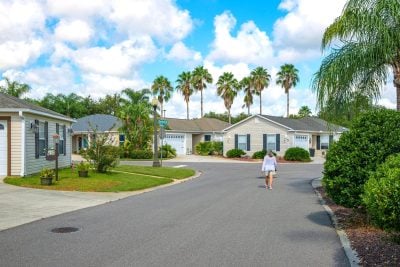
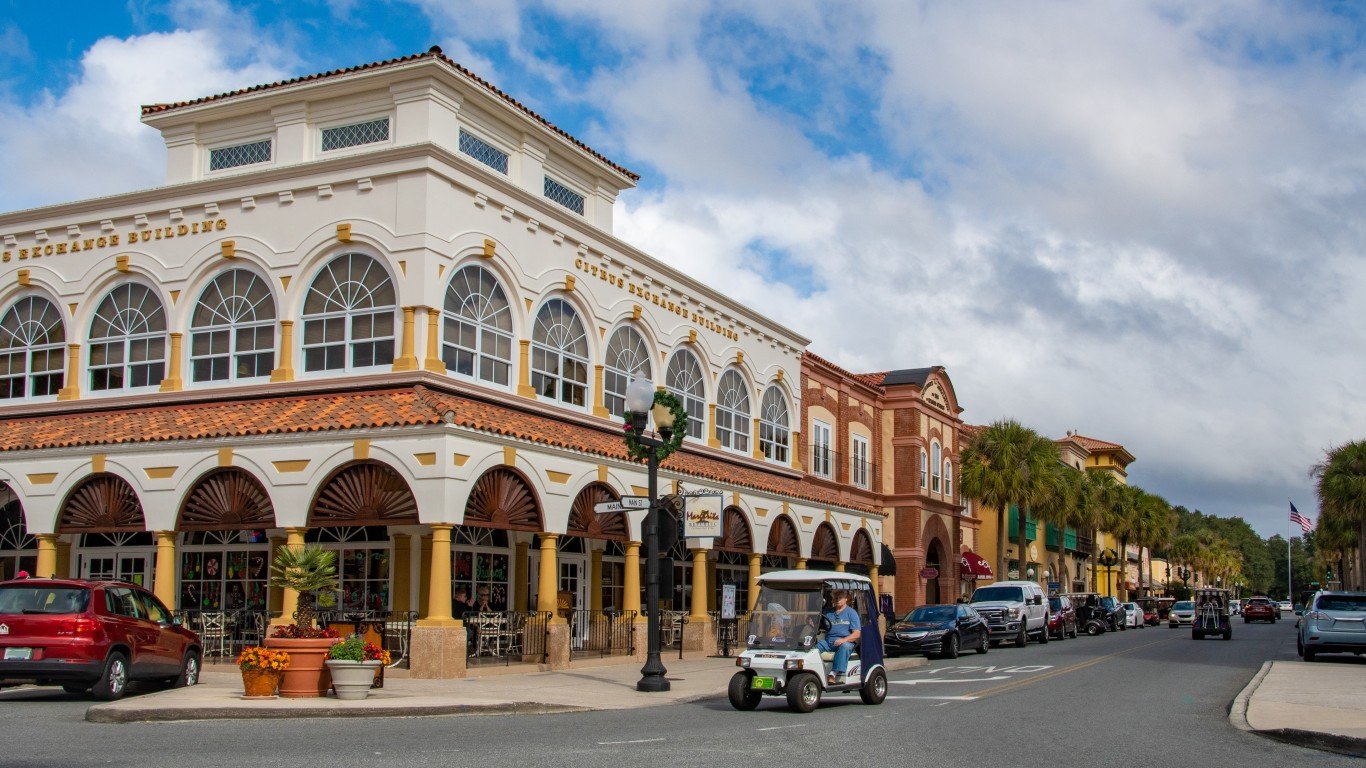
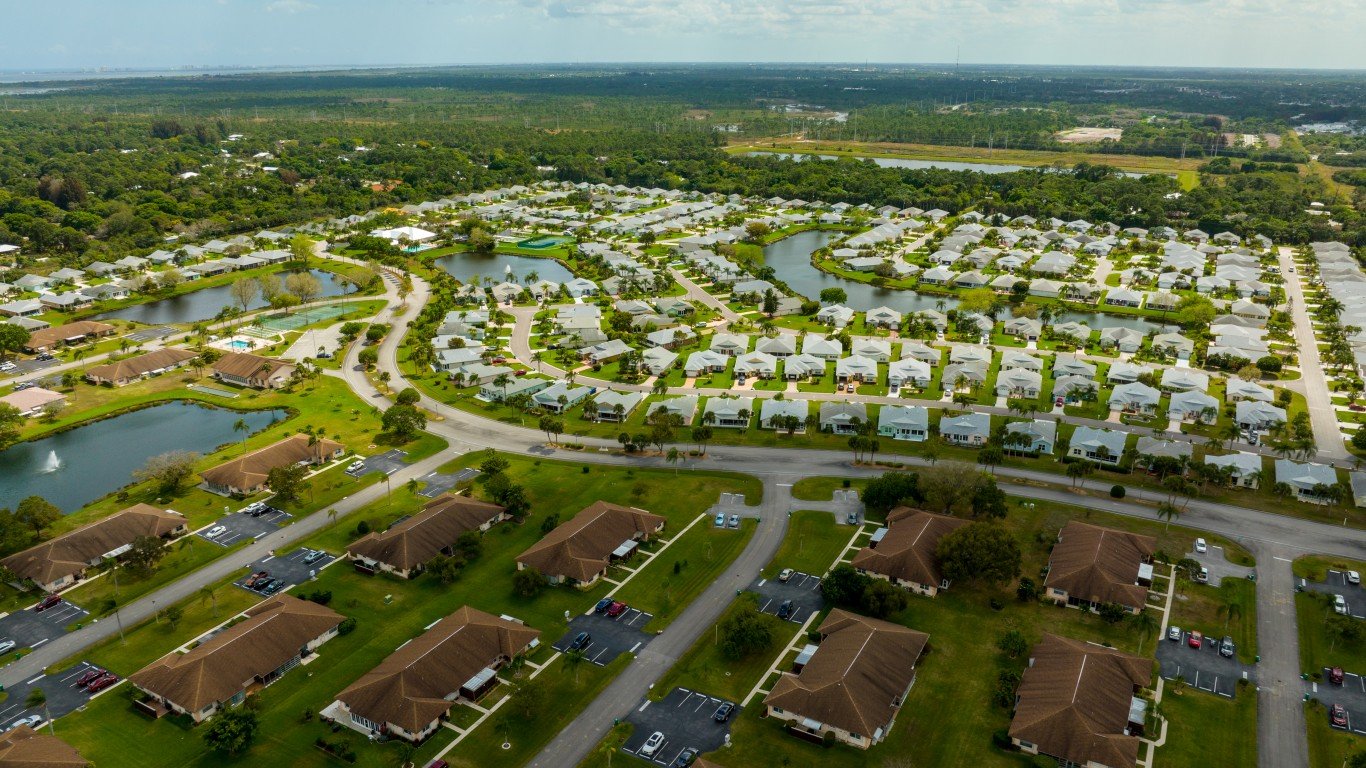
A $2,500 monthly retirement in The Villages is possible, but only inside a narrow version of the plan. The house has to be paid off, the home needs to avoid a large bond assessment, and the three years before Medicare must be handled carefully. Florida’s lack of state income tax helps, but it does not erase homeowners insurance, amenity fees, healthcare premiums, golf-cart costs, or the basic problem of trying to live in one of the country’s most active retirement communities on $30,000 a year.
What $2,500 a Month Actually Buys Inside the Gates
Florida’s statewide cost of living sits only slightly above the national average, but The Villages is not a generic Florida budget. MERIC’s first-quarter 2026 index put Florida at 100.7 against a national baseline of 100. For this budget to work at all, the house must be owned outright. A resale patio villa or modest older-section home may carry property taxes in the $2,000 to $3,500 range, homeowners insurance in the thousands, and The Villages amenity fee, which runs about $204 a month for new buyers in 2026. Existing owners pay a lower rate locked in at the time of their original purchase.
Add utilities, water, trash, internet, a modest food budget, a golf cart, gas, and the golf-cart trail fee if you play, and the budget can press against the $2,500 ceiling before restaurant meals or larger repairs enter the picture. Average U.S. consumer-unit spending was $78,535 in 2024, so a Villages retiree living on $30,000 a year is well below the national norm. That kind of discipline is only achievable because the mortgage is gone and the lifestyle is tightly controlled.
The Math That Lets You Skip the Portfolio Withdrawal
“Without touching your savings” needs a clear definition. In this version, it means Social Security, pension income, interest, dividends, or part-time work can pay the bills, but portfolio principal is not sold to fund monthly spending. That is a high bar at 62 because the retiree is usually taking a reduced Social Security check and still faces three years before Medicare eligibility.
Start with Social Security. Filing at 62 with a full retirement age of 67 cuts the monthly benefit by 30%. For a middle earner, that may land the check somewhere around $1,350 to $1,500 a month in 2026 dollars. Call it $1,400. That leaves a gap of roughly $1,100 a month, or $13,200 a year, that must come from somewhere other than selling principal.
The Cleanest Path
The cleanest path is a dividend and interest sleeve inside a taxable brokerage account. A blend of broad dividend ETFs and short-duration Treasury ladders yielding a realistic 3.5% needs about $380,000 to throw off $13,200 a year without selling a share. That is enough yield-producing capital for the checks to arrive on their own, well short of a $1 million portfolio. The national average 12-month CD rate stood at 1.68% in July 2026 per FDIC data, which will not get you there. You have to reach past the bank window into higher-yielding instruments.
Part-time work substitutes cleanly. Twenty hours a week at $16 an hour closes the same gap, and The Villages runs on part-time labor. Just watch the Social Security earnings test. In 2026, individuals under full retirement age can earn up to $24,480 before the test applies. Above that threshold, the Social Security Administration withholds $1 in benefits for every $2 earned, so a part-time income needs to stay below that ceiling to avoid an unpleasant surprise.
The Three Line Items That Break This Budget
The first hidden cost is the stacked carrying cost of newer homes. Many homes in newer districts, especially south of State Road 44, still carry bond assessments and maintenance assessments on top of property taxes and the amenity fee. Combined annual CDD assessments covering both bond repayment and maintenance commonly range from $1,600 to over $6,000 per year across The Villages, with newer areas at the higher end. Those costs vary by district and home, and the bond can often be paid off early, but a $2,500 monthly budget should treat a bond-free older resale near Spanish Springs, Lake Sumter Landing, or another established northern area as a hard requirement rather than a preference.
The second pressure point is the pre-Medicare bridge. From 62 to 65, a retiree without employer coverage usually needs ACA marketplace coverage. Florida has no state income tax and ranks fifth on the 2026 State Tax Competitiveness Index, but ACA subsidies are based on federal modified adjusted gross income, not state taxable income. MAGI includes adjusted gross income plus non-taxable Social Security, tax-exempt interest, and untaxed foreign income. This matters enormously in 2026 because the enhanced ACA premium tax credits expired on December 31, 2025, and the subsidy cliff has returned. A single person whose income tops $62,600 (400% of the federal poverty level) loses all premium tax credit eligibility. Exceed that line by a single dollar and the subsidy drops to zero.
That makes account mix critical. Qualified Roth withdrawals generally do not appear in ACA MAGI, while taxable dividends, interest, capital gains, and traditional IRA withdrawals do count. A retiree in this scenario needs to keep income under the relevant threshold and model county-level premiums carefully. A low premium may be achievable, but it should never be assumed without running the numbers for a specific county, age, income level, and plan tier.
The third is Florida insurance. Even away from the coast, homeowners insurance can be a budget breaker because premiums depend on roof age, construction type, replacement cost, wind mitigation, carrier appetite, and statewide reinsurance costs. The good news is that Florida’s market is stabilizing in a meaningful way for the first time in years. Citizens Property Insurance cut rates by an average of 8.7% statewide for 2026, and reinsurance pricing fell roughly 15 to 20% at the June 2026 renewal season after Florida avoided a landfalling hurricane in 2025 for the first time in a decade. Inland counties such as Marion (where The Villages sits) benefit from lower baseline exposure than coastal markets. Still, average annual premiums in Florida range from roughly $4,200 to $5,700 for inland standard coverage, a line that comfortably eats into a $30,000 annual budget. Build in room for insurance increases and roof-related surprises rather than assuming the improving market makes that line predictable.
The Number That Makes It Work
Retiring to The Villages at 62 on $2,500 a month without drawing down principal requires a paid-off older-section home, little or no bond assessment, roughly $380,000 in income-producing assets yielding around 3.5% before tax, a Social Security check filed at 62, and careful ACA MAGI management until Medicare begins at 65. Miss one of those pieces, particularly the bond-free house or the healthcare plan, and the monthly budget can move from $2,500 toward $3,200. At that point, the principal you wanted to protect starts funding the shortfall instead.
Editor’s note: This update refreshed the national average 12-month CD rate to 1.68% per July 2026 FDIC data, added the ACA subsidy cliff income threshold of $62,600 for a single person in 2026, updated the Florida homeowners insurance section to reflect the 8.7% Citizens rate cut and broader market stabilization, and added the specific CDD assessment range of $1,600 to over $6,000 per year for context on bond costs across the community.
Contact [email protected] for any questions or corrections.
Drew Wood has edited or ghostwritten nine books and published more than 1,500 articles on investing, business, politics, travel, world cultures, wildlife, and earth science. He holds a doctorate and four master's degrees and has nearly 30 years of college teaching experience. His travels have taken him to 25 countries, including three years living in Ukraine.