What It Takes to Retire in a Lake Michigan Beach Town on $650,000
A Lake Michigan beach town retirement sounds like a bargain until you close on the house and open your first tax bill. Four conditions have to line up perfectly before $650,000 actually holds together on the shoreline.

This post may contain links from our sponsors and affiliates, and Flywheel Publishing may receive compensation for actions taken through them.
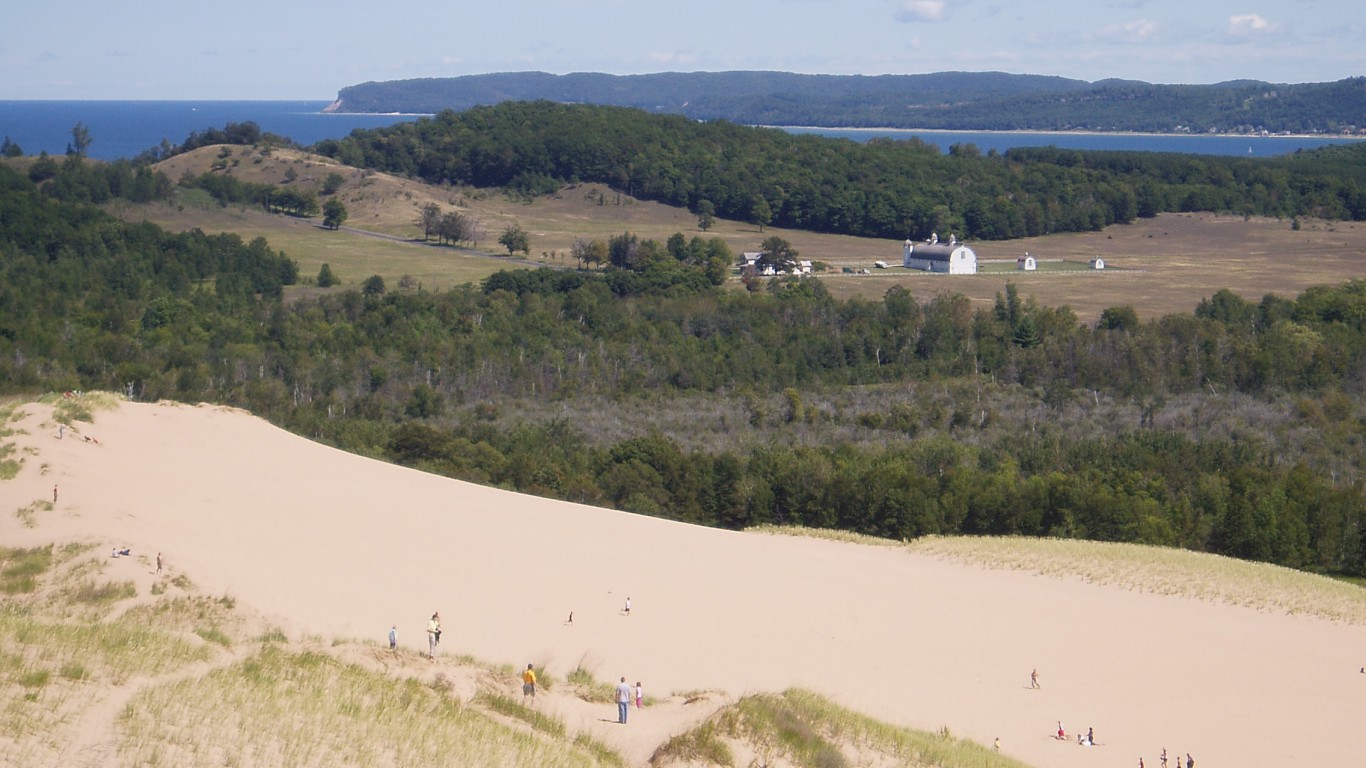
A house within walking distance of Lake Michigan, coffee on the porch, a bike path to a pier, sunsets that look like a screensaver. It is one of the most common retirement daydreams in the Midwest, and one of the most commonly underpriced. People see Michigan’s cost of living at 96 on the national index and Wisconsin’s at 94 and assume a beach town rides along at that same discount. It does not. Whether $650,000 is enough depends almost entirely on choices most people make before they ever open a spreadsheet.
What a Lake Michigan Beach Town Actually Costs
The state averages describe the state, not the shoreline. South Haven, Saugatuck, Holland, Petoskey, Traverse City, Door County, and Bayfield all price at a meaningful premium to their surrounding counties because the same summer buyer from Chicago or Milwaukee is bidding on the same inventory. With the Case-Shiller National Home Price Index sitting at 335.1 in May 2026, near a 12-month high, sticker prices in these towns have not softened the way the broader 4.06 million annualized existing home sales pace might imply.
A modest year-round home a few blocks off the water runs $325,000 to $450,000 in the more affordable towns, and well into the $600,000s in Harbor Country or the Leelanau Peninsula. To make $650,000 work, you almost certainly arrive with a paid-off or nearly paid-off house, funded by selling something inland. The $650,000 represents the portfolio only, separate from the house.
The Working Budget in Current Dollars
Assume a 65-year-old couple, house owned outright, Medicare-eligible, living in a Michigan lakeshore town. A believable annual budget:
- Property taxes and insurance on a $375,000 home: about $7,500
- Utilities, including higher winter heating: about $4,200
- Home maintenance and reserves: $6,000
- Groceries and household on the USDA moderate plan for two: about $10,800
- Medicare Parts B and D, Medigap, dental and vision for two: about $9,600
- Out-of-pocket healthcare reserve: $3,000
- Transportation, one paid-off vehicle plus replacement sinking fund: $5,500
- Dining, entertainment, travel, gifts: $8,000
- Miscellaneous and small emergency reserve: $3,000
That lands near $57,600 before income taxes. Call the all-in target $62,000 once federal taxes on withdrawals are layered in. That buys the marina walk, the farmers market, seasonal restaurants a couple of times a month, and one real trip a year. It does not buy a boat.
The Math on $650,000
A couple with average earning histories can expect roughly a combined Social Security benefit at full retirement age, or about $37,200 a year, with a 3.1% COLA tracking for 2027. That leaves a gap of about $24,800 to pull from the portfolio.
Divide $24,800 by a 4% withdrawal rate and you need $620,000. At $650,000, the plan pencils out with about $30,000 of cushion. A conservative sleeve in 10-year Treasuries yielding 4.70% covers several years of gap-funding without touching equities in a down market, and a diversified index-fund core carries the growth. Shopped rates and short Treasuries do the real work, well above the 1.68% national average 12-month CD rate.
The math breaks if you are 58 instead of 65. The bridge to Medicare adds $18,000 to $28,000 a year in ACA premiums and out-of-pocket costs, and the withdrawal rate should tighten to 3.3%. On $650,000, early retirement in this scenario does not work without part-time income or a smaller house.
The Property Tax Trap Most Buyers Miss
Michigan caps annual assessment increases on a primary residence through the Principal Residence Exemption, but that cap resets to true market value when the home changes hands. The prior owner may have paid $4,200 a year on a house that will bill you $8,500 in your first full year of ownership. Buyers tour in July, see the seller’s tax bill on Zillow, and budget from a number that will not exist once they close.
If you keep an inland home and treat the lake house as a second residence even for a year, it gets assessed at the non-homestead rate, which in many shoreline school districts adds 18 mills. On a $400,000 home, that is roughly $7,200 in additional annual tax until you file the exemption. Shoreline insurance compounds the problem. Lake-effect wind, ice shove, and bluff erosion are pushing premiums in exposed zip codes well past inland comparables, and carriers have been non-renewing homes within a set distance of eroding bluffs. Underwriting the house before you buy it matters more than underwriting the town.
What It Actually Takes
Retiring in a Lake Michigan beach town on $650,000 works when four things are true at once. You arrive with the house paid for, funded by an inland sale. You are 65 and on Medicare, so the pre-65 bridge is not eating $25,000 a year. You claim Social Security at or near full retirement age so combined benefits carry roughly $37,000 of the annual load. And you draw the remaining gap at 4% or a hair under, with a couple of years of spending parked in Treasuries or a short ladder so a bad market year does not force a bad sale. Under those conditions, even with CPI running at elevated levels near 333, the plan holds.
The number to remember is the property tax reset the day you close, along with the insurance quote you get before you sign. Get those two right and the sunsets take care of themselves.
Contact [email protected] for any questions or corrections.
I am a long time investor and student of business, and believe finding good companies that can become great investments is the best game on earth. After 20 years of writing and researching the public markets it is clear that individuals have never had more tools and information to take control of their financial lives. From ETFs and $0 commissions to cryptos and prediction markets there has never been a greater democratization of access to investing.
I write to help people understand the investments available to them so they can make the best choice for their portfolio, whether they're starting out or looking for income in retirement.