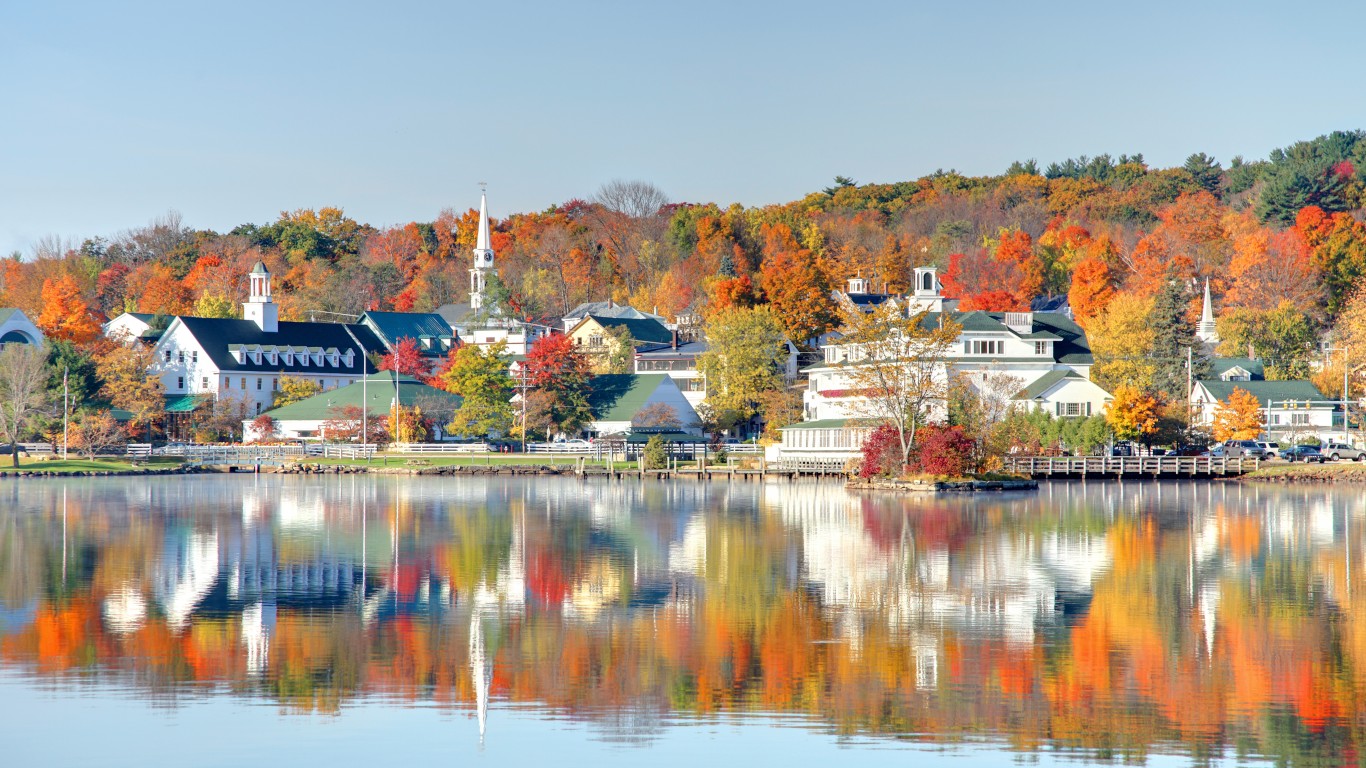
What It Takes to Retire to Montana at 62 on $900,000 With Room to Breathe
Montana promises big sky and low costs, but the retirement math has two structural traps that most shortlists quietly ignore, and whether $900,000 actually buys you breathing room depends entirely on which side of the divide you land on.

This post may contain links from our sponsors and affiliates, and Flywheel Publishing may receive compensation for actions taken through them.
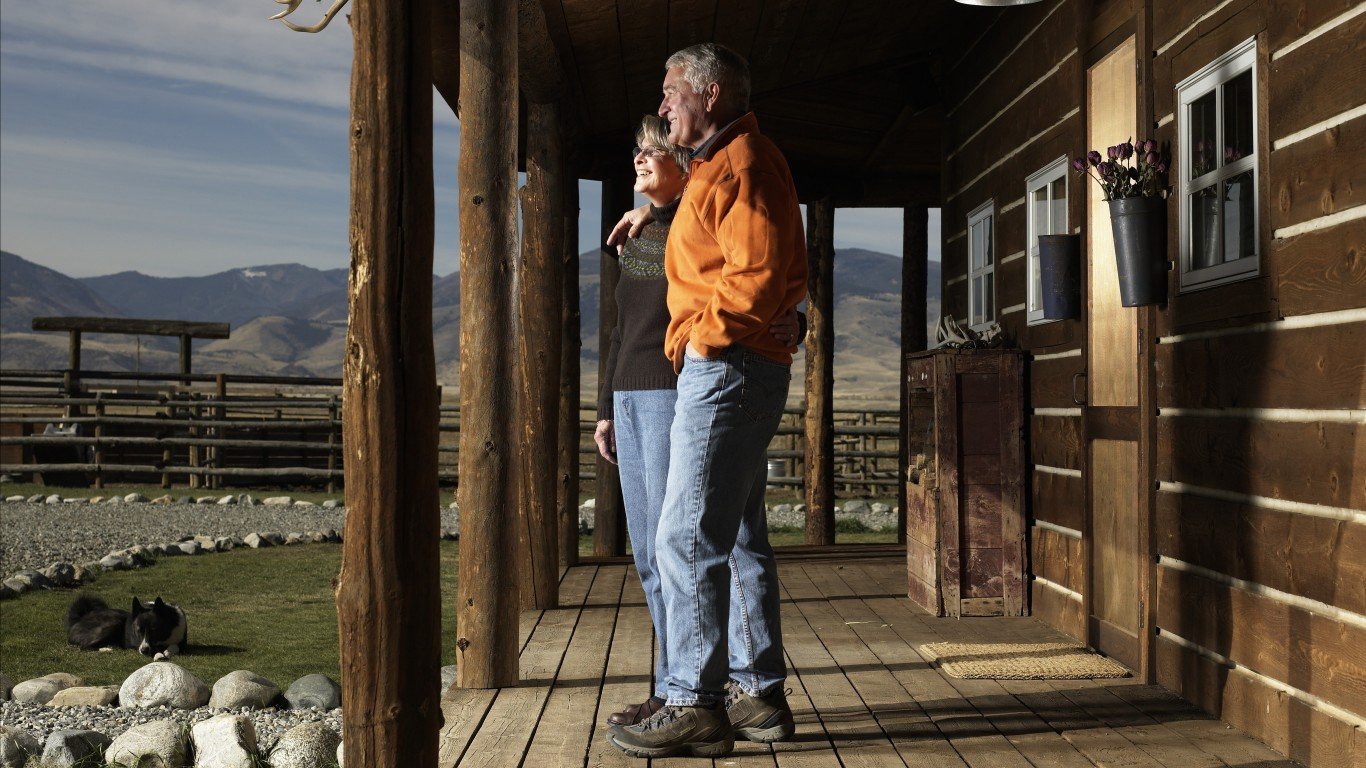
Montana keeps showing up on retirement shortlists for a reason: big sky, low crowds, no sales tax, and a cost of living that comes in below the national average at an index of 94.6. The question from readers in their late fifties and early sixties: I have around $900,000, I want to leave work at 62, and I want to breathe. Can Montana deliver that, or is it a postcard that quietly runs the meter? Here is what the math really looks like.
What “Room to Breathe” Actually Costs in Montana
The sub-market matters more than the state average. Bozeman and the Flathead corridor now price like Denver suburbs. Billings, Helena, Great Falls, and Butte still trade at a discount. For $900,000 to work at 62, you almost certainly need to arrive with a paid-off or mostly-paid home.
Assume a couple lands in Helena or Billings with a house bought outright. A realistic annual budget with breathing room:
- Property tax, insurance, utilities, and maintenance: about $14,000. Montana property tax bills have moved sharply after recent reappraisal cycles.
- Groceries and household for two: roughly $11,000.
- Transportation, including replacement vehicles: about $7,000. Montana miles are long.
- Pre-Medicare health coverage from 62 to 65: budget $12,000 to $16,000 per year for a couple on an ACA silver plan after subsidies.
- Travel, gifts, hobbies, and reserves: $12,000.
- Federal and Montana income tax on withdrawals: roughly $4,000 to $6,000.
That lands the working budget between $60,000 and $68,000 a year. Call it $64,000. Anything under $55,000 is tighter than the headline suggests; anything over $75,000 needs a bigger portfolio or smaller house.
Turning $64,000 a Year Into a Portfolio Plan
Between 62 and 67 there is no Social Security if you delay, and no Medicare until 65. Filing at 62 gets a reduced benefit, as much as a 30% reduction versus full retirement age. Waiting to 67 or 70 raises the check roughly 8% per year of delay past FRA. For a dual-earner couple with average work histories, waiting until 67 typically produces something around $4,500 to $5,200 per month combined in today’s dollars, indexed forward by the annual COLA (the 2027 adjustment is tracking near 3.1%).
Once both Social Security checks are on, the portfolio only needs to cover the gap. If Social Security carries $55,000 and the budget is $64,000, the portfolio funds the remaining $9,000 plus taxes. That is a trivial draw on $900,000. The pressure lives in the bridge.
For the five years from 62 to 67, plan to pull roughly $64,000 per year from the portfolio. Carve out about $320,000 into short-duration Treasuries and CDs, laddered against those five years. Ten-year Treasuries are near 4.7%, and even the national average 12-month CD sits at 1.68%, with top online banks paying meaningfully more. The remaining roughly $580,000 stays in a diversified equity-and-bond mix. Once Social Security starts, the residual portfolio draws at about 2% annually, comfortably inside a safe range for a 25 to 30 year horizon.
The Montana Wrinkles Most Analyses Skip
Two structural features change this answer. First, Montana taxes Social Security benefits, largely mirroring federal rules. That is unusual: most retirement-friendly states exempt SS entirely. Combined with Montana’s top individual income tax rate, retirees with meaningful IRA withdrawals plus SS can find themselves paying state tax on both. The state still lands at 5th overall on the 2025 State Tax Competitiveness Index, helped by a sales tax rank of 3 (there is no general sales tax), but the SS treatment is a real line item.
Second, the ACA bridge and Montana taxes interact. Every dollar of traditional IRA withdrawal between 62 and 65 raises MAGI, which trims your premium subsidy and adds Montana taxable income. A couple pulling $80,000 pretax to net $64,000 can easily lose $6,000 to $10,000 in ACA subsidy versus a couple that pre-funded a Roth or brokerage bucket for those three years.
Third, wildfire and hail insurance in western Montana are repricing fast. Carriers have pulled back around the Bitterroot and Flathead, and homeowners premiums have climbed at multiples of general inflation. If your Montana map has you west of the divide, add a couple thousand a year to the housing line.
The Number That Makes This Work
At 62 with $900,000, a paid-for Montana house, a five-year Treasury and CD ladder covering the bridge to 67, both spouses delaying Social Security to full retirement age, and a roughly 3.5% initial withdrawal rate falling to about 2% after benefits start, this retirement clears the bar. The budget it supports is around $64,000 a year in current dollars, indexed with CPI running near recent readings around 332.8. Skip the paid-off house, or land in Bozeman instead of Billings, and $900,000 stops being enough. The state gives you the discount; the sub-market and the sequencing decide whether you actually feel it.
Contact [email protected] for any questions or corrections.
I am a long time investor and student of business, and believe finding good companies that can become great investments is the best game on earth. After 20 years of writing and researching the public markets it is clear that individuals have never had more tools and information to take control of their financial lives. From ETFs and $0 commissions to cryptos and prediction markets there has never been a greater democratization of access to investing.
I write to help people understand the investments available to them so they can make the best choice for their portfolio, whether they're starting out or looking for income in retirement.