





When brokerages making money on a strategy start turning clients away, pay attention. That is what just happened with tax-aware long-short accounts, the fastest-growing tax dodge for the very wealthy.
Two Custodians Just Slammed the Brake
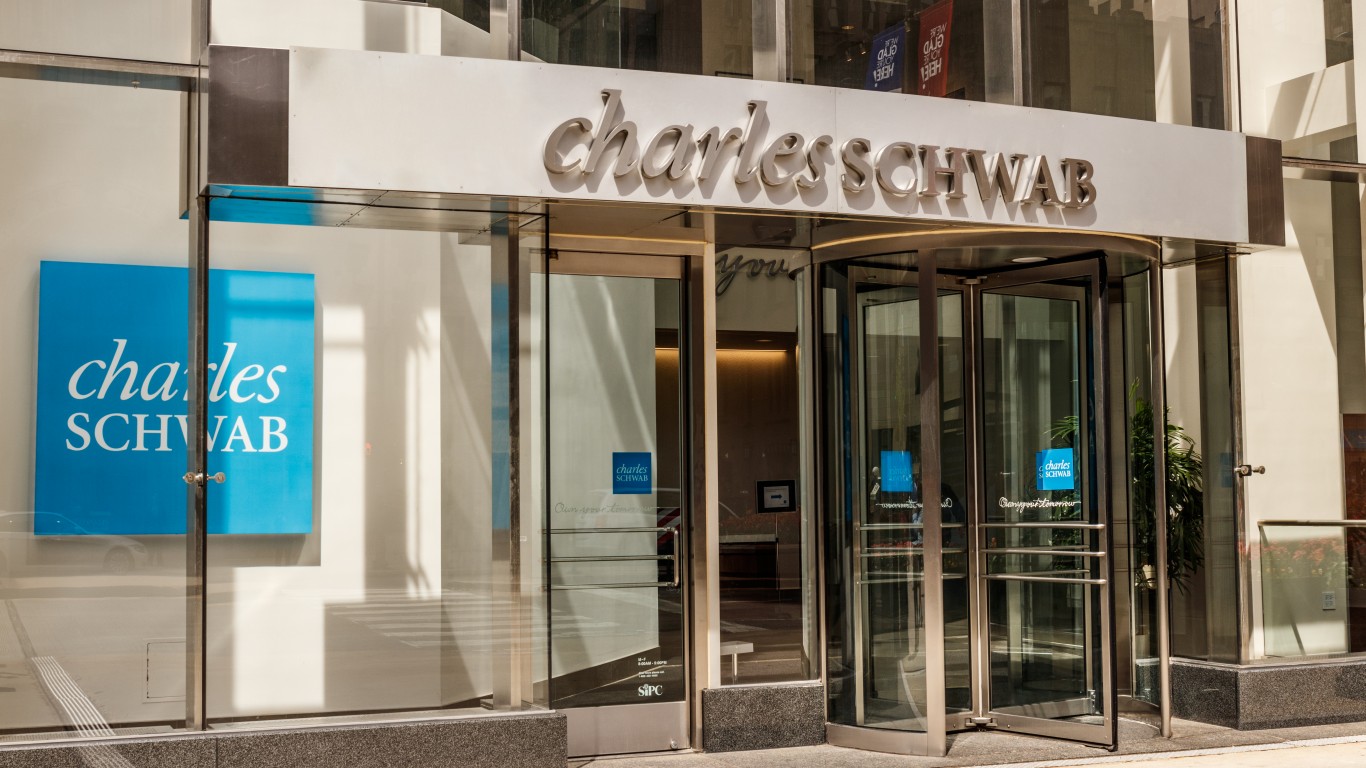
Per a Bloomberg “Great American Tax Dodge” investigation published August 18, 2026, Charles Schwab (NYSE:SCHW | SCHW Price Prediction) curbed how much of an adviser’s book can sit in these accounts, raised minimums, imposed borrowing and margin limits, and warned it will issue margin calls when accounts breach the new thresholds.

Fidelity moved earlier and harder. The largest US brokerage, with almost $20 trillion under administration, shut its doors to new clients and hiked fees for some existing ones. A spokesperson said “Fidelity chose to restrict access to new clients due to the unprecedented growth of these strategies on our platform.”
Schwab CEO Rick Wurster told Bloomberg the firm still wants to support the strategy and is going to great lengths to make sure advisers understand how complex and risky the accounts can be. On the July earnings call, he described the market as moving “past” the initial surge and into “more of a stable growth environment.”
What a Tax-Aware Long-Short SMA Actually Does
The account bets both on and against companies, engineered to create losses alongside long-term gains, so the accumulated losses erase taxes owed on other investments or income. It’s aimed at people facing big capital events like private equity payouts, business sales, or large market gains.
The accounts require relentless daily transactions, heavy borrowing that can trigger margin calls, a large number of shorted stocks, and sometimes complex derivatives. Fidelity and Schwab supply the financing and stock loans that make it work. Schwab’s Jalina Kerr told Bloomberg: “These sophisticated strategies can involve thousands of positions and significant client reporting intricacies.” Clients receive hundreds of pages of tax documents.
Scale and Systemic Risk
The strategy sits at the cutting edge of the $1 trillion “tax alpha” universe that helps wealthy people postpone or eliminate capital gains taxes. Schwab’s revenue from the business climbed to roughly $70 million by the second quarter. CFO commentary pegged it at “roughly 1%” of firm revenue, against total Q2 revenue of $7.1 billion.
Quantinno Capital, the shop that brought the first retail-scale tax-aware long-short SMA to Fidelity in October 2021, now has about $60 billion of assets, up from almost nothing five years ago. AQR surpassed $140 billion at the end of March, about $70 billion of it in tax-loss strategies, up from about $3 billion in 2023.
The custodians’ concern: as more money piles in, more of the same stocks get shorted, and a sudden loss could force everyone to unwind at once. If clients can’t post cash, the brokerage covers the shortfall. Former FDIC chair Sheila Bair told Bloomberg: “There’s no other reason to do it than avoid paying taxes. There’s risk for the firms offering this.”
Where the Wealthy Went Next
The plumbing rerouted. Wealth managers ran to Schwab when Fidelity pulled back, and when Schwab curbed access, less traditional firms started fielding calls. Goldman Sachs (NYSE:GS) and BNY Pershing have stepped into custody for these accounts, with Goldman citing “longstanding expertise as prime brokers.”
That’s consistent with Goldman’s Q2. Asset and wealth management revenues hit $4.6 billion, up 20% year-over-year, with wealth client assets near $2 trillion and CEO David Solomon saying the firm has “never been better positioned to help founders and executives realize and manage newly created wealth.”
Regulators are watching. At a July gathering in New York, Treasury officials warned that some strategies designed to slash tax bills may be crossing lines “that should not be crossed.” No rule has been issued.
Retail Playbook: Tax Moves You Can Actually Use
This SMA isn’t retail. Minimums, margin calls, and short books put it out of reach for most investors. But the underlying tax code is the same. Three legitimate moves for a taxable brokerage:
- Harvest losses inside your regular brokerage. Realized losses offset realized gains dollar for dollar, and up to $3,000 of ordinary income each year, with the remainder carried forward. Mind the 30-day wash-sale rule.
- Prefer ETFs over mutual funds in taxable accounts. The in-kind creation and redemption mechanism lets ETFs shed low-basis lots without pushing capital gains distributions onto your 1099.
- Use the 0% long-term capital gains bracket in low-income years. Between retirement and RMDs, many households have a window to realize gains at a 0% federal rate. Pair that with step-up in basis at death for lots you never need to sell.
That middle item is bigger than it looks. The quiet years between a last paycheck and the first required withdrawal may be the lowest tax rate a household ever sees again, and we sized up how to use that window in a free guide: The Roth Window.
Clients Piled In Anyway
One Boston-based adviser to high-net-worth clients told Bloomberg that on hearing the Schwab news, some of his biggest clients feared increasingly draconian restrictions were coming, and their response was to add even more money to their tax-aware accounts at Schwab while they still could. Schwab, meanwhile, recently recruited for a new role leading its long-short SMA program with a salary as high as $269,900.
When two firms whose margin desks profit from a trade start restricting it, and the buyers respond by ordering more, the story stops being about taxes and starts being about crowding. For a retiree, this is a math conversation worth having with a fiduciary advisor or CPA, not a strategy to chase.
Contact [email protected] for any questions or corrections.












 Top Gaining Stocks
 Top Losing Stocks