New York Now Has More Billionaires Than Almost Every Country on Earth
One American city now outranks nearly every nation on Earth by a measure that quietly shapes real estate prices, private capital flows, and where the next wave of AI wealth lands.

This post may contain links from our sponsors and affiliates, and Flywheel Publishing may receive compensation for actions taken through them.
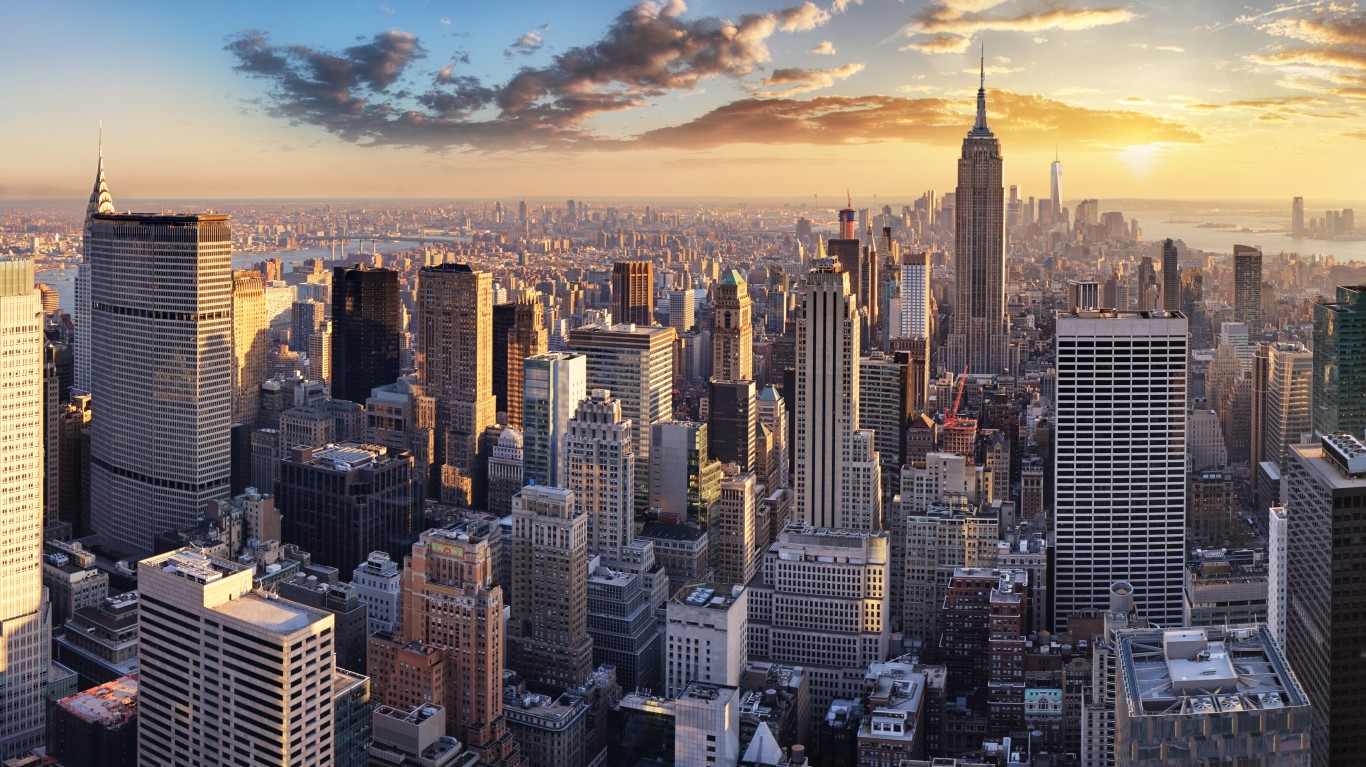
New York’s population of 164 billionaires is larger than that of almost every country in the world, barring China and Germany (excluding the US), according to Altrata’s Billionaire Census, 13th edition, published in August 2026 and covering 2025. That framing is the report’s own, and it is worth reading precisely: the city sits above every national billionaire population on Earth except two, once you remove the United States from the country list.
What the 164 Figure Actually Measures
Altrata’s count is a city-level headcount of individuals with a net worth of at least $1 billion, assessed through the firm’s proprietary valuation model and applied person-by-person rather than through economic modeling. The census tracks a global billionaire population that reached an all-time high of 3,795 individuals in 2025, holding record wealth of $15.1 trillion. New York’s 164 represents the top spot in the report’s ranking of the top 15 billionaire cities, which together housed 975 billionaires in 2025.
Two caveats shape how the ranking should be read. First, Moscow typically sits within the top 15 but is excluded in this year’s report owing to data limitations. Second, the country comparison in the lede is Altrata’s phrasing verbatim: New York’s headcount tops every nation’s billionaire population except China (830 billionaires by wealth-holding scale) and Germany, once the US is set aside. Those two are the only national populations larger than one American city’s.
Trend Line: Where 164 Sits Against Prior Editions
The city added 12 billionaires year-on-year, an 8% rise, which Altrata calls a firm riposte to recently heightened competition from more streamlined jurisdictions. The report attributes the gain to wealth trends tied to the AI investment boom, which drove activity across the city’s extensive private capital markets, family offices and ultra-prime real estate.
New York’s lead over the field widened. Second-ranked Hong Kong lost two billionaires to fall to 106, one of only two top-15 cities to shrink alongside London. San Francisco added nine to reach 99, and Singapore added 12 to reach 75. Six US cities sit in the top 15: New York, San Francisco, Los Angeles (73), Chicago (42), Houston (39), and Washington DC (36). The report also flags a structural quirk: the world’s third-largest billionaire country, Germany, has no city representation in the top 15, with its wealth dispersed across Munich, Frankfurt, and Hamburg. The top 15 cities’ share of the global billionaire class has eased gradually since the turn of the decade, from around 28-30%, and now sits at 26%.
Why This Matters if You Do Not Live on Park Avenue
The concentration has price consequences. New York’s cost-of-living index of 107.921 sits above the national benchmark of 100, and the state’s per capita personal income of $84,978 translates to a purchasing-power-adjusted real income of $78,741, according to 2024 Bureau of Economic Analysis data. Adding 12 billionaires in a single year into a metro with those baseline numbers reinforces demand at the top of the real estate stack and inside the private capital ecosystem that Altrata identifies as the wealth engine. For retail investors, the through-line is the report’s diagnosis of the driver: AI-linked private capital and family office allocation. That is where the incremental billionaire is being minted, and it is where public-market exposure to AI infrastructure, ultra-prime real estate, and alternative asset managers intersects with wealth creation the census can actually count.
Second, the ranking’s fragility matters. Moscow’s absence for data reasons and Hong Kong’s slippage remind readers that the city league table is a snapshot subject to revision. Streamlined jurisdictions (Singapore, Dubai) are gaining absolute numbers fastest, and mobility of capital is now a competitive variable.
New York’s 164 is the clearest signal in this edition that the AI capital cycle has a physical address. The city’s lead is widening, and its closest competition now comes from Singapore and San Francisco. Expect the 2027 census to test whether that gap holds as AI valuations mature and mobile capital keeps repricing where the ultra-wealthy choose to base themselves.
Contact [email protected] for any questions or corrections.
Joel South covers large-cap stocks, dividend investing, and major market trends, with a focus on earnings analysis, valuation, and turning complex data into actionable insights for investors.
He brings more than 15 years of experience as an investor and financial journalist, including 12 years at The Motley Fool, where he served as an investment analyst, Bureau Chief, and later led the Fool.com investing news desk. He has also co-hosted an investing podcast and appeared across TV and radio discussing market trends.