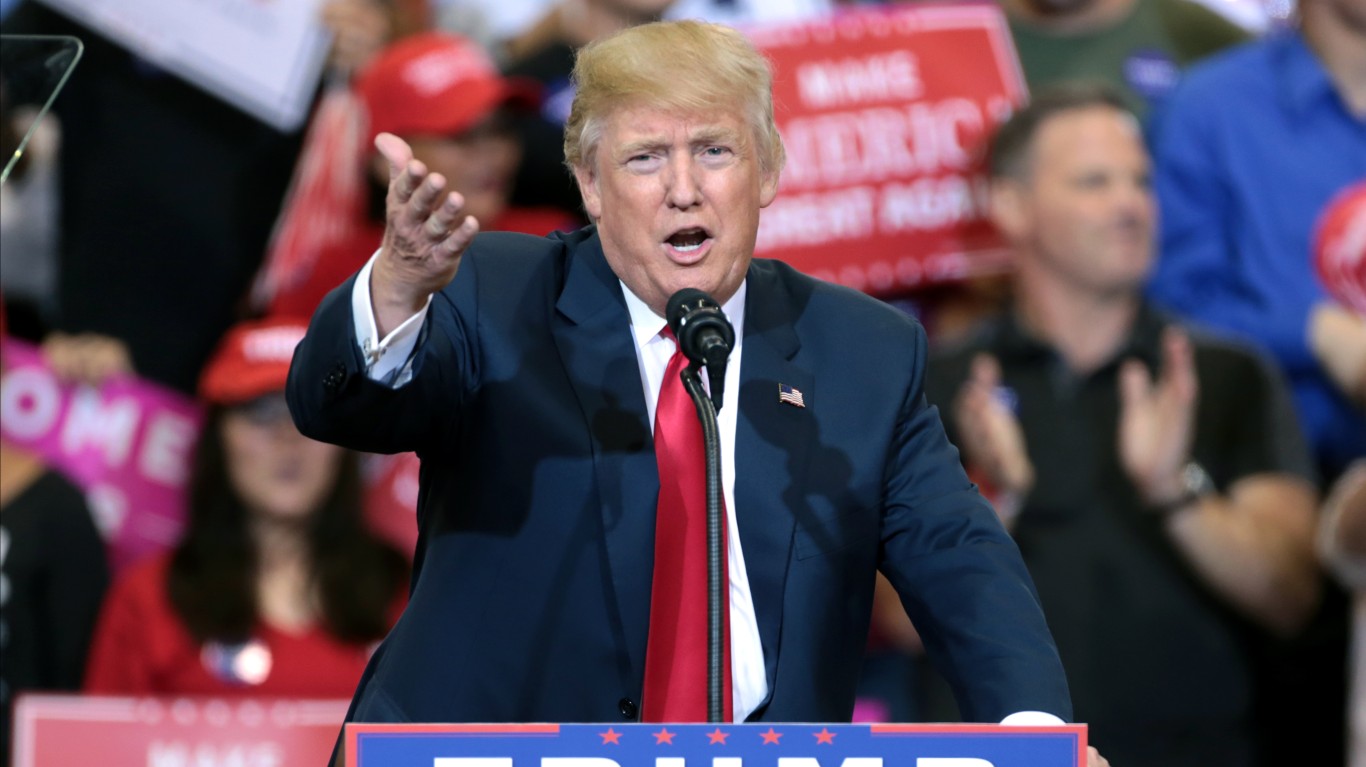
Trump Says His $5,000 Checks Are Happening “100%.” Mike Johnson Says Congress Decides.
Trump calls $5,000 checks a certainty and Congress an afterthought, but the Speaker of the House told a different story on the same weekend. What that gap means for your budget deserves a closer look before you start making plans.


President Donald Trump publicly recommitted this weekend to sending Americans $5,000 checks, calling the plan certain and easily affordable. Hours later, House Speaker Mike Johnson said something quieter and more consequential: Congress would still need to act. That gap between a presidential pledge and the legislative machinery required to fund it shapes what households should do next.
The real question is whether to treat an unlegislated, election-contingent promise as household income.
What Trump Actually Promised
Trump reaffirmed the pledge on Saturday, framing the payment as an easy fiscal lift. “We have trillions of dollars coming into the country,” Donald Trump said, casting the check as a share of what he described as record federal receipts.
He extended the argument to affordability. “We can easily handle that because we’re taking in so much money. We’ve never done better,” Donald Trump said, tying the payment to revenue rather than to any offset or appropriation.
The pledge was framed as personal. “I made that pledge. I always keep my pledge,” Donald Trump said, restating the commitment days after first floating a $5,000 dividend payment tied to political outcomes.
None of that language addresses how the money would move. The promise is clear; the mechanism is where households have to make decisions.
What It Would Actually Take
Speaker Mike Johnson answered the mechanism question on the Sunday shows. “I would assume, yes, he’d need Congress to act, and that’s a creative idea,” Mike Johnson said, describing a willingness to build consensus but no timeline and no committed vote.
The president has a different view. The Associated Press reported that Trump told CBS News Texas he did not think Congress would need to authorize the payments, and he did not explain how a sum of that scale would move without lawmakers.
That disagreement carries real fiscal weight. The federal government is already running a deficit equal to about 6% of GDP, so a program of this size lands on a budget that is far from balanced.
Congress writes checks. A president who says he can send them without a bill is describing a legal posture that still leaves households without a payment date.
Testing the Record-Revenue Claim
The affordability case rests on a strong-economy backdrop. The current data pushes back on that reading in several places, starting with prices.
The Consumer Price Index sat at 334.1 in August, the highest reading of the past year. Gas averaged $4.16 a gallon nationally, and WTI crude was around $97 a barrel, up sharply over the past month.
Borrowing costs are climbing with them. The 10-year Treasury yield reached about 5%, well above the roughly 4% low set earlier this year, which raises the interest bill on any new deficit spending.
Households are already feeling it. The University of Michigan sentiment index printed 55.2, inside the survey’s recessionary range, and the personal savings rate fell to 2.8% in the second quarter from 6.2% in early 2024. Money arriving in a tight, high-price environment tends to be spent faster and push inflation harder than the same dollars arriving in a slack one.
Verdict on the Pledge: Do Not Budget Around It
You should not plan on this payment. There is no bill, no appropriation, no eligibility rule, no timeline, and the two most senior Republicans in Washington described two different processes for making it real on the same day.
That verdict holds even if the payment eventually passes. A check whose size, timing, and tax treatment are unknown cannot support a car payment, a debt payoff, or a down-payment target, because plans that depend on money you do not control tend to break the month the money does not arrive.
Shift your attention to variables you already control. Set your 401(k) contribution to at least the employer match, list your debts by interest rate and attack the highest first, and build a starter emergency fund sized to one month of essential expenses before you touch anything else.
If a $5,000 deposit ever shows up, treat it the way you would treat any windfall: fund the emergency account, retire the most expensive debt, then invest what remains. Until then, the pledge is a political statement, and your budget is the only document that pays your bills.
Contact [email protected] for any questions or corrections.
Omor Ibne Ehsan is a writer at 24/7 Wall St. He is a self-taught investor with a focus on growth, cyclical, and dividend equities that have strong fundamentals, value, and long-term potential. He also has an interest in high-risk, high-reward investments such as penny stocks.