Trump Just Promised You $5,000. There’s a Catch, and It Changes Everything About How You’d Spend It.
Trump's promise of a $5,000 cash payment comes with a restriction no US transfer program has ever tried to enforce, and that single condition rewrites the math on what the money would actually be worth to you.


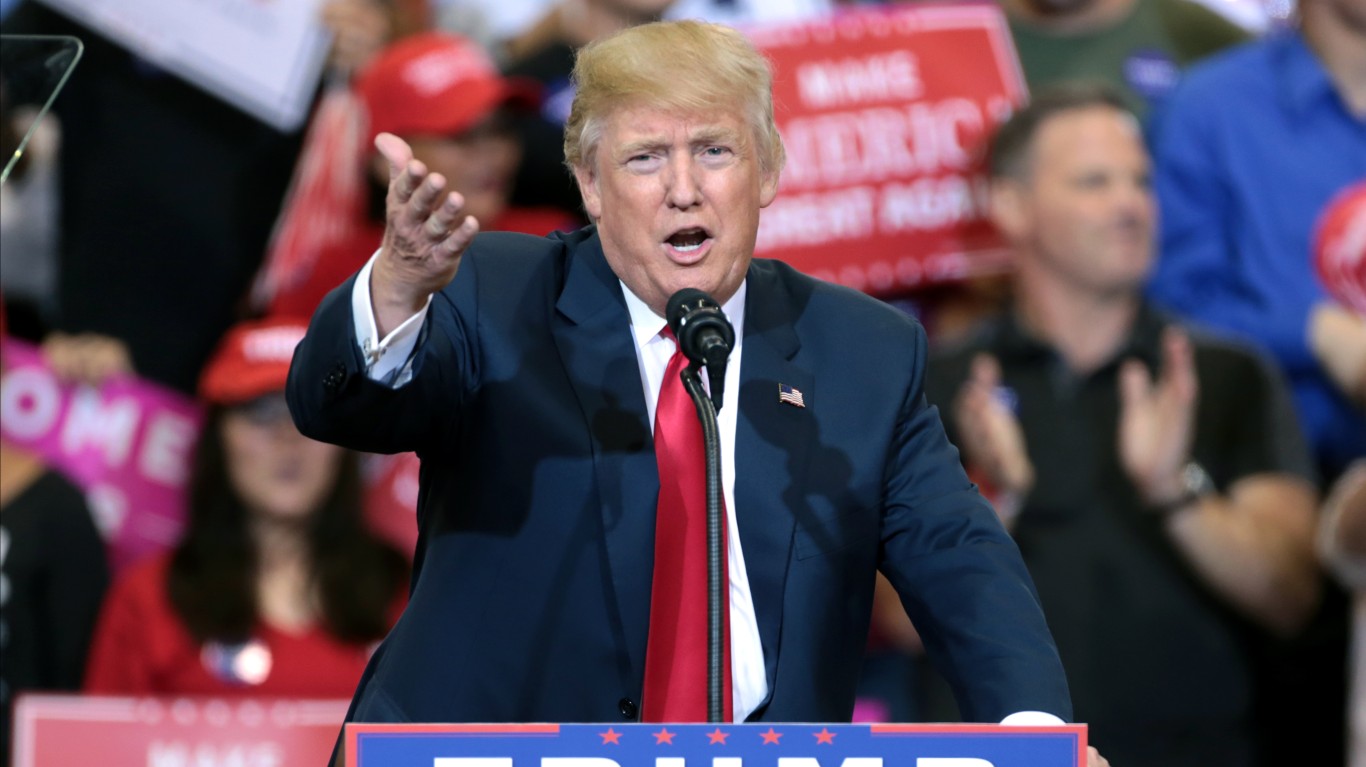
Donald Trump told reporters this week that every adult US citizen would receive a $5,000 cash payment if Republicans hold Congress in the midterms, a program he wants branded the “Trump dividend.”
In his words, it’s $5,000 to every adult. The only caveat is that the dividend must be spent in the United States of America.
The dollar figure gets the headlines. The domestic-spending requirement is what changes how you would actually use it, because a payment you can only spend at US registers behaves very differently from cash in hand.
Our position is straightforward. Treat this as a campaign line rather than a plan, because it is conditional on an election, has no bill attached, and comes with a spending restriction no US cash transfer has ever tried to enforce. You still have work to do now that does not depend on whether the check ever lands.
What Was Promised and What Was Left Blank
Four concrete terms exist: the amount is $5,000, recipients are adult US citizens, Republicans must win the midterms, and the money must be spent inside the country.
Everything else is blank. Trump did not name an income phase-out, a delivery mechanism, a timeline, or a way to police the domestic-spending rule, and he did not point to a legislative vehicle.
He framed the geographic condition bluntly: “We don’t want you going to Canada to spend the money. We don’t want you going to China, to Germany. You got to spend the money in the United States of America.”
He tied it to the ballot just as clearly: “If the Republicans win, you win with us and you get $5,000, it will be called the Trump dividend.” A promise made from a podium with those blanks is a pitch, and pretending otherwise is how households end up budgeting around money that never arrives.
Funding Claim and Who Actually Pays Tariffs
Trump says tariff revenue funds the check: “The reason the Democrats can’t do that is because they don’t do tariffs. They don’t take any money. All they know is poverty and how to ruin our country. But we’re making a fortune.”
Sending $5,000 to every adult American is a transfer measured in the hundreds of billions of dollars, according to White House. Current tariff receipts, even at recent elevated rates, do not comfortably cover a one-time payment at that scale without new debt or offsetting cuts.
Tariffs are paid by the US importer of record and frequently passed to consumers at the shelf. Walmart’s (NASDAQ:WMT | WMT Price Prediction) most recent quarter showed the same mechanics in reverse: tariff refunds boosted its gross profit rate 96 basis points to 25.4%, and management said it would reinvest those gains into lower customer prices in the second half.
The read-through is uncomfortable. If tariffs fund your check and those same tariffs lift the price of the goods you buy with it, you are partly paying yourself back at the register, which is the catch behind the catch.
What to Do About a Check That Doesn’t Exist Yet
Do not spend, borrow against, or budget for this payment. It has too many missing pieces to serve as a planning input, and the electoral trigger alone should keep it off your spreadsheet.
If a check ever does arrive, use the same priority stack that applied to prior stimulus rounds. Retire high-interest debt first, because the average US credit card carries an APR of nearly 21%, which the Federal Reserve’s own historical guide classifies as record territory.
Paying off a balance at that rate is a guaranteed return no equity investment can reliably match. After the cards are clear, fund an emergency account covering three to six months of essentials, then invest what remains inside a tax-advantaged account.
Consumer sentiment sits at 55.2, still inside the University of Michigan’s recessionary range even after a bounce from the May low of 44.8. Households already handling money defensively should not change that posture because of a campaign-trail figure.
Contact [email protected] for any questions or corrections.
Omor Ibne Ehsan is a writer at 24/7 Wall St. He is a self-taught investor with a focus on growth, cyclical, and dividend equities that have strong fundamentals, value, and long-term potential. He also has an interest in high-risk, high-reward investments such as penny stocks.