The Retirees Who Left The Villages for Good Say They Should Have Done It Years Sooner
Retirees who left The Villages say the regret is not about leaving but about the years they stayed after they knew it was time to go. Understanding what kept them frozen is the part nobody talks about.

This post may contain links from our sponsors and affiliates, and Flywheel Publishing may receive compensation for actions taken through them.
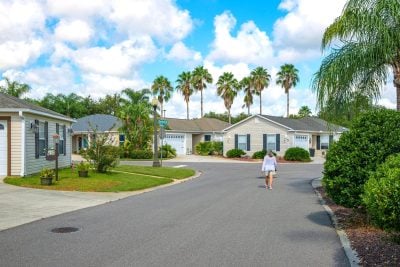
Nobody in this story regrets moving to The Villages. The twist most outside coverage misses is that people who left, and now say they should have done it years sooner, are describing something specific: the stretch of time, sometimes five years, sometimes ten, when they knew the arrangement had stopped working and stayed anyway. This piece examines that stretch, why it lasts, and what a financially literate reader in their fifties or sixties can do now to avoid repeating it.
Forces That Anchor a Retiree in Place
The first anchor is sunk cost. The buy-in on the house, golf cart, lanai furniture, and club initiations comes first, and none of it returns whether you stay or go. Yet leaving feels like a waste, and that feeling keeps the For Sale sign in the garage.
The second is a real transaction wall. Selling a home and buying another involves listing commission, title and settlement work, deed stamps, and moving costs. Round-trip transaction friction on a Villages home typically runs well into the five figures. Zillow data from June 2026 puts the average Villages home value at roughly $393,000, down about 1.8% year-over-year, which means sellers are not liquidating into a panic market but are also not pocketing the pandemic-era peaks that topped $436,000 in 2022.
The third is tax mechanics. Florida has no state income tax on retirement withdrawals, an established homestead exemption on primary residences, and the Save Our Homes assessment cap typically compresses property tax bases well below market value after a decade of ownership. Leaving forfeits that compression. A destination state that taxes 401(k) distributions or reassesses at purchase price can quietly consume whatever cost-of-living savings the move was supposed to deliver.
Florida’s cost-of-living index sits at 103.4, above the national benchmark of 100. Tennessee (88.9 to 91.9 depending on the index), South Carolina (91.9 to 93.7), and Georgia (90.6 to 96.3) all come in meaningfully cheaper, but they treat retirement income differently enough that the answer is not automatic. Total out-of-pocket math, including state tax treatment, must be run before committing to a destination. The fourth anchor is social: a life firmly in place at 70 is genuinely hard to rebuild as the years advance, and that reality deserves honest weight in the calculus.
Why the Arrangement Gets Worse in One Direction Only
The trends that erode the fit are one-directional. Driving gets harder as you age, and a community organized around driving yourself stops working the day you cannot. Care needs rise, and independent living offers thin built-in support for the medical middle years. The death of a spouse reshapes both household budget and social geometry in ways that cannot be anticipated in advance. Adult children become a logistics problem when a fall or diagnosis puts them in charge of decisions from several states away. None of these forces reverse. Waiting makes the decision harder while narrowing the available options.
The Villages itself has grown to a population of about 89,000, with a median resident age of 74.1. That figure captures the demographic reality operating beneath the pickleball courts and recreation clubs: a large share of the community is already well into the years when the calculus shifts.
Moving Early Versus Moving Under Duress
A voluntary move at seventy, executed on your own timeline, is fundamentally different from a forced move at seventy-eight after a health event. The voluntary version lets you list into a chosen season, price patiently, handle the packing on your schedule, and land in an independent home near family.
The S&P Cotality Case-Shiller national home price index came in at 336.9 for June 2026, up roughly 0.4% from the prior month and about 1.9% year-over-year by July, so sellers are not liquidating into a broken market. The forced version happens on someone else’s calendar, sometimes into whatever the housing market looks like that month, with paid movers doing what family would have done, and occasionally straight into assisted living priced well above what an earlier ordinary move would have cost. The cost of an early voluntary move is knowable and plannable. The cost of a late forced one is not, and it runs higher almost every time.
The Bureau of Labor Statistics reports that average household spending ran $78,535 in 2024. The 2027 Social Security COLA is on track to land between 3.4% and 3.6%, with most independent analysts projecting 3.5% ahead of the official October 14 announcement. A raise in that range lifts a modest benefit by roughly $65 to $70 a month before Medicare deductions. That figure does not absorb the cost of a forced move mispriced by twenty or thirty thousand dollars.
Write the Triggers Down While the Decision Is Still Yours
People who report regret about staying too long share a common thread: they lacked a predetermined threshold, so the decision kept getting deferred. The practical fix is to name the triggers now, in writing, while the decision still belongs to you. The day either spouse stops driving at night, the move conversation opens. The day a specialist visit requires a family member to fly in, it opens. The day one of you is alone in the house, it opens. The day the annual budget crosses a stated number, it opens.
The math behind a well-timed move is straightforward. A household drawing at a 4% rate against a portfolio sized to the post-move budget, with Social Security claimed at the age that fits the longevity picture, and a housing swap executed voluntarily rather than reactively, is the same math the calculators produce. (We made the full case for why that 4% figure wobbles today, and what to run instead, in a free income-first guide.) What the calculators do not produce is the trigger list. That document is what turns a good decision into one you actually make in time.
Editor’s note: This version updates the 2027 Social Security COLA projection from approximately 3.3% to the current pre-announcement consensus range of 3.4% to 3.6% (most analysts at 3.5%), reflects the June 2026 Case-Shiller national index reading of 336.9 and the 1.9% year-over-year gain reported for July 2026, and adds The Villages population and median home value figures current through mid-2026. The state cost-of-living index values for Florida, Tennessee, South Carolina, and Georgia were also verified against the 2026 BEA Regional Price Parities.
Contact [email protected] for any questions or corrections.
David Beren has been a Flywheel Publishing contributor since 2022. Writing for 24/7 Wall St. since 2023, David loves to write about topics of all shapes and sizes. As a technology expert, David focuses heavily on consumer electronics brands, automobiles, and general technology. He has previously written for LifeWire, formerly About.com. As a part-time freelance writer, David’s “day job” has been working on and leading social media for multiple Fortune 100 brands. David loves the flexibility of this field and its ability to reach customers exactly where they like to spend their time. Additionally, David previously published his own blog, TmoNews.com, which reached 3 million readers in its first year. In addition to freelance and social media work, David loves to spend time with his family and children and relive the glory days of video game consoles by playing any retro game console he can get his hands on.