Everyone’s Chasing The Villages. Smart Retirees Are Quietly Buying Here Instead
The Villages sells an entire lifestyle, but the true price hides inside fine print most buyers never read. Four quieter retirement markets are passing the math test Florida keeps failing.

This post may contain links from our sponsors and affiliates, and Flywheel Publishing may receive compensation for actions taken through them.

There is no question retirees ask more persistently: Is living in The Villages actually the best deal, or just the loudest one? The Florida megacommunity has become shorthand for active-adult retirement, and its scale delivers things smaller markets simply cannot match. Price the full package, though, and several quieter alternatives start looking sharper. Here is what the math shows and where most buyers stop looking too soon.
What The Villages Actually Sells, and What You Inherit
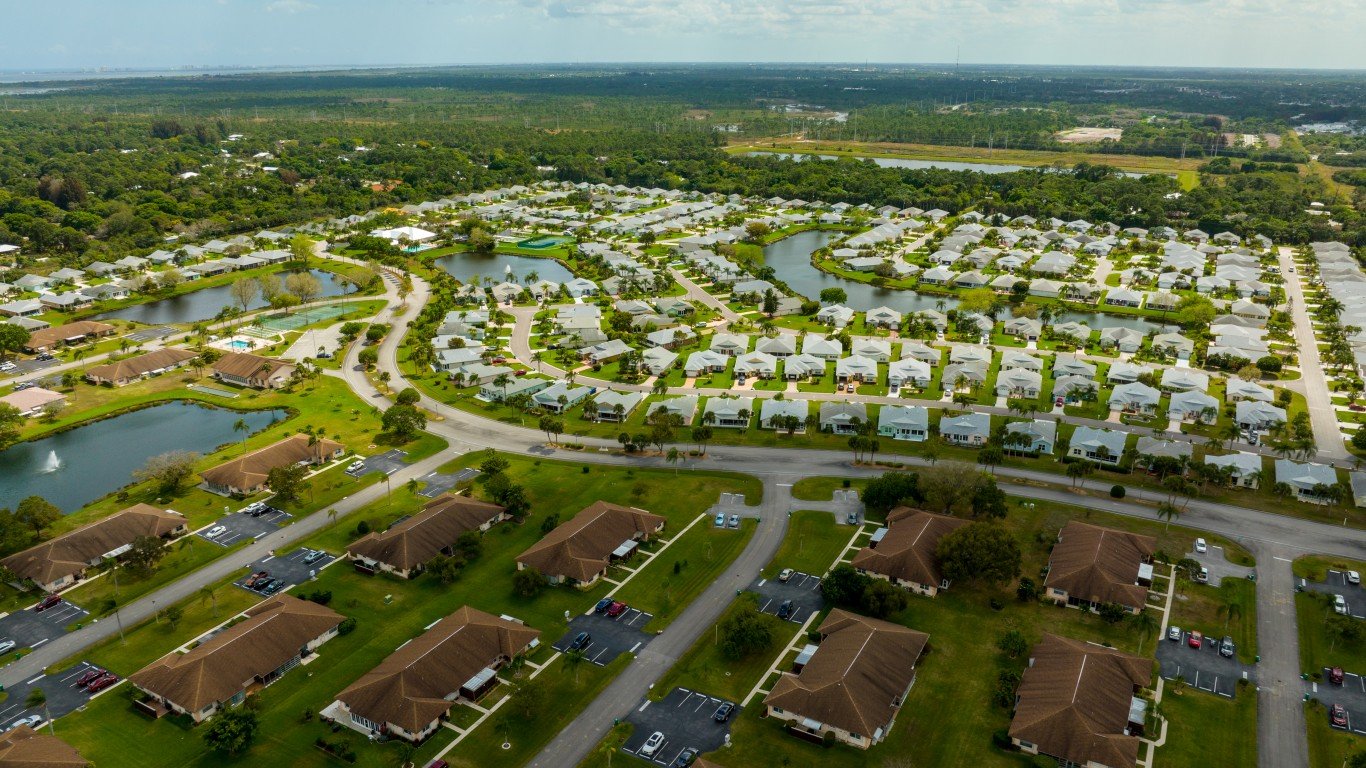
The Villages operates on a Community Development District (CDD) model, a Florida governance structure that finances community infrastructure through tax-exempt bonds attached to individual homes. Buy in, and you inherit whatever bond balance the prior owner did not pay down, on top of a monthly amenity fee covering recreation, pools, and golf. That fee has a documented history of periodic increases.
Those are contractual obligations, not market conditions. Layer on Florida’s hardened homeowners insurance market, hurricane exposure, and reliable 90-degree-plus summers, and the carrying cost of a Villages home runs meaningfully above the sticker price. Florida’s overall cost-of-living index sits at 103.4, above the national reference of 100. That gap compounds quietly over a 20- or 30-year retirement horizon.
Four Places Doing the Math Differently
- Chattanooga, Tennessee. Tennessee levies no state income tax on wages, Social Security, pensions, or retirement account withdrawals, making it one of the cleanest tax environments for retirees in the country. The state’s cost-of-living index is 91.87, with purchasing-power-adjusted real income of $72,154. Erlanger Health System provides genuine tertiary medical infrastructure without requiring residents to travel to a metro hub. No mandatory amenity assessment applies unless you opt into a specific HOA community.
- Asheville, North Carolina. The mountain setting sits outside the hurricane cone, but the 2024 Helene flooding fundamentally reset assumptions about inland climate risk. Two years on, Buncombe County (home to most of the region’s jobs) has seen a net loss of roughly 3,100 jobs since the storm, and the recovery across Western North Carolina remains uneven. That context does not disqualify Asheville, but buyers need to sit well above the floodplain and understand they are purchasing into an economy that is still rebuilding. North Carolina’s cost-of-living index is 94.3. The state exempts Social Security from income tax; other retirement income is taxed at the confirmed flat rate of 3.99% for 2026, down from 4.25% in 2025. Mission Hospital provides regional tertiary care.
- Iowa City, Iowa. The anchor here is the University of Iowa Hospitals and Clinics, a top-ranked academic medical center that draws patients from across the Midwest. Iowa’s cost-of-living index is 87.76, with a purchasing-power-adjusted real income of $74,574. Iowa fully exempts retirement income from state tax for residents aged 55 and up. Property taxes run higher than Florida’s, but homeowners insurance costs are a fraction of coastal Florida rates, a difference that adds up fast.
- Pittsburgh, Pennsylvania. Pennsylvania does not tax Social Security, most pensions, or retirement account distributions for those 59.5 and older. The state’s cost-of-living index is 97.57. UPMC provides one of the strongest regional healthcare networks in the country. The catch is real: Pennsylvania levies an inheritance tax with essentially no exemption, at low single-digit rates for lineal descendants and higher rates for siblings and more distant relatives. For heirs, that distinction is decisive.
Unbundling the Amenity Package and What You Give Up
A large share of what makes an age-restricted community expensive is the amenity infrastructure itself. If you are not golfing several times a week, swimming daily, or attending the clubhouse regularly, you are paying for capacity you will never use. The alternatives above let you buy the location and the healthcare access without a mandatory recreation package baked into your monthly carrying cost.
Social infrastructure is a different matter. A built-in peer community matters enormously for a widowed or single retiree, and a university town or mid-sized city does not replicate that on day one. Fewer age-restricted protections, no golf-cart grid, and in some markets fewer neighbors in the same life stage: the trade is genuine and worth pricing honestly before you sign anything.
Variables That Actually Decide It
Retirees routinely underweight four variables. State estate or inheritance taxes deserve scrutiny first, since a handful of states, Pennsylvania among them, impose levies at thresholds far below the federal exemption. Medicare Advantage network availability is county-specific and can be thin in rural counties. That matters especially because switching later to a Medigap policy usually requires medical underwriting, meaning insurers can decline coverage or raise premiums based on health history. Long-term care costs round out the picture, varying by state as widely as any other category in retirement planning. And proximity to adult children consistently surfaces as a stronger driver of relocation decisions than either climate or tax rates, according to research on retirement migration patterns.
What The Number Has To Look Like
Anchor the plan against the 2026 fixed costs everyone shares: Medicare Part B at $202.90 per month, a $283 annual deductible, and IRMAA surcharges beginning above $218,000 in joint modified AGI (the IRMAA thresholds and related Medicare premium traps are covered in a free guide here). The Social Security Administration officially announced a 3.6% COLA for 2027 on October 14, 2026, the largest annual increase in three years. Against a national Consumer Expenditure Survey average of $78,535 in 2024, a couple in Chattanooga or Iowa City can credibly run a comparable lifestyle for meaningfully less. That gap funds a larger discretionary bucket or an earlier exit from the workforce. At a 4% withdrawal rate net of Social Security, a mid-range retirement outcome in the coastal insurance market requires a substantially larger portfolio than the inland alternatives demand.
Before signing anything, rent in the target market through a full summer and a full winter. That single step will tell you more than any spreadsheet, and it is the one Villages buyers almost never take.
Editor’s note: This update corrects the 2027 Social Security COLA figure from 3.1% to 3.6%, reflecting the official SSA announcement on October 14, 2026. It also updates North Carolina’s flat individual income tax rate to the confirmed 3.99% for 2026, and adds post-Helene economic context for Asheville showing Buncombe County’s net job losses two years after the storm.
Contact [email protected] for any questions or corrections.
David Beren has been a Flywheel Publishing contributor since 2022. Writing for 24/7 Wall St. since 2023, David loves to write about topics of all shapes and sizes. As a technology expert, David focuses heavily on consumer electronics brands, automobiles, and general technology. He has previously written for LifeWire, formerly About.com. As a part-time freelance writer, David’s “day job” has been working on and leading social media for multiple Fortune 100 brands. David loves the flexibility of this field and its ability to reach customers exactly where they like to spend their time. Additionally, David previously published his own blog, TmoNews.com, which reached 3 million readers in its first year. In addition to freelance and social media work, David loves to spend time with his family and children and relive the glory days of video game consoles by playing any retro game console he can get his hands on.