‘They Get You Coming In, They Get You Going Out’: Clark’s Fix for T-Mobile’s Exit Bill Trap
T-Mobile billed Luke in Virginia for an extra month after he cancelled, and the supervisor refused to budge. Clark Howard says carriers have engineered this trap into every billing cycle, but a simple date on your calendar closes it.

This post may contain links from our sponsors and affiliates, and Flywheel Publishing may receive compensation for actions taken through them.
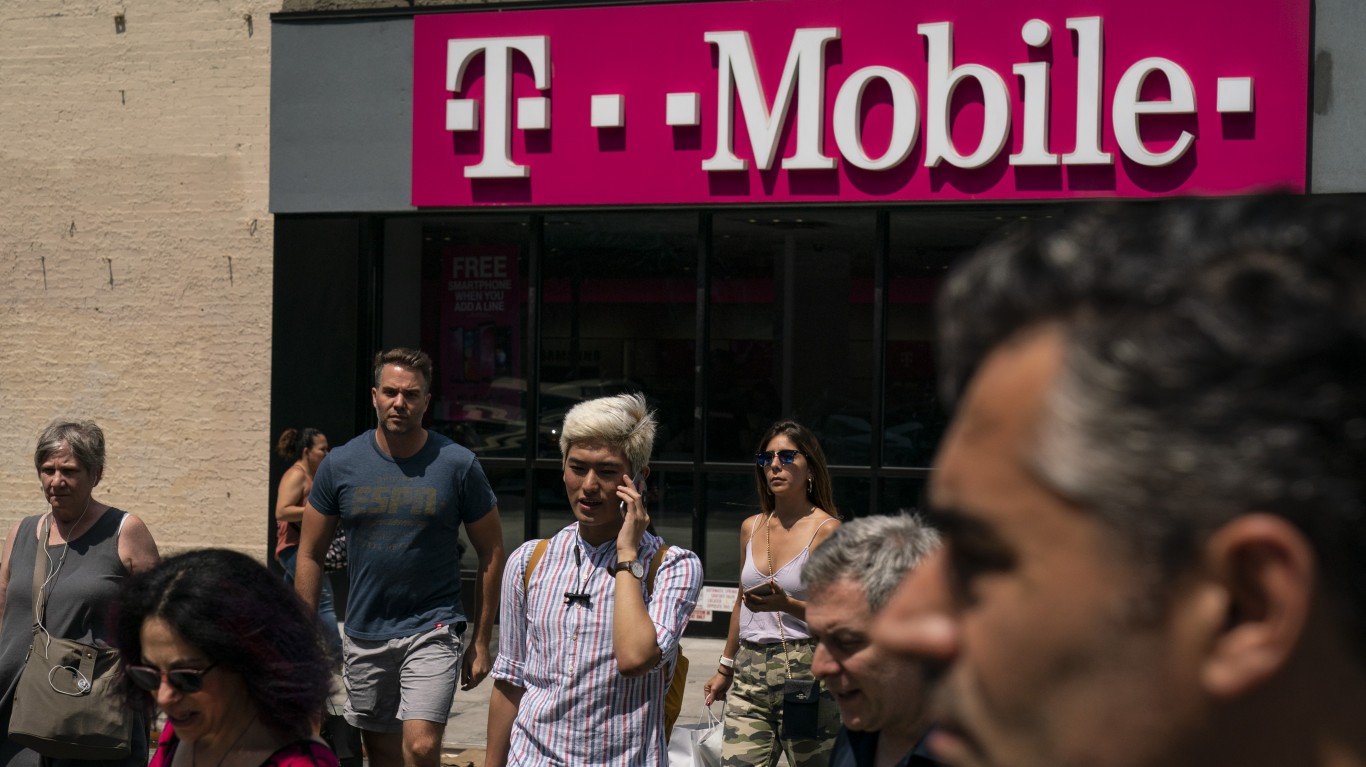
Clark Howard read a listener email on his September 23, 2026 podcast that will sound familiar to anyone who has tried to leave a wireless carrier. Luke in Virginia cancelled his T-Mobile cell and home internet after a price hike, moved his phone line to Visible at $29 a month, found a cheaper home internet option, and cut his bill by $30 a month. T-Mobile (NASDAQ:TMUS | TMUS Price Prediction) then told him he still owed for the remainder of the billing cycle. The supervisor “wouldn’t budge.”
Howard’s verdict: “When you sign up for a technology service, they bill you starting that day, but when you cancel they say your service stays in effect till your next billing cycle. So they get you coming in, they get you going out.”
The stakes are small in any one month and large across a lifetime of switching. If you pay for four extra weeks every time you change providers on cell, home internet, streaming, and cloud storage, a typical household can give back $100 to $300 a year in service it never uses.
Clark’s Fix Is a Calendar
Howard is right, and the fix is timing. His guidance: “You can look and see when your billing cycle ends, then about four days before it, give yourself time to get the cutover done, switch your cell phone, that kind of thing, so you’re not double paying for any long period of time.”
Here is the math with round numbers. Say your current plan runs $80 a month and bills on the 15th. If you port your number to a new carrier on the 16th, the old carrier keeps the full $80 for the cycle that just started, and the new carrier begins charging you from day one. You have paid two providers for essentially the same 30 days. That is $80 gone.
Now run the same move on the 12th, four days before the cycle closes. The old carrier has already collected for the period you are using. The new plan starts, and by the 15th the old service simply lapses. The overlap is four days on a new $29 plan, roughly $4. You keep the other $76.
The mechanic is called an asymmetric billing period. Prorated cancellation credits used to be standard in wireless. The major carriers eliminated them years ago. AT&T (NYSE:T) and Verizon (NYSE:VZ) bill the same way T-Mobile does on this point. Howard’s claim that the practice is “pretty much universal” in tech services is accurate.
What Decides How Much You Save
Whether the four-day trick is enough depends on one thing: are you carrying a device installment balance?
Service only. Luke moved to a $29 Visible plan with no phone financing attached. His only exit cost is the leftover billing cycle. Timing the switch is the whole game, and Howard’s fix saves him almost the entire final month.
Phone on a 36-month installment plan. Say you took a $1,100 phone with a $30 monthly bill credit that only applies as long as you stay. Leave in month 12, and the remaining device balance accelerates onto your final bill. The unused-cycle charge is a rounding error next to that. Before you cancel, open the carrier app, find the “device payoff amount,” and add it to your exit math.
Carriers are steering exactly this way. On Verizon’s Q2 2026 call, chief executive Dan Schulman told analysts the industry has been “too dependent on free handsets being the solution for everything” and that “the era of just the free handset, that’s gone right now.” AT&T chief John Stankey has said the same thing in different words: converged wireless-plus-internet accounts produce “lower churn, outstanding brand affinity, higher lifetime values.” The subsidy is smaller than it used to be. The installment balance is real, and it is the number that will surprise you at the door.
What To Do Before You Cancel
- Find your billing cycle close date. It is printed on every bill and inside your carrier’s app under account details.
- Pull your device payoff figure. If it is more than a couple hundred dollars, decide whether to pay it, port to a carrier offering to cover it, or delay switching until the balance shrinks.
- Schedule the port about four days before cycle close. That leaves time for the number transfer and equipment return without paying two providers for the same weeks.
- Audit autopay after the switch. Confirm the old debit stops. Howard’s warning about the “inertia tax” applies double to canceled accounts that quietly keep charging.
The exit bill is a date on a calendar you can plan around.
Contact [email protected] for any questions or corrections.
Jake has been been working in financial media for almost 15 years. He focuses on all things personal finance for 24/7 Wall St. with high hopes to educate and entertain. Most recently, Jake spent 12 years working various roles at The Motley Fool. He started copy editing fool.com content, worked on premium and marketing campaigns, and helped launch The Ascent, a personal finance brand.
His work has been featured on platforms like MSN, Yahoo Finance, USA Today, and more. He's written about credit cards, social security, ETFs, savings accounts, and just about anything else you can imagine when thinking about money. Jake love to cook, play golf, and tell people he's never had a cavity. (It's true!)