The Arizona Retirees Who Stay Will Say the Ones Who Fled the Summers Got One Thing Wrong
Arizona retirees who flee the desert every summer think they have the smarter retirement plan, but the numbers tell a very different story about where the real money goes.

This post may contain links from our sponsors and affiliates, and Flywheel Publishing may receive compensation for actions taken through them.
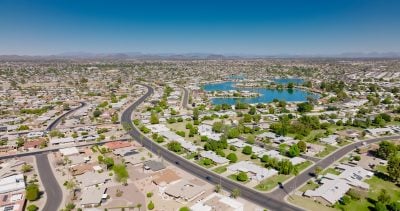
Many Arizona retirees spend summers away from the desert heat, and those who stay year-round often ask what that choice costs. Keeping a second place for the summer is one of the most common choices people consider when they plan an Arizona retirement. This is what the year-round version actually costs, and why the summer escape usually gets priced wrong.
What A Full Arizona Year Costs A Couple
Overall, Arizona prices line up closely with the rest of the country, with a regional price index of 100.677. Taxes also favor retirees. Arizona has a 2.5% flat income tax and does not tax Social Security. IRA and 401(k) withdrawals are taxed at that flat rate, so they belong in the budget. Property taxes are modest too, as one Oro Valley couple the Wall Street Journal profiled pays about $3,600 a year, compared with more than $13,000 on their old Illinois home, which is a difference that is hard to ignore.
Here is a working budget for a paid-off home in the Phoenix or Tucson suburbs:
| Line item | Annual |
|---|---|
| Property tax | $3,600 |
| Homeowners insurance | $2,500 |
| Medicare Part B, two people | $4,870 |
| HOA and maintenance, utilities, Medigap and Part D, food, transportation, travel, reserves (HVAC, vehicle, gifts), income tax | Balance of total |
| Total | $72,470 |
The Medicare line uses the standard Part B premium of $202.90 a month. The electric line includes some buffer. Arizona Public Service has asked regulators for a 14.75% increase, about $20 more a month for a typical customer. Regulators have to vote by December 31, 2026. Gasoline is running $4.47 a gallon nationally, and Arizona sprawl means a lot of driving.
Turning That Budget Into A Portfolio Number
The average Social Security retirement check is about $2,074 a month. Two spouses at that level bring in $49,776 a year, which leaves a gap of $22,694. Covering that gap at a 4% withdrawal rate requires a portfolio of about $567,000. For couples who retire before 65 and want a tighter 3.5% rate, the target rises to roughly $648,000. With 2027 cost-of-living adjustment tracking toward 3.6%, the Social Security side of the math stays intact. When the higher earner waits until 70 to claim, the joint check grows, and so does the survivor benefit, reducing the gap the portfolio has to cover.
Summer Escapes Cost As Much As A Second Retirement
Retirees who leave every summer pay for that escape like a trip. In practice, it is a second household. For a modest cabin, between its property tax, insurance, HOA, two sets of utilities, maintenance, and the drives back and forth, carrying costs add up quickly. Funding that at 4% takes another $600,000 of portfolio, more than the entire year-round target above, and that’s before the purchase price.
Over 25 years, the cash spending comes to about $600,000. Renting for three months is cheaper, but it still takes roughly $300,000 of capital. The people who stay pay for it with a bigger July electric bill.
Staying has a cost most people miss. In Phoenix, air conditioning is life-safety equipment, and a system that dies in August is a medical emergency for someone in their late seventies. That is why the reserve line includes HVAC replacement, a maintenance contract, and a plan for where to go during a long outage. Summer isolation is another challenge, and many social circles thin out when the snowbirds leave. Year-round residents who do well tend to build friendships with other people who stay, and they live within a reasonable drive of family and hospitals.
What It Takes To Stay Year-Round
A couple drawing average Social Security benefits needs roughly $567,000 to $648,000 invested to retire year-round in Arizona. That assumes a 3.5% to 4% withdrawal rate from a diversified portfolio with two years of spending held in short-term reserves (we made the full case for an income-first alternative to the old 4% rule in a free report). The portfolio must outpace inflation, which recently ran at 3.4%. Delaying Social Security for the higher earner is the cheapest way to reduce that target.
For retirees who leave each summer, the second home is a capital commitment about as large as their whole retirement. The couple who stays keeps that capital and spends a little of it on an HVAC reserve, and they can run the same retirement without funding a second household.
Contact [email protected] for any questions or corrections.
David Beren has been a Flywheel Publishing contributor since 2022. Writing for 24/7 Wall St. since 2023, David loves to write about topics of all shapes and sizes. As a technology expert, David focuses heavily on consumer electronics brands, automobiles, and general technology. He has previously written for LifeWire, formerly About.com. As a part-time freelance writer, David’s “day job” has been working on and leading social media for multiple Fortune 100 brands. David loves the flexibility of this field and its ability to reach customers exactly where they like to spend their time. Additionally, David previously published his own blog, TmoNews.com, which reached 3 million readers in its first year. In addition to freelance and social media work, David loves to spend time with his family and children and relive the glory days of video game consoles by playing any retro game console he can get his hands on.