Retirees Who Sell the House Up North Before Moving South Will Learn They Priced the Wrong Half of the Move
Selling a northern home to fund a southern retirement looks straightforward until the receiving end of that transaction starts adding up its own bills, and those bills compound in ways most retirement spreadsheets never account for.

This post may contain links from our sponsors and affiliates, and Flywheel Publishing may receive compensation for actions taken through them.

Retirees in New Jersey, New York, and Illinois keep running the same numbers. Sell the house, take the equity, move somewhere warm with no state income tax, and let the savings cover the rest. The sale gets most of the attention because it’s concrete: a listing price, a capital gains question, a closing date.
The purchase, where the retiree becomes a new homeowner under a different tax and insurance system, usually gets priced at the sticker price. That’s where these plans tend to fall short.
Why the Northern Sale May Bring In Less Than Expected
Sellers are working in a soft market, with existing home sales running at 3.99M annualized, which falls within the 3.5M to 4.5M range usually read as soft. The Case-Shiller national index is up 1.5% year over year, while the BLS puts 12-month CPI at 3.7%. In real terms, the house is losing value while it sits on the market.
Taxes on the sale matter for longtime owners. A married couple filing jointly can exclude up to $500,000 of gain, and a single taxpayer $250,000 (26 U.S.C. § 121(b)). A surviving spouse keeps the $500,000 limit only if the home sells within 2 years of the spouse’s death. Vanguard research found that retirees who moved somewhere cheaper typically freed up about $100,000 in home equity. That’s a useful buffer.
Southern Carrying Costs Start at Full Price and Keep Climbing
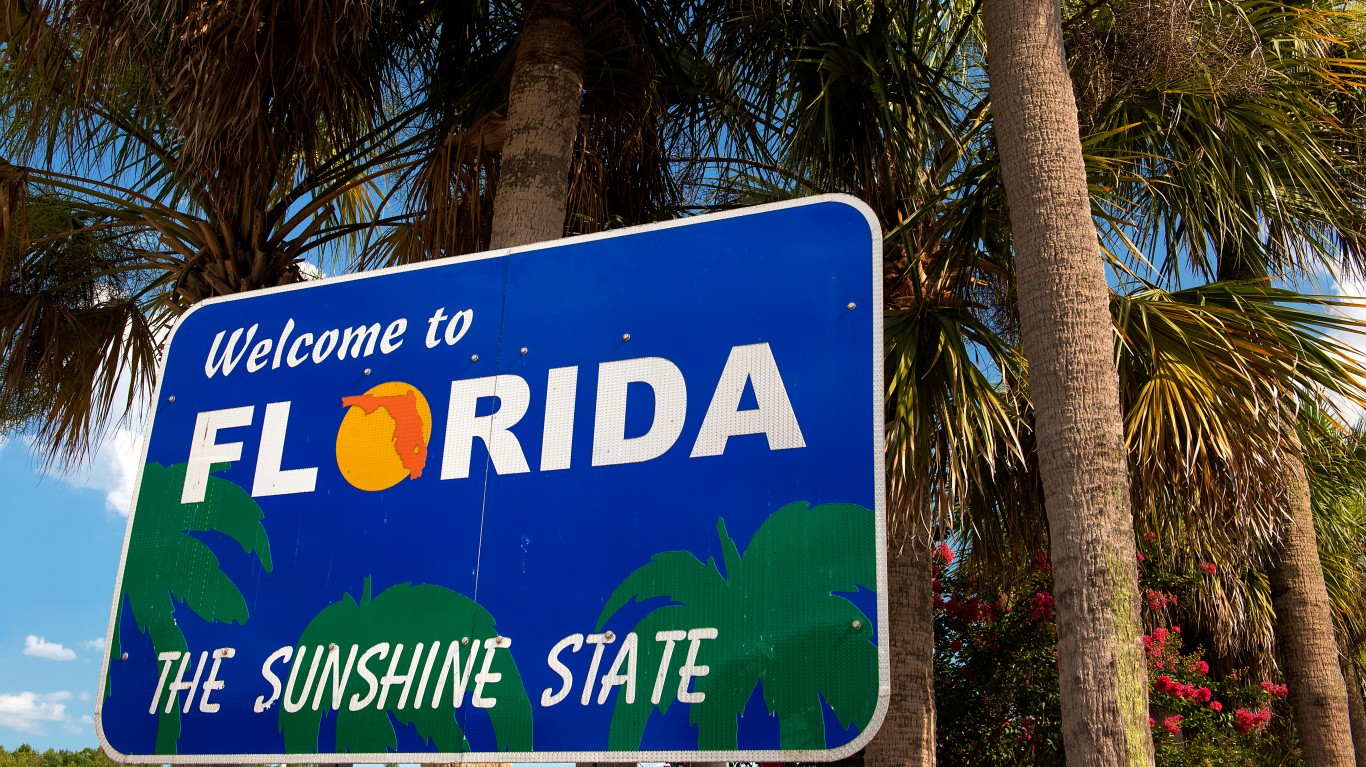
Florida gets the most movers, and its cost-of-living index of 103.414 is higher than the national average. New Jersey comes in at 108.805, so the overall gap is smaller than the income tax pitch suggests. Tennessee (91.87) and North Carolina (94.326) offer much more room.
Insurance is the first line item people underestimate. Insurify ranks Florida as the most expensive state for homeowners coverage, averaging $8,292 a year and projected to rise to about $8,458 before the end of 2026. Nationally, LendingTree (NASDAQ:TREE) found insurance premiums rose 12.7% in 2024 and 6.0% in 2025. If increases hold at 6% a year, that $6,408 bill reaches about $11,500 within a decade.
Property tax is the second. Under Florida’s Save Our Homes rule, a homestead’s assessed value can rise by no more than three percent or the change in CPI, whichever is less. A sale resets the home to full market value, and the accumulated benefit can carry over only from a previous Florida homestead.
A buyer from out of state starts with no capped value, while neighbors who bought 20 years ago pay tax on frozen assessments. Orange County estimates its homestead exemption cuts assessed value by up to $50,000 and saves about $750 a year, which works out to a rate near 1.5%. On a $450,000 home, that’s roughly $6,000 a year.
Property taxes combined with insurance add up to about $12,400 a year. Funding that from a portfolio at a 4% rate takes $310,200, roughly three times the typical equity a move frees up. Sellers leaving high-property-tax states will offset some of it. Insurance costs and the reset assessment are the two parts that keep compounding.
Running the Full Retirement Number
Start with average household spending of $78,535 from the BLS Consumer Expenditure Survey. After the 3.6% COLA, the average aged couple where both spouses collect receives $3,355 a month, or $40,260 a year. That leaves a $38,275 gap. At 4%, the portfolio target is $956,875. At 3.5%, which suits a horizon past 30 years, it rises to about $1.09 million. Whether 4% still holds for a 30-plus-year retirement is itself contested, and we laid out the income-first alternative in a free report.
Medicare Part B costs $202.90 per person per month, or $4,869.60 per year for a couple, and the government deducts it from retirement benefit checks. Florida has no state income tax, but federal tax still applies because IRA distributions count as gross income (26 U.S.C. § 408(d)(1)). Joint taxpayers stay in the 12% bracket up to $96,950 of taxable income. Waiting to claim Social Security raises the benefit, narrowing the gap and lowering the portfolio target for life.
What It Takes to Make the Move Pay Off
A couple spending at the national average and collecting typical retirement benefits needs roughly $957,000 invested and a 4% withdrawal rate. Whether a portfolio built on index funds and a Treasury ladder can earn that 4% after inflation depends on market returns. If the new home comes with Florida-level insurance and a fully reset tax bill, the target could grow by as much as $310,000, depending on how much of that cost the northern budget already carried.
Before listing the old house, the relevant figures are insurance quotes and a property tax estimate at full assessed value for the specific southern address, with that annual total divided by the withdrawal rate. The sale proceeds must cover that number first. Whatever equity is left after that is the real gain from moving south.
Contact [email protected] for any questions or corrections.
David Beren has been a Flywheel Publishing contributor since 2022. Writing for 24/7 Wall St. since 2023, David loves to write about topics of all shapes and sizes. As a technology expert, David focuses heavily on consumer electronics brands, automobiles, and general technology. He has previously written for LifeWire, formerly About.com. As a part-time freelance writer, David’s “day job” has been working on and leading social media for multiple Fortune 100 brands. David loves the flexibility of this field and its ability to reach customers exactly where they like to spend their time. Additionally, David previously published his own blog, TmoNews.com, which reached 3 million readers in its first year. In addition to freelance and social media work, David loves to spend time with his family and children and relive the glory days of video game consoles by playing any retro game console he can get his hands on.