Retirees Who Move to Florida and Move Back Will Say the Trip Home Cost More Than the Move Down
Retirees who packed up and headed back north after Florida retirement expected a straightforward move, but the financial reset waiting for them touches property taxes, portfolio targets, and state income taxes all at once, and rarely in a forgiving direction.

This post may contain links from our sponsors and affiliates, and Flywheel Publishing may receive compensation for actions taken through them.

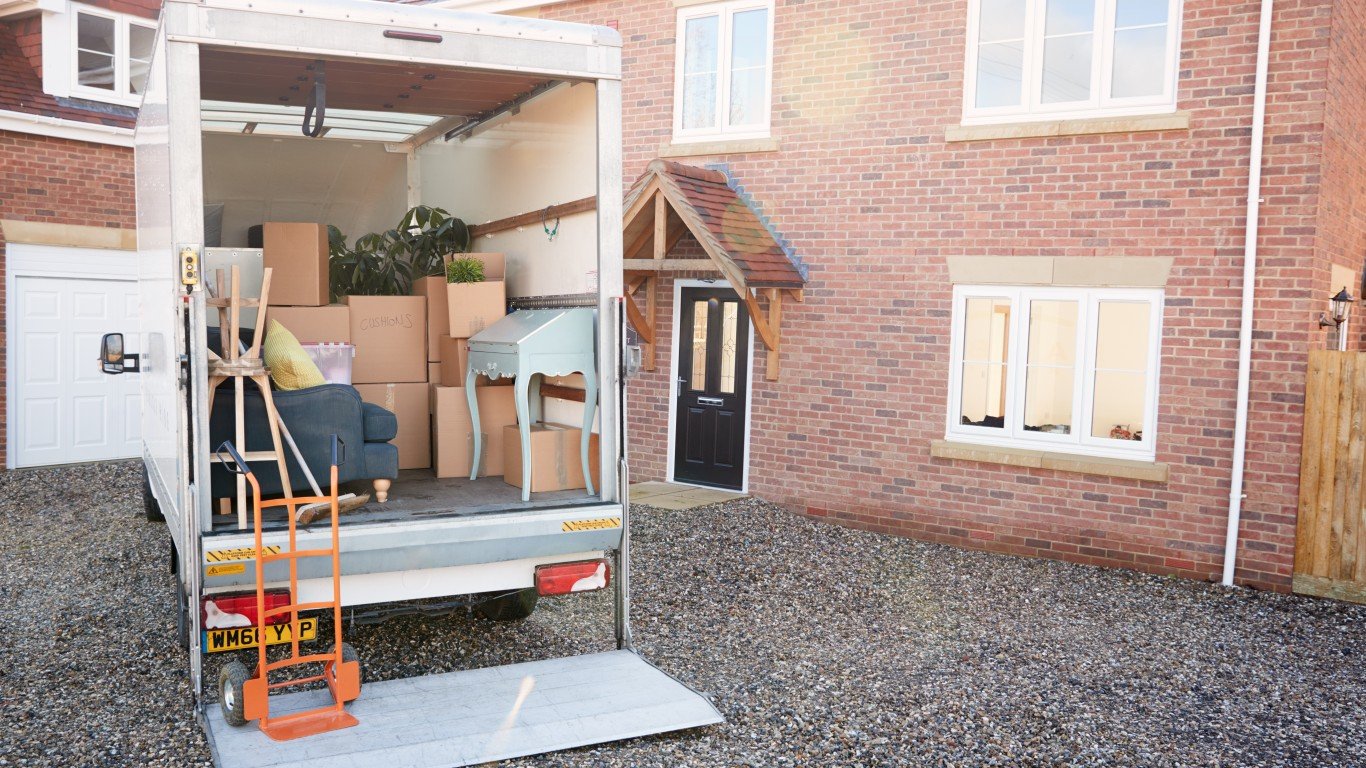
Every year, retirees sell the house up north, drive south with the furniture, and settle into Florida’s life without a state income tax. Many later turn around, pulled back by grandchildren, hurricane season, or insurance bills that keep rising. Movers even have a name for those who stop partway: “halfbacks.” For people thinking about returning to their original state, the central question is simple: what does the trip home really cost? Usually, it costs more than the move down did, but not for the reasons you might suspect.
Why the Move Down Paid Off and the Trip Home Costs Money
The first move is usually a financial win. A Vanguard study found that about 60% of retirees who relocate after retiring move somewhere more affordable, typically freeing up around $100,000 in home equity. Going back runs that trade in reverse. You sell in Florida, which has a cost-of-living index of 103.414, and buy in a place like Massachusetts at 105.757 or New Jersey at 108.805.
Market timing adds to the cost, as median sale prices fell in many Florida cities in early 2026, with the biggest drop in Cape Coral and Fort Myers, down 9% to $341,250, according to ATTOM data reported by CBS News. Nationally, the Case-Shiller index is at a record 337.3, up 1.9% over the past year. So you sell into a soft market and buy into a firm one.
Pricing the Round Trip on a $425,000 Florida Home
Take a couple selling a Florida house near the statewide median single-family price of about $425,000. Selling through an agent usually costs 5% to 6% of the price, or $21,250 to $25,500. Buyer closing costs back home range from less than 1% to nearly 3%. On a $600,000 replacement home, that’s $6,000 to $18,000. A full-service long-distance move adds about $5,000. Altogether, that is $32,250 to $48,500 spent before you unpack a single box.
If the house sells at a Cape Coral-style 9% discount, you lose another $38,250, and the tax code gives you nothing back for it. For individuals, deductible losses are limited to business losses, losses on for-profit transactions, and casualty or theft losses under 26 U.S.C. § 165(c). A loss on your own home doesn’t meet any of those.
State Income Tax Raises Your Portfolio Target
State income tax is the next piece of return-trip math. Say the couple spends about $80,000 a year, close to what The Wall Street Journal profiled one Florida retiree as spending. The SSA’s average benefit for a senior couple who both collect is $3,208 a month after the 2.8% cost-of-living increase, or $38,496 a year. That leaves $41,504 a year for the portfolio to cover.
In Florida, covering that gap at a 4% withdrawal rate takes about $1,037,600. Massachusetts taxes IRA withdrawals at 5%, although it exempts Social Security. Before its small personal exemptions, the yearly withdrawal there rises to about $43,700, and the portfolio target climbs to roughly $1,092,200. That is about $54,600 more, and you need it for the rest of your life.
Some costs go down too, as state regulators put Florida’s average homeowners premium, including wind coverage, at $3,815. Insurify’s figure is $8,292, with Miami-Dade at $15,715. When you leave Florida, that bill is removed. Wherever you retire, Medicare Part B runs $202.90 a month. A Medicare Advantage network stays in Florida, though, so the coverage switch typically needs to align with the move date.
Losing Florida’s Homestead Cap Restarts Your Property Tax Bill
Under Florida’s Save Our Homes rule, yearly increases in a homestead’s assessed value are limited to the lesser of 3% or the change in CPI. If you have owned your home for a decade, its assessed value is often well below market, and you lose that gap the day you sell. Your new home up north gets assessed at today’s price, with national prices near record highs. Ten years of capped growth in the tax value disappears all at once.
What It Takes to Make the Trip Home Work
Putting it all together, moving and closing costs of about $48,500 plus $54,600 in extra portfolio puts put the trip home near $103,100. A weak Florida sale can push that toward $141,400. Keeping an $80,000 lifestyle points to roughly $1.1 million invested on top of the house. That supports a 4% withdrawal rate, as long as portfolio returns hold up over time (the original research behind that number is older than most retirees see, and we made the case for an income-first replacement in a free guide here). Couples who fall short have two main options.
They could hold off on claiming Social Security until 70, which boosts the guaranteed income and narrows the gap, or they could buy a smaller home back up north. Heading home isn’t free, though, because the move resets your property tax value, your state income tax bill and your housing equity all at once, and each of them shifts in the more expensive direction.
Contact [email protected] for any questions or corrections.
David Beren has been a Flywheel Publishing contributor since 2022. Writing for 24/7 Wall St. since 2023, David loves to write about topics of all shapes and sizes. As a technology expert, David focuses heavily on consumer electronics brands, automobiles, and general technology. He has previously written for LifeWire, formerly About.com. As a part-time freelance writer, David’s “day job” has been working on and leading social media for multiple Fortune 100 brands. David loves the flexibility of this field and its ability to reach customers exactly where they like to spend their time. Additionally, David previously published his own blog, TmoNews.com, which reached 3 million readers in its first year. In addition to freelance and social media work, David loves to spend time with his family and children and relive the glory days of video game consoles by playing any retro game console he can get his hands on.