Can a 55-Year-Old Still Build a Roth IRA That Pays $3,950 a Month Tax-Free for Life?
At 55, two retirement clocks start ticking the moment you open a Roth IRA, and missing either one turns tax-free income into a tax bill. Here is what it actually takes to hit nearly $4,000 a month before both deadlines…

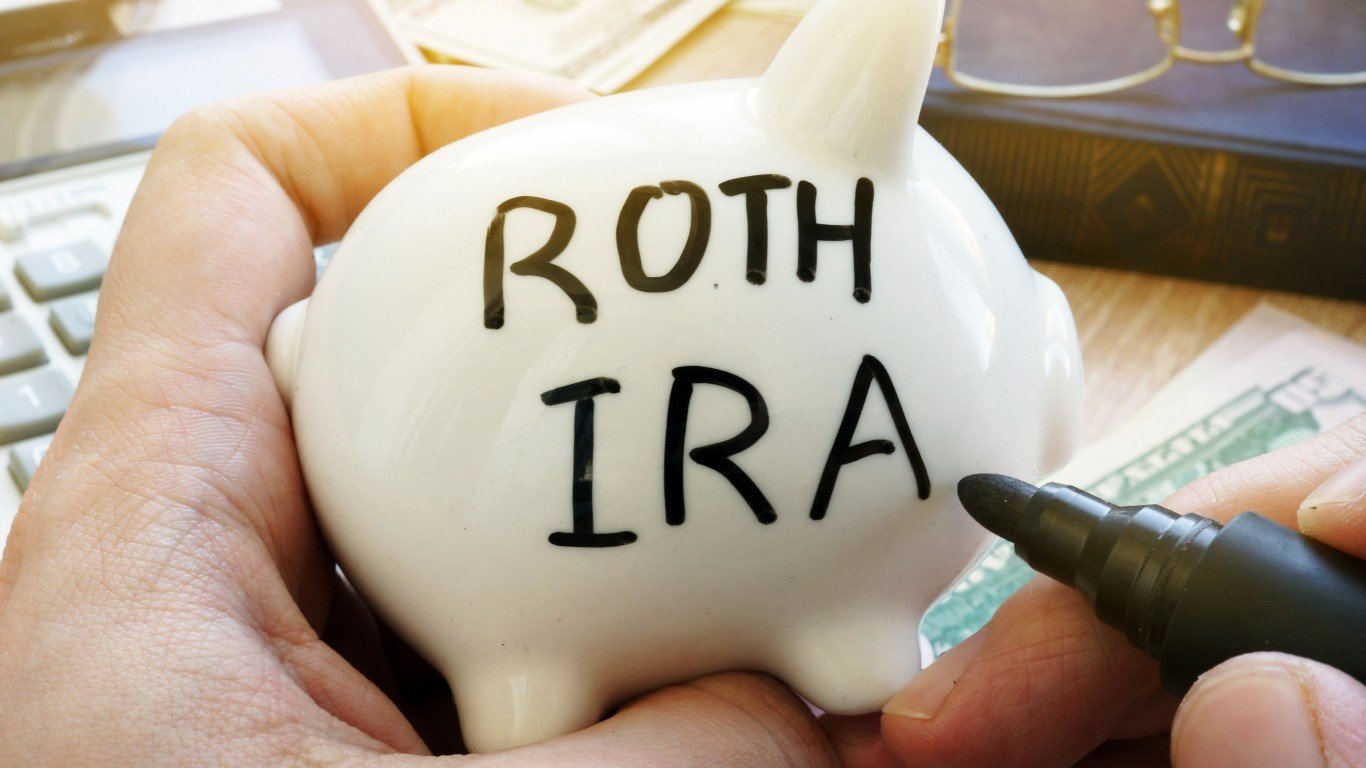
Taking $3,950 a month from a Roth IRA adds up to $47,400 a year, and with a Roth, you keep that amount. Under federal law, any qualified distribution from a Roth IRA shall not be includible in gross income. If you’re 55, you’re working against two deadlines. A Roth distribution qualifies only if it comes on or after age 59 1/2 and after a 5-taxable year period that starts with your first Roth contribution. Open the account now, and both clocks run out at about the same time.
Contributions Alone Fall Short
For 2026, the IRA limit is $8,600 for individuals age 50 or older, so ten years of maximum contributions adds up to $86,000 before growth. That won’t get you close to any of the targets below. For most people, the realistic path is converting money from an old 401(k) or traditional IRA.
You pay ordinary income tax on the converted amount in the year you convert. In the case of a single filer, the 24% bracket applies to income over $105,700. Spreading conversions over several years keeps more of each dollar in lower brackets.
What Each Yield Level Costs You Upfront
Conservative: 3.5% Yield
In the world of conservative investing, $47,400 divided by 0.035 equals about $1,354,000. This level supports dividend-growth funds and broad-market index funds. You need more capital, but your principal tends to grow, and payouts rise over time.
Moderate: 6% Yield
In a moderate investment, $47,400 divided by 0.06 equals $790,000. NNN REIT (NYSE:NNN) yields about 5.9% and just raised its dividend for the 37th consecutive year. Reaves Utility Income Fund (NYSEAMERICAN:UTG) yields about 7.4%. Its monthly payout has stepped up from $0.19 to $0.21 since 2025. The 10-year Treasury pays 5.1%, so this level earns only a thin premium for taking equity risk.
Aggressive: 10% Yield
At a 10% yield, the $47,400 target takes $474,000. The JPMorgan Nasdaq Equity Premium Income ETF (NASDAQ:JEPQ) yields about 11.6%. The Global X S&P 500 Covered Call ETF (NYSEARCA:XYLD) pays about 9.2%. Ares Capital (NASDAQ:ARCC | ARCC Price Prediction) yields about 10.2%, and Hercules Capital about 11.5%.
XYLD’s monthly payments in 2026 have ranged from $0.30 to $0.41. Ares’ net asset value per share fell to $19.35 from $19.94 at the end of 2025, and non-accruals (loans that have stopped paying interest) rose to 2%. Part of Hercules’ payout is a $0.07 supplemental dividend, which can be cut.
A Six-Fund Mix Gets There on About $497,000
Here is one example split that could help investors reach this financial goal. Start with JEPQ 25%, with 15% each in XYLD, NNN, ARCC, Hercules, and UTG. The blended yield comes to about 9.5%, so $47,400 divided by 0.0953 is roughly $497,000. That puts the mix firmly in the aggressive level, since 70% of the money sits in funds yielding above 9%.
Why the Smaller Check Can Win by 65
Picture a dividend growth portfolio paying half your target, or $23,700, with payouts growing 8% a year. In nine years, it pays about $47,376. You’d reach the full goal by your mid-60s on a fraction of the capital the 3.5% level needs today.
Flat payouts lose ground to inflation. Ares has paid $0.48 every quarter since 2023. Your $3,950 check remains the same while your grocery bill keeps rising. NNN’s dividend rose from $0.55 in 2023 to $0.62, so your income keeps rising.
Three Moves to Make This Year
- Start the five-year deadlines now. Even a small Roth contribution in 2026 starts the holding period, so later conversions can pay out tax-free by about 60. Single filers lose Roth contribution eligibility at $168,000 of modified adjusted gross income. Conversions have no income limit.
- Map conversions to your bracket. Work out how much traditional money you can convert each year before you cross into the next bracket. Compare that tax bill with what a $497,000 to $1,354,000 Roth balance would require.
- Blend level by timeline. One approach is to hold dividend growers in the money you won’t touch for 10 years and reserve the high-yield funds for the income you need first. Reviewing NAV trends each year shows whether a payout is eating into principal.
Contact [email protected] for any questions or corrections.
David Beren has been a Flywheel Publishing contributor since 2022. Writing for 24/7 Wall St. since 2023, David loves to write about topics of all shapes and sizes. As a technology expert, David focuses heavily on consumer electronics brands, automobiles, and general technology. He has previously written for LifeWire, formerly About.com. As a part-time freelance writer, David’s “day job” has been working on and leading social media for multiple Fortune 100 brands. David loves the flexibility of this field and its ability to reach customers exactly where they like to spend their time. Additionally, David previously published his own blog, TmoNews.com, which reached 3 million readers in its first year. In addition to freelance and social media work, David loves to spend time with his family and children and relive the glory days of video game consoles by playing any retro game console he can get his hands on.