The Insurance Bill Was Supposed to Empty Florida of Retirees. The Ones Who Stayed Know Why It Didn’t
Florida's sky-high insurance premiums were supposed to drive retirees north, but the migration data tells a different story. The tax asset locked inside a paid-off homestead may explain why so many are staying put despite the bills.

This post may contain links from our sponsors and affiliates, and Flywheel Publishing may receive compensation for actions taken through them.

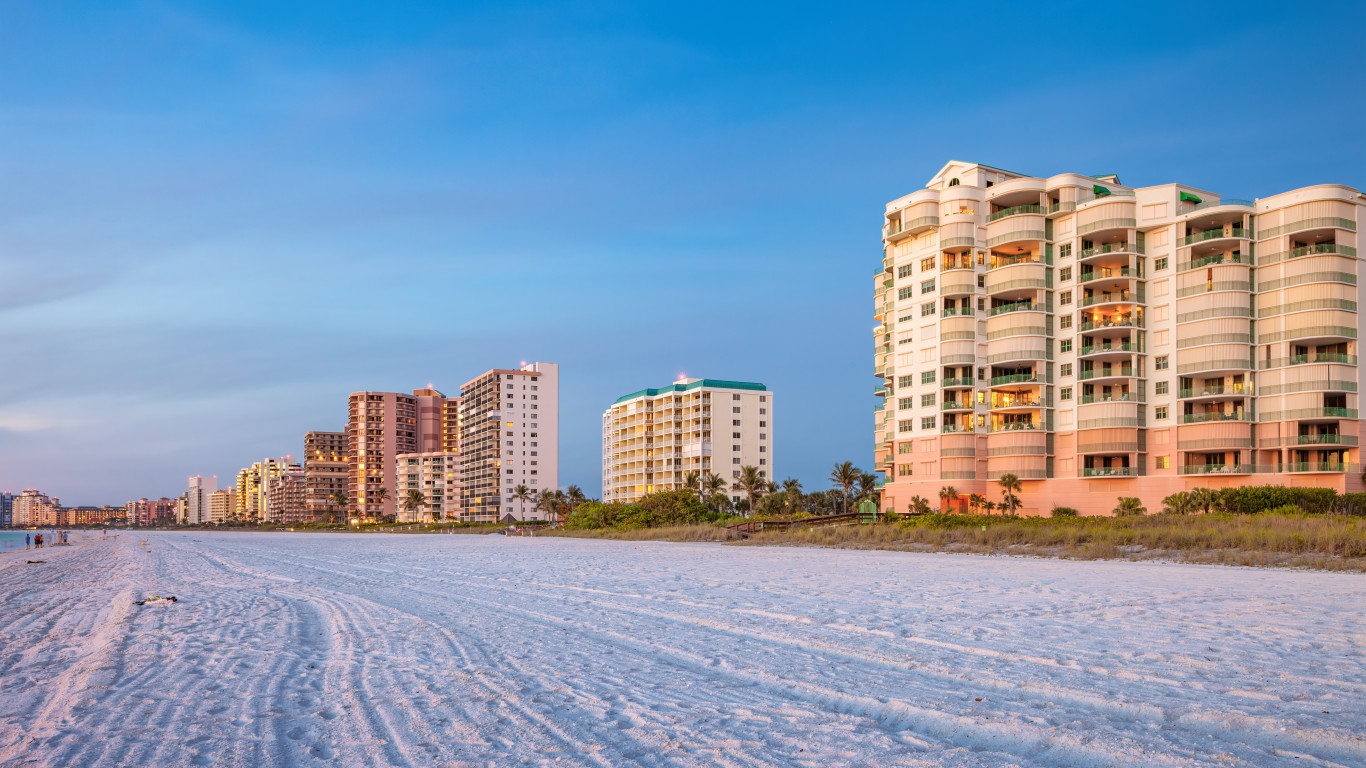
Every hurricane season brings another round of predictions that home insurance bills will finally push retirees out of Florida. A narrower question is whether a paid-off Gulf Coast home still works on a fixed income, or whether the wind premium has offset the tax advantage that brought people south in the first place.
IRS migration data suggest the predicted wave of departures never materialized. In the latest year available, Florida gained a net 111,742 residents and $20,646,698,000 in net adjusted gross income, which ranked first among states.
What a Gulf Coast Retirement Costs a Couple Today
This example uses a couple, both 67, in a paid-off homesteaded house in the Sarasota and Bradenton area that they bought before the pandemic run-up. Home prices in that metro are up 37.54% over five years and down 0.46% over the past year. With no state income tax, withdrawals only face the federal bill.
On insurance, Insurify puts the average Florida policy at $6,060 a year for $300,000 in dwelling coverage. That figure is falling, as regulators report rate cuts in 51 counties this year, and Citizens is lowering rates by 8.7% on average.
| Line Items (Annual) | Estimate |
|---|---|
| Homeowners insurance with wind | $6,060 |
| Flood insurance | $1,500 |
| Property tax (homesteaded, capped) | $4,500 |
| Medicare Part B, two people at $202.90 a month | $4,870 |
| Medigap, Part D, dental, out-of-pocket | $9,000 |
| Food, including dining out | $12,000 |
| Utilities, heavy on air conditioning | $5,500 |
| Transportation and vehicle replacement | $8,500 |
| Maintenance and roof reserve | $7,000 |
| Travel, gifts, personal, emergencies | $15,000 |
| Federal income tax on withdrawals | $4,000 |
| Total | About $78,000 |
That total sits close to the national average household spend of $78,535, even though prices in Florida run at 103.414. A paid-off house is a big part of why the numbers land there.
Turning $78,000 Into a Portfolio Target
After the 3.6% COLA, the average couple with both spouses working gets $3,355 a month, or $40,260 a year, leaving a gap of about $37,700. Over a 30-year horizon, a 4% withdrawal rate means you need about $942,000. If you want the extra buffer of 3.5%, the target rises to about $1.08 million. When both spouses wait until 70, benefits rise to near $49,900 a year. The gap then shrinks to about $28,000 and the target to about $700,000. Withdrawals this size keep joint income well below the $218,000 IRMAA threshold.
On its own, the insurance line ties up about $151,500 of portfolio at 4%. That cost also rises with prices that track older households. The 62-and-older inflation index climbed 3.65% over the past year, a bit faster than the COLA. The most direct way to bring that number down is to get a free wind mitigation inspection and apply for matching grants of up to $10,000 through My Safe Florida Home.
Why Longtime Owners Hold a Tax Asset Newcomers Can’t Buy
Under Save Our Homes, a homestead’s assessed value can rise each year by no more than three percent or the change in CPI, whichever is less. When the house sells, it gets reassessed at full market value. For an owner who bought before the run-up, that means the property tax bill stays nearly flat while the insurance premium moves around. Moving to Georgia would hand that benefit back.
Another consideration is that Amendment 3, which is on the November 3, 2026 ballot, would widen the gap. It raises the non-school exemption to $150,000 in 2027 and $250,000 in 2028 and needs 60% approval to pass. People who are not Florida residents on December 31, 2026, would keep the existing exemption for five years. Florida TaxWatch estimates the savings at the statewide average millage at $1,035 in 2027 and $2,085 in 2028. For an incumbent, that $2,085 is worth about $52,000 of portfolio at 4%.
What It Takes to Make Staying Work
For a couple at 67, a $78,000 Gulf Coast retirement requires about $940,000 if both claim Social Security now, or about $700,000 if both can wait until 70. One approach is a 4% draw from a mix of broad index funds alongside a Treasury ladder that covers five years of the gap so a bad market and a bad storm season don’t force sales at the same moment.
The 4% figure itself has taken some hits lately (we laid out the case against it, and the income-first alternative, in a free report here). This budget includes insurance at the full $6,060 and assumes it rises at senior inflation. The stayers’ main advantage is the capped homestead assessment, which disappears the day they sell.
Contact [email protected] for any questions or corrections.
David Beren has been a Flywheel Publishing contributor since 2022. Writing for 24/7 Wall St. since 2023, David loves to write about topics of all shapes and sizes. As a technology expert, David focuses heavily on consumer electronics brands, automobiles, and general technology. He has previously written for LifeWire, formerly About.com. As a part-time freelance writer, David’s “day job” has been working on and leading social media for multiple Fortune 100 brands. David loves the flexibility of this field and its ability to reach customers exactly where they like to spend their time. Additionally, David previously published his own blog, TmoNews.com, which reached 3 million readers in its first year. In addition to freelance and social media work, David loves to spend time with his family and children and relive the glory days of video game consoles by playing any retro game console he can get his hands on.