Let’s Be Real. For Most Retirees, Only One Florida Coast Actually Works
Florida retirement math has quietly split in two, and the coast you choose determines whether your portfolio lasts or gets steadily dismantled by a single line item most people never price correctly.

This post may contain links from our sponsors and affiliates, and Flywheel Publishing may receive compensation for actions taken through them.
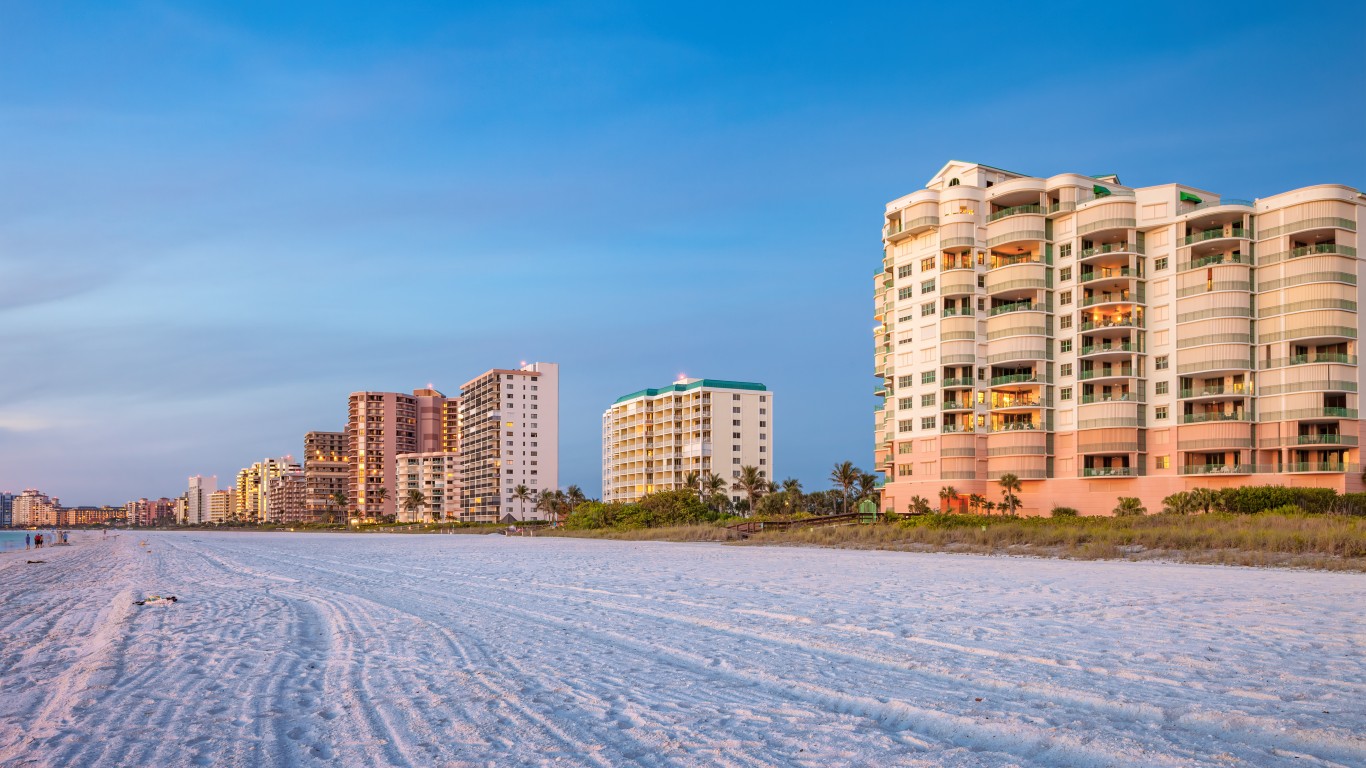
Ask ten people nearing retirement where they picture themselves and Florida still comes up more than any other answer. What has changed is that Florida is no longer one retirement market. The two coasts have separated so sharply on housing, insurance, and property tax that the same portfolio buys two completely different retirements depending on which side of the peninsula you land on. For a household living on Social Security plus a middle-seven-figure portfolio or less, only the Gulf side actually pencils out.
What Each Coast Actually Costs a Retiree Today
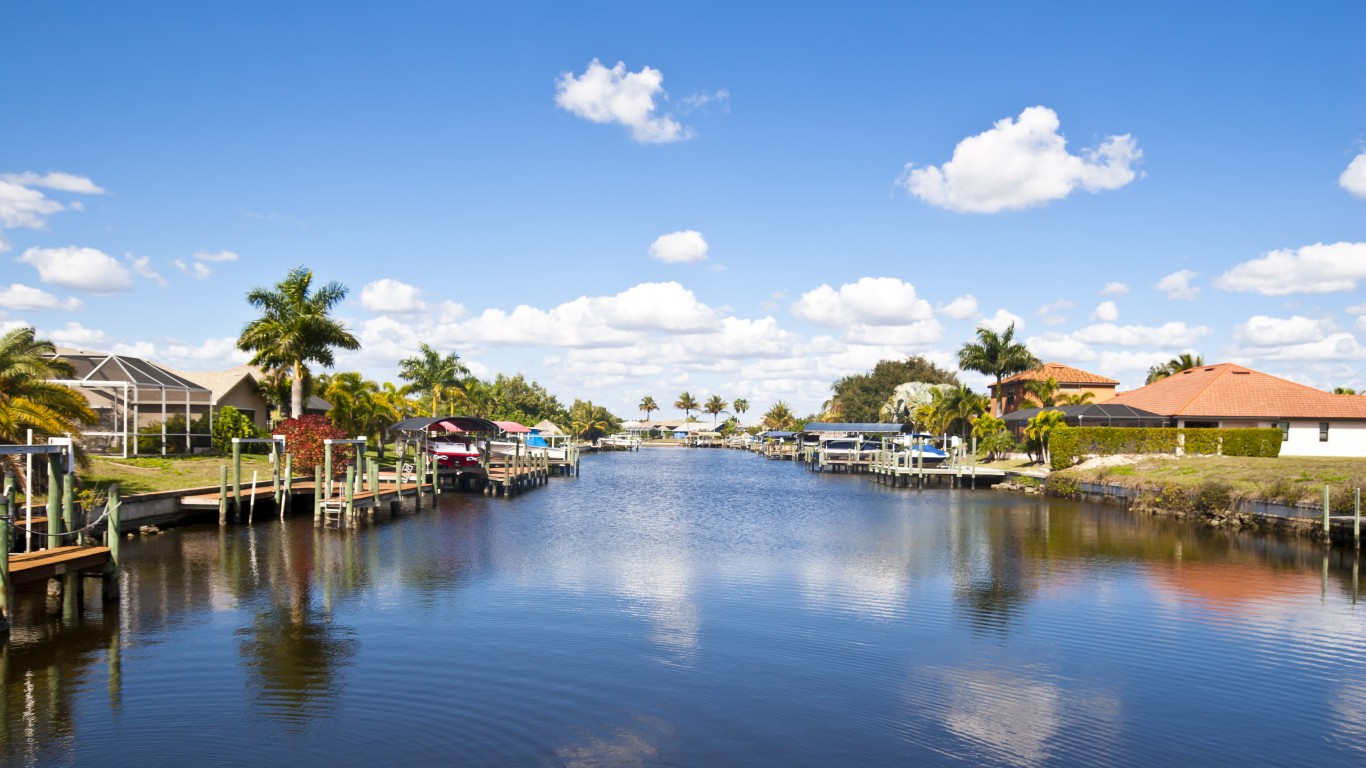
Florida’s cost of living sits at 103.4 against a national baseline of 100, but the Atlantic side, running from Jupiter through Miami-Dade to Vero Beach, prices closer to the Northeast corridor it draws from. The Gulf side, from Sarasota through Fort Myers to the Nature Coast, still prices like Florida used to.
Picture a couple, both 65, who want a modest three-bedroom near the water, one car each, dinners out a couple of times a week, and the ability to fly the grandkids down twice a year. On the Gulf side, that budget in current dollars breaks down roughly like this: housing all-in (mortgage-free, meaning taxes, HOA, insurance, and maintenance) around $22,000; food at the USDA Moderate plan for two around $12,500; utilities and internet $4,800; transportation $8,500; healthcare on Medicare $11,500; travel and gifts $9,000; and miscellaneous reserves $10,000. That total lands near $78,000, essentially matching the $78,535 average U.S. household spend the BLS reported for 2024.
Move the same household to Delray Beach or Stuart and the housing line alone jumps by $15,000 to $22,000 a year, driven almost entirely by wind and flood coverage and property tax on a higher assessed value. The working budget on the Atlantic side lands closer to $98,000 to $105,000 for the same lifestyle.
The Portfolio Math Behind Each Answer
Healthcare is the one line that does not care which coast you pick. Medicare Part B runs $202.90 a month per person in 2026, up nearly 10% from 2025, with a $283 annual deductible and a $1,736 Part A hospital deductible if anyone gets admitted. Add a Medigap plan and a Part D, budget for dental and vision out of pocket, and $11,500 per couple is realistic.
Social Security’s 2.8% COLA for 2026 puts a typical dual-earner couple claiming at full retirement age near $60,000 in combined annual benefits. Florida takes none of it. The state has no individual income tax and ranks 5th overall in the 2026 Tax Foundation State Tax Competitiveness Index, which means every dollar of Social Security, pension, IRA withdrawal, and capital gain stays with you at the state level.
On the Gulf Coast, $78,000 in spend minus $60,000 in Social Security leaves an $18,000 gap. At a 4% withdrawal rate, that requires $450,000 in invested assets. Gross the withdrawal up for federal tax on the IRA portion and call it $500,000 to $550,000. That is a genuinely achievable Florida retirement.
On the Atlantic Coast, the same lifestyle needs $100,000 in spend, leaving a $40,000 gap. At 4%, that is $1,000,000, and after federal tax gross-up, closer to $1,150,000. Same Social Security, same Medicare, same sunshine, more than double the portfolio required.
The Insurance Line Nobody Prices Over a Thirty-Year Horizon
Florida homeowners insurance is both the most dangerous line in any retiree’s budget and the one that recently delivered the clearest illustration of why. After Hurricanes Helene and Milton swept through in 2024, Florida homeowners filed roughly 300,000 claims. Insurers responded by pushing the statewide average annual premium up 18% in 2025, to just under $8,300 a year, the highest of any state in the country according to Insurify. For coastal Atlantic-side properties, where wind and flood exposure is concentrated, the hit was sharper still.
The good news entering 2026 is real, even if partial. Citizens Property Insurance, the state-backed insurer of last resort, cut its rates an average of 8.7% effective mid-2026, with the deepest reductions on the Atlantic side: 14% in Broward County and Miami-Dade. Seventeen new private carriers have entered the Florida market since legislative reforms took effect, adding competitive pressure that was absent just a few years ago. Insurify projects the statewide average creeps up only another 2% through year-end 2026, a meaningful deceleration from recent years. That said, the long-run compounding math is unchanged. A $6,000 wind-and-flood package on the Gulf side today, growing at even a moderate pace, still roughly triples over a 25-year retirement while Social Security grows at something closer to 2.8% a year. On the Atlantic side, where the same coverage starts at $14,000 to $18,000, the compounding gap eats real purchasing power year after year regardless of any single year of rate relief.
Property tax carry works the same way. Florida’s Save Our Homes cap limits primary-residence assessment growth to 3% a year, but only after you establish homestead. Buy in at today’s elevated prices and you lock in a high starting basis on the Atlantic side that the cap then protects at a higher absolute dollar amount for the life of the mortgage. The Gulf side lets you lock in the same protection on a smaller base.
The Number That Actually Delivers a Florida Retirement
For most retirees, the realistic answer is a Gulf Coast address, a paid-off house, roughly $550,000 to $700,000 in invested assets alongside two full Social Security checks, a 4% withdrawal rate, and a specific line item for insurance inflation running two to three points above general CPI. That combination survives a soft housing market, the kind reflected in the 4.09 million annualized existing-home-sales pace NAR reported for June 2026. It survives a hurricane year. It still funds the grandkids’ plane tickets. The Atlantic version of the same life needs closer to $1.2 million and an explicit plan for what happens when the insurance bill doubles. Both addresses are in Florida. Only one of them is the retirement people actually picture when they say the word.
Editor’s note: This update corrects Florida’s Tax Foundation overall ranking from 4th to 5th (reflecting the 2026 index), updates the existing-home-sales pace to 4.09 million annualized (June 2026, per NAR), and adds context on Florida’s homeowners insurance market, including the 18% average premium spike in 2025 and the subsequent Citizens Property Insurance rate cut of 8.7% effective mid-2026.
Contact [email protected] for any questions or corrections.
I am a long time investor and student of business, and believe finding good companies that can become great investments is the best game on earth. After 20 years of writing and researching the public markets it is clear that individuals have never had more tools and information to take control of their financial lives. From ETFs and $0 commissions to cryptos and prediction markets there has never been a greater democratization of access to investing.
I write to help people understand the investments available to them so they can make the best choice for their portfolio, whether they're starting out or looking for income in retirement.