Renting for Good Was Supposed to Be About the Money. Retirees Who Did It Found That Was the Smallest Part
Selling the house frees the equity and ends the maintenance calls, but retirees who made the switch say the spreadsheet missed the costs that hit hardest. Here is what the math leaves out.

This post may contain links from our sponsors and affiliates, and Flywheel Publishing may receive compensation for actions taken through them.
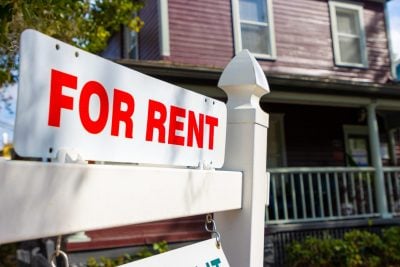
One of the most common retirement questions is whether you should sell your house and rent for the remainder of your life. Like many retirement questions, it comes down to money. If you sell, you free up the equity, stop paying property taxes, never buy another roof, and put the proceeds to work. Below we walk through the numbers that make it work, then the costs that never show up on a spreadsheet.
What a Rented Retirement Costs a Couple Today
Zillow Group (NASDAQ:Z | Z Price Prediction) puts the typical U.S. asking rent at $1,962 a month, up 2.3% annually. That’s $23,544 a year. Here is a sample budget for two retirees in their late 60s paying that rent. Uncited lines are example assumptions, not verified data; swap in your own:
- Rent: $23,544
- Medicare Part B for two at $202.90 a month each: about $4,870
- Medigap and Part D premiums plus out-of-pocket care: $6,000
- Groceries at a moderate food-plan level: $10,000
- Utilities and renters insurance: $4,500
- Transportation, including saving for the next car: $7,000
- Miscellaneous and reserves (gifts, travel, emergencies, income tax on withdrawals): $12,000
All in, that’s $67,914 a year, but note that the budget excludes property tax, a homeowners policy, and a maintenance fund. When you rent, the landlord covers those costs.
Turning That Budget Into a Portfolio Target
After the 2027 COLA, a couple drawing benefits averages $3,355 a month, or $40,260 a year. That leaves a $27,654 gap for the portfolio to cover, based on our math for those in a similar budget situation. At a 4% withdrawal rate, you would need about $691,000. At 3.5%, it’s closer to $790,000. For a renter, we’d use the tighter rate for the reasons below.
Ultimately, claiming timing matters more here than it does for owners. Each year you delay past full retirement age adds delayed retirement credits, and that larger, inflation-adjusted check is the only income that rises alongside your rent.
The plan can also be stress-tested against Social Security’s long-term outlook. The 2026 Trustees Report projects the combined Social Security trust funds will run out in 2034, with 83% of benefits payable after that unless Congress acts, and while there is hope this won’t come to pass, it’s something to keep in the back of any retiree’s mind.
Rent Keeps Climbing, and the Tax Code Treats the Swap Unevenly
A paid-off house’s costs drift up a little each year, while rent resets at every renewal. Keep rent growing at 2.3% a year and today’s payment comes to about $37,100 a year two decades out, roughly $13,600 more than now. That growth is why we’d plan for 3.5%.
Taxes also affect the comparison because an owner living in a paid-off house effectively pays themselves rent, and that benefit isn’t taxed. A renter pays rent from IRA withdrawals and dividends on the invested sale proceeds, and both are taxable.
Selling the house also has tax consequences, as the gain exclusion is capped at $250,000 for single filers (double that for joint filers), and any gain above the cap counts toward the income Medicare looks at. IRMAA is based on income from two years earlier.
If the sale pushes joint income over $218,000, each spouse pays an extra $81.20 a month for Part B and $14.50 for Part D. Together, that adds up to about $2,297 for the year. Social Security’s life-changing-event appeal covers things like stopping work or losing a spouse. A home sale is not on that list, so plan for the surcharge when you choose the sale year.
What Money Cannot Buy Back
Many of the costs retirees cite center on keeping a stable place to live, making changes to their home, and staying close to people they care about. In addition, a landlord may sell the building late in a renter’s life.
Additionally, a lease may not allow you to install grab bars or a walk-in shower, so most rentals must be lived in as is. Beyond the physical home, moving at 85 also costs you neighbors and routines along with the moving bill. Households 70 and older still own 27.3% of all owner-occupied real estate, and for many, the house is the implicit plan for paying for long-term care. Once you sell, that backstop becomes portfolio dollars you can easily spend on other things.
Making the Rented Retirement Work
For this budget, the plan holds together with about $790,000 invested, plus average Social Security, drawn at 3.5%. The portfolio needs to earn enough to outpace rent growth after withdrawals, and some retirees use index funds for growth and a Treasury ladder to cover the next few years of rent.
Choose the year you sell with IRMAA in mind, and put Social Security delay at the top of your list. On taxes, when you sell, a housing benefit you never paid tax on becomes a monthly bill you pay with taxable dollars. One approach is to set aside part of the sale proceeds as a reserve for housing and long-term care, so that money remains available for housing and long-term care costs.
Contact [email protected] for any questions or corrections.
David Beren has been a Flywheel Publishing contributor since 2022. Writing for 24/7 Wall St. since 2023, David loves to write about topics of all shapes and sizes. As a technology expert, David focuses heavily on consumer electronics brands, automobiles, and general technology. He has previously written for LifeWire, formerly About.com. As a part-time freelance writer, David’s “day job” has been working on and leading social media for multiple Fortune 100 brands. David loves the flexibility of this field and its ability to reach customers exactly where they like to spend their time. Additionally, David previously published his own blog, TmoNews.com, which reached 3 million readers in its first year. In addition to freelance and social media work, David loves to spend time with his family and children and relive the glory days of video game consoles by playing any retro game console he can get his hands on.