‘It Probably Costs You $700,000, Which Makes Me Want to Puke’: Dave Ramsey to 54 Year Old With $2.8 Million IRA
A 54-year-old with $2.8 million in a traditional IRA called Dave Ramsey for conversion advice, and his first reaction revealed a tax bill so brutal he said it made him physically sick. The right pace could save this couple hundreds…

This post may contain links from our sponsors and affiliates, and Flywheel Publishing may receive compensation for actions taken through them.
Lisa is 54 and lives in Birmingham. She has $2.8 million in a traditional IRA. Her husband is 61 and retired almost three years ago.
The couple has no money outside retirement accounts, and their $150,000 household income comes out of that same IRA. She called The Ramsey Show to ask how fast to convert to a Roth.
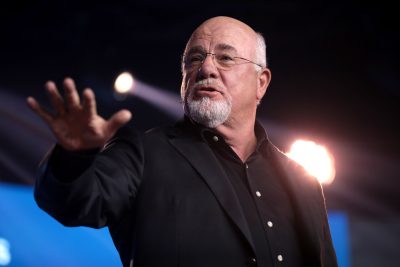
Dave Ramsey’s first reaction was to the idea of converting everything at once: “It probably costs you 700 grand, which makes me want to puke.” That would leave about $2.1 million. He still told her to move the money, a slice at a time.
If they get the pace wrong, this couple pays the IRS hundreds of thousands of dollars more than they need to. If they get it right, they lock in today’s rates on money that would likely be taxed at higher rates later.
Ramsey’s Slow Conversion Holds Up, and the All-at-Once Bill Is Worse Than He Said
Ramsey’s plan is sound. He suggested paying roughly $50,000 in tax each year to move about $200,000, “for the next six years,” which he totaled at “a million dollars.”
His estimate is close. Take 2026 joint brackets and the $32,200 standard deduction.
A $200,000 conversion on top of $150,000 of income adds about $46,000 in federal tax.
Every converted dollar falls in the 22% or 24% bracket, and the 24% bracket runs to $403,550 of taxable income.
Converting everything in one year costs far more. Most of the $2.8 million would be taxed in the 37% bracket, which starts at $768,700 for joint filers. The extra federal bill comes to roughly $986,000, and Alabama takes its share on top of that. Ramsey said of the one-time move, “I’m not suggesting that,” and the numbers support him.
Your Future Tax Rate Decides Whether Converting Pays
If your tax rate is the same now and later, a conversion leaves you exactly where you started. Ramsey said the $2.8 million could grow to about $6 million.
Tax that at the 25% rate built into his $700,000 estimate, and the couple keeps $4.5 million.
Convert first instead, keep $2.1 million, grow it at the same pace, and they end with $4.5 million.
The order you multiply in doesn’t change the answer. So everything comes down to one variable: the rate you pay today compared with the rate you, a surviving spouse, or your kids will pay later.
For Lisa, the later rate looks higher. Ramsey pointed to required minimum distributions (RMDs) starting at 75. Federal law confirms that age for anyone who turns 74 after 2032 (26 U.S.C. § 401(a)(9)(C)(v)(II)).
A $6 million IRA would force large taxable withdrawals every year. Her husband is older than she is, so she may spend years filing single. For single filers, the 24% bracket tops out at $201,775, a much lower ceiling.
Her heirs face the biggest bill. Ramsey said “the Biden SECURE Act 2.0” makes kids empty an inherited traditional IRA within 10 years. That rule actually comes from the original 2019 SECURE Act. It applies when the owner died after December 31, 2019. Adult children who inherit millions in their peak earning years could pay 32% or more. Money they inherit in a Roth comes out tax-free.
When that variable flips, so does the answer. A retiree with a modest IRA who expects to stay in the 12% bracket gets little from paying 24% now. The sweet spot sits in the quiet years between a last paycheck and the first RMD, which we sized up in a free guide on the Roth window.
Ramsey Admits He Stumbled Into His Own Roth Strategy
Ramsey said the RMD and inheritance benefits had nothing to do with why he converted his own money: “I accidentally stumbled into this, folks. I didn’t know. I wish I could tell you I was that smart. All I wanted was tax-free growth.” His company’s 401(k) match has to go in as traditional money, so every December he rolls it into a Roth and pays the tax.
He also admitted that after the first few years, Lisa would have to pay the tax out of the IRA itself: “I would reduce the size of the nest egg by the tax bill in order to get it moved.” Her age matters here. Converted dollars escape the 10% early withdrawal penalty (26 U.S.C. § 408A(d)(3)(A)(ii)). That exemption only covers dollars that actually land in the Roth. If Lisa is under 59½ and withholds tax from her own IRA, those dollars count as an early withdrawal.
Run These Numbers Before Your First Conversion
- Find your bracket ceiling. Subtract your taxable income from the top of your current bracket. That gap is roughly how much you can convert at today’s rate without moving into a higher bracket.
- Project your first RMD. Grow your balance to age 75 at a realistic return and estimate the first required withdrawal. If that amount alone pushes you into a higher bracket, converting now makes sense.
- Convert from the older spouse’s IRA first. If one spouse is past 59½, taking the tax money from that account avoids the 10% penalty.
- Model the survivor years. Redo your tax estimate using single-filer brackets. A widow or widower often pays more tax on the same income.
That same morning, Clark Howard called Ramsey “more a firefighter” who helps “people whose financial life is on fire.” Lisa’s call was seven-figure tax planning, and the lesson works at any balance: convert when today’s tax rate is lower than the one waiting for you or your heirs.
Contact [email protected] for any questions or corrections.
Jake has been been working in financial media for almost 15 years. He focuses on all things personal finance for 24/7 Wall St. with high hopes to educate and entertain. Most recently, Jake spent 12 years working various roles at The Motley Fool. He started copy editing fool.com content, worked on premium and marketing campaigns, and helped launch The Ascent, a personal finance brand.
His work has been featured on platforms like MSN, Yahoo Finance, USA Today, and more. He's written about credit cards, social security, ETFs, savings accounts, and just about anything else you can imagine when thinking about money. Jake love to cook, play golf, and tell people he's never had a cavity. (It's true!)