The State Will Tell His Wife She Can Keep $162,660 and Not a Dollar More. She Will Ask for a Hearing and Be Allowed to Keep $310,000 Under a Rule the Caseworker Never Brings Up
When a Medicaid caseworker hands an at-home spouse her asset limit, that number is not the final word. A legal mechanism buried in federal spousal rules can push the protected amount far higher, and most families never think to ask…

This post may contain links from our sponsors and affiliates, and Flywheel Publishing may receive compensation for actions taken through them.

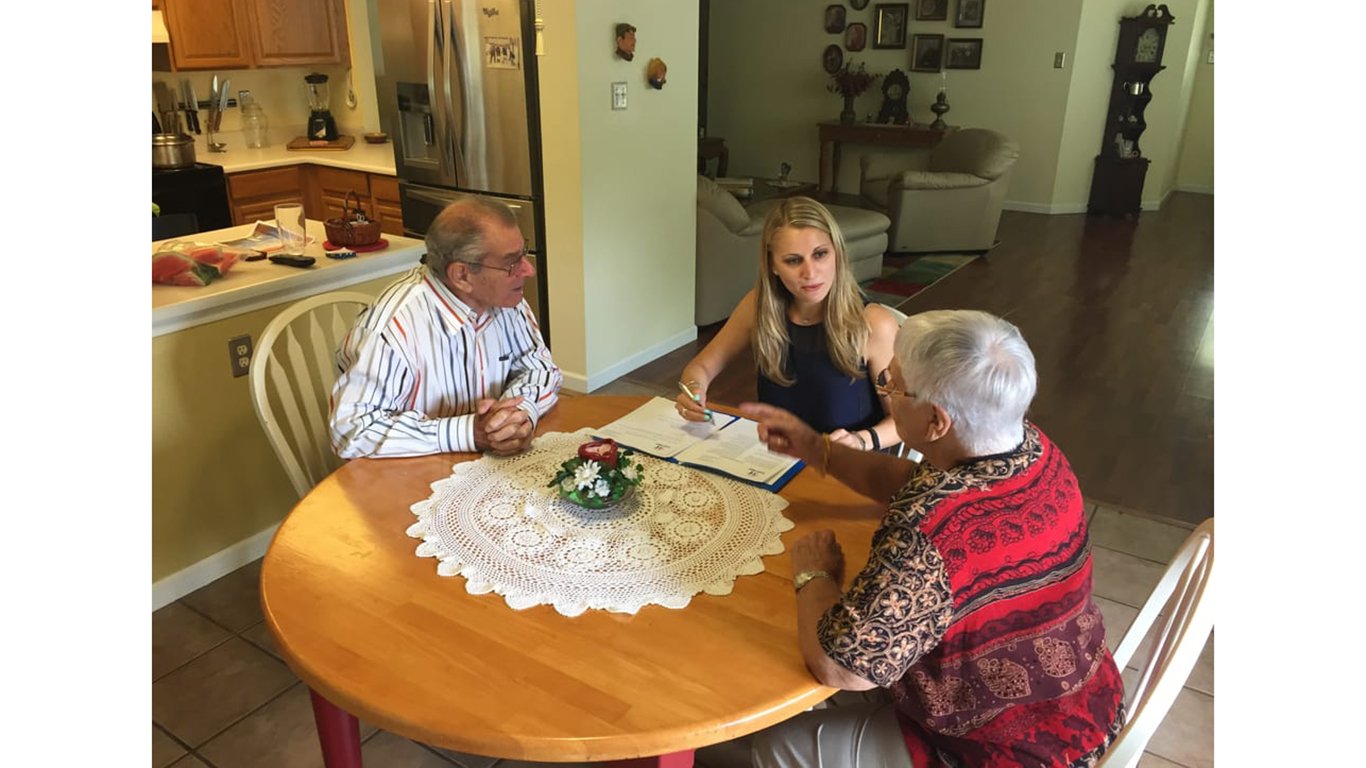
Picture a wife sitting across from a Medicaid caseworker the week her husband moves into long-term care. The couple has more than $325,000 in countable savings. The caseworker walks her through the community spouse resource allowance (CSRA). That’s the share of a married couple’s countable savings the at-home spouse can protect when the other spouse applies for nursing home Medicaid. In 2026 the federal ceiling is $162,660. Anything the couple can’t protect has to be spent down or otherwise brought within Medicaid’s limits before her husband qualifies.
A second path exists, and few families know to ask for it. Either spouse can request a fair hearing when the standard allowance doesn’t generate enough income to bring the spouse at home up to her protected monthly amount. When the numbers support it, the hearing officer can let her keep more assets. In this example, that can mean protecting roughly $310,000 instead of stopping at $162,660.
How a Fair Hearing Lifts the $162,660 Cap
The spousal rules build that protection into the asset test. If the standard allowance doesn’t generate enough income to bring the spouse at home up to her protected monthly amount, federal law gives her a way to ask for a larger allowance.
There’s a catch, and it’s a big one. Before the hearing officer gives her more savings to protect, the calculation counts income her husband can make available to her. That’s the “income-first” rule. His pension and Social Security help fill her monthly gap first. Only a shortfall that remains after that can justify a larger asset allowance.
Here’s the Math Behind a $310,000 Allowance
Here’s an example with clear assumptions:
- Her income target: High housing costs push her protected monthly amount to the 2026 maximum of $4,066.50.
- Her own income: $1,400 a month from Social Security.
- His income available to her: $1,545 a month after his personal-needs allowance.
- Income before the savings calculation: $2,945 a month.
That still leaves a $1,121.50 monthly gap. Massachusetts then asks how much income her protected savings are expected to generate. If the standard allowance plus the income available from her husband still can’t close the gap, the hearing officer can increase the amount of savings she’s allowed to keep.
That is how a wife who starts with a standard allowance capped at $162,660 can end up protecting $310,000. The exact amount isn’t automatic: it depends on her income, her husband’s income, her housing costs and the deposit rates Massachusetts uses on the date of the hearing.
Massachusetts Rule Shows How States Run the Numbers
Medicaid is state-administered, so the details vary. Massachusetts spells out the sequence. The hearing officer first estimates the income the wife’s existing allowance can produce, using specified money-market and deposit rates available on the hearing date. Then the calculation adds income her husband can make available to her. If she’s still below her protected monthly amount, the officer can increase her asset allowance enough to help close the remaining gap.
The Massachusetts number depends on the deposit rates in effect on the day of the hearing. Those rates matter because a lower assumed return means more savings are needed to produce the same monthly income. The starting allowance can vary too: under the standard federal calculation, the spouse’s share can fall below the $162,660 maximum when the couple doesn’t have enough assets to reach it.
Who Gets Nothing Extra From the Hearing
Not every spouse will qualify for more. A wife with enough income of her own, or a husband whose income closes her monthly gap, may have no shortfall left to support a larger allowance. The rule matters most when the spouse at home has relatively little income, her husband’s income still doesn’t fill the gap, and the couple has substantial savings at risk.
Massachusetts also allows a separate appeal to raise the protected monthly amount when exceptional circumstances create significant financial strain, although that route is narrower and generally involves special needs beyond ordinary household expenses.
For the wife at that caseworker’s desk, $162,660 is where the standard calculation ends. If her protected income still comes up short, a fair hearing can carry the calculation, and her savings, well further.
Contact [email protected] for any questions or corrections.
Gerelyn Terzo is the author of dividend investing handbook "Dividend Investing Strategies: How to Have Your Cake & Eat It Too." A veteran financial journalist, she covers agri-finance for outlets like Global AgInvesting and the broader stock market and personal finance for 24/7 Wall Street. She began at CNBC and later helped launch Fox Business in New York. Gerelyn currently resides in Woodland Park, Colorado and dabbles in nature photography as a hobby.