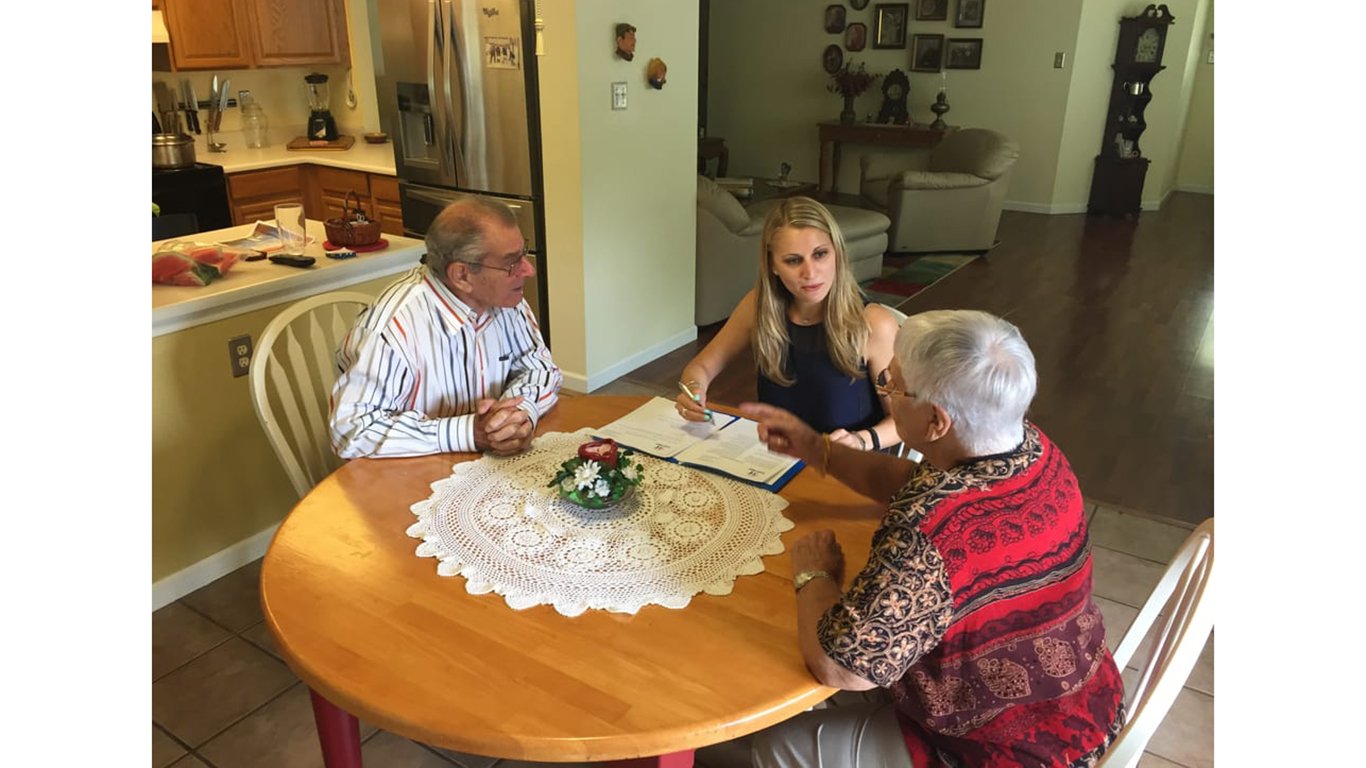
At 70 He’ll Sell the Family Lake Cabin to His Kids for Far Less Than It’s Worth. Part of That Sale Is Really a Gift

This post may contain links from our sponsors and affiliates, and Flywheel Publishing may receive compensation for actions taken through them.

It’s late August. The dock boards are still warm, and a 70-year-old dad shakes hands with his two grown kids on a deal: the family lake cabin is theirs for $250,000. On the open market it would probably bring $600,000. He figures a low price is the easiest way to keep the place in the family.
Plenty of families try something like this. In one Bogleheads forum thread about three kids and a house on the lake, a poster described a family log cabin that ended up in court: “Legal actions ensued and forced the sale of the property.” A handshake price is only half a plan, and the tax side matters too, and it’s where most of the money is.
Why the IRS Sees Two Deals on One Dock
Federal rules treat a below-market sale to family as part sale, part gift. The gift is the gap between fair market value (what a stranger would pay) and the price the kids actually pay. That’s spelled out in 26 CFR 1.1001-1(e). With our example numbers, the gift is $350,000. Split between two kids, that’s $175,000 each.
For 2026, the annual gift exclusion is $19,000 per recipient, and it will rise to $20,000 in 2027. Once a gift exceeds that amount, he must file a gift tax return (Form 709), generally due April 15 of the following year. Filing generally doesn’t mean paying gift tax. The amount above the annual exclusions reduces his remaining lifetime gift and estate tax exemption, which is $15,000,000 for 2026.
He Still Owes Tax on Part of the Sale
His taxable gain is the sale price minus his adjusted basis. Basis is about what he paid for the cabin plus improvements. Say his basis is $150,000. Then his gain is $100,000, under the rule in 26 CFR 1.1001-1(e)(1). If the price had come in below his basis, he couldn’t deduct a loss. The same regulation says no loss is sustained in a part-gift sale.
That gain also counts toward his income for Medicare purposes. In 2026, Part B surcharges start above $109,000 for single filers and $218,000 for joint filers.
Where the Kids Lose Out: Their Cost Basis
In a part-sale, part-gift deal, the kids’ basis is the greater of what they paid or Dad’s basis (26 CFR 1.1015-4(a)). Here, that’s $250,000. If they inherit the cabin instead, their basis resets to its fair market value on the date of death (26 U.S.C. § 1014(a)(1)). That reset is the step-up in basis. And passing property at death isn’t a sale, so it doesn’t trigger gain for the estate (IRS Publication 544).
| Item | Sell at $250,000 now | Inherit at $600,000 value |
|---|---|---|
| Dad’s taxable gain | $100,000 | None |
| Gift reported | $350,000 | None |
| Kids’ basis | $250,000 | $600,000 |
Selling later for $600,000 leaves them $350,000 of gain that inheriting would have eliminated. They’d pay tax on money he meant as a gift.
Two Paths, and One Usually Wins
Hold it and pass it at death. If he doesn’t need the cash, this wins for most families. He avoids his own gain, and the kids get the step-up. To manage the cabin now, he can consider a family LLC or a trust, with an agreement covering repairs, expenses, and sibling buyouts. But the structure must preserve the intended inheritance tax treatment, since transferring ownership during his lifetime can eliminate the step-up in basis.
Sell now, at full value. If he wants the kids to own it today, a full-price sale paid over time through an installment note keeps the gift out of the picture. He’d still owe tax on his gain, and the kids still miss out on the step-up. The discounted handshake deal falls short on both counts.
Either way, the siblings need a written agreement covering shared costs, who gets which weeks, and how a buyout works. Without one, they’re set up for the kind of fight that sent that log cabin to court. Someone has to check property taxes too. Some states reassess property when it changes hands. California’s parent-child exclusion, for example, is written for a principal residence, and a lake cabin usually isn’t one. Call the county assessor before closing.
Get One Number Before Anyone Signs
That number is a professional appraisal. Fair market value is a question of fact, and it drives everything else: the size of the gift, what goes on Form 709, and whether holding until death beats selling. The most common mistake is treating the handshake price as the value. The appraisal comes first, then the family decides which path fits.
Contact [email protected] for any questions or corrections.
David Beren has been a Flywheel Publishing contributor since 2022. Writing for 24/7 Wall St. since 2023, David loves to write about topics of all shapes and sizes. As a technology expert, David focuses heavily on consumer electronics brands, automobiles, and general technology. He has previously written for LifeWire, formerly About.com. As a part-time freelance writer, David’s “day job” has been working on and leading social media for multiple Fortune 100 brands. David loves the flexibility of this field and its ability to reach customers exactly where they like to spend their time. Additionally, David previously published his own blog, TmoNews.com, which reached 3 million readers in its first year. In addition to freelance and social media work, David loves to spend time with his family and children and relive the glory days of video game consoles by playing any retro game console he can get his hands on.