The Roth IRA Portfolio That Pays $5,825 a Month Without Selling a Single Share

This post may contain links from our sponsors and affiliates, and Flywheel Publishing may receive compensation for actions taken through them.

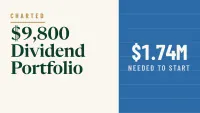
A Roth IRA can pay $5,825 a month without you selling a single share, and to help prove that point, below is a six-fund income portfolio built to do it. It covers what each fund pays, why it’s there, and where it can break. The plan works off a 7.9% blended yield. At that rate, you’d need $884,810 invested. Here’s the math: $69,900 a year divided by 0.079.
A plain dividend growth portfolio yielding 3.5% needs about $2 million. Push everything to 11%, and you’d need about $635,000, but you’d own only the riskiest payers. At today’s prices, this mix yields closer to 9%, mostly because one holding’s share price fell hard.
Why Payouts Beat Selling in a Bad Year
Say you fund retirement by selling shares. A market drop forces you to sell more of them at low prices, and those shares miss the recovery. Live on distributions instead, and your share count stays put. The catch: high-payout holdings usually grow slower, and some shrink.
Six Funds, Six Jobs
Growth Stocks Paying Option Income (20%)
Amplify CWP Growth & Income ETF (NYSEARCA:QDVO) has a 20% weight. It’s an option-income ETF: it has big tech names and writes call options on some of them. Selling a call brings in cash today, and in exchange the fund gives up gains above a set price. It pays monthly and yields about 11.5%. The risk: payouts bounce around from month to month, and part of a payout can be a return of capital. That’s your own money handed back to you.
Small Caps for Maximum Income (10%)
Global X Russell 2000 Covered Call ETF sells calls on the whole small-cap index and yields about 11.5%. The risk: the monthly check has slipped from 24 cents in March 2022 to about 15 cents.
Convenience Store Landlord (15%)
Getty Realty (NYSE:GTY) is a net-lease REIT, meaning tenants pay property taxes, insurance, and maintenance. It owns 1,269 properties, mostly convenience stores, auto service centers, and drive-thrus. It yields about 7%, and it recently raised its dividend by 3%[1]. That’s its 13th consecutive year[1] of increases. The risk: higher interest rates make borrowing pricier and can weigh on the stock.
Lending to Midsize Companies (15%)
PennantPark Floating Rate Capital (NYSE:PFLT), a BDC, lends to private midsize businesses. 99% of its loans carry floating rates. It yields about 15%, and that number is a warning sign. The fund cut its monthly payout from about 10 cents to 8 cents in mid-2026. Net asset value per share, meaning what its loans are worth per share, fell 5% in one quarter. The shares are down 18% this year. The risk: falling rates and struggling borrowers shrink its income fast.
Real Estate on Borrowed Money (15%)
Cohen & Steers Quality Income Realty Fund (NYSE:RQI) is a closed-end fund that has REIT stocks and preferred shares and uses leverage. It pays 9 cents a month, about a 9% yield. Closed-end funds trade like stocks, so the share price can sit above or below the value of what the fund owns. The risk: leverage magnifies the losses when real estate falls.
Steady Dividend Anchor (25%)
Franklin U.S. Low Volatility High Dividend Index ETF (NASDAQ:LVHD) is a low-volatility dividend ETF. It owns steady payers like utilities, consumer staples, and banks. It yields about 3.4%, and its price has climbed 135% over 10 years. The risk: payouts are lumpy, and the February check is small.
What the Roth Adds
Qualified Roth withdrawals aren’t included in gross income[2]. To qualify, you generally need to be 59½ and past the five-year period that starts with the year you first put money into a Roth. As the original owner, you aren’t required to take distributions at any age. That matters here because REIT and BDC payouts are mostly taxed as ordinary income in a regular brokerage account.
Slow Payers Can Win the Long Game
Getty paid 37 cents per share per quarter in 2020, and now it pays 50 cents. PennantPark’s payout moved the other way. A 3.5% yield that keeps growing raises your income every year. An 11% yield that gets cut never catches up. That’s why the slower payers carry heavy weights here.
Three Moves Before You Build It
- Track your actual spending for a full year. If it comes in under the target, you’ll need less capital.
- Pull the payout history for the Global X fund and PennantPark. Both have paid less over time, so model what another cut would do to your monthly check.
- Keep a year of expenses in cash inside the Roth. Then a payout cut won’t force you to sell shares at a low price.
Income you don’t have to sell for is income you can count on in a bad year. That only holds while the payouts do, so check them every quarter. The whole idea of a dividend ladder is living off the checks while the shares stay put, and we walked through how to build one in a free guide here: Never Touch the Principal.
Contact [email protected] for any questions or corrections.
David Beren has been a Flywheel Publishing contributor since 2022. Writing for 24/7 Wall St. since 2023, David loves to write about topics of all shapes and sizes. As a technology expert, David focuses heavily on consumer electronics brands, automobiles, and general technology. He has previously written for LifeWire, formerly About.com. As a part-time freelance writer, David’s “day job” has been working on and leading social media for multiple Fortune 100 brands. David loves the flexibility of this field and its ability to reach customers exactly where they like to spend their time. Additionally, David previously published his own blog, TmoNews.com, which reached 3 million readers in its first year. In addition to freelance and social media work, David loves to spend time with his family and children and relive the glory days of video game consoles by playing any retro game console he can get his hands on.