Elon Musk Keeps Pitching Tesla Self-Driving As Safer For Seniors. Some Residents Of The Villages Have Said They Use It On Nearly Every Trip

This post may contain links from our sponsors and affiliates, and Flywheel Publishing may receive compensation for actions taken through them.

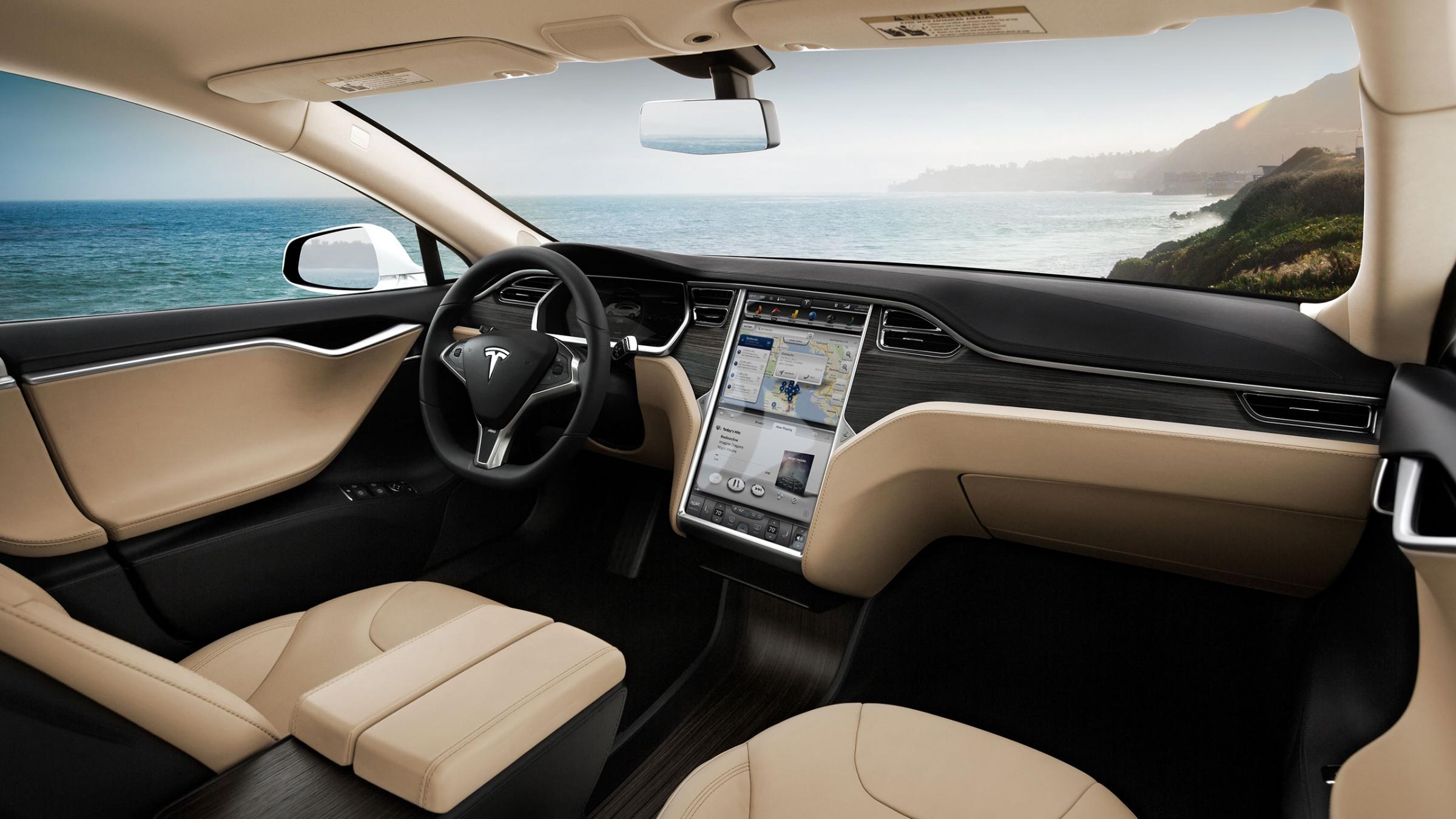
Families with aging parents tend to dread the same conversation: when should Mom or Dad stop driving? Giving up the car can mean giving up grocery runs, doctor visits and the weekly card game on your own schedule. So it gets noticed when Tesla (NASDAQ:TSLA | TSLA Price Prediction) chief executive Elon Musk shows the company’s driver-assist software as a way for older people to keep driving. In The Villages, Florida’s huge retirement community, some Tesla owners say they already use it for nearly every trip. Tesla’s own fine print describes something narrower.
Musk’s Pitch Features Drivers in Their 90s
According to Fast Company, Musk shared an in-car video in September 2026 of 98-year-old “Larry,” who says, “Look, I didn’t have to look, you know! I don’t want to look, it’s just doing it.” In July 2026, Tesla posted a video on X about “Lois,” who is 93 according to Fast Company and who “noticed how tired she was on her daily drives.” Musk reshared it and added his own claim: “Tesla self-driving enables safer mobility for senior citizens.” A Tesla North America post featured a 71-year-old man, per Fast Company, who bought a Cybertruck “because my eyes are getting bad.” Fast Company calls this “part of a pattern of boosterism.”
Villages Owners Describe Using It Almost All the Time
One Talk of The Villages forum thread from May 2025 shows how residents talk about it. The posters are anonymous and don’t give their ages. Spectreron wrote on the Talk of The Villages forum that at a Tesla Club meeting with over 100 in attendance[1], about 3/4 of members raised their hands when asked who uses self-driving often. That is one poster’s account. RavenelRibet wrote, “I drive my Tesla Mod Y everyday, all trips in FSD,” and added that drivers take over at the community gates: “When you approach the gate, you take over by tapping the brake lightly, then when you are through you just engage FSD again and relax.”
Talk of The Villages forum poster twoplanekid said they drive under FSD about 85%[1] of the time, even though it “doesn’t always drive (made the same choices) as I would.” USOTR said they use it 80% of the time and wrote, “The hardest part of owning a Tesla is learning the technology, then learning to trust it.” Another attendee at the meeting, who called Teslas “simply amazing vehicles,” wrote, “My hand did not go up. Do not have the need for FSD.”
For some posters, the appeal is personal. Nell57 wrote, “I have macular degeneration… intermediate stage,” and “I’m thrilled that self driving technology is continuing to improve so I’ll be able to maintain my independence.” Cpecka noted that “with the increased shaking on my hands some day I won’t be able to drive myself.” Others pushed back. OrangeBlossomBaby wrote, “I don’t trust other people behind the wheel, I’m certainly not going to trust a machine behind the wheel.” tophcfa asked, “Who will be held responsible when these things get into horrific accidents causing bodily injury and/or death?”
The same pattern shows up outside Florida. The Detroit News reported that Dick Amacher, a 78-year-old retired General Motors (NYSE:GM) engineer, drives his Teslas on FSD 98% of the time. “It’s as good a driver as I am,” he said. “It will not go through a red light. It will not go through a stop sign.” The paper also featured Leonard Kraus, 92, who uses FSD in Maryland.
Tesla’s Fine Print Puts the Driver in Charge
Tesla’s support page says “FSD (Supervised) is an advanced driver assistance system that is intended to be used only with a fully attentive driver.” It adds, “It does not turn a Tesla into a fully autonomous vehicle,” and “You are responsible for the speed and control of your vehicle at all times.” According to Fast Company, the owner’s manual says, “You must remain attentive and be ready to take over at all times.” Tesla did not reply to Fast Company’s request for comment.
On cost, Tesla’s support page lists the subscription at $99 a month. For comparison, the standard Medicare Part B premium will be $209.40[2] a month in 2027, and the average retired worker’s Social Security check will be about $2,071 after the 3.6% COLA. On a typical retiree budget, that makes the subscription a recurring monthly bill.
Researchers Say Nobody Knows How Seniors Use It
Birsen Donmez, a University of Toronto professor who studies human factors, told Fast Company, “If you can’t drive yourself, you shouldn’t be driving with FSD,” and said the name “could be misleading.” Johnathon Ehsani of Johns Hopkins said, “The extent to which people are willing to adopt these vehicles, and ways that they’re using them are completely wide open. We know nothing.” About Lois, he said, “Her feeling tired is a bit of a red flag.” An Insurance Institute for Highway Safety spokesperson said such systems “should be considered convenience features rather than safety systems.”
Fast Company mentions surveys finding that three in 10 Americans with dementia keep driving. It also reports a crash in a California Trader Joe’s parking lot involving a 91-year-old driver that killed one person and injured five. Fast Company says it is unclear whether FSD was in use.
What Families Should Ask Before Leaning on It
Jennifer Crawley of the Maryland Department of Aging told Fast Company, “There’s a grieving process that can occur when people give up the keys.” That grief explains the enthusiasm. FSD (Supervised) can make a long drive less tiring for someone who can still drive well, watch the road and take over right away, the way Villages owners describe doing at the gates. For a parent whose eyesight, hand tremor or memory has already made driving unsafe, Tesla’s manual and the researchers point the same way: the system requires a able driver at the wheel. The question to ask is whether Dad could safely handle the car without FSD.
Contact [email protected] for any questions or corrections.
AJ spent 10 years writing about financial markets at The Motley Fool. His coverage centers on technology stocks and the broader macroeconomic trends, from interest rates to geopolitics, that shape where markets are headed next. AJ is drawn to the stories where big-picture economics and individual companies collide.