Warren Buffett’s 3 Biggest Investing Lessons for Anyone Retiring in 2027

This post may contain links from our sponsors and affiliates, and Flywheel Publishing may receive compensation for actions taken through them.
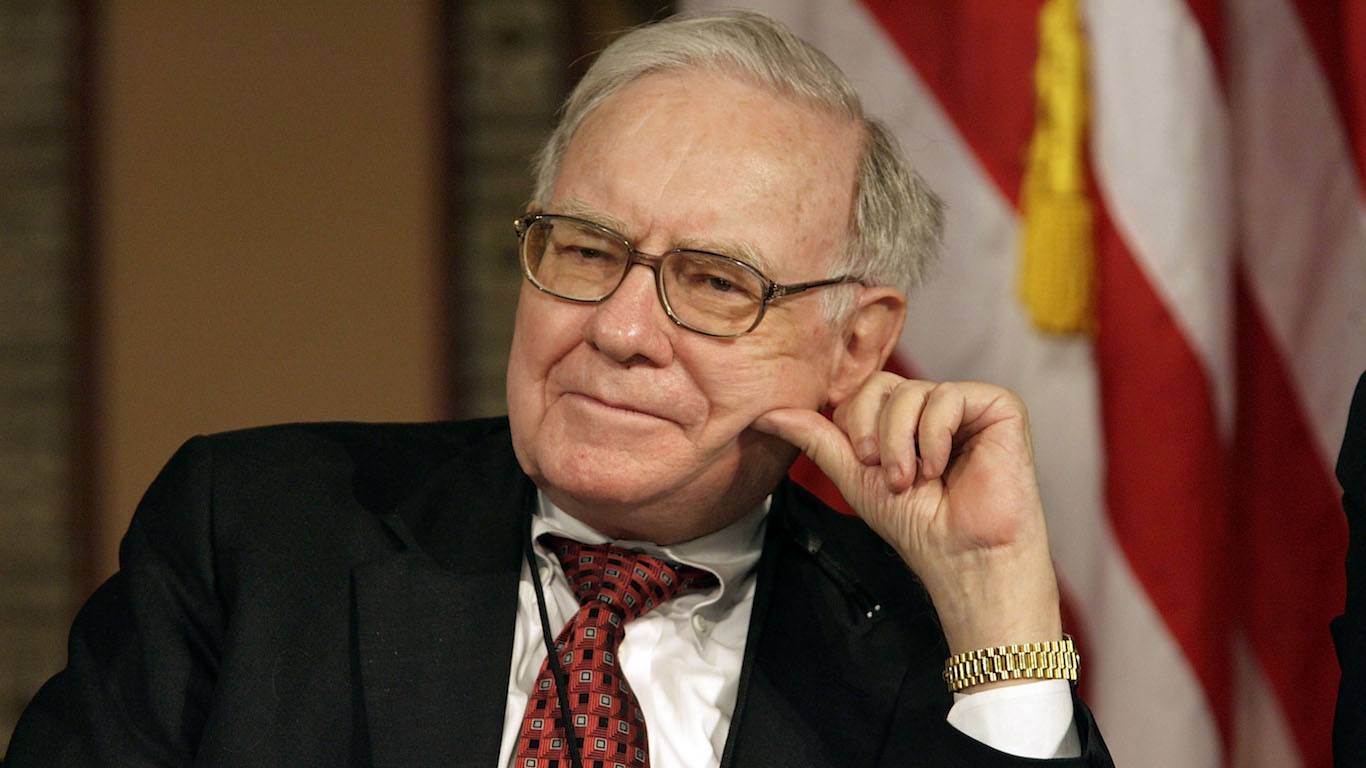
Warren Buffett once boiled his family’s financial future down to a single instruction. On a recent episode of Barron’s Streetwise podcast, the host put it this way: “Even Warren Buffett, in his 2013 letter to shareholders, talked about instructions for the trustee on behalf of his wife: 90% in a low-cost S&P 500 fund and 10% in short-term US government bonds.”
If you retire in 2027, Buffett’s thinking gives you three solid lessons. The 90/10 split on its own leaves a gap, though. Buffett has never backed it as a plan for someone taking out a paycheck out of a portfolio every month, and following it without checking that gap can cost you real money in your first bad year.
Lesson 1: A Crash in Year One Can Cost You Far More Than a Crash in Year 15
Buffett separates temporary price declines from permanent losses. A falling quote can recover. Money is lost for good when the business goes under or when you sell at the bottom. Retirees face extra danger because they often have to sell.
That danger is called sequence-of-returns risk. Once withdrawals begin, the order of your returns matters. You sell shares at low prices to pay bills, and those shares never get to recover.
Take a hypothetical $1 million portfolio. In year one the market falls 25% and you withdraw $40,000 to live on. You’re left with $710,000.
Getting back to $1 million now takes a 41% gain. An investor who withdrew nothing would need only 33%.
Everything hinges on one question: will you be forced to sell stocks during a drop? The same podcast framed the goal clearly: “The idea is to avoid getting in a situation where you have to sell stocks at beaten-down prices to provide money to live.”
In our hypothetical, a 10% bond piece covers about 2.5 years of withdrawals. If Social Security and a pension pay most of your bills, that buffer is plenty. If you live on portfolio withdrawals alone, a downturn lasting longer than that forces you to sell stocks at low prices.
Durable Businesses Raise Your Income Over Time
In his 1996 letter, Buffett described his ideal investment: an easy-to-understand business whose earnings are very likely to be higher five, 10, and 20 years from now. Coca-Cola (NYSE:KO | KO Price Prediction) and American Express (NYSE:AXP) fit that description. Berkshire Hathaway (NYSE:BRK-B) first bought Coca-Cola in 1988. It has owned American Express since the 1960s.
Coca-Cola’s quarterly dividend rose from $0.35 in 2016 to $0.53 in 2026. That’s a 51% raise. The company has now increased its dividend for 63 consecutive years[1].
American Express went further, raising its quarterly payout from $0.29 to $0.95 over the same period.
Both stocks pay modest yields. Coca-Cola yields about 2.1%, and American Express yields roughly 1.2%. A small yield that grows every year can produce more income than a large one that gets cut. Pick income stocks by earnings strength and payout growth first. Look at yield last.
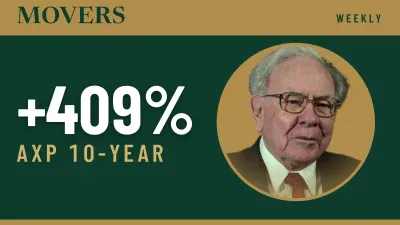
Quality stocks still fall. American Express is down 14% this year even after a 409% gain over 10 years. Coca-Cola sells at about 32x earnings, so investors are already paying a high price for its quality. If you own just a few great companies, you also take on a lot of single-stock risk.
Lesson 3: Fees Are a Loss You’re Guaranteed to Take
Buffett has supported low-cost S&P 500 index funds for ordinary investors for decades. The SPDR S&P 500 ETF Trust (NYSEARCA:SPY) charges an expense ratio of 0.0945%. On our hypothetical portfolio, that comes to $945 a year. A 1% fee costs $10,000.
Over time, that gap compounds. Say the market returns 6% a year and you make no withdrawals. Twenty years of a 1% fee leaves you about $554,000 poorer than an investor paying nothing. That money comes straight out of your returns, whether markets rise or fall.
Run These Numbers Before Your 2027 Retirement Date
- Count your safe years. Divide your cash and short-term bond holdings by the amount you’ll withdraw each year. If the answer is under three, you may have to sell stocks during a long bear market.
- Stress-test year one. Take 25% off your stock balance, subtract a full year of withdrawals, and figure out what gain you’d need to recover. If that number concerns you, review the size of your bond buffer before you retire.
- Price your fees in dollars. Multiply each fund’s expense ratio and any advisory fee by your balance. Then compare the total to what an index fund would cost.
- Screen dividend stocks by growth. Check 10 years of payout history and earnings trends before you look at today’s yield.
Contact [email protected] for any questions or corrections.
Joel South covers large-cap stocks, dividend investing, and major market trends, with a focus on earnings analysis, valuation, and turning complex data into actionable insights for investors.
He brings more than 15 years of experience as an investor and financial journalist, including 12 years at The Motley Fool, where he served as an investment analyst, Bureau Chief, and later led the Fool.com investing news desk. He has also co-hosted an investing podcast and appeared across TV and radio discussing market trends.