He Cashed In an Annuity With a $150,000 Gain and Expected Ordinary Income Tax. The Extra 3.8% Surtax Was a Surprise, and the $250,000 Threshold Behind It Has Not Moved Since 2013

This post may contain links from our sponsors and affiliates, and Flywheel Publishing may receive compensation for actions taken through them.

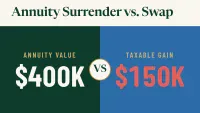
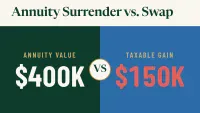
A hypothetical married couple in their late 60s surrenders a nonqualified deferred annuity they bought with after-tax savings years ago. The contract carries a $150,000 gain. They planned for ordinary income tax on that gain and set money aside. Then a second federal levy showed up on their return: the 3.8%[1] net investment income tax, or NIIT. The trigger for joint filers is $250,000[1] of modified adjusted gross income (MAGI). That dollar figure is written directly into the tax code and has stayed the same since the tax began, while consumer prices kept rising.
With year-end planning underway, anyone thinking about cashing out an annuity this year or next should run this math before calling the insurer.
Why an Annuity Gain Counts as Investment Income
Annuity gains can face two layers of federal tax. Start with income tax. When you fully surrender a contract, the amount you receive is included in gross income “only to the extent it exceeds the investment in the contract”[2] under 26 U.S.C. § 72(e)(5)(A). Your after-tax premiums come back tax-free. The growth is taxed as ordinary income, with no capital gains rate available.
The NIIT is the second layer. Under 26 U.S.C. § 1411(c)(1)(A)(i), net investment income includes “gross income from interest, dividends, annuities, royalties, and rents”[1]. Treasury’s regulation repeats the same list at 26 CFR 1.1411-4(a)(1)(i)[3]. So the taxable gain on a nonqualified annuity counts toward the surtax.
Annuities held inside retirement accounts are treated differently. Section 1411(c)(5) excludes “any distribution from a plan or arrangement described in section 401(a), 403(a), 403(b), 408, 408A, or 457(b)”[1]. An annuity inside an IRA avoids the NIIT. A contract bought with after-tax money does not.
Run the Numbers: A Hypothetical Joint Return
The surtax equals 3.8%[1] of whichever is smaller: net investment income, or the amount by which modified adjusted gross income exceeds the threshold, per 26 U.S.C. § 1411(a)(1). The threshold is $250,000[1] for joint filers and surviving spouses, half that for married couples filing separately, and $200,000 for everyone else.
Hypothetical example: Assume the couple has $160,000 of other income: a pension, IRA withdrawals and taxable Social Security. Adding the annuity gain brings their MAGI to $310,000.
| Item | Amount |
|---|---|
| Net investment income (annuity gain) | $150,000 |
| Income above the $250,000 threshold | $60,000 |
| NIIT (3.8% of the smaller figure) | $2,280 |
Their IRA withdrawals are exempt from the NIIT, but they still count toward adjusted gross income. That pushes more of the annuity gain above the threshold. If the couple’s other income were high enough that the full gain sat above the line, the surtax would reach $5,700.
A Threshold That Has Not Moved Since 2013
The NIIT applies to taxable years beginning after December 31, 2012[1]. Section 1411 has no inflation adjustment, which sets it apart from the tax brackets and the standard deduction. Each year, rising nominal incomes bring more retirees within reach of the surtax.
Prices show how much ground the threshold has lost. The CPI for all urban consumers rose from 231.679 in January 2013 to 337.476 in October 2026, an increase of about 45.7%. To keep pace with inflation, the joint threshold would need to be roughly $364,163 today. Instead, it is stuck at $250,000.
Medicare Premiums Can Rise From the Same Income Spike
The same one-time income jump can also raise Medicare premiums through IRMAA, the income-related surcharge, which is based on the tax return from two years earlier. Under the 2027 brackets announced November 17, 2026[4], joint filers with income up to $224,000 pay the standard Part B premium of $209.40 a month. Income between $282,000 and $354,000[4] raises that to $418.80 per person. A surrender in 2026 would affect 2028 premiums, and those brackets haven’t been published yet.
Questions to Answer Before You Cash Out
- Can the gain be spread out? Partial withdrawals come out of earnings first under 26 U.S.C. § 72(e)(3). In the hypothetical, splitting the gain into two annual $75,000 withdrawals would leave modified adjusted gross income at $235,000 each year, below the threshold. Check surrender charges first.
- Would annuitizing work better? The exclusion ratio in 26 U.S.C. § 72(b)(1) treats part of each payment as a tax-free return of your investment. That spreads the taxable gain over many years. The payments rely on the insurer’s claims-paying ability.
- Is a different contract the real goal? Section 1035(a)(3) allows exchanging “an annuity contract for an annuity contract”[5] without recognizing the gain. That postpones both the income tax and the NIIT.
- Is a lower-income year coming? A year without large IRA withdrawals or business income can keep the gain under the line.
What to Watch Heading Into Tax Season
The $250,000[1] joint threshold stays fixed unless Congress amends Section 1411, and that has not happened so far. Before surrendering any nonqualified contract, ask the insurer for the cost basis and current gain, then estimate your full-year modified adjusted gross income. Comparing that total with the threshold, and with the Medicare brackets, shows whether one large withdrawal or a series of smaller ones costs less after tax.
Contact [email protected] for any questions or corrections.
Gerelyn Terzo is the author of dividend investing handbook "Dividend Investing Strategies: How to Have Your Cake & Eat It Too." A veteran financial journalist, she covers agri-finance for outlets like Global AgInvesting and the broader stock market and personal finance for 24/7 Wall Street. She began at CNBC and later helped launch Fox Business in New York. Gerelyn currently resides in Woodland Park, Colorado and dabbles in nature photography as a hobby.