The First Arizona City a Retiree Picks Is Not Always the One That Fits, and a Second Move Is Not Cheap

This post may contain links from our sponsors and affiliates, and Flywheel Publishing may receive compensation for actions taken through them.
Many Arizona retirees choose a home after a winter visit and reassess after the first summer, when heat, distance from family, and access to specialists carry more weight. They start in a big metro, an active-adult community, or a mountain town, then move again within the state to find cooler summers, lower costs, or better access to hospitals.
People plan the first move for years. The second one usually gets planned in a few months, and that’s where the extra costs add up. Plenty of people take the chance anyway. IRS migration data shows Arizona gained a net 17,316[1] tax returns in 2022-2023, and California alone sent 28,402.
What an Arizona Retirement Costs Before a Second Move
As a baseline, in 2025, the average U.S. household spent $81,905, and Arizona’s cost-of-living index is 100.677, close to the national mark of 100. When both partners collect Social Security, a couple gets an average of $3,208 a month, or $38,496 a year. That leaves a $43,409 gap for the portfolio to cover. At a 4% withdrawal rate, that takes about $1.09 million. Early retirees needing a 3.5% rate to stretch the money over a longer life push the target to about $1.24 million. Claiming Social Security later shrinks that number, because at 4% every extra dollar of guaranteed income replaces $25 of portfolio.
Arizona’s tax treatment narrows that gap. Arizona doesn’t tax Social Security under A.R.S. § 43-1022(10). IRA withdrawals and pensions are taxed at a flat 2.5%, and each spouse who’s 65 or older gets a $2,100 exemption. On the federal side, a married couple has a $43,200 standard deduction in 2026, plus $1,650 for each spouse who’s 65 or older, plus up to a $6,000 senior deduction per person, which begins phasing out when joint income exceeds $150,000. On top of everything else, Medicare Part B runs $209.40[2] a month each in 2027.
Flat Home Prices Won’t Pay for a Second Move
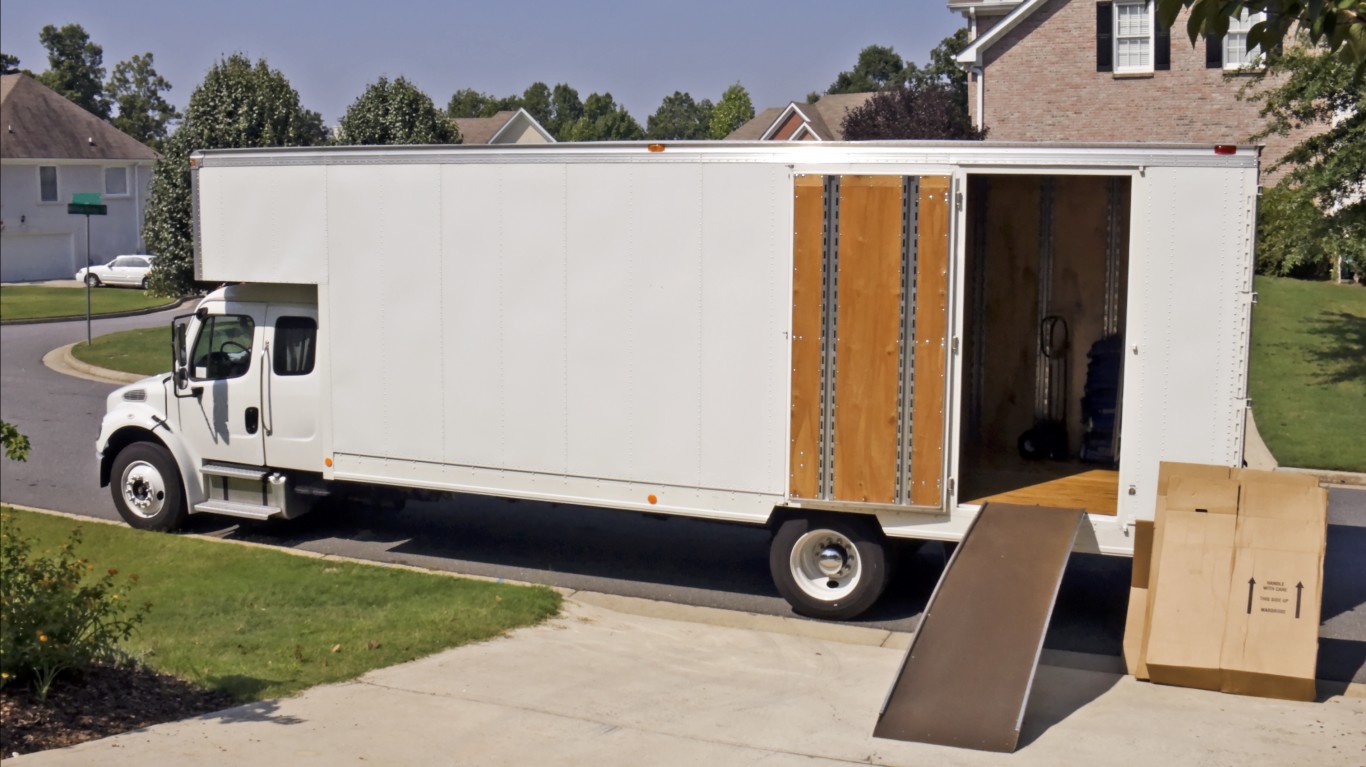
A second move means paying commissions and closing costs again, hiring movers again, and paying HOA transfer and disclosure fees when leaving one community and joining the next. Recent home price changes cover little of that.
Over the latest year, FHFA shows Phoenix-Mesa-Chandler up 0.85%[3], Tucson up 1.88%, and Prescott Valley-Prescott down 0.73%. Buyers from a year or two ago probably haven’t gained enough to cover the round trip. That money comes out of the portfolio. At 4%, every $50,000 spent on the move cuts about $2,000 a year from safe spending, for life.
Selling Before Two Years Can Raise the Medicare Bill
To qualify for the full home-sale exclusion, the seller generally must have owned and lived in the home for at least 2 years in the last 5. For a married couple, the exclusion is $500,000. If you sell before two years, the gain is taxable unless the move was for health or another qualifying reason, which reduces the exclusion. Say a couple owned the home for 12 months and moved for health reasons, their cap would be $250,000.
A taxable gain also adds to modified adjusted gross income, and Medicare sets premiums based on the tax return from two years earlier. For 2027, a couple’s 2025 joint income above $224,000 raises Part B to $293.10 per person per month. That’s an extra $2,008.80 a year for the couple, plus a Part D surcharge of $15.40[2] a month per person (IRMAA is one of several premium traps we mapped in a free Medicare guide). Arizona also taxes the gain at 2.5%. One rushed sale can bring a tax bill this year and a higher Medicare bill two years from now.
Why a Summer Rental Costs Less Than Another Sale
Some retirees rent in the city they’re considering from June through September, drive to the closest emergency room and their specialists when they’d need to go, and get homeowners insurance quotes and the HOA’s current dues and transfer fees in writing before making an offer. A summer of rent costs less than a third of selling costs.
What Makes the Move Pay Off
A couple with average spending and average Social Security needs about $1.09 million if they withdraw 4% a year, or $1.24 million if they withdraw 3.5% as early retirees. A separate moving reserve built from real quotes sits on top of that, because a second move draws straight from that portfolio. A second Arizona home that ends the moving cycle avoids another round of selling costs, but a taxable gain on another sale can add capital gains taxes and potentially higher Medicare premiums, even after two years of ownership.
Contact [email protected] for any questions or corrections.
David Beren has been a Flywheel Publishing contributor since 2022. Writing for 24/7 Wall St. since 2023, David loves to write about topics of all shapes and sizes. As a technology expert, David focuses heavily on consumer electronics brands, automobiles, and general technology. He has previously written for LifeWire, formerly About.com. As a part-time freelance writer, David’s “day job” has been working on and leading social media for multiple Fortune 100 brands. David loves the flexibility of this field and its ability to reach customers exactly where they like to spend their time. Additionally, David previously published his own blog, TmoNews.com, which reached 3 million readers in its first year. In addition to freelance and social media work, David loves to spend time with his family and children and relive the glory days of video game consoles by playing any retro game console he can get his hands on.