At 69 With $1 Million, He’ll Be Sued After a Guest Slips on His Icy Driveway. An Umbrella Policy Is What Stands Between the Claim and His Savings

This post may contain links from our sponsors and affiliates, and Flywheel Publishing may receive compensation for actions taken through them.
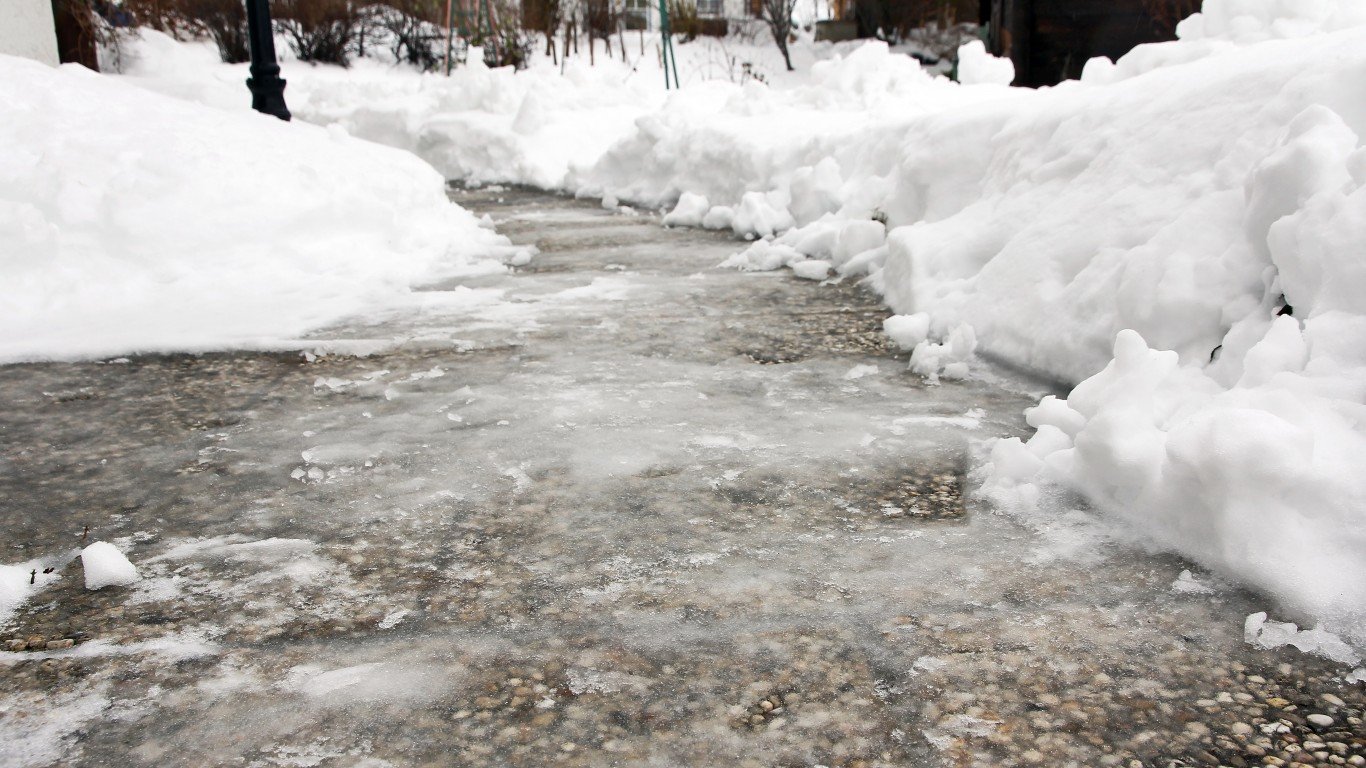
If a guest slips on your icy driveway and sues, you could face a claim that exceeds your homeowners coverage. If you’re 69 with about $1 million saved, that case is harder than it would be at 35, because you don’t have a salary to rebuild whatever a judgment takes.
This piece covers how homeowners liability coverage works, where it runs out, how an umbrella policy adds protection on top of it, which of your assets a court can actually reach, and how much coverage to buy before winter starts.
Icy Driveways Turn Into Real Lawsuits
New Jersey homeowners must take reasonable steps to keep private walkways and driveways safe for expected visitors, but generally have no duty to remove naturally accumulated snow and ice from adjoining public sidewalks.
Homeowners who do clear ice also have to make sure they do so in a way that does not create additional hazards. The details change from state to state, but the takeaway is the same everywhere: a fall on your property can become a negligence claim against you.
Why a Retiree’s Savings Draw the Claim
Americans aged 55 to 69 hold 41%[1] of all U.S. household net worth, according to Federal Reserve data. People of that age own assets worth suing over.
For most of them, Social Security pays the basic bills, with the average retired worker getting $2,071 a month. The $1 million is the buffer that pays for everything else, and that buffer is what a plaintiff’s lawyer is after.
Your Homeowners Policy Has a Ceiling
Your homeowners policy pays injury claims up to the personal liability limit printed on your declarations page, and it stops there, so a claim that includes surgery, rehab, and lost wages can go past that limit. If a settlement or judgment exceeds your insurance coverage, your unprotected personal assets may be at risk.
An umbrella policy fills that gap. It generally takes effect when other forms of insurance (e.g., auto or homeowners) have been exhausted. Consumer advocate Clark Howard describes it as coverage that “lays over everything you have,” and says people usually buy it in multiples starting at $1 million. He adds that they’re “very cheap because they’re not called upon a lot.”
The insurance company selling you the umbrella will also require a level of underlying liability coverage on your home and auto policies, so you may need to raise those limits first. Umbrellas usually cover injuries on your property and car accidents.
They generally exclude intentional or criminal acts, business activities, damage to your own property, and injuries to you. If you rent out a room or a garage apartment, ask whether that counts as a business activity before you assume you’re covered.
Which of Your Dollars a Judgment Can Reach
Your accounts carry different levels of exposure:
- 401(k) and other employer plans: Federal tax law requires qualified plans to state that benefits under the plan may not be assigned or alienated, which makes these accounts very hard for creditors to touch.
- IRAs: How much protection an IRA gets from a lawsuit depends on your state, so don’t count on it until you’ve checked your state’s rules.
- Taxable brokerage accounts: These have no special shield. A judgment creditor can usually go after them directly.
- Home equity: Only the amount your state’s homestead exemption covers is protected. Everything above that is exposed.
Buy the Umbrella Before the First Freeze
One common way to size the policy is to calculate your net worth, but to exclude assets that are already shielded. Another guideline is to carry coverage equal to or greater than your net worth. For someone with $1 million in net worth, $1 million of umbrella coverage is the minimum. If your brokerage account plus your home equity add up to more than that, go to $2 million.
The other option is to skip the umbrella and count on your homeowners policy plus having most of your money in retirement accounts. Most people will find that the worse choice. It leaves your brokerage account and home equity exposed, and IRA protection depends on state law.
You can’t fix that gap after someone has already fallen, either. Insurance covers incidents that happen after the policy starts, so a policy bought after the party won’t pay for that claim.
State law determines what’s protected and what isn’t. If most of your savings sits in IRAs or you rent out part of your property, an hour with an asset-protection attorney in your state can tell you exactly what’s covered.
What to Do This Week
First, find your homeowners declarations page and write down your personal liability limit. Then ask your insurance company which underlying limits an umbrella policy would require, and get quotes for $1 million and $2 million.
The biggest mistake is assuming your retirement accounts protect everything. Add up your brokerage balance and unprotected home equity, since both may be exposed to judgment creditors, and buy enough coverage to protect them before the driveway ices over.
Contact [email protected] for any questions or corrections.
David Beren has been a Flywheel Publishing contributor since 2022. Writing for 24/7 Wall St. since 2023, David loves to write about topics of all shapes and sizes. As a technology expert, David focuses heavily on consumer electronics brands, automobiles, and general technology. He has previously written for LifeWire, formerly About.com. As a part-time freelance writer, David’s “day job” has been working on and leading social media for multiple Fortune 100 brands. David loves the flexibility of this field and its ability to reach customers exactly where they like to spend their time. Additionally, David previously published his own blog, TmoNews.com, which reached 3 million readers in its first year. In addition to freelance and social media work, David loves to spend time with his family and children and relive the glory days of video game consoles by playing any retro game console he can get his hands on.