Kentucky Has 16.1 Million Barrels of Bourbon Aging. Here’s How a Retiree Can Actually Own One, and What a Sale Does to Social Security.
Owning a Kentucky bourbon barrel sounds like a bucket-list flex, but retirees who cash out a profitable barrel often discover the real cost hiding two years later in their Medicare bill.

This post may contain links from our sponsors and affiliates, and Flywheel Publishing may receive compensation for actions taken through them.
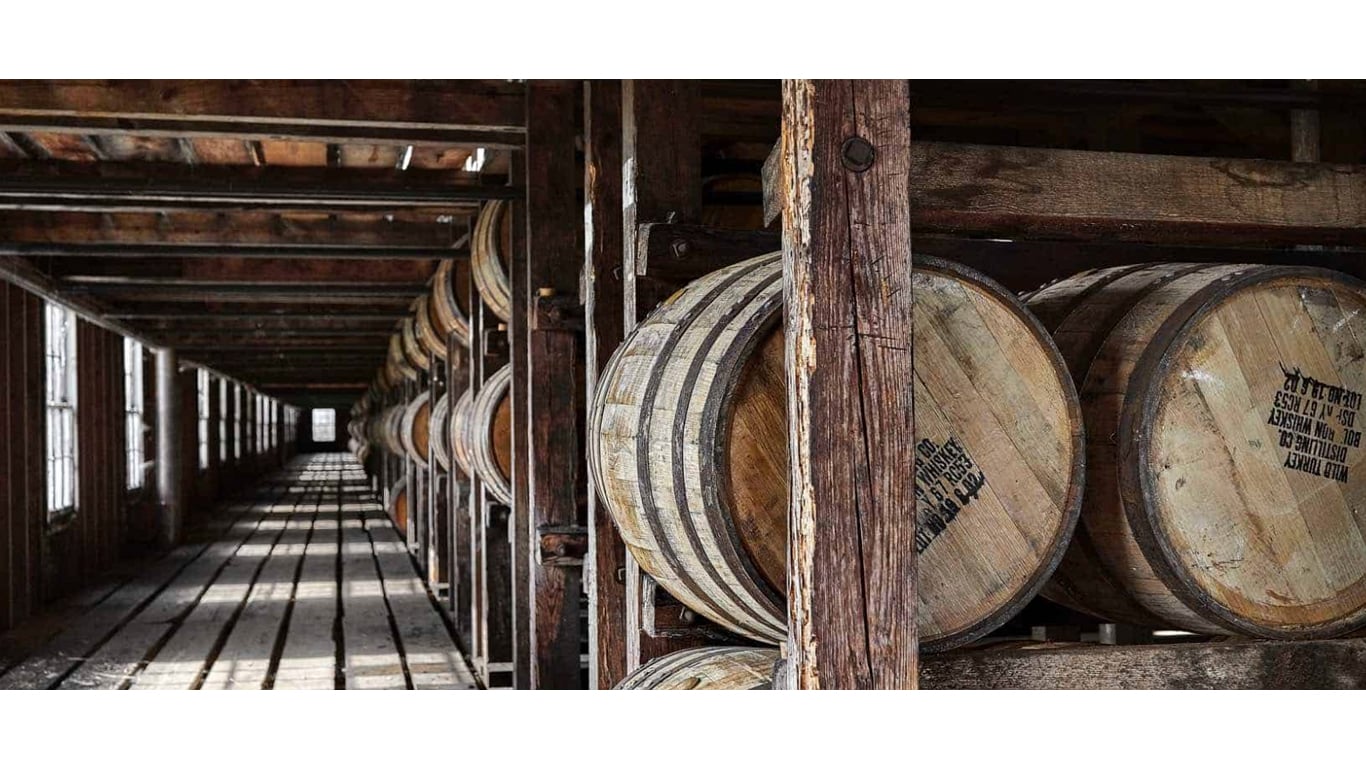
Kentucky’s rickhouses entered 2026 holding a record 16.1 million barrels of bourbon, according to the Kentucky Distillers’ Association, whose figures are drawn from inventories submitted to the Kentucky Department of Revenue as of January 1, 2025. The industry has swung hard from shortage to glut. The main distillery on Jim Beam’s Clermont campus paused all distillation for the full year as the Suntory-owned brand weighed consumer demand against a market battered by slumping consumption and tariff pressures. Production at the smaller Fred B. Noe craft distillery in Clermont and the Booker Noe facility in Boston, Kentucky, continued, and the campus kept its visitor center and bottling operations running. No layoffs were announced, but the scale of the pullback was impossible to miss.
The broader export picture makes the situation even more difficult to shrug off. American whiskey exports fell 19% in 2025 as retaliatory tariffs closed off major markets: Canada cut U.S. spirits imports by 85% in the second quarter of 2025, and the EU, bourbon’s largest overseas destination, saw exports drop 35% over the full year. The European Union did suspend its retaliatory tariff on U.S. spirits through August 6, 2026, but as of mid-2026 no further extension had been announced, leaving a fresh round of 25% duties as a real possibility for the back half of the year. Against that backdrop, barrel ownership has shifted from a bragging-rights hobby into a legitimate question retirees are asking their financial advisors. Could a 66-year-old actually buy a barrel and sell it later for a gain?
The answer is yes, with real friction. The part most articles skip is what a taxable sale does to your Social Security check and your Medicare bill two years down the road.
A retired couple posting on a personal-finance forum recently described exactly this situation: mid-60s, pensions covering the basics, a taxable brokerage account, and a bucket-list itch to own a single barrel from a favorite Kentucky distillery. They wanted to know whether the purchase was a hobby, an investment, or a tax mistake waiting to happen.
Three Legitimate Paths to Owning a Barrel
Not every “own a barrel” pitch works the same way, and the legal structure changes what you are actually buying.
- A distillery single-barrel or barrel-select program. You pick a barrel at the distillery, it gets bottled for you under the distillery’s license, and the bottles ship to a retailer in a state that permits it. This is generally structured for personal use and gifting, not resale, and you pay federal excise tax and state markups on bottling.
- A cask investment platform or broker. Your barrel stays in a bonded, duty-suspended warehouse. The platform handles storage, insurance, and eventually markets the barrel to a trade buyer such as a bottler, blender, or private-label brand. You never take physical possession of the liquid.
- Fractional or syndicate ownership. You buy a slice of a barrel or a small portfolio of barrels alongside other investors. Lower entry price, same warehouse-and-broker mechanics, and the same exit constraints.
An individual generally cannot legally take possession of un-bottled spirits or resell finished liquor without proper licenses. That single rule is why platforms and distilleries sit in the middle of every transaction, and why exit liquidity depends entirely on a trade buyer showing up at the right moment.
The oversupply problem is not going away quietly. The assessed value of Kentucky’s aging barrels surged to $10 billion in 2025, a 25% jump from the prior year’s record of $8 billion, and Kentucky distillers paid $75 million in aging barrel taxes in 2025 alone, a 27% increase from 2024 and a 163% surge over the prior five years. Kentucky was until recently the only jurisdiction in the world that taxed barrels while they age. The state legislature passed House Bill 5 in 2023, phasing out that tax beginning in 2026 and eliminating it completely by 2043. The first year of the phase-out reduces the tax by only about 4%, so the immediate financial relief for distillers carrying record inventories is modest. The glut itself persists: brokerage commissions, storage fees, insurance, authentication, and any excise taxes due on eventual bottling all take a bite before you see a dollar of profit, and the pool of motivated trade buyers has thinned considerably.
What a Profitable Sale Does to Your Benefit Check
Take a simple example. A barrel bought for $12,000 sells four years later for $22,000. That $10,000 gain lands on your tax return and lifts your modified adjusted gross income (MAGI). Two things then happen at once.
First, more of your Social Security benefit becomes taxable. Once combined income crosses the provisional-income thresholds, up to 85% of your benefit can be pulled into ordinary income. On a benefit that received the 2.8% cost-of-living adjustment for 2026, bringing the average retired worker’s monthly payment to roughly $2,064, the extra tax on the benefit itself can quietly equal several hundred dollars beyond the tax on the gain alone.
Second, Medicare uses a two-year lookback. A 2026 sale shows up in your 2028 Part B and Part D premiums through the income-related monthly adjustment amount, known as IRMAA. The standard 2026 Part B premium is $202.90 per month. Cross $109,000 in modified adjusted gross income as a single filer, or $218,000 filing jointly, and the first surcharge tier kicks in: an extra $81.20 per month on Part B, bringing the total to $284.10, plus $14.50 on Part D. For a married couple, that surcharge applies per person, so the household hit is double. A one-time bourbon windfall can quietly cost roughly $2,300 in extra Medicare premiums across a full year, on top of the income tax bill. Because IRMAA operates as a cliff, crossing a threshold by even one dollar triggers the full surcharge for the tier.
Before You Write the Check
Time your sale in a year when other income is low. Ideally that means selling before required minimum distributions (RMDs) begin at age 73, so the gain does not stack on top of a full withdrawal schedule. Ask the platform or distillery for the all-in cost of exit in writing, covering storage, insurance, bottling, excise taxes, and brokerage fees. If those fees swallow the projected gain, the “investment” is really a hobby with a resale option attached.
Bourbon makes a fine story at the holidays. The practical discipline is to size the position so a good outcome does not accidentally reprice your Medicare for two years running, and a bad outcome does not dent the retirement plan. A short conversation with a CPA before you buy is almost always cheaper than one after you sell.
Editor’s note: This article was updated to add post-publication context on the bourbon industry’s export headwinds, including a 19% decline in American whiskey exports in 2025, an 85% drop in U.S. spirits shipments to Canada in Q2 2025, and the European Union’s 25% retaliatory tariff suspension running through August 6, 2026, with no renewal confirmed as of mid-2026. It also reflects the Kentucky barrel tax phase-out timeline under House Bill 5: the 2026 reduction is approximately 4%, with full elimination of the tax not occurring until 2043, and notes that Kentucky’s aging barrel inventory carried a total assessed value of $10 billion in 2025.
Contact [email protected] for any questions or corrections.
Gerelyn Terzo is the author of dividend investing handbook "Dividend Investing Strategies: How to Have Your Cake & Eat It Too." A veteran financial journalist, she covers agri-finance for outlets like Global AgInvesting and the broader stock market and personal finance for 24/7 Wall Street. She began at CNBC and later helped launch Fox Business in New York. Gerelyn currently resides in Woodland Park, Colorado and dabbles in nature photography as a hobby.