He Built Locomotives for 30 Years. The Railroad Retirement Board Said He Never Worked for a Railroad.
Thirty years on a locomotive plant floor, wiring cabs and watching finished engines roll out to freight lines, sounds like railroad work. The retirement system drew a very different line.

This post may contain links from our sponsors and affiliates, and Flywheel Publishing may receive compensation for actions taken through them.
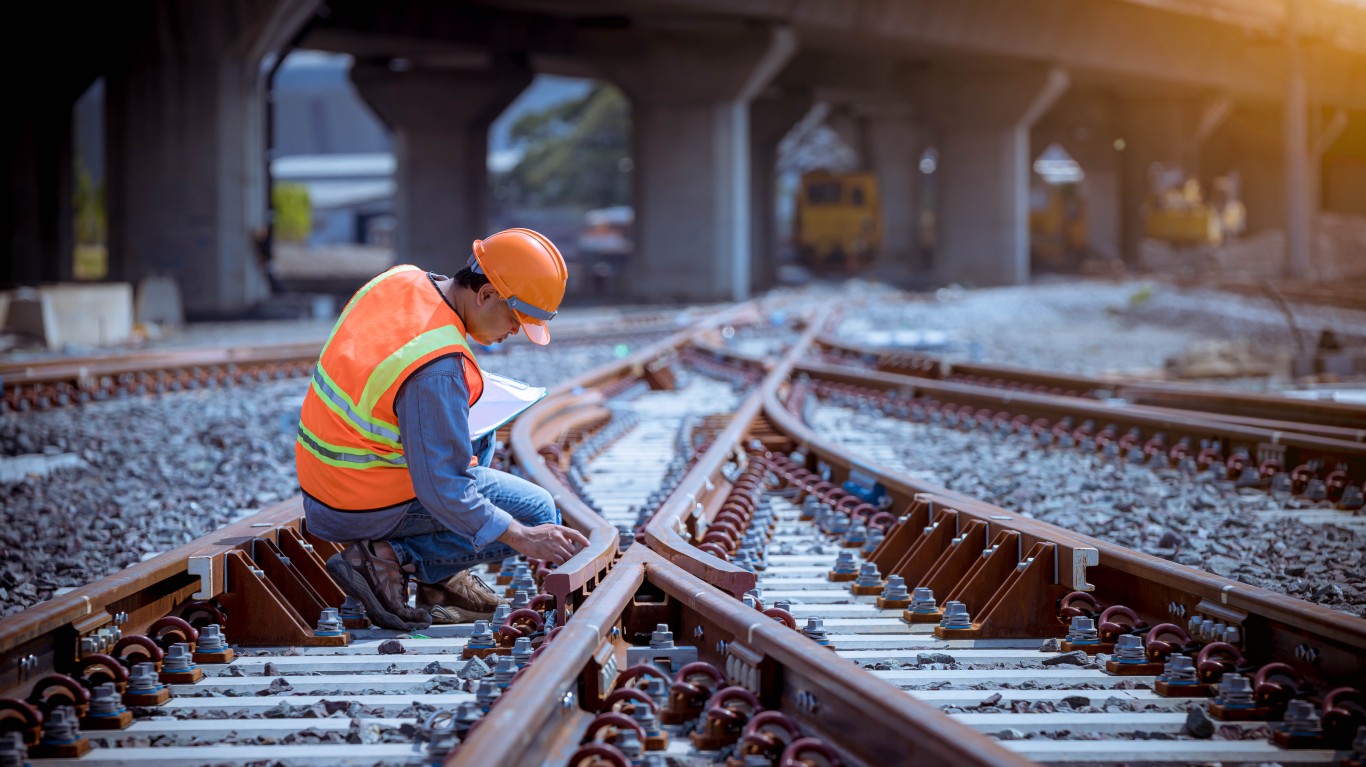
In February, Union Pacific signed a $1.2 billion deal with Wabtec to modernize locomotives, a reminder that the companies building the machines and the railroads running them can sit on opposite sides of a surprisingly important retirement line.
Picture a man who hypothetically spent 30 years on a locomotive plant floor. He wired cabs, tested traction motors and watched finished engines roll out to freight lines across the country. Everyone in his family called it railroad work. He thought so too.
Then retirement approached and the Railroad Retirement Board (RRB) told him he had no creditable railroad service. His employer had been an independent manufacturer covered by Social Security, not a railroad covered by the Railroad Retirement Act. Thirty years around trains did not equal 30 years in railroad retirement.
The Employer Draws the Line
Railroad retirement coverage generally follows the employer and the employment relationship, not the product being built or the industry printed on a worker’s résumé. The RRB determines whether a company is a covered railroad employer or qualifying railroad-connected operation. An independent manufacturer can build locomotives exclusively for railroads without automatically bringing its workers into the railroad retirement system. That distinction has real consequences.
Railroad retirement requires at least five years of creditable railroad service performed after 1995, or 10 years at any time, for a regular employee annuity. A worker with 30 years of qualifying service can potentially retire at 60 without the age reduction that would apply to many Social Security claimants. Our machinist has 30 years of work. He has zero years toward that railroad threshold.
His Pay Stub Knew All Along
There was a clue hiding in every paycheck. Covered railroad employees pay railroad retirement taxes. Tier I is coordinated with Social Security, while Tier II finances the portion of railroad retirement that works more like a private pension. In 2026, employees pay a 4.9% Tier II tax on earnings up to $137,100, in addition to Tier I and Medicare taxes.
A worker at a Social Security-covered manufacturer instead sees ordinary Social Security and Medicare payroll taxes. That means the retirement system was not actually a mystery for 30 years. The evidence was sitting in the deductions column. The problem is that few workers in their 30s or 40s look at a paycheck and ask which federal retirement agency will eventually count it.
The Work Was Not Lost
The good news is that his career did not disappear. Because the locomotive plant was covered by Social Security, those wages went onto his Social Security earnings record. Retirement benefits will generally be based on his highest 35 years of indexed earnings, just as they would be for workers in other Social Security-covered industries.
What he lost was not 30 years of retirement credit altogether. He lost the railroad retirement structure he thought those years were building. That can mean a different claiming age, different spouse and survivor rules and no Tier II railroad benefit. The distinction is especially jarring because the physical work may have looked inseparable from railroading. He could spend decades standing beside locomotives and still never accumulate a month of railroad service.
Know Which System Is Counting You
A worker should not have to discover the answer while filing for retirement. Before building a long-term plan around railroad benefits, these three checks can settle it much earlier:
- Ask the RRB whether the employer and the particular work are covered rather than relying on the company name or job description.
- Look at payroll records for railroad retirement deductions, especially Tier II, versus ordinary Social Security withholding.
- Check both the RRB service record, if applicable, and the Social Security earnings record while old payroll documents are still easy to find.
He spent 30 years helping put locomotives on railroad tracks. The retirement lesson is that working on the train and working for the railroad can look almost identical from the factory floor. On the retirement record, they can be two entirely different careers.
Contact [email protected] for any questions or corrections.
Gerelyn Terzo is the author of dividend investing handbook "Dividend Investing Strategies: How to Have Your Cake & Eat It Too." A veteran financial journalist, she covers agri-finance for outlets like Global AgInvesting and the broader stock market and personal finance for 24/7 Wall Street. She began at CNBC and later helped launch Fox Business in New York. Gerelyn currently resides in Woodland Park, Colorado and dabbles in nature photography as a hobby.