Las Vegas’ High-Speed Rail Project Is Waiting on a $6 Billion Federal Loan. Five Years Building It Could Still Earn Him No Railroad Pension
A construction worker can spend years setting track on a high-speed rail line and badge into a railroad jobsite every single morning without earning a single month of railroad retirement credit. The reason has nothing to do with how long…

This post may contain links from our sponsors and affiliates, and Flywheel Publishing may receive compensation for actions taken through them.

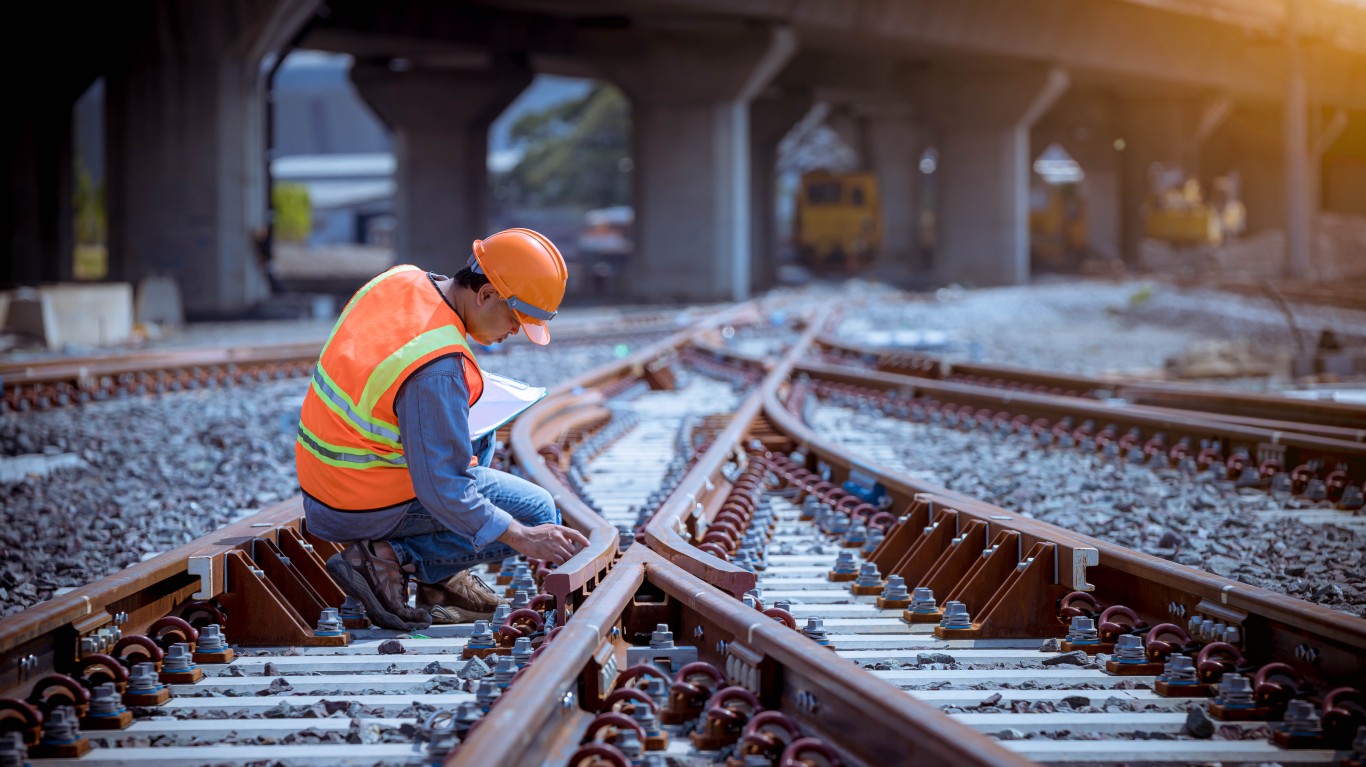
A construction worker spends five years building the Brightline West high-speed rail line between Las Vegas and Southern California. He sets track, pours station foundations, and badges into a railroad jobsite every morning. His W-2 comes from an independent construction contractor covered by Social Security.
At the end of those five years, he may have zero months of railroad retirement service.
The project is $15.5 billion short of a $21 billion funding goal while waiting a $6 billion federal loan. If that money arrives and construction ramps up, many workers could end up where he is, assuming a railroad paycheck is on the way when it isn’t.
Why Five Years on the Tracks Can Add Up to Zero Railroad Months
The Railroad Retirement Board (RRB) runs the rail industry’s retirement system, which serves as a substitute for Social Security. For a regular annuity, it requires 120 months of creditable railroad service, or 60 months if that service came after 1995. A worker who builds up 60 covered months today can meet the minimum service requirement, subject to the program’s other eligibility rules. What the time counts is covered employment. Physical railroad work plays no part in it.
| Measure | His Total |
|---|---|
| Time on the Brightline West project | 5 years |
| Months doing railroad construction | 60 |
| Creditable railroad service | 0 months |
| Social Security-covered wages | 5 years |
Railroad retirement follows the employer. His contractor wages stay outside the railroad system.
Contract Workers Can Still Land Inside the Railroad System
The Board can rule that someone officially employed by a contractor is really a railroad employee. A central test is whether the railroad holds “the continuing authority of the employer to supervise and direct the manner of rendition of his service,” according to the Railway Labor Act. In our hypothetical, his contractor relationship is truly independent. His coverage falls under Social Security.
His Social Security Record Quietly Gets Stronger
His five years still count toward Social Security. In 2026, each $1,890 of covered earnings earns one credit, up to four a year, so five years can add as many as 20 credits. Most workers need 40 credits to qualify for a retirement benefit, although he may be closing in from earlier jobs.
Those Social Security credits do not disappear if he later takes a covered railroad job. Tier I of a railroad annuity can use both railroad and Social Security credits. If he later earns some railroad service but never reaches the minimum needed for a railroad annuity, those Tier I railroad credits generally transfer to Social Security instead. Tier II is different: it is based only on railroad service.
His construction years stay on the Social Security record for good and will never be reclassified as railroad time. If he takes a covered railroad job at 50, his railroad service starts counting from his first day in that job. The 60-month rule only helps when those months come from covered railroad employment.
Four Checks That Beat Assuming a Railroad Pension
- Find out whether his employer is covered by the Railroad Retirement Act. The company name on his hard hat doesn’t answer that.
- Confirm whether the Board treats his specific job as covered railroad service. Two people on the same site can fall under different systems.
- Look at his pay stub. Railroad retirement taxes and ordinary Social Security taxes show up as different line items.
- Ask the Board for his service record. The number of creditable months on file decides whether he is vested.
What to Settle Before Your Retirement Math Depends on It
If you’re in his position, checking takes far less effort than fixing a mistake later. The hardest mistake is building a retirement plan around a tier II pension that was never accruing, then finding out a decade later. A single pay stub and a request to the Board can settle it this year, while there’s still time to change jobs or adjust savings.
If his wages go to Social Security, those five years are not wasted. They remain on his Social Security earnings record, even though they do not build railroad service or a Tier II benefit.
Contact [email protected] for any questions or corrections.
Gerelyn Terzo is the author of dividend investing handbook "Dividend Investing Strategies: How to Have Your Cake & Eat It Too." A veteran financial journalist, she covers agri-finance for outlets like Global AgInvesting and the broader stock market and personal finance for 24/7 Wall Street. She began at CNBC and later helped launch Fox Business in New York. Gerelyn currently resides in Woodland Park, Colorado and dabbles in nature photography as a hobby.