South Korea’s $576 Billion AI Bet Shows Why Vertiv Is More Than a Cooling Company
Artificial intelligence stocks often move on earnings reports, product launches, or analyst upgrades. Vertiv Holdings (NYSE: VRT | VRT Price Prediction) did none of those things on June 30, yet its shares climbed 9.1%, adding nearly $11 billion in market…


Artificial intelligence stocks often move on earnings reports, product launches, or analyst upgrades. Vertiv Holdings (NYSE: VRT | VRT Price Prediction) did none of those things on June 30, yet its shares climbed 9.1%, adding nearly $11 billion in market value in a single trading session. The catalyst originated more than 6,000 miles away in Seoul, where the South Korean government unveiled one of the world’s most ambitious semiconductor and AI infrastructure investment programs. That reaction illustrates how investors increasingly view AI infrastructure companies as global beneficiaries of AI investment, regardless of where those investments originate.
That’s an unusual way for an industrial company to gain nearly $11 billion in market value, but it says a great deal about how Wall Street now views AI infrastructure. Investors are increasingly reacting not just to company-specific news, but to any development that suggests the global AI buildout will continue accelerating.
That disconnect between where the news occurred and where investors directed their money explains much about how Wall Street is beginning to value the next phase of the AI infrastructure cycle. Increasingly, investors are reacting not simply to company-specific developments but to any indication that global AI spending will continue expanding. Vertiv has become one of the clearest beneficiaries of that trend because its products sit at the heart of virtually every modern AI data center.
The question investors now face is whether Vertiv has become the best way to invest in the global AI infrastructure buildout, or whether its shares have become a high-beta proxy for AI enthusiasm that could swing sharply whenever sentiment changes. That distinction may determine whether June 30 marks the start of another leg higher, or just another volatile day in one of the market’s fastest-growing infrastructure names.
The $576 Billion Catalyst: South Korea’s AI Ambition
The news that ignited the rally came from South Korea, where President Lee Jae Myung announced a sweeping national initiative to strengthen the country’s leadership in semiconductors and artificial intelligence.
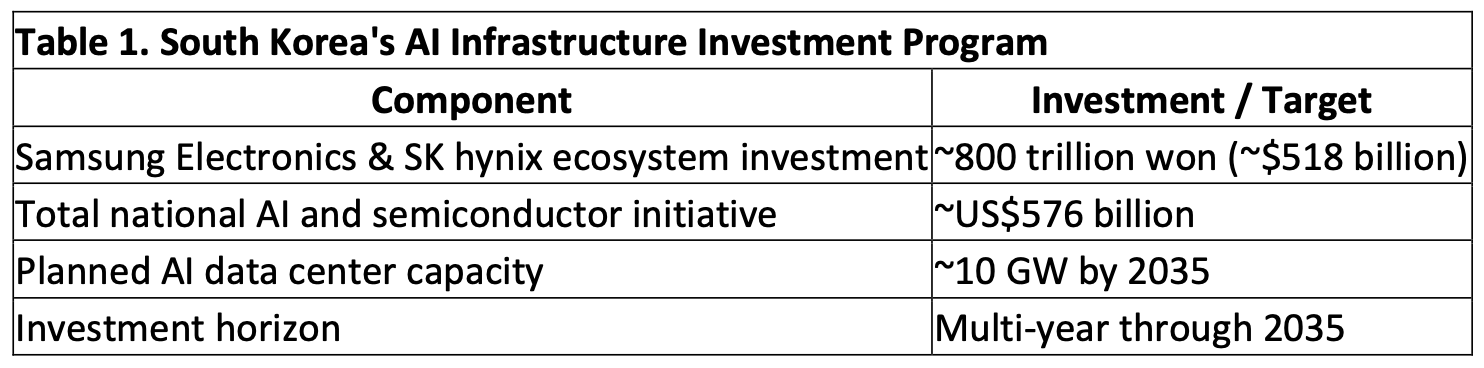
According to Table 1, South Korea’s announcement represents one of the largest government-supported AI infrastructure initiatives announced anywhere in the world. Although much of the investment will be directed toward semiconductor manufacturing, every new AI data center also requires extensive electrical distribution, power management, thermal management, and cooling infrastructure before computing hardware can be deployed. That is why investors immediately connected the announcement to companies such as Vertiv.
Vertiv was never mentioned during the announcement. It did not need to be. Every large AI data center requires electrical distribution equipment, power conversion systems, backup power, liquid cooling, thermal management, and monitoring software before a single AI accelerator is ever installed — regardless of whether the chips inside come from Nvidia, AMD, custom ASIC programs, or future architectures.
Markets make these connections long before company press releases do. Investors recognized immediately that a program of this magnitude would require far more than semiconductors—it would require the electrical and thermal infrastructure that allows AI data centers to operate.
Why Vertiv Wins Regardless of Which Chip Wins
That reality increasingly explains why investors have begun viewing Vertiv as a direct beneficiary of global AI investment rather than merely another industrial equipment company. When governments or hyperscale cloud providers announce multi-billion-dollar AI infrastructure programs, investors immediately ask which companies will supply the essential systems that make those facilities operable — and Vertiv consistently appears near the top of that list.
The June 30 rally illustrates just how tightly Vertiv’s stock is now tied to AI infrastructure sentiment. The company issued no press release, offered no updated guidance, and announced no new customer wins. Investors simply interpreted Seoul’s announcement as fresh confirmation that global AI infrastructure spending remains in its early stages — a read that lines up with hyperscaler capex programs in the U.S., sovereign AI strategies across Europe, the Middle East, and Asia, and gradually rising enterprise adoption of generative AI workloads.
Unlike semiconductor manufacturers, whose growth depends partly on which AI accelerator wins market share, Vertiv benefits regardless of which computing platform customers choose. That broad exposure lets the company participate across the entire AI ecosystem rather than betting on a single chip architecture.
The Real Bottleneck: Power, Not Processors
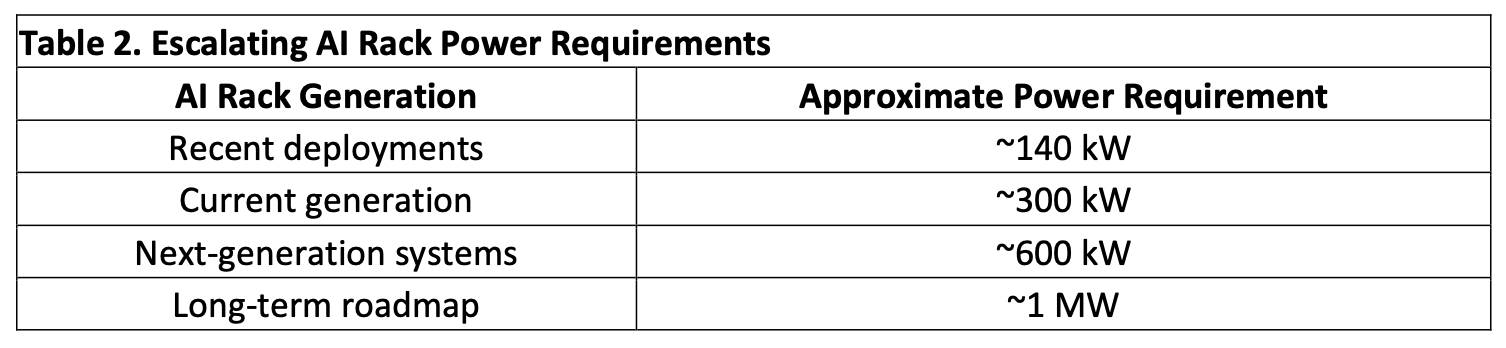
Management has been expanding Vertiv’s technological reach to address one of the industry’s fastest-growing challenges: delivering enough electrical power to increasingly dense AI computing environments. At Vertiv’s May 2026 Investor Conference, Chief Product and Technology Officer Scott Armul laid out just how quickly rack power requirements are escalating. According to Table 2, AI computing density is increasing at an extraordinary pace. Rack power requirements that only recently averaged approximately 140 kilowatts are already approaching 300 kilowatts, with 600-kilowatt systems under development and one-megawatt racks appearing on long-term technology roadmaps. This dramatic increase explains why electrical infrastructure and thermal management are becoming the primary constraints on future AI data center expansion.
That trajectory is reshaping data center design. Historically, attention centered on processors and networking gear. Today, electrical distribution, battery storage, cooling architecture, and grid integration increasingly determine whether an AI facility can be built and run efficiently at all — the bottleneck is shifting from compute hardware to the infrastructure needed to deliver that much reliable power.
Vertiv has responded with integrated products that combine medium-voltage switchgear, battery energy storage, and uninterruptible power systems into unified platforms built for multi-megawatt AI installations — designed not just as backup equipment, but to help AI campuses act as active participants within increasingly constrained electrical grids. Industry commentary increasingly backs this integration thesis: as rack densities rise, power management, liquid cooling, and thermal control stop being separate engineering disciplines and start being one interconnected system, favoring suppliers who can deliver the whole stack rather than individual components.
Vertiv’s Own Numbers: Growth With Visibility
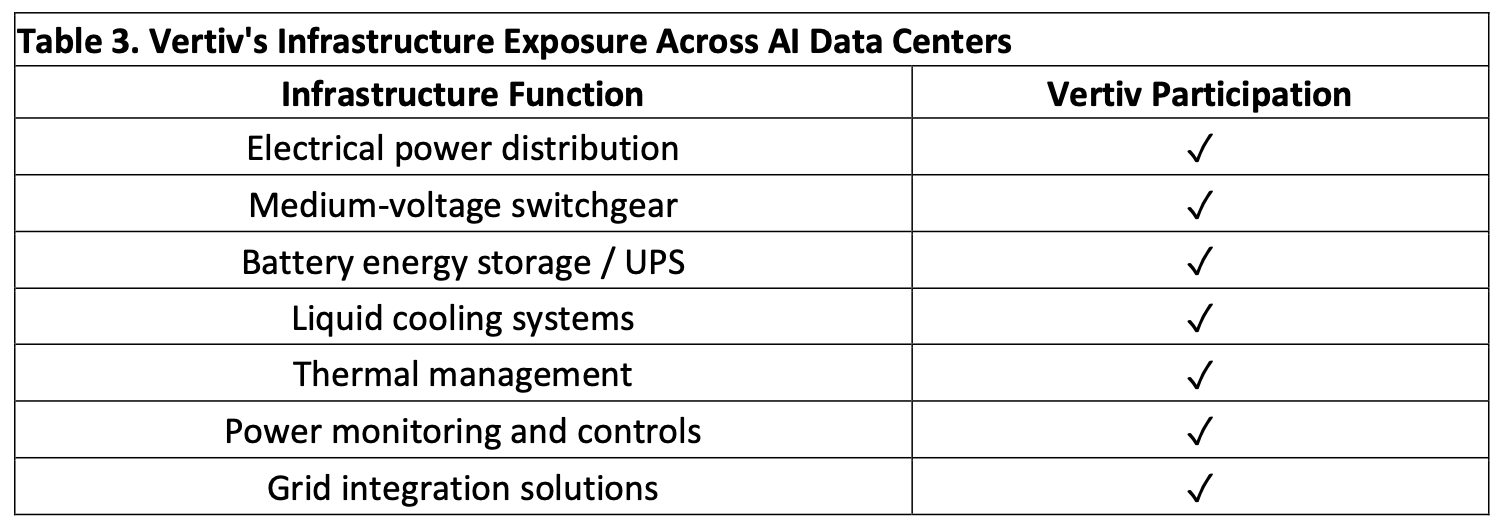
According to Table 3, Vertiv participates across nearly every major infrastructure layer required to operate a modern AI data center. Unlike semiconductor manufacturers, whose revenues depend partly on which AI accelerator customers adopt, Vertiv benefits regardless of the processor architecture because every AI installation requires reliable power delivery, thermal management, backup power, and increasingly sophisticated liquid-cooling systems.
Demand is supported by a substantial order backlog that gives Vertiv unusually strong revenue visibility for an industrial company. While many manufacturers rely on short-term orders that swing with economic conditions, Vertiv enters each quarter with a significant share of future revenue already committed by customers.
The confidence reflected in that backlog is also evident in Vertiv’s manufacturing expansion strategy. Earlier this year, the company opened a new manufacturing facility in Johor, Malaysia, its first in Southeast Asia. The facility will produce power systems, liquid-cooling equipment, and integrated infrastructure for customers across Southeast Asia, North Asia, Australia, and New Zealand. By adding manufacturing capacity well before AI infrastructure demand is expected to peak, management is signaling confidence that hyperscaler and sovereign AI investments will continue driving orders for years rather than quarters.
That confidence also shows up in capital allocation: earlier this year, Vertiv announced a new manufacturing facility in Johor, Malaysia, built to serve fast-growing demand across Southeast Asia, North Asia, Australia, and New Zealand. Expanding production capacity years ahead of anticipated demand peaks suggests management expects AI infrastructure investment to stay strong well beyond the current product cycle.
The Valuation Question: Bull Case vs. Bear Case
According to Table 4, the investment debate surrounding Vertiv is straightforward. Supporters believe the company’s exceptional growth rate, expanding margins, and broad exposure to AI infrastructure justify a premium valuation. Skeptics counter that much of that future success has already been reflected in the share price, leaving little room for execution missteps should AI capital spending moderate.
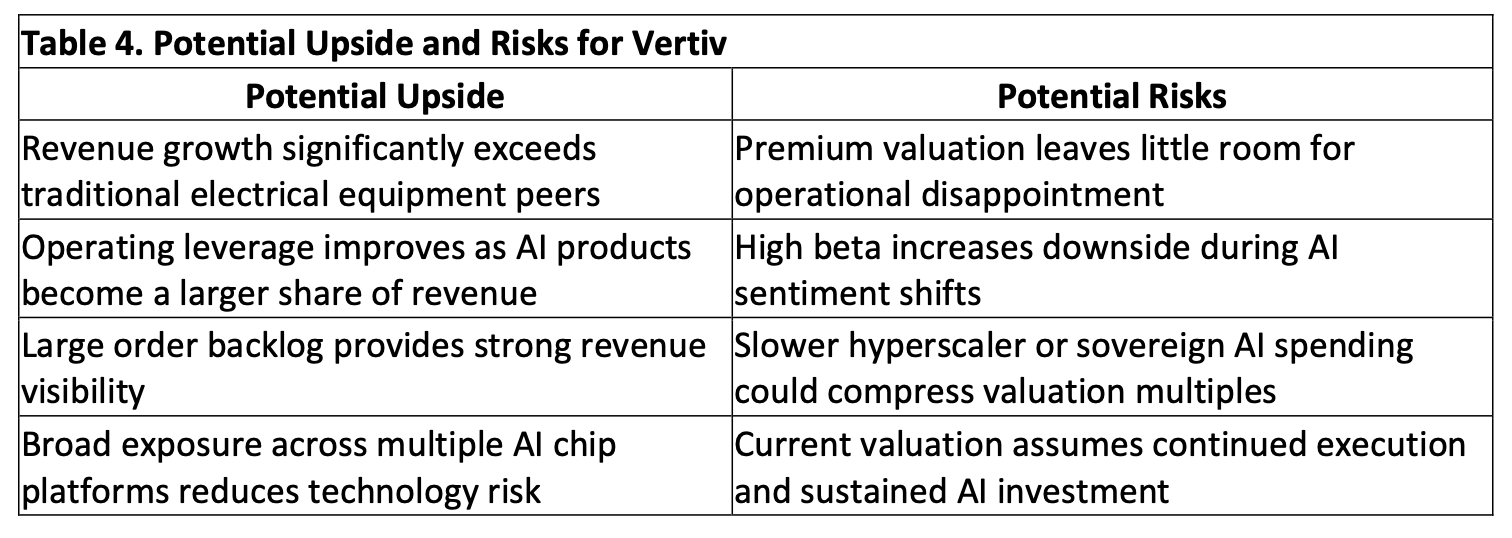
The valuation debate is straightforward. Investors aren’t questioning whether Vertiv is benefiting from AI infrastructure spending—they’re debating how much of that future growth is already reflected in today’s share price.
What to Watch: Q2 Earnings
The South Korean announcement demonstrated that AI infrastructure investment is no longer driven exclusively by U.S. hyperscale cloud providers. Governments increasingly treat artificial intelligence as strategic national infrastructure, requiring domestic investment in computing capacity, semiconductor manufacturing, and the electrical systems underneath it all. Every new sovereign AI initiative expands the addressable market for companies supplying that infrastructure — arguably more consequential for Vertiv’s long-term story than any single quarter.
The next real test arrives when Vertiv reports second-quarter results later this month. Investors will be watching revenue growth, order trends, operating margins, backlog conversion, and management’s outlook for the rest of 2026 — the figures that will determine whether the business keeps validating the optimism already priced into the stock.
Bottom Line
June 30 answered one question while leaving another open. It confirmed that Wall Street increasingly views Vertiv as one of the purest publicly traded beneficiaries of the global AI infrastructure buildout. What’s still uncertain is whether the growth investors are now pricing in can continue long enough to justify the expectations already baked into the share price. In today’s market, sentiment can move a stock 9% in a matter of hours — sustained earnings growth is what determines whether those gains hold.
One additional factor investors should keep in mind is that AI infrastructure spending is becoming increasingly global rather than concentrated in a handful of U.S. technology companies. South Korea’s announcement illustrates how governments now view artificial intelligence as a strategic national asset requiring long-term investment in computing capacity, electrical infrastructure, and advanced semiconductor manufacturing. If similar initiatives continue to emerge in Europe, the Middle East, and other parts of Asia, companies such as Vertiv could benefit from multiple independent sources of demand rather than relying solely on the capital spending plans of a few hyperscale cloud providers. That broader geographic diversification could become an important driver of long-term growth, even as investors continue debating the company’s premium valuation.
Contact [email protected] for any questions or corrections.
Dr. Robert Castellano has over 40 years of experience analyzing the high-tech industries. He is president of The Information Network (www.theinformationnet.com). He earned a PhD degree in Chemistry from Oxford University (UK). His PhD thesis advisor, John Goodenough, won the Nobel Prize in Chemistry in 2019 for the invention of the Lithium Ion Battery. He writes with George Gilder, novelist, futurist, and economist, and his team for Eagle Financial Publishing.